Changing Your Life Insurance Agent: How to Switch Without Losing Coverage
Switching your life insurance agent is a common administrative change that allows you to work with a representative who better understands your financial needs, provides more responsive service, or offers better advisory support. You c...
Switching your life insurance agent is a common administrative change that allows you to work with a representative who better understands your financial needs, provides more responsive service, or offers better advisory support. You can change your agent without canceling your policy or losing your existing coverage, as life insurance contracts are legally bound to the insurance company, not the individual agent.
Contents
Understanding the Relationship Between Agent and Carrier
When you purchase a life insurance policy, you enter into a binding legal contract with the insurance carrier—the company that assumes the financial risk and guarantees the death benefit. The agent or broker serves as your point of contact, intermediary, and advisor. Because the contractual obligation resides with the carrier, replacing the agent does not trigger a cancellation of the policy, nor does it require a new medical underwriting process.
Your policy benefits, premium structure, cash value accumulation, and coverage limits remain entirely unaffected by a change in representation. The carrier simply updates its records to reflect that a different licensed agent is now the "Agent of Record" (AOR) for your account.
Why Policyholders Choose to Switch
Policyholders often seek a new agent due to life transitions or dissatisfaction with service quality. Common reasons include:
- Lack of Communication: If your current agent fails to respond to inquiries regarding policy updates, beneficiary changes, or premium adjustments, you may find the administration of your financial planning hindered.
- Relocation: While many insurance relationships are managed digitally, some clients prefer a local agent they can meet in person. If you move across state lines, you may want an agent licensed in your new jurisdiction who understands regional tax implications or estate laws.
- Professional Alignment: As your financial situation evolves—through marriage, business ownership, or the accumulation of significant assets—you may require an agent with specialized knowledge in trust structures or complex estate planning that your previous agent does not possess.
- Retirement or Agency Transition: Agents often retire or merge their practices. In these cases, you may be automatically reassigned to a new representative, but you retain the right to request someone else if that individual does not meet your expectations.
Steps to Change Your Agent Without Losing Coverage
The process of switching is generally straightforward but requires formal communication with the insurance carrier. Follow these steps to ensure a smooth transition.
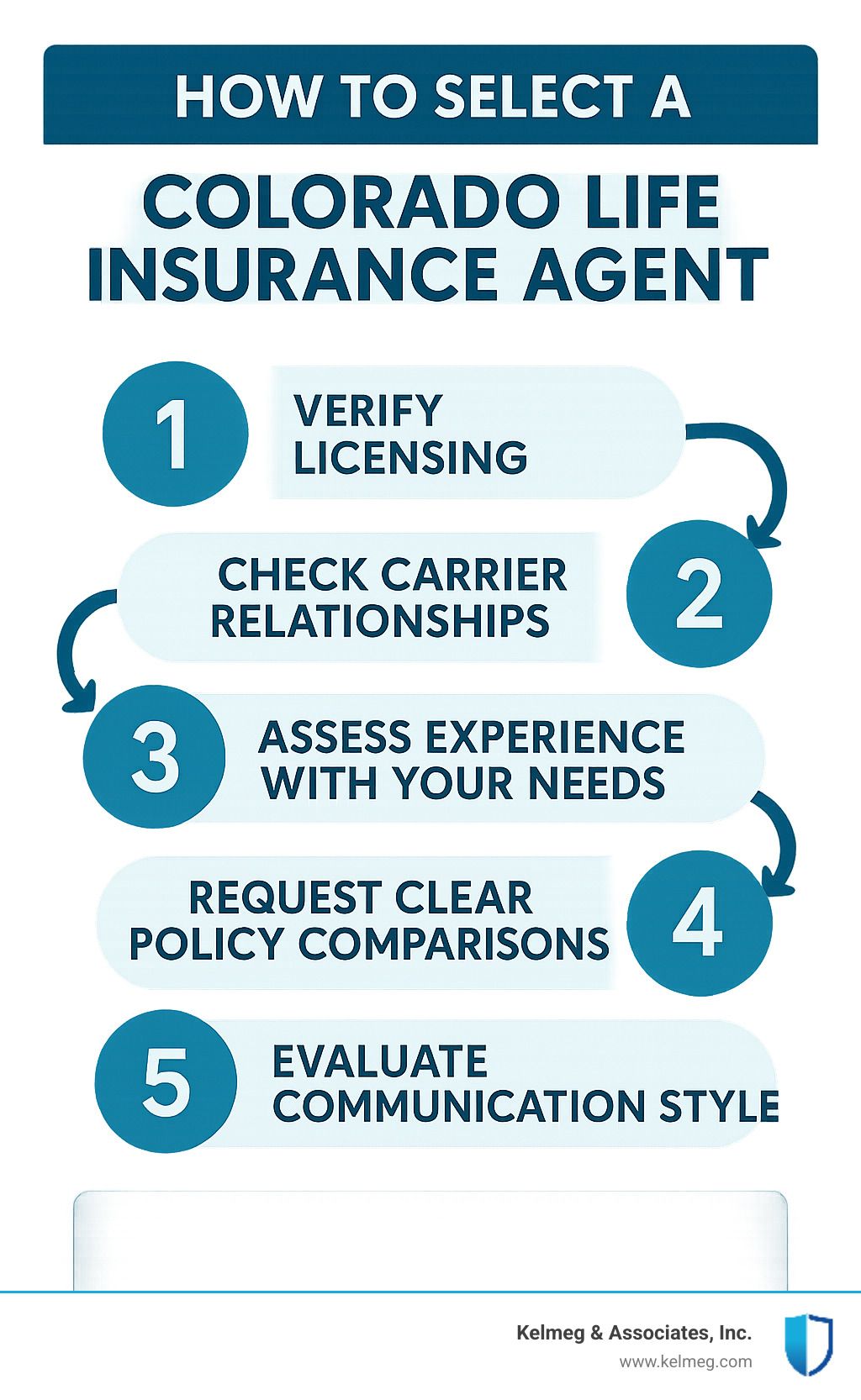
- Identify a New Agent: Before initiating the switch, find a licensed agent who is authorized to sell products from your current insurance carrier. You can verify an agent’s status by searching the licensing database of your state’s Department of Insurance.
- Verify Compatibility: Contact the prospective agent and confirm they are willing and able to take over your policy. Ask if they have experience with your specific type of product, such as Whole Life, Universal Life, or Term Life, and ensure they are comfortable working with your current carrier’s administrative systems.
- Submit a Change of Agent Request: Contact your current insurance carrier’s customer service department. They will provide a specific "Change of Agent of Record" form. This document acts as a formal instruction to the company to transfer the servicing rights from the old agent to the new one.
- Confirm the Transfer: Once the carrier processes the request, you should receive a confirmation notice via mail or email. Your new agent will also be notified of the change.
- Review Beneficiaries and Details: Use this transition period as an opportunity to review your policy details with your new agent. Ensure that your beneficiary designations are current and that your contact information is accurate.
Comparing Traditional Agents and Direct Carriers
The ability to switch agents depends partially on the structure of your policy.
| Feature | Captive Agent | Independent Broker | Direct-to-Consumer |
|---|---|---|---|
| Carrier Access | Represents one company | Represents multiple carriers | No agent assigned |
| Flexibility | Limited to one provider | High; can switch carriers | None |
| Service Model | Personalized, long-term | Advisory, market-based | Self-service portal |
| Switching Difficulty | Moderate; requires transfer | Easy; internal re-assignment | N/A |
If you own a policy bought through a "direct-to-consumer" platform, you may not have an assigned agent. In these instances, you can often request to be assigned a representative if you decide you need professional guidance. Conversely, if you have a captive agent, you can request a different agent within the same company.
Potential Hurdles and Misconceptions
While the process is designed to be seamless, policyholders should be aware of a few common misconceptions.
Will my premiums increase? No. Your premium is dictated by the terms of your original policy, which was calculated based on your age, health status, and the risk assessment conducted at the time of purchase. Changing your agent does not allow the insurance company to re-evaluate your health or adjust your premiums.
Can I move my policy to a different insurance company? It is critical to distinguish between changing an agent and changing a carrier. Changing your agent keeps your existing policy intact. If you wish to change insurance companies (e.g., to seek lower premiums or different benefits), you are effectively "replacing" your policy. This process requires a new application, new medical underwriting, and the potential for higher premiums based on your current age and health status. Never cancel an existing policy until a new one is fully approved and in force to ensure you maintain continuous coverage.
Will the old agent be notified? In most cases, the insurance carrier will notify the departing agent that the Agent of Record has been changed. While this may feel uncomfortable, remember that insurance is a commercial arrangement. You are under no obligation to remain with an agent whose service does not meet your standards.
Professional Advice and Regulatory Considerations
Life insurance is a long-term financial product often linked to tax planning and wealth transfer. Before making any changes, consider the following:
- Regulatory Protections: Every state maintains a Department of Insurance that governs the conduct of agents. If you believe your current agent is engaging in unethical practices or failing to fulfill their fiduciary duties, you may report them to your state regulator.
- Policy Loans and Dividends: If you have a permanent life insurance policy with accumulated cash value or dividend options, ensure that your new agent is fully briefed on these features. A change in agent should not impact your access to policy loans or the distribution of dividends, but having an agent who understands your history is vital.
- Documentation: Always maintain a copy of the "Change of Agent of Record" form for your personal financial files. This document serves as proof that you have officially authorized the transition.
Frequently Asked Questions
Does changing my agent require a medical exam? No. Because you are maintaining your existing policy, no new medical underwriting, health questions, or exams are required. Your coverage terms remain locked in as they were on the original effective date.
Can I switch to an agent who does not work with my current carrier? Generally, no. An agent must be "appointed" by the specific insurance company to manage policies issued by that company. If you want to work with a specific agent who is not appointed by your current carrier, you would have to replace your entire policy, which is rarely advisable due to the loss of your original underwriting status and potential surrender charges.
How long does it take for the agent change to take effect? The processing time varies by carrier but typically ranges from 5 to 15 business days after the correctly completed form is received by the company’s home office.
What happens if my agent refuses to help me? You do not need your current agent’s permission to switch. If they are unresponsive or obstructive, bypass them entirely by contacting the insurance carrier’s customer service department to request the necessary paperwork to change your Agent of Record.
Is there a fee for switching agents? No. There is no cost associated with changing your servicing agent. Be wary of any third party that claims they can charge a "service fee" to facilitate this change; this is typically a red flag for predatory behavior.
Final Recommendation
If you feel your current agent is not providing the level of service you require, do not hesitate to exercise your right to request a change. Start by identifying an agent you trust, verify their appointment with your existing carrier, and reach out to the carrier directly to obtain the necessary Agent of Record change form. This simple administrative step ensures your insurance remains active while providing you with the professional support necessary to achieve your long-term financial goals.
Image Gallery