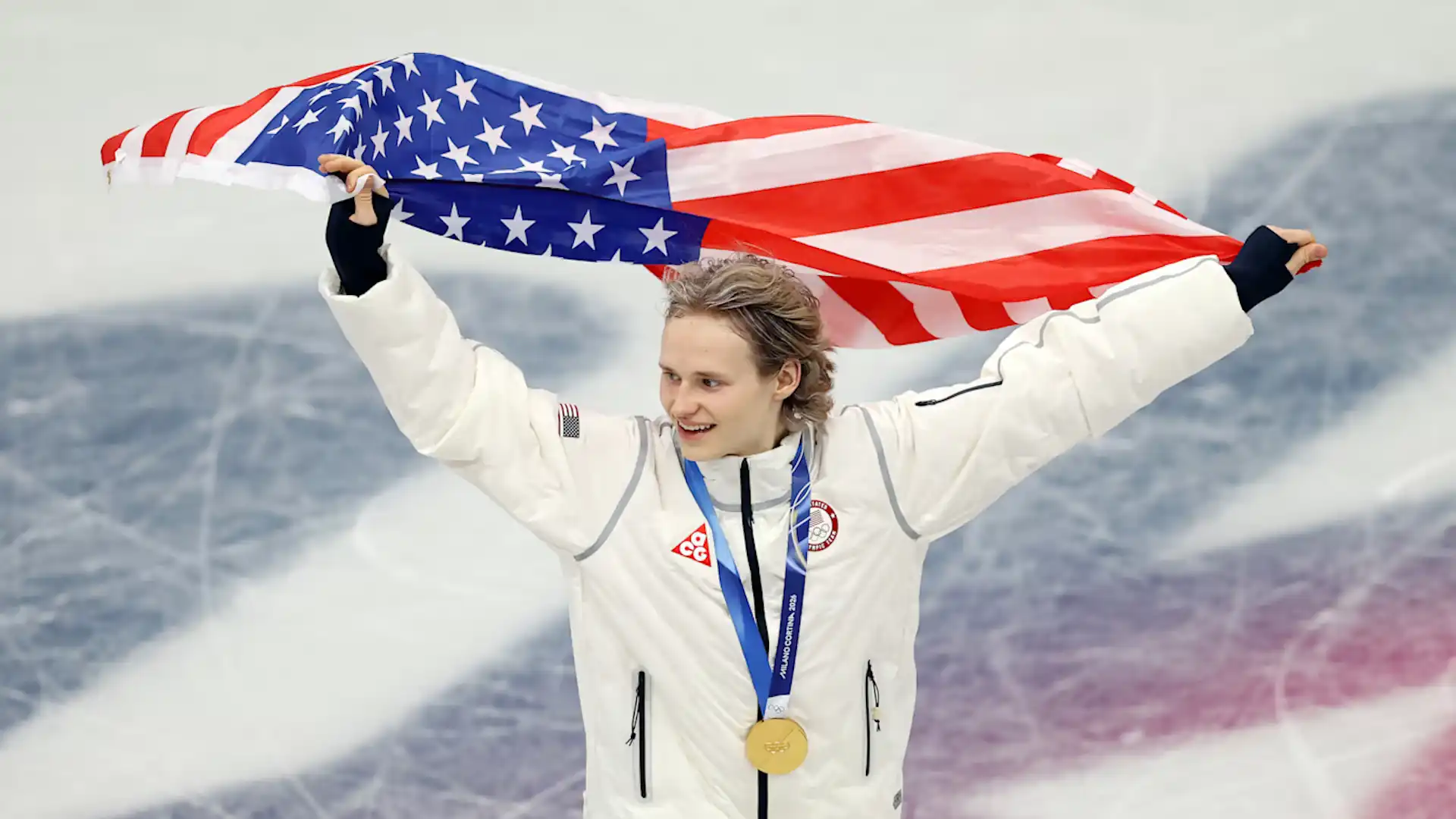
Analyzing the 1 Gold No Silver Ilia Malinin 2026 Olympic Outcome in Figure Skating
Ilia Malinin's performance trajectory heading into the 2026 Winter Olympics highlights the intense margins of elite competitive figure skating, where a single major error in a short program can completely reshape the podium. Examining...
Ilia Malinin's performance trajectory heading into the 2026 Winter Olympics highlights the intense margins of elite competitive figure skating, where a single major error in a short program can completely reshape the podium. Examining a hypothetical or actual scenario where Malinin secures one gold medal and no silver medals at the 2026 Milan-Cortina Games requires understanding the scoring system, technical layout, and historical context of men's singles figure skating.
Contents
The Competitive Landscape of Men's Figure Skating in 2026
Men's figure skating has entered an era of unprecedented technical difficulty, largely driven by the proliferation of quadruple jumps. Competitors routinely attempt elements that were considered physically impossible or mathematically unfeasible a decade ago. At the center of this movement is Ilia Malinin, widely known as the "Quadgod" for his historic execution of the quadruple Axel in international competition.
When analyzing a potential 2026 Olympic outcome involving Malinin, one must evaluate how international judging panels weigh technical elements against component scores and execution grades. The International Skating Union (ISU) judging system rewards base value heavily, but it also enforces strict penalties for under-rotations, edge errors, and falls. In an Olympic field featuring elite skaters from Japan, South Korea, Canada, and Europe, the margin for error is razor-thin. A skater with Malinin's technical ceiling can easily dominate an entire field when clean, securing the highest step of the podium. However, if execution falters in the short program—where jumping content is strictly capped and mistakes carry severe cumulative point losses—recovery becomes an immense mathematical challenge.
Understanding why a skater might finish with a gold medal yet secure no silver medals points to the binary nature of single-discipline Olympic entries or specific competition blocks. In a single discipline like men's singles, an athlete either wins the gold, claims a silver, secures a bronze, or finishes off the podium entirely. An outcome featuring "1 gold, no silver" simply describes a single-discipline entry where the athlete either wins the premier title or does not place second. In multi-event contexts, such as team events combined with individual events, athletes can accumulate multiple medals. For Malinin, competing in both the Olympic Team Event and the Men's Individual Event opens up multiple pathways for medal accumulation.
Technical Demands and Scoring Mechanics in the Olympic Cycle
To appreciate how a gold medal outcome is achieved under intense Olympic pressure, one must examine the specific mechanics of the ISU Judging System (IJS). Skaters are evaluated on two main pillars: the Technical Element Score (TES) and the Program Component Score (PCS).
- Base Value (BV): The predetermined point value assigned to every jump, spin, and step sequence. Malinin's routines routinely feature the highest base values in skating history due to the inclusion of the quadruple Axel and multiple other quads.
- Grade of Execution (GOE): Judges award from -5 to +5 based on the quality of entry, height, distance, air position, and landing flow of each element.
- Program Components: Evaluated across five categories: Composition, Presentation, and Skating Skills. Historically, skaters with immense technical difficulty sometimes face a balanced assessment in components compared to artistic specialists, though Malinin has worked extensively to elevate his presentation scores.
The table below outlines the general structural differences between the Short Program and Free Skate formats that dictate Olympic outcomes:
| Segment | Duration | Element Requirements | Impact of Mistakes |
|---|---|---|---|
| Short Program | 2 minutes, 40 seconds | Exactly 7 required elements (1 Axel, 1 jump combo, 1 solo jump, spins, step sequence) | Severe. A missed jump or failed combination can drop a skater out of medal contention immediately due to strict element limits. |
| Free Skate | 4 minutes | Up to 11 required elements (mix of jumps, spins, choreographic sequences) | Moderate to High. Allows greater opportunity to recover from an early error through high-value jump combinations in the second half. |
Historical Context and Pressure Management at the Winter Games
The Olympic Games impose a unique psychological and media burden upon favorites. Athletes who dominate the World Championships and Grand Prix circuit during a quadrennial cycle often find themselves facing unprecedented scrutiny as the Winter Games approach.
For Malinin, managing the physical toll of performing multiple quadruple jumps while maintaining peak health through the Olympic season remains a central operational challenge. High-rotation jumps place extraordinary stress on ankles, knees, and the lower back. Training regimens must balance the need for repetition with injury prevention protocols. When skaters arrive at the Olympic venue, adaptation to the ice conditions, local time zones, and the sheer scale of the arena often dictates who executes under pressure.
Furthermore, competitors are well aware of Malinin's technical layout. Rivals from nations with deep skating traditions adjust their own layouts, attempting to match or exceed technical difficulty while banking on immaculate execution and higher program component scores to bridge any gap. This strategic game of chess on ice transforms every international assignment into a preview of Olympic tactical planning.
Strategic Preparation for Major International Championships
Elite figure skaters do not build their programs overnight; they execute a multi-year periodization plan designed to peak precisely during the Olympic month. This preparation involves several structured phases:
- Off-Season Choreography and Technical Integration: Skaters work with specialists to design new programs, select music, and safely integrate new or more consistent quad variations into their layouts.
- Early-Season Grand Prix Circuit: Athletes test their programs under international judging conditions, gathering feedback on technical calls from technical controllers and refining component marks.
- National Championships: Serving as a crucial qualifier, skaters secure their spots while managing peak physical conditioning away from international travel fatigue.
- Tapering and Final Tuning: The final weeks before the Olympic competition focus entirely on consistency, mental resilience, and executing full-run-through simulations without fatigue.
Frequently Asked Questions
What makes Ilia Malinin's jumping technique unique in men's figure skating?
Malinin is internationally renowned for executing the quadruple Axel—a 4.5-revolution jump that no other skater had successfully landed in official ISU competition prior to his historic milestones. His takeoff technique generates exceptional vertical height and rotational speed, allowing him to complete difficult aerial maneuvers within regulation time.
How does the Olympic figure skating team event impact individual medal counts?
The Olympic Winter Games feature both a Team Event—where skaters earn points for their country across men's, women's, pairs, and ice dance disciplines—and individual discipline events. Skaters competing in both can potentially win multiple medals, combining a team medal with an individual medal.
What happens if a skater falls during the short program at the Olympics?
A fall results in an automatic deduction of 1.0 point from the total score, alongside a severe negative impact on the Grade of Execution for that element. In the short program, missing a required combination element can invalidate the entire jump pass, making recovery in the free skate mathematically difficult if competitors skate clean.
How are Program Component Scores evaluated compared to technical elements?
Program Component Scores evaluate the overall presentation, musical interpretation, and skating skills of the athlete on a scale from 0.25 to 10.00. While technical elements are objective based on landed rotations and difficulty, component scores rely on panel consensus regarding the artistic and physical mastery of the program.
Why is consistency such a major factor in modern men's figure skating?
Because the base values of quadruple jumps are so high, a skater who attempts multiple quads but falls repeatedly will score lower than a skater who executes slightly less difficult jumps with absolute perfection and high positive GOEs. Balancing maximum technical difficulty with clean execution is the central challenge for modern contenders.
Practical Next Actions for Following Figure Skating Competitions
To stay fully informed on elite figure skating developments, follow official International Skating Union (ISU) communications, monitor Grand Prix assignment announcements, and review detailed protocol sheets published after every major competition. Analyzing judge protocol sheets provides transparent insight into exact base values, GOE marks, and component breakdowns for every competitor on the global stage.
Image Gallery