Navigating Marion Mugshots Inmate Search: Official Records and Public Access
Conducting a Marion Mugshots inmate search requires understanding official county jail databases, public records laws, and the operational differences between local detention facilities and state departments of correction. Depending on...
Conducting a Marion Mugshots inmate search requires understanding official county jail databases, public records laws, and the operational differences between local detention facilities and state departments of correction. Depending on whether your inquiry targets Marion County, Indiana, Marion County, Florida, or another jurisdiction sharing the name, search procedures rely on authorized law enforcement portals and public safety transparency mandates.
Contents
Understanding the Scope of Public Inmate Records and Mugshots
Public access to arrest records, booking photographs, and detention status serves as a cornerstone of government transparency. However, the availability of these records varies significantly by state statutes, county sheriff department policies, and recent legal adjustments regarding the commercial exploitation of mugshots.
When searching for individuals housed in local detention facilities, users generally encounter two primary data layers: real-time booking logs and historical court records. Real-time booking data includes individuals recently taken into custody who may still be awaiting arraignment, bond posting, or transfer. Historical records encompass individuals who have been sentenced, transferred to state prisons, or released.
Identifying the Correct Marion Jurisdiction
Because multiple states feature counties named Marion, specifying the exact geographic jurisdiction is the most critical first step for any search. Confusing Marion County, Indiana, with Marion County, Florida, or Marion County, Ohio, will yield zero results due to disconnected municipal databases.
| County and State | Primary Detention Facility | Official Search Portal Type |
|---|---|---|
| Marion County, Indiana | Marion County Jail / Arrestee Processing Center | Indianapolis Metropolitan Police Department / County Sheriff Online Lookup |
| Marion County, Florida | Marion County Jail (Multi-Use Detention Center) | Marion County Sheriff's Office Inmate Lookup Tool |
| Marion County, Ohio | Marion County Adult Correctional Facility | Marion County Sheriff Public Inmate Database |
| Marion County, Illinois | Marion County Law Enforcement Center | County Sheriff Jail Roster |
Step-by-Step Guide to Performing an Inmate Search
Executing an accurate search within an official Marion detention portal involves navigating specific search parameters to filter through common names and verify correct identities.
- Determine the Exact Jurisdiction: Verify the state and county where the arrest or detention occurred. If the arrest took place within city limits by municipal police rather than county deputies, check both city and county databases.
- Access the Official Law Enforcement Website: Navigate directly to the official county sheriff's office or state department of corrections website. Avoid third-party aggregator sites that charge fees for public data.
- Input Identifying Information: Enter the subject's full legal name. For optimal accuracy, include middle names or initials, date of birth, or the specific booking number if known.
- Review Booking Details: Examine the returned records for identifiers such as age, race, gender, arrest date, arresting agency, and listed charges.
- Check Bond and Court Information: Look for associated bond amounts, scheduled court appearance dates, and assigned courtroom numbers to track the judicial process.
Official Versus Commercial Inmate Search Platforms
Navigating public safety databases exposes users to a wide array of third-party background check websites. Understanding the structural differences between official government portals and commercial entities protects personal data and ensures legal compliance.
Official Government Portals Official county and state websites provide free access to raw arrest logs, intake details, and court dockets directly sourced from law enforcement management systems. These platforms operate under public records mandates and do not require subscription fees or hidden service charges.
Commercial Third-Party Aggregators Private companies frequently scrape public arrest data to create independent profile pages designed to rank in search engine results. These platforms often monetize mugshots by charging fees to remove or obscure booking photographs, a practice heavily regulated or restricted by various state laws.
Accessing State-Level Prison Inmates in Marion Jurisdictions
When an individual's legal proceedings conclude with a felony conviction and a state prison sentence, they transition out of local county jail custody into the state department of corrections. Local county search engines will typically show a status of "released" or transfer to state custody.
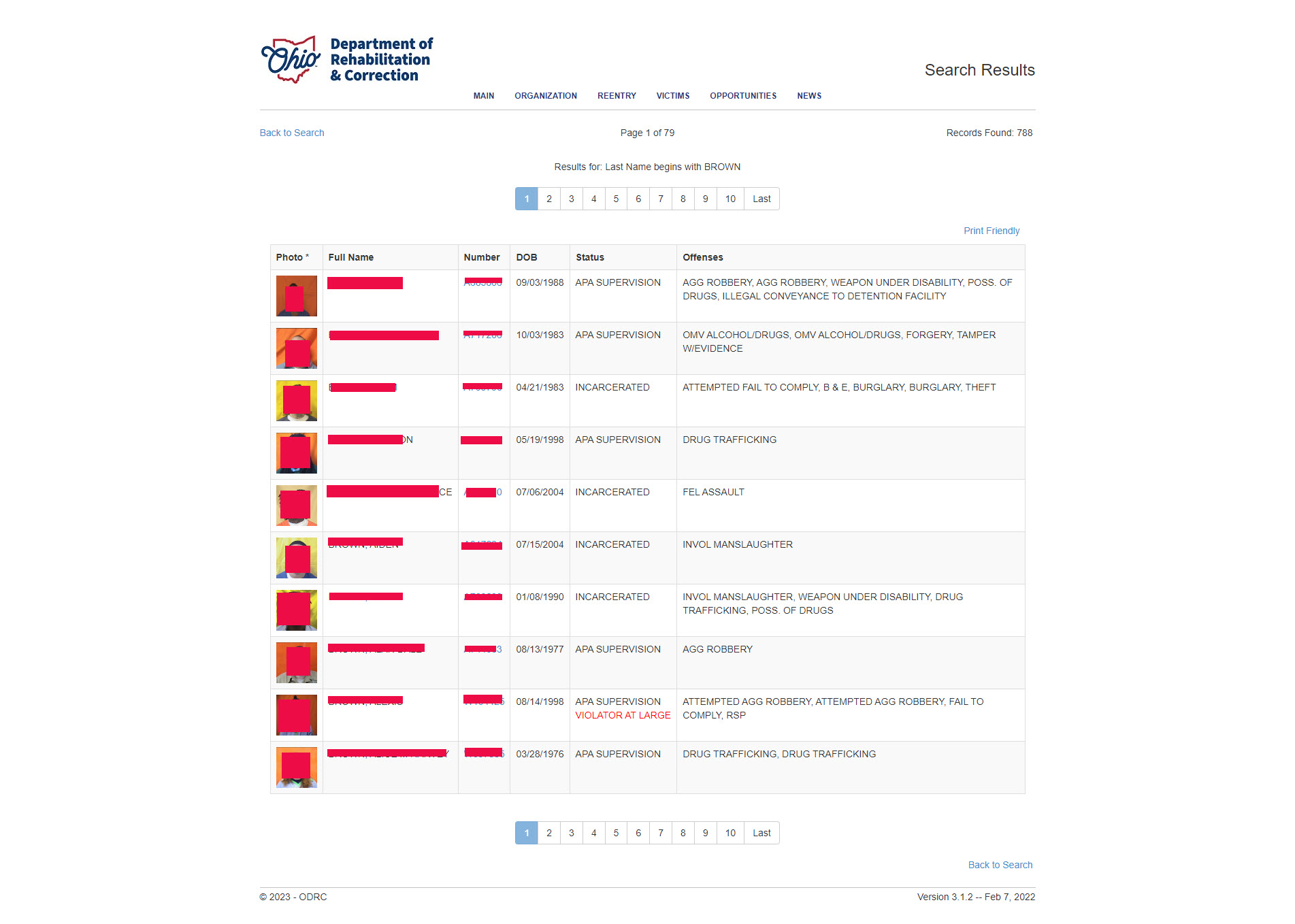
To locate an inmate who has been transferred to a state correctional facility, users must access the state-level offender tracking system. For example, individuals sentenced within Marion County, Indiana, fall under the jurisdiction of the Indiana Department of Correction (IDOC) offender search tool, while those in Marion County, Florida, fall under the Florida Department of Corrections (FDC) database. These state databases track long-term housing assignments, projected release dates, and institutional work assignments.
Legal Rights, Privacy Protections, and Mugshot Removal Laws
The publication and distribution of booking photographs are subject to evolving state legislation aimed at protecting individuals who were never convicted, whose charges were dropped, or who were found not guilty.
- Expungement and Sealing: Individuals who have successfully completed diversion programs, had their records expunged, or had charges dismissed can petition the court to seal arrest records and associated mugshots from public view.
- Commercial Mugshot Removal Statutes: Many states have enacted specific consumer protection laws prohibiting private websites from charging fees to remove booking photographs of unconvicted individuals.
- Presumption of Innocence: Law enforcement agencies emphasize that an arrestee or inmate listed in a booking database is presumed innocent until proven guilty in a court of law.
Frequently Asked Questions
How can I find someone who was just arrested in Marion County?
Check the official county sheriff's office daily booking log or online inmate roster, which updates continuously as new arrestees are processed through intake. Most county jails publish booking photos and charges within hours of intake completion.
Are mugshots and arrest records completely free to view?
Yes, official county sheriff websites and state department of correction portals provide inmate searches and booking logs completely free of charge to the public. Any website demanding payment to view a mugshot is a commercial third-party platform.
What information do I need to locate an inmate?
Having the exact legal first and last name is mandatory, while secondary details such as date of birth, booking number, or approximate arrest date significantly narrow down common names and ensure accurate identification.
Why is an inmate no longer showing up in the county jail database?
Inmates frequently disappear from local jail rosters due to posting bond, release upon court order, transfer to a medical facility, or relocation to a state prison system following sentencing.
How do I get a mugshot removed from the internet?
If the record is hosted on a commercial aggregator site, consult the website's specific removal policy or submit a removal request accompanied by official court documentation proving case dismissal, acquittal, or record expungement.
Conclusion
Utilizing official government portals for a Marion Mugshots inmate search ensures access to accurate, up-to-date public safety records while avoiding commercial data brokers. By verifying the correct county jurisdiction, utilizing proper search parameters, and understanding the distinction between local jails and state prisons, researchers can efficiently navigate public arrest and detention data.
Image Gallery