Health-Ade Kombucha Net Worth: Brand Valuation and Success Story in 2026
As of 2026, Health-Ade Kombucha maintains an estimated market valuation and brand net worth of approximately $500 million to $650 million. This figure reflects its position as one of the top three leaders in the global kombucha market,...
As of 2026, Health-Ade Kombucha maintains an estimated market valuation and brand net worth of approximately $500 million to $650 million. This figure reflects its position as one of the top three leaders in the global kombucha market, bolstered by a significant majority-stake acquisition by First Bev in 2021 and consistent double-digit annual revenue growth.
Contents
Health-Ade Kombucha has transitioned from a small-scale operation in a Los Angeles apartment to a dominant force in the functional beverage industry. Understanding the financial trajectory of this brand requires looking at its transition from a founder-led startup to a private equity-backed powerhouse. While "net worth" is a term typically reserved for individuals, in the context of Health-Ade, it refers to the enterprise value and the equity standing of its parent organization and founding members.
The Financial Genesis of Health-Ade
Founded in 2012 by Daina Trout, Justin Trout, and Vanessa Dew, Health-Ade was born out of a "kombucha club" that aimed to explore the health benefits of fermented foods. With an initial investment of just $600, the founders produced their first batches in their home kitchen and sold them at local Los Angeles farmers' markets.
The brand's rapid financial ascent was driven by its "Real Food" philosophy—using organic ingredients, glass-jar fermentation, and high-quality tea. This premium positioning allowed them to command a higher price point than traditional soft drinks, appealing to the burgeoning demographic of health-conscious consumers. By 2013, the company had secured its first round of outside funding, signaling the beginning of its institutional financial growth.
Major Investment Milestones and Acquisitions
The primary driver of Health-Ade’s multi-hundred-million-dollar valuation is its history of strategic partnerships and capital infusions. The company’s ability to attract top-tier investors is a testament to its scalable business model and brand equity.
The Role of First Bev and Coca-Cola
First Bev, a private equity firm focused on the beverage industry, was an early and consistent supporter of the brand. In 2019, Health-Ade received a significant boost when Coca-Cola’s Venturing & Emerging Brands (VEB) unit took an equity stake. While Coca-Cola did not acquire the company outright, the partnership provided Health-Ade with unparalleled access to distribution networks and retail insights.
The 2021 Pivot to Majority Control
A pivotal moment for the brand’s valuation occurred in August 2021, when First Bev acquired a controlling interest in Health-Ade. This move was supported by Manna Tree, an investment firm focused on human health. At the time of this acquisition, Health-Ade was reportedly generating over $150 million in annual retail sales. By 2026, those sales figures have expanded significantly as the brand moved beyond specialty grocers into mainstream convenience stores and international markets.
Revenue Streams and Market Share in 2026
To sustain a net worth in the hundreds of millions, Health-Ade has diversified its revenue streams. While the classic 16oz glass bottle remains the flagship product, the company has successfully expanded into new categories.
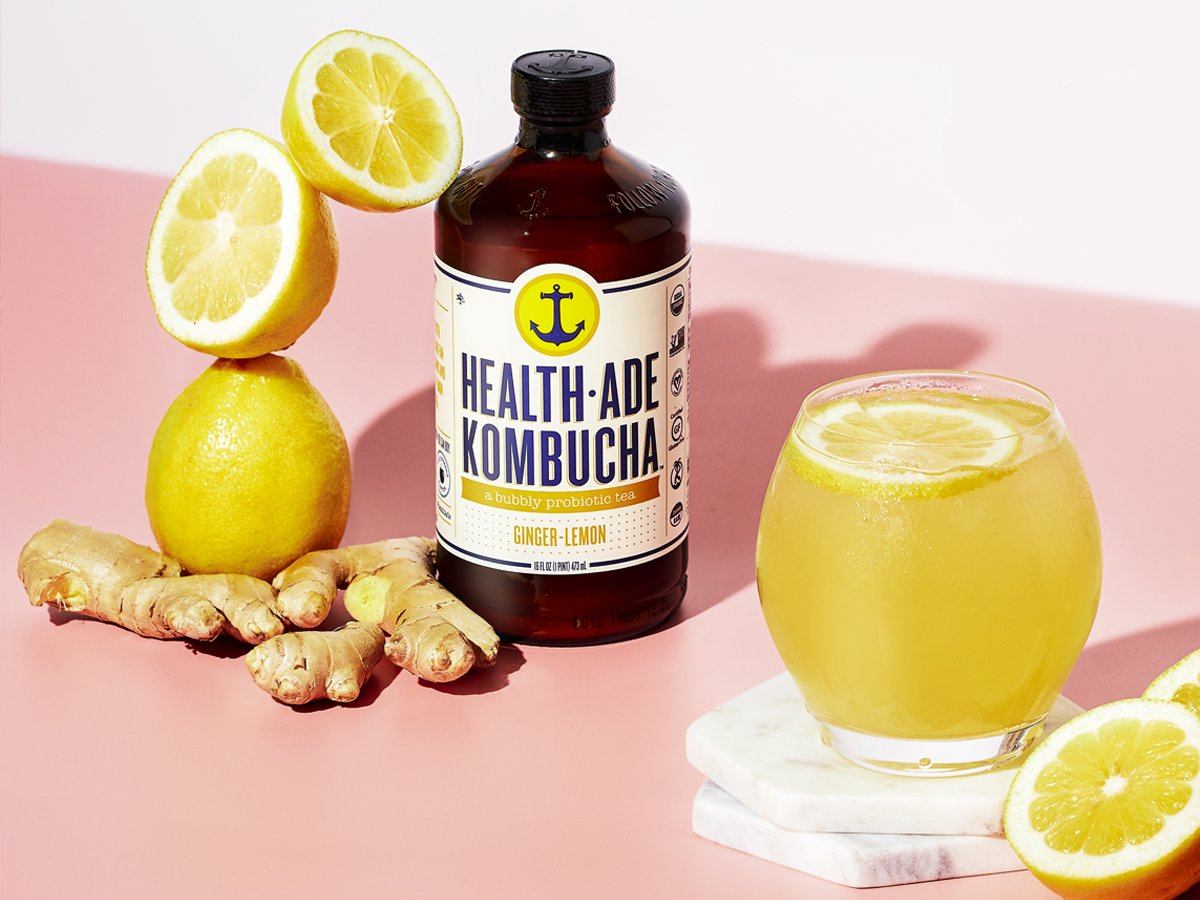
- Core Kombucha Line: This remains the primary revenue driver, with flavors like Pink Lady Apple and Ginger Lemon maintaining high velocities in retail.
- Health-Ade SunSips: A prebiotic soda line introduced to compete in the rapidly growing functional soda category (competing with brands like Olipop and Poppi).
- Direct-to-Consumer (DTC) Sales: The company’s subscription model provides a steady stream of recurring revenue, reducing reliance on physical retail shelf space.
- Bulk and Foodservice: Partnerships with tech campuses, hospitals, and high-end cafes have integrated the brand into daily consumption habits outside the home.
In the 2026 market landscape, Health-Ade holds roughly 15% to 18% of the U.S. kombucha market share, trailing only behind GT’s Living Foods. This market dominance is a key component of its high enterprise valuation.
Founder Net Worth and Leadership Transition
The net worth of the founders—Daina Trout, Justin Trout, and Vanessa Dew—is tied largely to the 2021 majority stake sale. While specific individual bank balances are private, the trio retained equity in the company following the First Bev takeover.
Daina Trout, who served as CEO for the first nine years, moved into the role of Chief Mission Officer in 2021, allowing professional management to scale the business further. This transition is a common "liquidity event" for founders, where they can monetize a portion of their shares while remaining involved in the brand's visionary direction. Industry analysts estimate the founders' collective wealth in the tens of millions, based on the valuation multiples typically applied to high-growth beverage exits.
Competitive Comparison and Valuation Drivers
The value of a beverage brand is often calculated as a multiple of its annual revenue. In the functional beverage space, these multiples can range from 3x to 6x revenue, depending on growth rates and profitability.
| Metric | Health-Ade (Est. 2026) | GT’s Living Foods | KeVita (PepsiCo) |
|---|---|---|---|
| Est. Annual Revenue | $250M - $300M | $500M+ | $200M+ |
| Primary Ownership | First Bev (Majority) | Founder-Owned | PepsiCo |
| Product Focus | Premium/Organic | Raw/Authentic | Probiotic/Mass Market |
| Estimated Brand Value | $550M+ | $1B+ | $400M+ (at acquisition) |
Health-Ade’s valuation is particularly robust because of its "clean label" reputation. Unlike some competitors that use lab-grown probiotics or pasteurization, Health-Ade maintains a traditional fermentation process that justifies its premium price and protects its brand integrity.
Factors Influencing Future Growth
As we look through the remainder of 2026, several factors will dictate whether Health-Ade’s net worth continues to climb toward the billion-dollar mark.
- International Expansion: Success in European and Asian markets, where interest in gut health is peaking, could double the company's addressable market.
- Operational Efficiency: As a private equity-backed company, Health-Ade has focused heavily on optimizing its supply chain and glass bottle sourcing, which are its largest overhead costs.
- Category Blurring: The company’s ability to successfully market "Health-Ade" as a wellness brand rather than just a "kombucha brand" allows it to enter the supplements or functional snack space, further increasing its valuation.
Challenges to Valuation Stability
Despite its success, Health-Ade faces headwinds that could impact its financial standing. The rising cost of organic sugar and high-quality tea leaves puts pressure on profit margins. Additionally, the functional beverage market is becoming increasingly crowded with "gut-healthy" alternatives that do not have the vinegar-like tang of kombucha, potentially siphoning away casual consumers.
Furthermore, the environmental impact of heavy glass bottles remains a logistical and PR challenge. While glass is essential for the fermentation process and brand identity, the carbon footprint associated with shipping heavy glass impacts the company's ESG (Environmental, Social, and Governance) rating, which is increasingly important for institutional investors in 2026.
FAQs
What was the original investment in Health-Ade?
The founders started Health-Ade with just $600 in 2012. They used this money to purchase ingredients, jars, and a stall at a local farmers' market. This "bootstrap" beginning is a core part of the brand's narrative.
Who owns Health-Ade Kombucha now?
As of 2026, First Bev Group is the majority owner of Health-Ade. Other significant investors include Manna Tree and Coca-Cola’s Venturing & Emerging Brands unit. The founders remain shareholders and continue to influence the brand’s mission.
How does Health-Ade make money?
Health-Ade generates revenue through the wholesale distribution of its beverages to major retailers (like Whole Foods, Target, and Kroger), direct-to-consumer sales via its website, and partnerships with foodservice providers.
Is Health-Ade a profitable company?
While Health-Ade does not publicly disclose its profit and loss statements as a private company, the 2021 acquisition and subsequent expansion suggest a focus on "path to profitability." Private equity-backed brands typically aim for high EBITDA (Earnings Before Interest, Taxes, Depreciation, and Amortization) to prepare for a future IPO or total acquisition.
What is Daina Trout's role in 2026?
Daina Trout serves as the Chief Mission Officer. While she is no longer the CEO, she remains the "face" of the brand, focusing on product innovation, culture, and the company's long-term health-focused goals.
Final Recommendation
For those tracking the "net worth" of Health-Ade as a case study in business success, the brand serves as a blueprint for the "premiumization" strategy. By refusing to compromise on the traditional fermentation process and investing heavily in distinctive branding, Health-Ade has built an enterprise value that far exceeds its physical assets. Investors and entrepreneurs should look to Health-Ade as evidence that in the 2026 beverage market, authenticity and "clean label" transparency are the most valuable currencies for long-term financial growth.
Image Gallery