Decoding the Wealth of a Western Icon: Gene Autry Net Worth in Context
Evaluating Gene Autry’s net worth requires looking far beyond box office earnings, record sales, and touring fees from his decades as Hollywood’s premier singing cowboy. While his early fortune was built on entertainment, his lasting f...
Evaluating Gene Autry’s net worth requires looking far beyond box office earnings, record sales, and touring fees from his decades as Hollywood’s premier singing cowboy. While his early fortune was built on entertainment, his lasting financial legacy stems from pioneering business acumen, particularly in radio broadcasting and Major League Baseball ownership.
Contents
The Foundations of a Multi-Industry Fortune
To understand Gene Autry’s financial standing, one must first recognize that his career spanned multiple distinct business eras. Born Orvon Grover Autry in 1907, his ascent began in the Great Depression as a recording artist and radio performer before transitioning into B-Western films for Republic Pictures and Columbia Pictures.
Unlike many actors of his era who relied entirely on studio salaries or percentage deals that faded with changing cinematic trends, Autry maintained strict control over his image and intellectual property. In 1938, he formed Flying A Pictures, a production company that created not only his own feature films but also pioneering television series such as The Gene Autry Show and The Range Rider. This early foray into television syndication established a recurring revenue stream long before backend syndication profits became standard Hollywood practice.
Furthermore, Autry was among the first major film stars to realize the immense commercial potential of merchandising. Through agreements with manufacturers, his name and likeness adorned guitars, boots, cowboy hats, and comic books, generating royalties that insulated him from the financial volatility of the entertainment industry.
Real Estate and Broadcasting Empire
While entertainment launched his career, broadcasting and real estate cemented his status as a multi-millionaire. In the late 1950s and 1960s, as his film and television output slowed, Autry pivoted heavily into media investments.
He acquired controlling stakes in several radio stations, most notably KMPC in Los Angeles, which became a powerhouse in regional broadcasting and sports coverage. Under his Golden West Broadcasters umbrella, the portfolio expanded to include television stations and additional radio properties across the American West. Broadcasting assets during this era provided high profit margins and steady advertising revenues, serving as the primary engine for his compounding wealth.
Concurrently, Autry invested heavily in Southern California real estate, acquiring commercial properties, ranches, and hotels. His real estate holdings appreciated dramatically during the post-war suburban boom, providing a stable, hard-asset foundation that balanced the cyclical nature of media and entertainment.
| Asset Class | Primary Holdings | Financial Impact |
|---|---|---|
| Entertainment | Flying A Pictures, film royalties, music recordings | Established initial capital and long-term syndication revenue. |
| Broadcasting | Golden West Broadcasters, KMPC radio | Generated sustained cash flow through regional media monopolies. |
| Sports Ownership | California Angels (MLB) | Provided massive capital appreciation upon majority sale. |
| Real Estate | Southern California land, hotels, ranches | Offered long-term asset appreciation and portfolio diversification. |
Major League Baseball and the California Angels
The crowning achievement of Autry’s financial life—and the primary driver of his peak net worth—was his venture into professional sports. In 1960, Major League Baseball awarded a new expansion franchise to Los Angeles for the 1961 season. When initial efforts by local politicians to secure an owner stalled, American League owners approached Autry, initially asking him to buy radio broadcast rights. Instead, Autry agreed to purchase the entire franchise, becoming the founding owner of the Los Angeles Angels (later known as the California Angels).
Investing in a startup sports franchise in 1960 required substantial capital, and the team operated at a financial loss during its early years while playing in minor league ballparks and temporary homes like Dodger Stadium before moving to Anaheim Stadium in 1966. However, sports franchise valuations followed an explosive upward trajectory over the following decades.
Autry maintained majority ownership of the Angels for over thirty years. In 1995, he sold a 25 percent stake to The Walt Disney Company for a reported valuation that reflected the staggering growth of sports media rights and real estate surrounding sports venues. Following his death in 1998, his widow, Jackie Autry, retained control before selling the remaining majority stake to Disney in 1999. The valuation of the franchise at the time of these transactions transformed his portfolio from a successful media empire into a generational fortune.
Financial Comparison with Peers
To contextualize Autry’s financial success, it is useful to compare his business model with contemporaries who worked in the same cinematic genres.
- Roy Rogers: While Rogers achieved massive cinematic and television success alongside his wife Dale Evans, his business model relied more heavily on personal appearances and product licensing rather than large-scale corporate media or sports acquisitions.
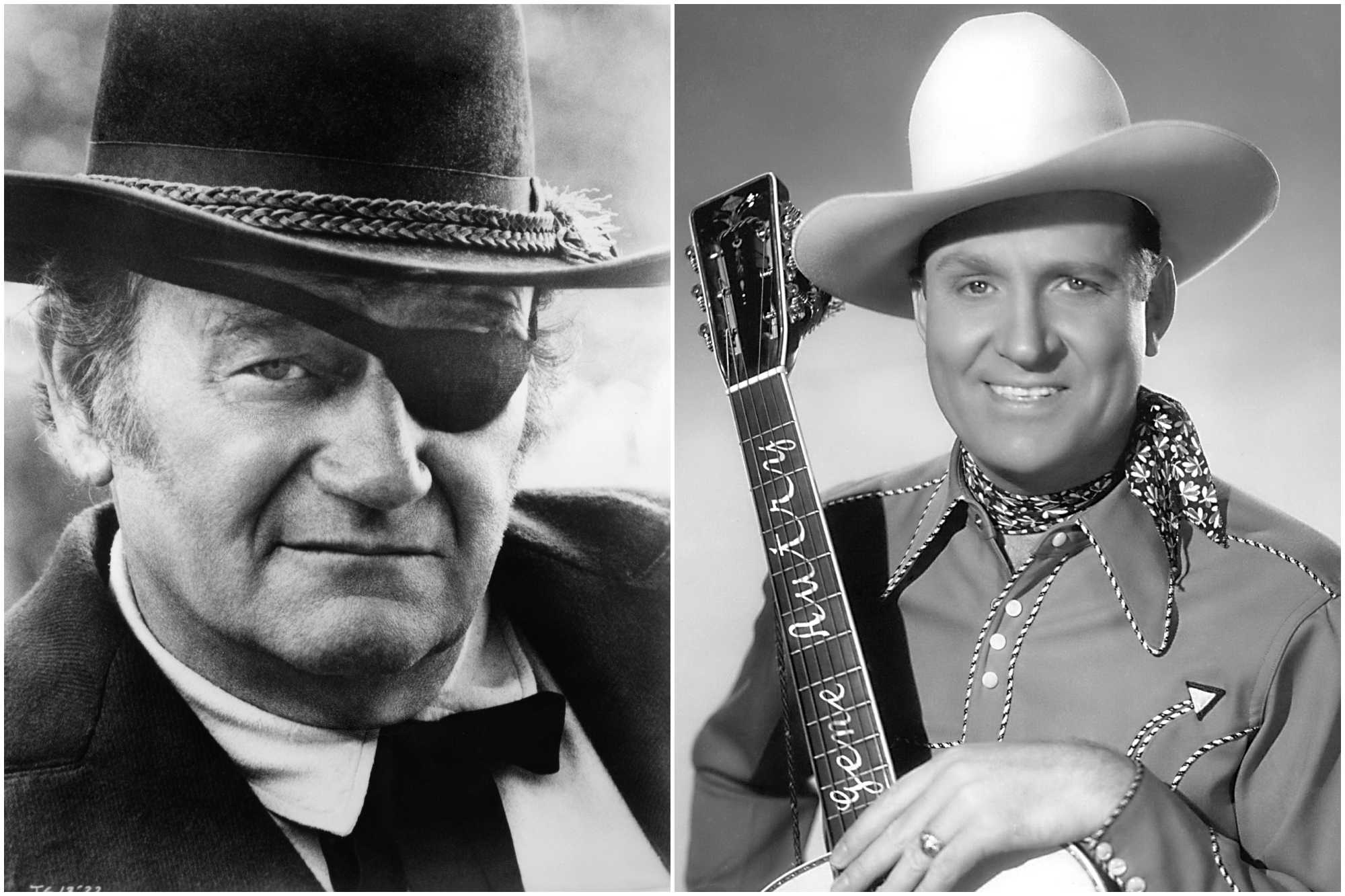
- John Wayne: Wayne commanded massive salaries for major studio films and co-founded Batjac Productions, achieving substantial wealth through film profits and real estate, though he did not venture into professional sports ownership on the scale of Autry.
- Bing Crosby: Crosby represents the closest parallel to Autry in terms of diversified business acumen. Crosby invested early in the National Broadcasting Company (NBC), pioneered magnetic tape recording technology through Ampex, and owned a stake in the Pittsburgh Pirates baseball franchise, demonstrating that multi-industry diversification was the key to true generational wealth in mid-century entertainment.
Wealth Preservation and Philanthropy
Gene Autry’s financial narrative is incomplete without examining his approach to philanthropy and estate preservation. Unlike figures who liquidated fortunes late in life or left estates vulnerable to litigation, Autry established structured legal frameworks and charitable foundations.
The Gene Autry Western Heritage Museum, which opened in Los Angeles in 1988 (later evolving into the Autry Museum of the American West), received substantial financial endowments and artifacts from Autry and his wife. This institution served both as a cultural preservation project and as part of a broader estate management strategy. By the time of his passing, his financial affairs were consolidated to support his surviving spouse and designated cultural institutions, minimizing probate complications and protecting the integrity of his business holdings.
Frequently Asked Questions
What was Gene Autry’s net worth at his peak?
Estimates of Gene Autry’s net worth at the time of his death in 1998 typically ranged between $100 million and $200 million. In the context of the late 1990s, this placed him among the wealthiest figures originating from the golden age of Hollywood, driven largely by his broadcasting empire and the skyrocketing valuation of the California Angels baseball team.
How did Gene Autry make his money outside of acting?
Beyond films and music, Autry generated vast wealth through media ownership via Golden West Broadcasters, strategic Southern California real estate investments, and founding ownership of the Major League Baseball franchise that became the Los Angeles Angels.
Did Gene Autry own the Angels baseball team his entire life?
Autry purchased the expansion franchise in 1960 and remained the majority owner for the rest of his life. After his death in 1998, his estate finalized the sale of the remaining controlling interest to The Walt Disney Company in 1999.
Why was Gene Autry’s business model considered unique for actors of his era?
Most actors in the 1930s and 1940s operated under strict studio contracts that denied them ownership of their films, television shows, or likeness rights. Autry formed his own production company early, retained rights to his music and television programs, and aggressively pursued equity investments in unrelated industries like radio and sports.
How does Gene Autry’s wealth compare to modern entertainment moguls?
While modern entertainment moguls often command billions due to globalized distribution, digital streaming, and massive equity valuations in tech and media conglomerates, Autry’s fortune was exceptionally large for a traditional mid-20th-century performer, achieved through hard asset accumulation and pioneering corporate diversification.
Practical Next Actions for Wealth Contextualization
When studying historical net worth figures like Gene Autry’s, financial researchers and biographers should examine primary corporate filings, probate records, and contemporaneous trade publications rather than relying on speculative entertainment journalism. Understanding how tangible assets—such as real estate, broadcast licenses, and sports franchises—outperform perishable entertainment income provides a timeless lesson in long-term wealth preservation and multi-industry portfolio diversification.
Image Gallery