St. Clair County Jail Inmate Search: Official Roster Lookup, Visitation & Bail Guide
To locate an inmate currently held in a St. Clair County Jail facility, search the official online inmate roster provided by the respective Sheriff's Office in Illinois (Belleville), Michigan (Port Huron), or Alabama (Pell City/Ashvill...
To locate an inmate currently held in a St. Clair County Jail facility, search the official online inmate roster provided by the respective Sheriff's Office in Illinois (Belleville), Michigan (Port Huron), or Alabama (Pell City/Ashville). Searches require the inmate's full legal name, date of birth, or booking ID, and can also be verified through the automated VINELink public notification system.
Contents
Identifying the Right St. Clair County Jurisdiction and Online Rosters
Because three major U.S. counties share the name St. Clair County, confirming the specific state and municipal jurisdiction is the vital first step in conducting an inmate lookup. Each county operates an independent Sheriff's Office and adult detention facility with separate inmate databases, visitation guidelines, and correctional management vendors.
The three primary county correctional operations in the United States include:
- St. Clair County, Illinois (Belleville): The St. Clair County Jail located in Belleville acts as the primary detention center for law enforcement agencies within St. Clair County, IL, including the Illinois State Police, Belleville Police Department, and local municipal forces.
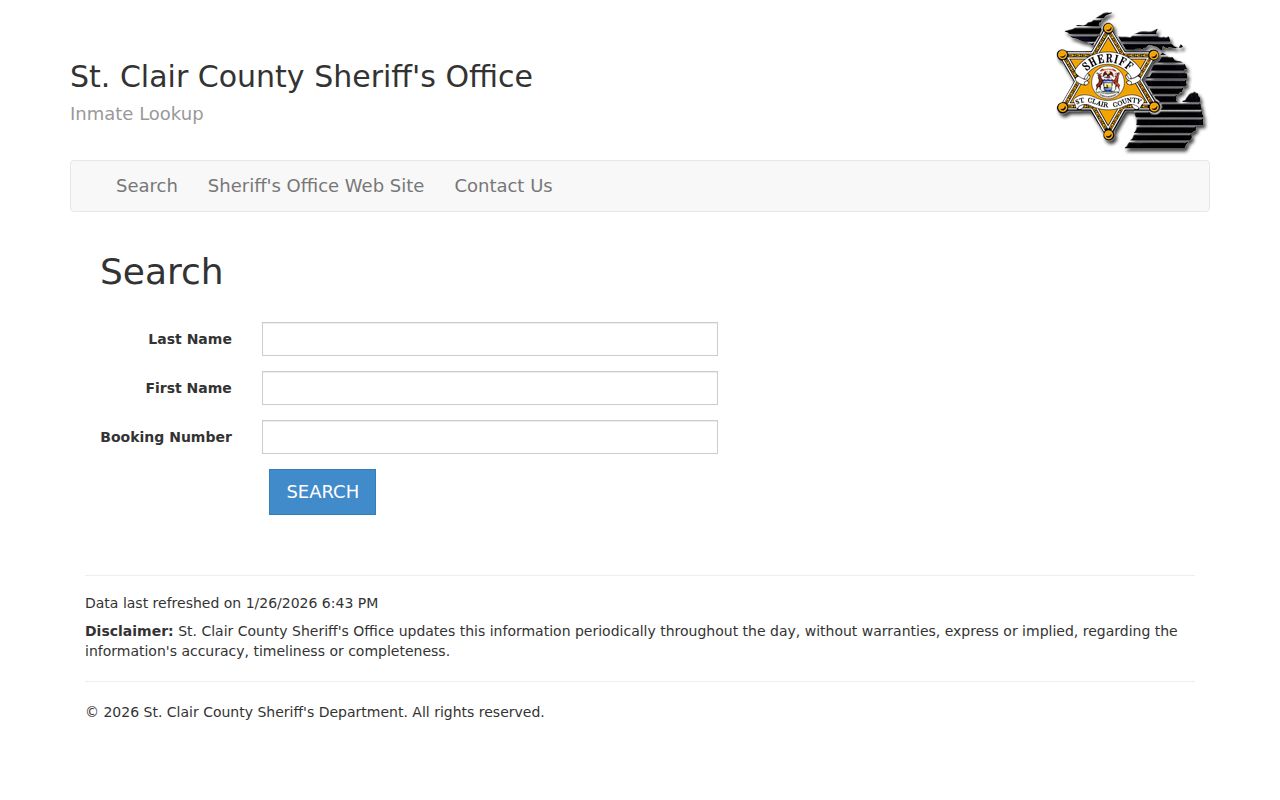
- St. Clair County, Michigan (Port Huron): Managed by the St. Clair County Sheriff's Office in Port Huron, this facility houses pre-trial detainees, sentenced misdemeanants, and short-term felons within eastern Michigan.
- St. Clair County, Alabama (Pell City & Ashville): Operating facilities in both Pell City and Ashville, the St. Clair County Sheriff's Office in Alabama maintains central booking rosters for county arrests and state detainers.
| Jurisdiction & Facility | Physical Address & Contact | Primary Inmate Search Portal | Telecommunications & Commissary Vendors |
|---|---|---|---|
| St. Clair County Jail (Illinois) | 700 N Illinois St, Belleville, IL 62220Phone: (618) 277-3505 | St. Clair County Sheriff Inmate Roster / IL VINELink | Securus Technologies / Inmate Canteen |
| St. Clair County Jail (Michigan) | 1170 Michigan Rd, Port Huron, MI 48060Phone: (810) 987-1700 | St. Clair County MI Sheriff Active Inmate Search | Smart Communications / GTL (ViaPath) |
| St. Clair County Jail (Alabama) | 1610 Cogswell Ave, Pell City, AL 35125Phone: (205) 884-3333 | St. Clair County AL Sheriff Inmate Query | CityTeleCoin / JailATM |
How to Conduct an Official St. Clair County Inmate Lookup
Searching for an incarcerated individual requires basic identifying information to navigate municipal and county criminal justice records accurately. Most county detention facilities update their active inmate lists throughout the day as individuals complete the booking process or are released on bond.
1. Online Active Booking Rosters
The fastest method to locate an individual is through the official online search engine maintained by the local Sheriff's Office. To execute an effective lookup:
- Navigate to the designated Sheriff's Office domain for the target state (IL, MI, or AL).
- Enter the subject's exact legal primary last name and first name. Avoid using nicknames, aliases, or informal abbreviations.
- Filter results using known secondary identifiers, such as date of birth (DOB), middle initial, or booking date.
- Review the search output, which typically displays the inmate's full name, booking photograph (mugshot), arresting agency, primary criminal charges, bail/bond amounts, and upcoming court appearance schedules.
Public Records Disclosure Notice Inmate booking information is classified as public record under state freedom of information statutes. However, records for juvenile offenders, individuals held under federal protective custody, or sealed court orders will not appear on public jail search portals.
2. Using the VINELink Victim Notification System
If an individual does not immediately appear on a county web portal, the Victim Information and Notification Everyday (VINELink) platform provides real-time custody updates. By registering through the state-specific VINE portal, family members, victims, and legal representatives can receive automated phone calls, text messages, or emails whenever an inmate's custody status changes, including transfers, bond postings, or releases.
3. Direct Phone Inquiries with Central Booking
When online systems undergo maintenance or when urgent verification is required, contact the facility's Central Booking or Records Division directly. Be prepared to provide staff with:
- The inmate's legal full name and date of birth.
- The approximate time and location of the arrest.
- Your relationship to the detainee (to determine what non-public legal status details can be shared).
Inmate Contact Procedures: Mail, Phone Calls, and Messaging
Maintaining contact with incarcerated family members or clients requires strict compliance with facility policies. Security rules regulate mail processing, telephone access, and electronic messaging across all St. Clair County adult detention centers.
Postal Mail Regulations and Addressing Requirements
County jails enforce rigid contraband policies to maintain institutional security. Standard postal correspondence must adhere to specific formatting guidelines:
- Standard Mail Envelope Setup: Incoming letters must include the inmate's full legal name, booking identification number, and the official facility mailing address with a complete return address.
- Prohibited Items: Do not include polaroid photographs, stickers, stamps, cash, paper clips, staples, metallic ink, glitter, perfume, or food items. Any incoming envelope exhibiting foreign substances will be discarded without delivery.
- Digital Mail Scanning: Many facilities process incoming personal mail through off-site digital scanning centers. Staff scan paper mail into digital files, which inmates read via secure wall-mounted kiosks or tablet devices. Physical mail is then shredded per facility protocol.
- Publication Orders: Books, magazines, and newspapers must be ordered directly from recognized commercial publishers or distributors (such as Amazon, Barnes & Noble, or publisher warehouses) and shipped directly to the facility address in softcover format.
Phone System Registration and Call Funding
Inmates cannot receive incoming phone calls under any circumstances. Outgoing calls are placed through approved correctional telecommunications providers on a collect or pre-paid basis.
- Account Registration: Recipients of inmate phone calls must establish an account with the facility's contracted vendor (such as Securus Technologies, GTL, or CityTeleCoin).
- Pre-Paid Accounts: Funding an account allows an inmate to dial landline or mobile numbers assigned to the account holder. Federal Communications Commission (FCC) regulations cap the maximum per-minute rate for correctional phone calls.
- Call Monitoring: All telephone conversations, excluding privileged attorney-client communications, are subject to real-time monitoring and recording by law enforcement authorities.
Electronic Messaging (E-Messaging)
Digital messaging tools allow friends and family to send electronic text letters and digital photos to inmates. Users create an account through the official jail software vendor, purchase digital stamps, and send messages electronically. Jail staff screen all incoming electronic messages prior to delivery to inmate tablet interfaces.
Depositing Commissary Funds and Managing Inmate Accounts
Inmates rely on commissary funds to purchase secondary personal hygiene items, over-the-counter medications, stationery supplies, snacks, and extra clothing items not provided by basic facility provisions.
- Commissary Deposit Methods:
- Online Portal: Authorized Vendor: Inmate Canteen / JailATM / Securus
- Lobby Kiosk: Cash, Debit, or Credit Card at Facility Entry
- Money Order: USPS Money Order Sent via Mail with Booking Number
- Central Inmate Trust Fund Account Processing
- Inmate Purchasing / Weekly Deductions
Approved Deposit Channels
- Online Deposit Services: Web portals provided by contracted vendors allow immediate electronic deposits using credit or debit cards. Service fees apply based on the deposit amount.
- On-Site Lobby Kiosks: Self-service kiosks located in the detention center public lobby accept cash, credit cards, or debit cards 24 hours a day, 7 days a week.
- Mail-In Money Orders: Some facilities accept United States Postal Service (USPS) money orders made payable to the inmate trust fund. The inmate's full legal name and booking ID must be listed in the memo line. Personal checks, cashier's checks, and cash sent through the mail are strictly rejected.
Account Rules and Hold Regulations
Funds deposited into an inmate account are subject to administrative deductions for outstanding medical co-pays, facility damage fees, or initial booking processing costs before remaining funds become available for commissary store purchases.
Visitation Guidelines, Scheduling, and Security Protocols
Visiting an inmate in a St. Clair County facility requires advance scheduling, strict adherence to security dress codes, and valid government-issued identification.
Types of Visitation
Facilities offer two main forms of visitation:
- On-Site Video Visitation: Visitors travel to the jail facility and communicate with the inmate through a video terminal located in the lobby area.
- Remote Video Visitation: Visitors schedule and conduct video visits from home using a computer, smartphone, or tablet equipped with a camera and high-speed internet connection. Fees are assessed per minute or per session block.
- In-Person Contact Visitation: Generally restricted to legal counsel, law enforcement officials, and specific court-ordered administrative exceptions.
Mandatory Visitor Qualifications and Protocols
To secure visitation privileges, every visitor must fulfill established security benchmarks:
Mandatory Entry Requirements All adult visitors (aged 18 and older) must present a valid, unexpired government photo ID, such as a state driver's license, state identification card, military ID, or passport. Minors must be accompanied by a legal parent or guardian at all times.
- Advance Scheduling: Visits must be booked at least 24 to 48 hours prior to the requested time slot using the online visitation portal or lobby kiosk. Walk-in visits are typically not permitted.
- Background Screening: Individuals with outstanding warrants, active protective orders involving the inmate, or recent felony convictions within the facility's restricted timeframe are barred from entry.
- Dress Code Enforcement: Visitors must wear modest attire. Prohibited items include short shorts, skirts above mid-thigh, low-cut tops, sheer or see-through clothing, gang-affiliated insignia, and clothing featuring offensive language or graphics.
- Prohibited Belongings: Purses, bags, cell phones, smartwatches, food, drinks, and weapons of any kind are strictly forbidden inside visitor areas. Lockers may be available in the public lobby to store personal items.
Posting Bail and Legal Release Procedures
When a judicial officer assigns a monetary bail or bond, paying the court-mandated sum secures an inmate's release from custody pending trial. Bail rules differ depending on the jurisdiction and state laws governing pre-trial detention.
Common Types of Bail Bonds
- Cash Bond: The full bail amount is paid directly to the court clerk or jail booking counter in cash or certified funds. The full amount (minus administrative fees) is refunded once the defendant completes all required court appearances.
- Surety Bond: A licensed bail bondsman posts the total bond on behalf of the defendant. The indemnitor pays the bondsman a non-refundable fee (typically 10% of the total bail amount) and often pledges collateral to secure the agreement.
- Recognizance Bond (I-Bond / Own Recognizance): The court permits the defendant to be released on their signature without posting immediate cash, based on their agreement to attend all future judicial proceedings.
- Property Bond: Real estate equity within the county is pledged as collateral to satisfy the total bond requirement, requiring formal property assessments and lien filings.
Step-by-Step Bail Posting Process
- Confirm Bond Status: Call central booking or check the online inmate roster to confirm the exact bond type and dollar amount assigned by the magistrate.
- Choose the Method of Payment: Gather cash, certified cashier's checks, or contact a licensed bail bondsman operating within the county jurisdiction.
- Present Documentation: Deliver the funds along with valid government photo identification to the designated bail window at the county courthouse or jail facility.
- Processing Time: Once the bond is verified and accepted, discharge processing takes anywhere from 2 to 8 hours depending on facility staffing, ongoing intake volume, and court clearing procedures.
Frequently Asked Questions
How can I search for an inmate in St. Clair County for free?
You can search for an inmate for free by accessing the official Sheriff's Office website for the specific St. Clair County jurisdiction (Illinois, Michigan, or Alabama) and using their public inmate lookup portal. Alternatively, you can use the state-specific VINELink system online or via telephone at no cost.
Detailed search results will display active custody status, primary charges, mugshots, and set bail amounts without requiring paid subscriptions or search fees.
What information do I need to look up an inmate in St. Clair County Jail?
To look up an inmate, you need their full legal name and their date of birth or approximate age. Having the inmate's booking number, state ID number, or exact arrest date will refine your search results and eliminate confusion with individuals who share similar names.
If you lack exact details, call the jail's central booking line and provide the full name and any known identifying details to an intake deputy.
Can inmates in St. Clair County Jail receive incoming phone calls?
No, inmates cannot receive incoming phone calls under any facility security rules. If you need to speak with an inmate, you must set up an account with the jail's authorized telecommunications provider so the inmate can place an outgoing call to your phone line.
Emergency calls regarding family crises must be routed through the jail chaplain or senior shift supervisor, who will verify the emergency before permitting a special administrative call.
How do I deposit money into an inmate's commissary account?
You can deposit commissary funds online through the jail's approved payment portal vendor, by visiting the self-service lobby kiosk inside the facility entry, or by mailing a USPS money order containing the inmate's full name and booking ID.
Be aware that electronic card transactions carry third-party processing fees, while lobby cash kiosks or postal money orders offer lower fee structures depending on facility vendor rules.
How long does it take for an inmate to be released after bail is posted?
Release processing generally takes between 2 to 8 hours after the court or booking clerk accepts the bond payment. Variations in release times depend on current intake volume, shift changeovers, pending warrant checks, and administrative paperwork clearance.
Ensure that the person posting bond provides accurate contact details to the release desk so staff can notify them when the individual is prepared for discharge from the facility lobby.
For legal advice, specific court date changes, or official case inquiries, contact the Clerk of the Circuit Court in the respective county jurisdiction or speak directly with a licensed defense attorney representing the individual.
Image Gallery