Understanding the Integrated Teaching and Learning Program: A Comprehensive Guide to Modern Pedagogy
The Integrated Teaching and Learning (ITL) program offers a revolutionary approach to education by synthesizing theoretical classroom instruction with hands-on, interdisciplinary practice. By breaking down the silos between academic di...
The Integrated Teaching and Learning (ITL) program offers a revolutionary approach to education by synthesizing theoretical classroom instruction with hands-on, interdisciplinary practice. By breaking down the silos between academic disciplines—specifically within engineering, technology, and applied sciences—the program provides students with access to state-of-the-art laboratories, collaborative design spaces, and real-world project management experience designed to mirror the complexities of the 2026 global workforce.
Contents
The Evolution of the Integrated Teaching and Learning Model
The concept of an Integrated Teaching and Learning program emerged from a critical need to evolve beyond the "lecture-and-exam" format that dominated the 20th century. Traditionally, subjects like mathematics, physics, and creative design were taught in isolation. However, modern professional environments require practitioners who can navigate the intersections of these fields.
An ITL program functions as both a physical space and a pedagogical philosophy. It is designed to foster an environment where students do not just learn about a concept but immediately apply it using industry-standard tools. As of 2026, these programs have become the gold standard for institutions aiming to produce "work-ready" graduates who possess both deep technical knowledge and the "soft skills" of teamwork, communication, and ethical decision-making.
The primary goal of the program is to increase student retention and engagement. Data over the last decade has consistently shown that students are more likely to succeed when they understand the context of their studies. By integrating various subjects into a cohesive project-based curriculum, the ITL model ensures that the "Why" is answered alongside the "How."
Core Offerings of a High-Performance ITL Program
While specific offerings can vary by institution, a standard Integrated Teaching and Learning program focuses on several key pillars that differentiate it from traditional academic departments. These offerings are structured to support students from their first year through graduation.
1. Hands-on Laboratory Access and Fabrication
At the heart of the ITL program is the laboratory environment. Unlike traditional labs that are reserved for specific research tiers, ITL labs are often "open-access" or "hands-on," allowing undergraduate students to interact with sophisticated equipment early in their academic careers.
- Electronics and Micro-processing: Facilities for circuit design, soldering, and testing embedded systems.
- Manufacturing and Prototyping: Access to 3D printers (polymer and metal), CNC machines, laser cutters, and traditional woodworking or metalworking tools.
- Specialized Testing: Wind tunnels, materials testing machines (tensile/compression), and fluid dynamics benches.
2. Interdisciplinary Curriculum Design
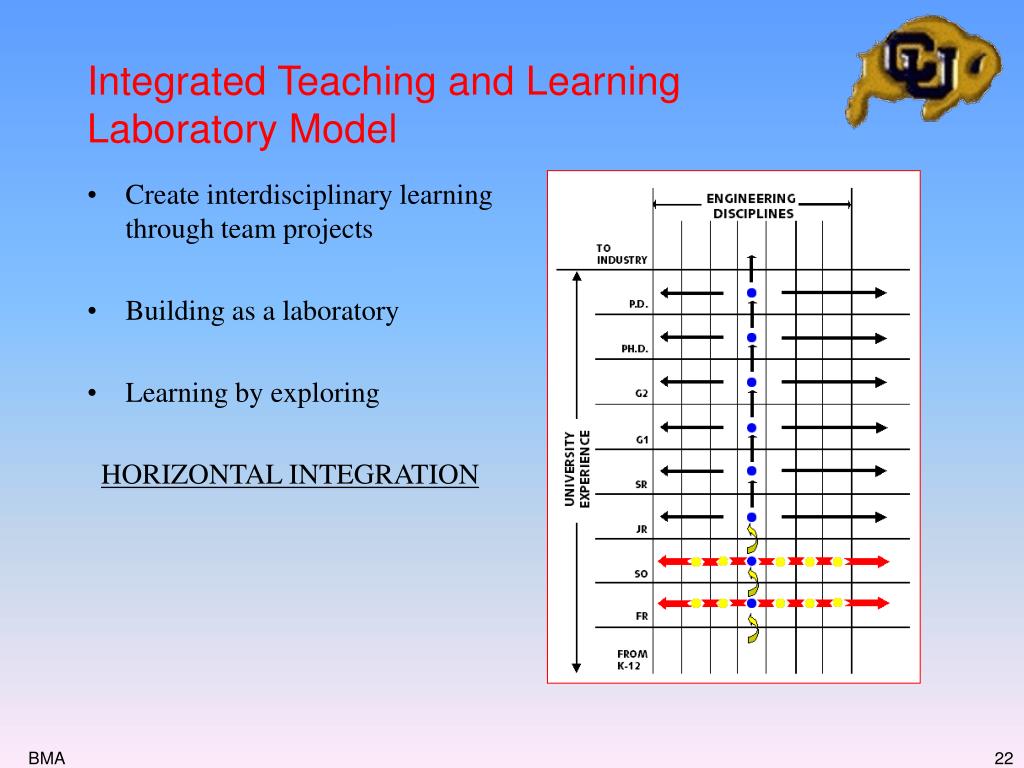
The ITL program offers a curriculum that blends multiple disciplines into single courses. For example, a "First-Year Design" course might require students to apply principles of physics, computer programming, and environmental science to build a sustainable energy harvester. This horizontal integration ensures that students see the connections between disparate classes they may be taking simultaneously.
3. Professional Skill Development
Beyond technical prowess, the ITL program focuses heavily on the "Engineer of 2026" profile. This includes:
- Collaborative Teamwork: Most projects are group-based, requiring students to navigate personality differences, leadership roles, and shared accountability.
- Technical Communication: Students are taught how to document their designs, write professional reports, and present their findings to both technical and non-technical audiences.
- Project Management: Programs often incorporate Agile or Scrum methodologies, teaching students how to manage budgets, timelines, and resource allocation.
4. Community and K-12 Outreach
Many ITL programs, most notably the pioneering ITL Program at the University of Colorado Boulder, offer extensive outreach initiatives. These programs provide a platform for university students to mentor younger generations, reinforcing their own knowledge by teaching complex concepts to K-12 students. This creates a pipeline of interest in STEM fields and fosters a sense of social responsibility.
Comparing Traditional Learning vs. Integrated Teaching and Learning
To understand the value proposition of an ITL program, it is helpful to compare it against the traditional instructional models that were prevalent prior to the widespread adoption of integrated systems.
| Feature | Traditional Learning Model | Integrated Teaching & Learning (ITL) |
|---|---|---|
| Instruction Style | Passive (Lecture-heavy) | Active (Project-based) |
| Subject Delivery | Siloed (Separate subjects) | Interdisciplinary (Synthesized) |
| Problem Solving | Theoretical/Textbook-based | Real-world/Open-ended |
| Lab Access | Restricted to upper-class/researchers | Early-access/Undergraduate-focused |
| Assessment | Examinations and individual papers | Peer review, prototypes, and presentations |
| Technology Integration | Supplemental | Central and Essential |
| Soft Skills | Secondary or omitted | Formally integrated into the core curriculum |
Technical Infrastructure and Resource Management
An Integrated Teaching and Learning program is more than just a set of courses; it is a resource-intensive infrastructure. To offer these benefits, institutions must invest heavily in both physical space and personnel.
The Role of Design Centers
Modern ITL programs usually center around a "Design Center" or "Invention Hub." These spaces are characterized by their flexibility—mobile furniture, abundant power outlets, and high-speed wireless connectivity. In 2026, these centers are also equipped with Digital Twin technology, allowing students to simulate their designs in a virtual environment before proceeding to physical fabrication. This reduces waste and allows for more rapid iteration.
Staffing and Mentorship
Unlike a standard department that may only employ professors and TAs, an ITL program offers access to "Laboratory Coordinators" and "Industry Mentors." These individuals provide safety training, technical troubleshooting, and career advice. This mentorship is a crucial offering, as it bridges the gap between academic theory and the practical "tricks of the trade" used in the industry.
Safety and Compliance
Because ITL programs offer early access to dangerous machinery, a significant part of the program offering is a rigorous, tiered safety certification system. Students earn "badges" or certifications as they progress, which not only ensures a safe working environment but also provides them with a portfolio of verified skills that can be shown to potential employers.
The Pedagogical Framework: Why the ITL Model Works
The success of the ITL program is rooted in Constructivism, a learning theory which suggests that humans construct knowledge through experiences and reflections. By offering a platform where students "build to learn," the ITL program aligns with several cognitive learning principles.
Problem-Based Learning (PBL)
The program offers "Open-Ended Challenges." Instead of being given a problem with a single correct answer, students are given a goal—such as "reduce the carbon footprint of this campus building by 20%." They must then research, design, and justify their own solution. This mirrors the ambiguity of professional life, where there is rarely a "back of the book" answer.
Just-in-Time Learning
In an integrated environment, students often encounter a need for a specific piece of knowledge (e.g., how to calculate torque) right when they are trying to solve a physical problem. The ITL program facilitates "Just-in-Time" instruction, where faculty provide targeted lessons exactly when the information is most relevant to the project at hand. This significantly increases information retention.
Eligibility and Requirements for Participation
While specific requirements vary, most Integrated Teaching and Learning programs are housed within University Colleges of Engineering or Applied Science.
- Prerequisites: Students generally need a foundation in basic mathematics (Calculus I or equivalent) and an introduction to computing.
- Enrolment Status: While primarily for matriculated students, many programs offer "Professional Certificates" for industry workers looking to upskill in modern design methodologies.
- Technology Requirements: In 2026, students are typically expected to have a mobile workstation capable of running CAD (Computer-Aided Design) software and simulation environments. Many programs provide "Virtual Desktop Infrastructure" (VDI) to ensure students can access high-powered software from any device.
Common Challenges and Limitations
Despite the extensive offerings, ITL programs are not without challenges. It is important for prospective students and administrators to recognize these factors:
- Time Intensity: Project-based learning often requires more hours in the lab than a traditional lecture requires in the library. Students must possess strong time-management skills.
- Resource Constraints: Because the program offers access to expensive consumables (3D printing filament, circuit components, raw metals), there may be lab fees associated with specific courses.
- Group Dynamics: The heavy reliance on team projects means that a student's grade can sometimes be influenced by the performance of their peers, which can be a source of stress.
Frequently Asked Questions
What is the difference between an ITL program and a standard engineering degree?
A standard engineering degree often focuses on theoretical mastery within a specific branch (e.g., Mechanical Engineering). An ITL program offers a layer of integration on top of that degree, focusing on cross-disciplinary projects, hands-on fabrication, and professional skill development that spans all engineering branches.
Can non-engineering students participate in an ITL program?
Many institutions are moving toward "Integrated Learning for All." While the core of many ITL programs is engineering-based, they often offer "Design Thinking" or "Maker Space" electives to students in business, arts, and sciences to encourage diverse perspectives in problem-solving.
How does the ITL program prepare students for the 2026 job market?
The 2026 job market values adaptability and "T-shaped" skills (deep expertise in one area, broad ability to collaborate across others). By offering experience with interdisciplinary teams and sophisticated prototyping technology, the ITL program ensures students have a portfolio of physical work, not just a transcript of grades.
Are there extra costs associated with the ITL program?
Most programs include access to basic facilities in the standard tuition. However, specialized materials for senior capstone projects or advanced certifications (like high-end robotic operation) may incur additional lab fees or material costs.
Does the program offer online or hybrid options?
While the "Teaching" aspect can be hybrid, the "Learning" aspect of an ITL program is heavily reliant on physical presence in laboratories. In 2026, some programs offer "Remote Labs" where students can control equipment via the cloud, but the most value is found in the in-person, collaborative environment.
Next Steps for Prospective Participants
If you are a student or a professional looking to engage with an Integrated Teaching and Learning program, your first step should be to audit the specific "Design Facilities" of your chosen institution. Look for programs that offer a clear path from "Foundational Design" in year one to a "Capstone Design Project" in your final year.
For educators and administrators, implementing an ITL model requires a shift from being a "sage on the stage" to a "guide on the side." This involves restructuring physical spaces to prioritize student collaboration and investing in staff who can maintain complex fabrication equipment.
Ultimately, the Integrated Teaching and Learning program offers a pathway to mastery that is as much about personal growth and professional identity as it is about technical competence. By participating, you are not just earning a degree; you are joining a community of practice dedicated to solving the world’s most pressing challenges through integrated innovation.
Image Gallery