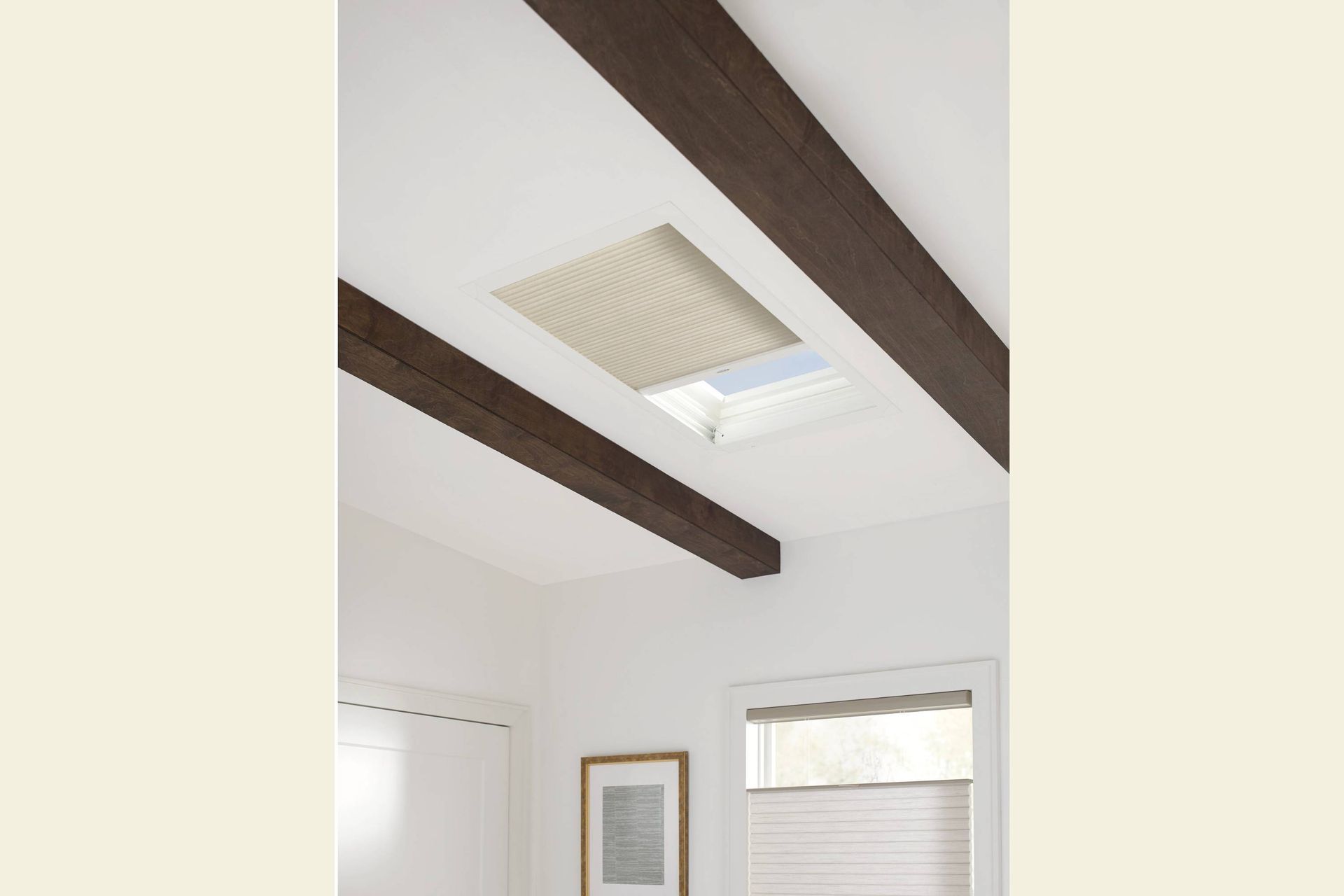
How to Get Cheap Skylight Blinds: A Complete 2026 Buyer’s Guide
To get cheap skylight blinds without sacrificing quality, focus on purchasing multi-fit compatible blinds from third-party manufacturers rather than original equipment manufacturer (OEM) brands. By identifying the unique make and model...
To get cheap skylight blinds without sacrificing quality, focus on purchasing multi-fit compatible blinds from third-party manufacturers rather than original equipment manufacturer (OEM) brands. By identifying the unique make and model code on your window’s ID plate, you can source high-quality "unbranded" alternatives that offer the same blackout and thermal benefits at 40% to 60% less than the retail price of branded versions.
Contents
Skylights, often referred to by brand names like Velux, Fakro, or RoofLITE, are a popular architectural choice for 2026 home designs, providing essential natural light and ventilation. However, their unique positioning makes them prone to excessive heat gain in the summer and heat loss in the winter. While branded accessories are expensive, the secondary market for skylight coverings has matured significantly, offering homeowners various avenues to save money while maintaining energy efficiency and aesthetic appeal.
Understanding the Price Gap: OEM vs. Compatible Blinds
The primary reason skylight blinds are traditionally expensive is the proprietary nature of the window frames. For decades, manufacturers like Velux designed specific fitting systems (such as Pick&Click!™) that discouraged the use of generic products.
In 2026, the market is vastly different. Third-party manufacturers now produce "compatible" blinds that are engineered to fit these specific frames perfectly. These are not "universal" blinds—which often fit poorly—but rather precision-engineered alternatives.
Why Branded Blinds Cost More
Branded blinds carry a premium due to extensive marketing budgets, patented installation hardware, and integrated smart-home technology. When you buy a branded blind, you are paying for the logo and the guarantee of a five-minute installation. While the quality is undeniably high, the material costs do not always justify the 100% markup over high-end compatible versions.
The Rise of High-Quality Compatibles
Companies like Itzala and various specialist retailers have filled the gap by offering blinds that use the same polyester fabrics and aluminum side rails as the major brands. By choosing a compatible blind, you are opting for the same functional performance—light blockage and thermal insulation—without the brand-name surcharge.
Step 1: Identifying Your Window Code (The Key to Savings)
The most common mistake homeowners make is attempting to measure the glass area with a tape measure. Custom-made blinds are significantly more expensive than "code-based" blinds. To get the cheapest price, you must find the data plate located on the top of the window sash.
- Open the Skylight: Tilt the window toward you.
- Locate the Plate: Look for a small metal or plastic plate on the top edge of the frame.
- Note the Code: You will see a brand (e.g., Velux), a model (e.g., GGL), and a size code (e.g., MK04 or 304).
Using this code allows you to shop at discount online warehouses. Because these retailers stock thousands of blinds pre-cut to these specific industrial standards, the prices are drastically lower than a bespoke blind cut to your manual measurements.
Step 2: Choosing the Right Type for Your Budget
Not all skylight blinds are created equal. The mechanical complexity of the blind dictates its price. If your goal is to minimize costs, you must choose the right style.
Manual Roller Blinds
This is the most cost-effective option. It consists of a simple fabric sheet that rolls up into a cassette. These are ideal for rooms where you only need basic light filtering. In 2026, even budget roller blinds often feature "hook-in" positions, allowing you to set the blind at three different heights.
Blackout Blinds
While slightly more expensive than standard rollers, blackout blinds offer the best value for bedrooms. They feature a side-channel system that prevents light leakage around the edges. In 2026, "cheap" blackout blinds now almost universally include a silver thermal backing, which helps reflect solar heat, potentially saving you more on cooling costs than the blind itself costs to purchase.
Honeycomb (Cellular) Blinds
These are generally the most expensive manual option, but they provide the highest thermal resistance (R-value). If you live in a climate with extreme temperature swings, the extra $20–$30 spent on a honeycomb structure can be recouped through energy savings within a single season.
Comparing Costs: Branded vs. Budget Alternatives
The following table outlines the estimated price differences for a standard-size skylight (e.g., MK04 size) in 2026 prices.
| Blind Type | Branded (OEM) Price | High-End Compatible | Budget No-Brand |
|---|---|---|---|
| Basic Roller | $90 - $110 | $45 - $55 | $30 - $35 |
| Blackout (Manual) | $120 - $150 | $60 - $75 | $40 - $50 |
| Honeycomb/Thermal | $160 - $200 | $85 - $105 | $65 - $75 |
| Solar Powered | $350 - $500 | $180 - $250 | N/A |
Note: Prices are estimates based on 2026 market trends and may vary by region and shipping costs.
Where to Buy Cheap Skylight Blinds
To secure the lowest prices, avoid physical showrooms and "big box" home improvement stores, which often have high overheads. Instead, look toward specialized online portals.
- Dedicated Discount Retailers: Sites that specialize exclusively in skylight accessories often buy in bulk and pass the savings on.
- eBay and Amazon Warehouses: Often, customers return blinds because they ordered the wrong size code. These "open box" items are usually functional and discounted by up to 50%.
- Refurbished Outlets: Some manufacturers have official outlets where they sell previous-generation styles or minor cosmetic seconds.
DIY Installation: Saving on Labor
In 2026, professional installation for a single skylight blind can cost between $75 and $150. However, modern skylight blinds are designed for consumer installation. Most compatible blinds now use a "four-screw system."
- Mount the Cassette: Slide the top housing into the pre-fitted brackets or screw it into the top of the frame.
- Attach Side Rails: Align the side channels with the edges of the window.
- Secure the Bottom: Snap the rails into the bottom corners.
- Connect the Cords: Most modern budget blinds come with pre-tensioned cords that simply hook into the bottom of the rails.
By performing the installation yourself, you effectively halve the total cost of the project.
Common Mistakes to Avoid
When chasing the lowest price, it is easy to fall into traps that result in wasted money or a poor-quality product.
- Ignoring the U-Value: A very cheap blind with no thermal coating may save you $10 today but cost you $50 in increased heating bills over the winter. Always check if the fabric has a reflective or "pvc-free" thermal lining.
- Measuring Manually: As mentioned, avoid manual measurements unless your skylight is a rare, custom-built timber frame with no ID plate. Branded frames have specific tolerances that manual measurements rarely capture accurately.
- Forgetting the Opening Pole: If your skylight is out of reach, a "cheap" manual blind is useless without a telescopic pole. Ensure you factor this into your budget, or look for "bundle deals" where a pole is included at a discount.
Maintenance for Longevity
Cheap blinds can last as long as branded ones if maintained. The most common failure point is the internal tensioning cord. To prolong the life of budget blinds, avoid "snapping" the blind shut. Use a smooth, consistent motion, and keep the side rails free of dust and debris which can cause friction and wear down the cords.
Frequently Asked Questions
Are compatible blinds as good as the original brands?
In terms of fabric quality and light exclusion, the difference is negligible. The main difference usually lies in the aesthetics of the aluminum side rails and the smoothness of the sliding mechanism. Branded blinds often have a more "premium" feel, but compatibles perform the core tasks of shading and insulation equally well.
Can I get cheap electric or solar skylight blinds?
Solar-powered blinds are rarely "cheap" in the traditional sense, but they are significantly cheaper than hard-wired electric blinds because they don't require an electrician. To save money here, look for third-party solar kits that can be retrofitted to existing manual blinds, though this requires some technical skill.
How do I know if a "cheap" blind will fit my old window?
Even if your skylight is 20 years old, the size codes remain standardized. As long as you have the code from the data plate, a 2026 compatible blind will fit. If the plate is missing, you must measure the internal width and height of the glass and contact a specialist retailer to match it to the nearest standard code.
Does color affect the price of the blind?
Usually, yes. Manufacturers mass-produce standard colors like white, grey, and beige. Opting for a "specialty" color or a patterned fabric can increase the price by 20% to 30%. For the absolute cheapest price, stick to the "Essential" or "Standard" color ranges.
Is it safe to buy skylight blinds from international marketplaces?
While prices on sites like AliExpress or Temu can be tempting, be cautious about shipping times and return policies. Skylight blinds are long and fragile; if they arrive bent, returning them to an international seller can be more expensive than the blind itself. It is usually safer to buy from a domestic discount retailer.
Final Recommendation
For the best balance of cost and performance in 2026, purchase a high-quality compatible blackout blind with thermal backing. Avoid the cheapest non-thermal options, as the energy savings from a thermal-backed blind will pay for the price difference within months. Always use your window's size code to shop online, and perform the DIY installation to avoid labor fees. By following this strategy, you can outfit an entire home with functional, stylish skylight coverings for the price of just one or two branded units.
Image Gallery