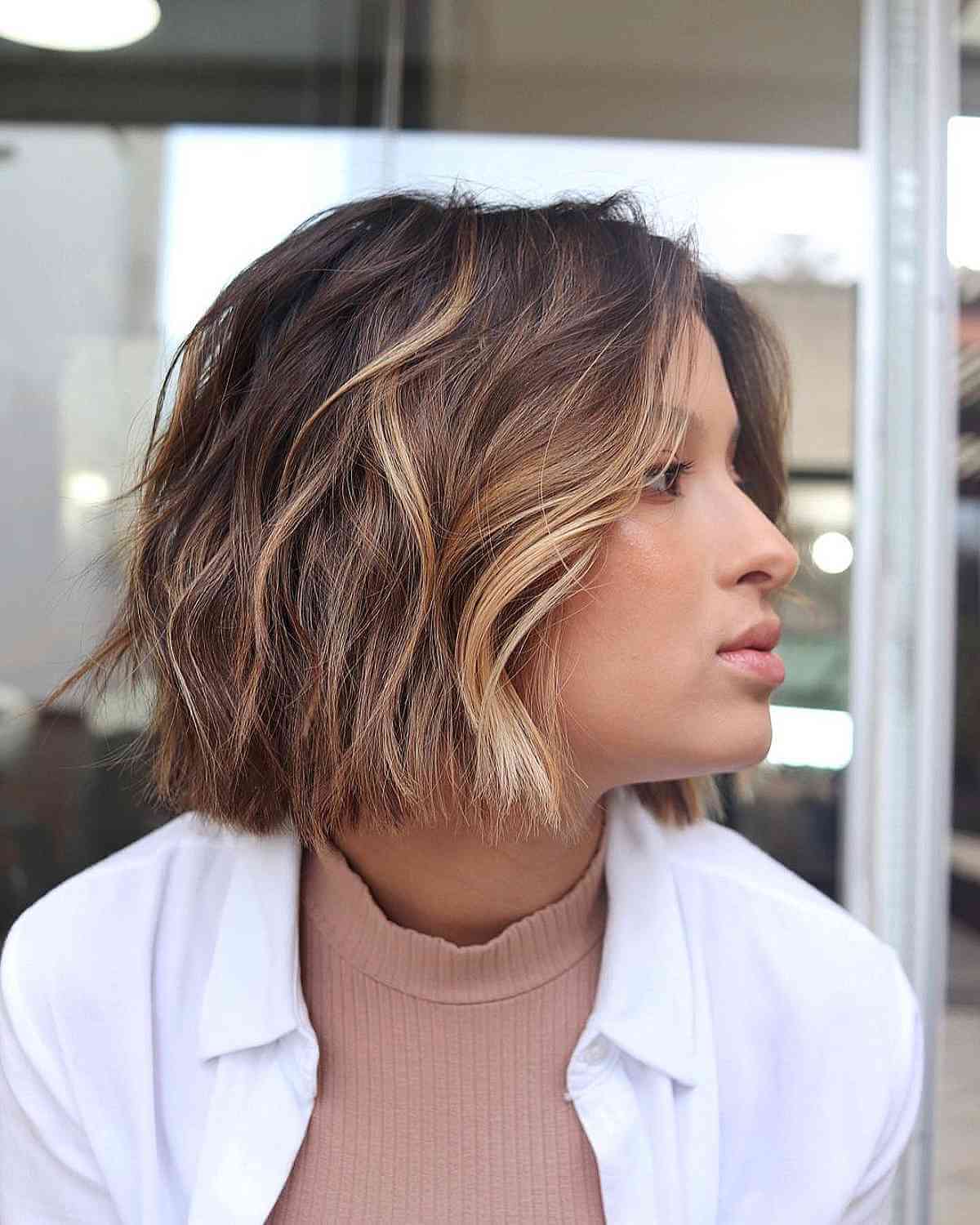
Short Hair with Blonde and Brown Highlights: 2026 Dimensional Color Guide
Short hair with blonde and brown highlights offers a sophisticated, multi-dimensional aesthetic that adds volume and movement to shorter lengths like bobs, pixies, and lobs. By blending warm or cool brown bases with strategically place...
Short hair with blonde and brown highlights offers a sophisticated, multi-dimensional aesthetic that adds volume and movement to shorter lengths like bobs, pixies, and lobs. By blending warm or cool brown bases with strategically placed blonde accents, stylists create depth that prevents short cuts from appearing flat or monochromatic. This color combination is the premier choice in 2026 for those seeking a low-maintenance yet high-impact transformation.
Contents
The Evolution of Dimensional Color for Short Hair in 2026
In the current 2026 beauty landscape, the "flat color" era has been entirely replaced by high-contrast, multi-tonal techniques. Short hair, which inherently has less surface area to showcase color gradients, requires a specialized approach to highlighting. The goal is no longer just "adding stripes" but rather creating a "lived-in" look that mimics how natural sunlight interacts with hair fibers.
Blonde and brown highlights—often referred to in the industry as "Bronde"—serve as a bridge between light and dark. For short hair, this is particularly effective because it allows for visual "contouring." Darker brown tones can be placed around the nape and under-layers to create a shadow effect that makes the hair look thicker, while blonde highlights on the crown and face-framing pieces (the "money piece") brighten the complexion and draw attention to facial features.
The technical proficiency required for these applications has increased. Professional colorists now focus on "interstitial depth," ensuring that the transition from a Level 5 Mocha to a Level 9 Champagne blonde is seamless, even on hair that is only three to five inches long.
Choosing the Right Tonal Palette for Your Skin Undertone
Success with blonde and brown highlights depends heavily on matching the temperature of the dyes to your skin’s natural undertone. In 2026, the trend has shifted toward "expensive neutrals," but specific temperature matching remains the gold standard for professional results.
Warm Undertones (Golden, Olive, or Peachy Skin)
If your skin has warm undertones, your base brown should lean toward mahogany, chestnut, or golden cocoa. The blonde highlights should complement this with honey, caramel, or butterscotch tones. These shades reflect light and provide a healthy, sun-kissed glow to the skin.
Cool Undertones (Pink, Blue, or Ruddy Skin)
For those with cool undertones, the brown base should be an ash brown, mushroom brown, or espresso. The highlights should be icy, such as platinum, ash blonde, or "mushroom blonde." These cool-toned combinations neutralize redness in the skin and provide a chic, edgy aesthetic often seen in modern asymmetrical bobs.
Neutral Undertones
Neutral skin tones have the most flexibility. In 2026, "Greige" (a mix of gray and beige) highlights over a neutral walnut brown base are the top-tier recommendation for those who want a balanced, sophisticated look that works in both professional and casual environments.
Advanced Highlighting Techniques for Short Lengths
The method of application is just as important as the color choice. Short hair requires more precision because there is less room for error in the "blend."
- Micro-Babylights: These are incredibly fine highlights that mimic the hair color of a child. For very short hair or pixies, babylights are essential because they prevent the "leopard spot" look that can occur with traditional foils.
- Balayage-Painted Tips: On a textured pixie or a "bixie" cut, hand-painting the very tips of the hair with blonde creates a "frosted" effect that adds incredible texture and emphasizes the "choppiness" of the cut.
- The Scandi Hairline: This 2026 staple involves lightening the baby hairs and the immediate hairline around the forehead to a bright blonde, while keeping the rest of the hair a mix of brown and blonde. It creates an instant brightening effect on the face.
- Foilyage: This combines the natural look of balayage with the lifting power of foils. It is ideal for dark brown bases that need to reach a high-level blonde without excessive warmth or "brassiness."
Comparison of Highlighting Methods for Short Hair
The following table breaks down the most effective techniques used in 2026 to achieve the blonde and brown look on short hair, including maintenance levels and ideal hair types.
| Technique | Best For | Visual Result | Maintenance Level |
|---|---|---|---|
| Traditional Foils | Classic Bobs | High contrast, structured lines | High (6-8 weeks) |
| Babylights | Fine Hair / Pixies | Natural, shimmering dimension | Medium (8-10 weeks) |
| Balayage | Textured Lobs | Lived-in, sun-kissed, soft roots | Low (12-16 weeks) |
| Money Piece | Face Framing | Bold brightness around the face | Medium (6-8 weeks) |
| Melted Highlights | Thick, Short Hair | Seamless transition from brown to blonde | Low (10-12 weeks) |
Maintenance and Longevity in 2026
Maintaining short hair with blonde and brown highlights requires a two-pronged approach: preserving the tone and protecting the health of the hair. Short hair is often cut more frequently, which helps remove split ends, but the chemical processing of highlights can still lead to porosity issues.
The 2026 Post-Color Protocol
Bond Building Technology Modern hair care in 2026 relies heavily on maleic acid or cystine-based bond builders. Unlike standard conditioners, these penetrate the cortex to relink broken disulfide bonds caused by the bleaching process. Professional-grade treatments like K18 or the latest Olaplex formulations are mandatory for maintaining the structural integrity of highlighted short hair.
Tonal Preservation Blonde highlights over a brown base are prone to "tonal shift." If the hair is warm, it can become brassy (orange); if it is cool, it can become dull or yellow. Stylists recommend a blue-toning shampoo for the brown sections and a violet-toning mask for the blonde sections to keep the contrast crisp.
Heat Protection and UV Shielding Short hair sits closer to the scalp and often receives more direct sun exposure on the crown. Using a lightweight, silicone-free UV protectant prevents the sun from oxidizing the delicate blonde highlights and fading the brown base.
Step-by-Step: The Salon Process for Short Hair Highlights
When you visit a salon in 2026 for this service, the workflow typically follows a highly technical sequence to ensure color accuracy and hair health.
- Consultation and Level Check: The stylist identifies your natural "starting level" (Level 1-10). A typical brown base is Level 4-6, while the desired blonde highlights are usually Level 8-10.
- Sectioning: Short hair is sectioned into smaller quadrants than long hair to ensure every layer receives even saturation.
- Lightener Application: Using a low-volume developer (10 or 20 volume) is preferred for short hair to maintain scalp health and prevent "hot roots."
- Processing with Bond Protectors: The lightener is mixed with a bond-building additive to prevent damage during the lift.
- The Double-Gloss Technique: After rinsing the lightener, two different glosses/toners are applied. One is formulated for the brown base (to add richness and shine) and another for the blonde highlights (to deposit the specific desired tone, such as pearl or honey).
- Precision Cut: The haircut is often refined after the color to ensure the highlights are perfectly positioned according to how the hair naturally falls.
Frequently Asked Questions
Can I achieve blonde and brown highlights on short hair at home?
In 2026, professional colorists strongly advise against DIY highlights for short hair. Because short hair has very little room for error, "bleeding" from foils or overlapping lightener can lead to "cheetah spots" or chemical breakage that is difficult to fix without a significant color correction service.
How often do I need to touch up my highlights?
This depends on the technique used. A full head of traditional foils on a bob usually requires a touch-up every 6 to 8 weeks. However, if you opt for a "lived-in" balayage with a brown root smudge, you can often go 12 to 14 weeks between salon visits, as the regrowth appears intentional and soft.
Will highlighting my short hair make it look thinner or thicker?
When done correctly, highlights make hair look significantly thicker. The contrast between the dark brown shadows and the light blonde highlights creates an illusion of "interstitial space," which gives the hair a three-dimensional appearance and more perceived volume.
What is the best blonde shade for dark brown short hair?
For dark brown bases (Level 3-4), a caramel or "bronde" highlight is best for a natural look. If you want a high-contrast look, a cool-toned ash blonde is recommended, but this will require more maintenance and a higher-lift bleaching process.
Is this look suitable for gray hair coverage?
Yes. Short hair with blonde and brown highlights is one of the most effective ways to blend gray hair. By incorporating the gray into the blonde highlights, the "re-growth line" becomes much less noticeable compared to a solid dark brown color.
Professional Recommendations for 2026
If you are considering short hair with blonde and brown highlights in 2026, the expert recommendation is to prioritize "hair health over lightness." Short hair styles, particularly pixies and structured bobs, rely on the hair's natural shine and "bounce" to look their best. Over-processing to achieve a white-blonde can leave the hair limp and dull.
Instead, aim for a "high-shine" finish using acidic color glosses. This technology, which is standard in 2026, seals the cuticle after highlighting, ensuring that your brown stays rich and your blonde stays luminous. Always consult with a stylist who specializes in "Short Hair Artistry," as the geometry of a short cut requires a different highlight placement than long, flowing layers.
Image Gallery