Understanding Senior Life Insurance Company AM Best Ratings in 2026
An AM Best rating is a specialized evaluation of an insurance company’s financial strength and its ability to meet ongoing policy and contract obligations. For seniors, these ratings are critical indicators that a life insurance provid...
An AM Best rating is a specialized evaluation of an insurance company’s financial strength and its ability to meet ongoing policy and contract obligations. For seniors, these ratings are critical indicators that a life insurance provider will remain solvent and capable of paying out death benefits several decades into the future.
Contents
When shopping for life insurance in 2026, seniors often focus on monthly premiums or the ease of the application process. However, the most important "fine print" isn't found in the policy document itself, but in the independent financial assessments provided by credit rating agencies. AM Best (A.M. Best Company) stands as the oldest and most widely recognized agency dedicated specifically to the insurance industry. Their ratings serve as a report card for an insurer's financial health, providing a standardized way to compare the reliability of a household name against a smaller, niche provider.
For a senior purchasing a final expense policy or a late-life term plan, the AM Best rating represents the peace of mind that the company won't disappear or become insolvent before a claim is filed. In an era of economic shifts and evolving healthcare costs, understanding these ratings is the cornerstone of responsible financial planning.
The Significance of AM Best Ratings for Senior Policyholders
The insurance industry is built on the promise of future payment. Unlike a retail purchase where you receive the product immediately, a life insurance policy is a contract for a service that may not be rendered for 10, 20, or 30 years. For seniors, the timeframe is compressed but the stakes are higher. If a company fails, the policyholder may be left without coverage at an age where finding a replacement policy is either prohibitively expensive or medically impossible.
AM Best focuses exclusively on the insurance sector, which distinguishes it from other major agencies like Standard & Poor’s (S&P) or Moody’s. While those agencies look at general corporate credit, AM Best analyzes the specific risks associated with insurance portfolios, such as mortality shifts, interest rate impacts on cash-value accounts, and regulatory capital requirements.
Financial Strength vs. Credit Rating
It is important to distinguish between an insurer’s Financial Strength Rating (FSR) and its Issuer Credit Rating (ICR). For most seniors, the FSR is the primary metric of concern. It is an opinion on the insurer’s ability to pay senior-tier obligations (the death benefit). The ICR, conversely, reflects the company’s ability to meet its overall financial obligations, including debt payments to bondholders. A company with a high FSR is one that prioritizes its policyholders' claims above all else.
Decoding the AM Best Rating Scale
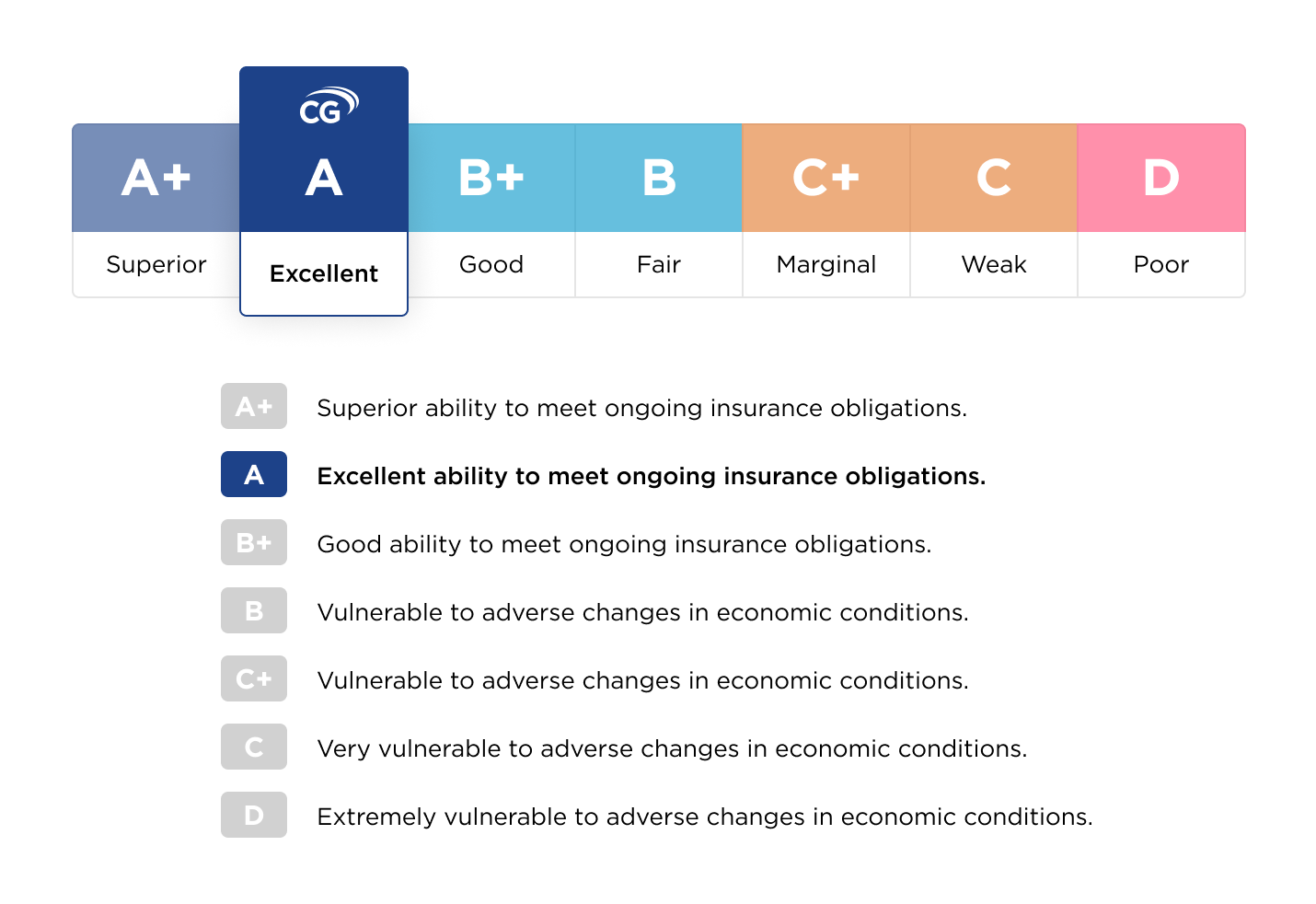
AM Best uses a letter-grade system that can be confusing at first glance. Unlike school grades where a "B" is often considered "good," a "B" rating from AM Best is actually categorized as "Fair" and may signal a higher level of risk for long-term contracts.
The Superior and Excellent Categories (A++ to A-)
Ratings in the "A" range are generally considered "Secure" by AM Best.
- A++ and A+ (Superior): These companies have a very strong balance sheet and a proven track record of weathering economic downturns. They are the gold standard for senior life insurance.
- A and A- (Excellent): These providers are still considered highly reliable but may have slightly more exposure to market volatility or a less diversified product line than "Superior" peers.
The Vulnerable Categories (B++ and Below)
Once a rating drops into the "B" category or lower, it is classified as "Vulnerable."
- B++ and B+ (Good): While technically "Good," these companies have a higher vulnerability to adverse changes in underwriting or economic conditions.
- B and B- (Fair): These companies have a limited ability to meet their obligations and may face significant challenges in a high-inflation or high-interest-rate environment.
- C, D, and E: These ratings indicate a company is in distress, under regulatory supervision, or in liquidation. Seniors should avoid these providers regardless of how attractive the premiums may appear.
| AM Best Rating | Category | Financial Strength Summary |
|---|---|---|
| A++ / A+ | Superior | Strongest ability to meet ongoing insurance obligations. |
| A / A- | Excellent | Very strong ability to meet insurance obligations. |
| B++ / B+ | Good | Generally secure, but more vulnerable to economic shifts. |
| B / B- | Fair | Vulnerable; limited financial strength to meet obligations. |
| C++ / C+ | Marginal | High vulnerability; questionable ability to pay claims. |
| C / C- | Weak | Very high vulnerability; significant financial distress. |
| D | Poor | Currently in default or liquidation proceedings. |
Top-Rated Senior Life Insurance Providers in 2026
As of 2026, several companies consistently maintain high AM Best ratings while offering products specifically tailored to the senior market, such as Final Expense insurance, Guaranteed Issue Life, and Long-Term Care Riders.
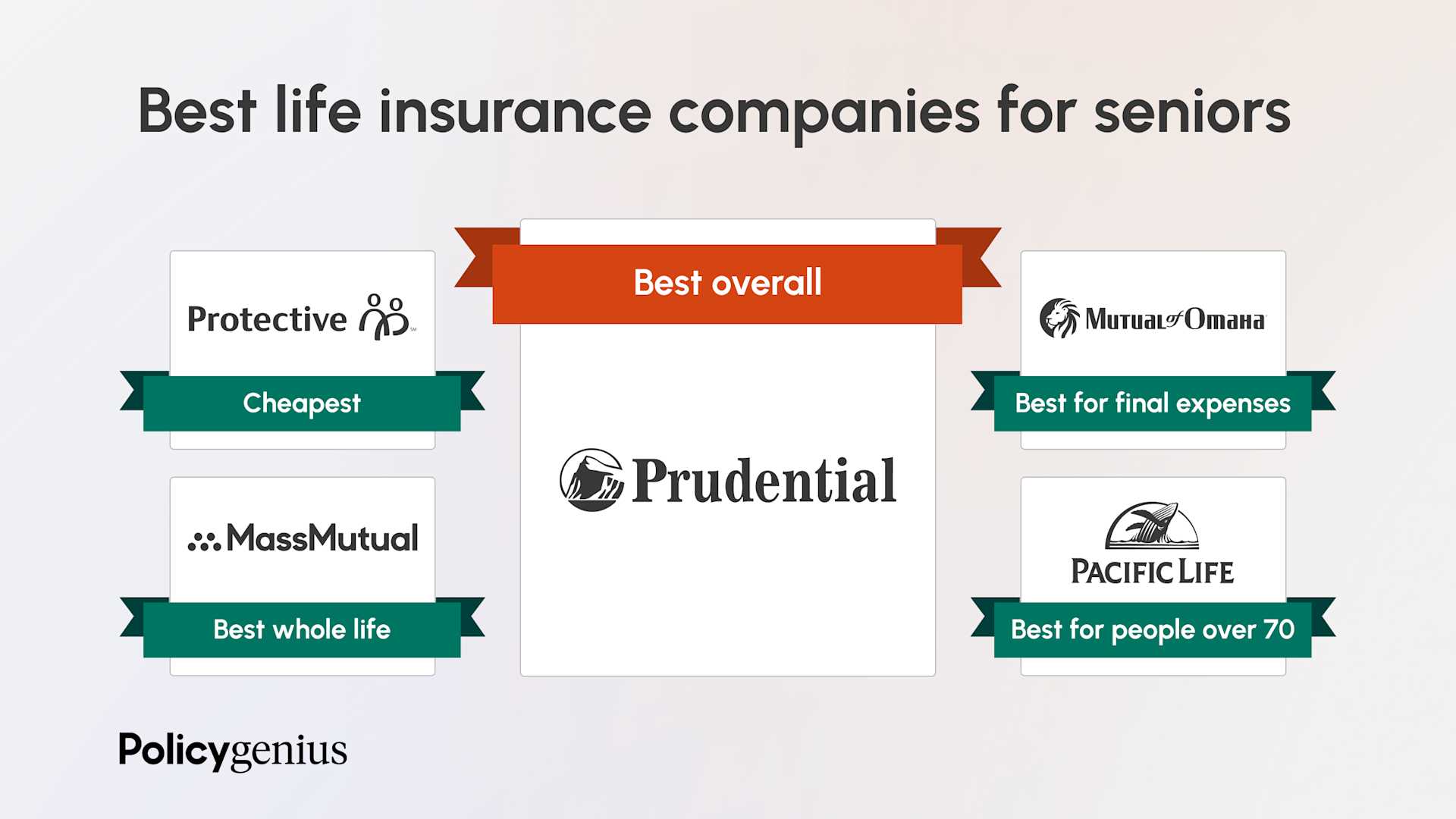
New York Life (A++)
New York Life remains a titan in the industry, consistently holding the highest possible rating. Their mutual company structure means they are owned by policyholders rather than shareholders, which often aligns their financial goals with the long-term stability required for senior products. They are a preferred choice for seniors looking for whole life insurance with potential dividend payments.
Mutual of Omaha (A+)
A household name for seniors, Mutual of Omaha is highly rated and specializes in simplified issue products. Their "Living Promise" whole life policy is a staple for those seeking burial insurance. Their A+ rating suggests that despite the high volume of senior claims they process, their reserve management remains exceptional.
State Farm (A++)
State Farm is frequently recognized for its financial robustness. While many know them for home and auto, their life insurance division is remarkably stable. For seniors who prefer a local agent and the security of a "Superior" rating, State Farm is a top contender, particularly for term life policies that can be converted to permanent coverage later.
MassMutual (A++)
Like New York Life, MassMutual is a mutual insurance company with a focus on long-term solvency. They are particularly noted for their high-yield whole life products, which can serve as both an inheritance tool and a cash-value asset for seniors.
How AM Best Conducts Its Evaluations
To reach a rating decision, AM Best analysts perform a deep dive into several qualitative and quantitative factors. Understanding these can help seniors realize why a rating is more reliable than a simple online review.
- Balance Sheet Strength: Analysts look at the "liquidity" of the company. Do they have enough cash and easily sellable assets to pay out a sudden surge in claims? This is particularly relevant for companies that insure a high percentage of seniors.
- Operating Performance: This measures the company’s profitability. A company that consistently loses money on its underwriting is at risk of a rating downgrade, even if it currently has a large reserve.
- Business Profile: AM Best evaluates the diversity of the company’s products. If a company only sells one type of insurance in one state, it is more vulnerable than a diversified national carrier.
- Enterprise Risk Management (ERM): This is the company’s internal "plan B." Analysts check how the insurer prepares for catastrophes, such as pandemics or massive stock market crashes.
Practical Steps: How to Verify an Insurer's Rating
Seniors should never take a salesperson's word for a company's rating. Ratings can change annually, and a company that was "A" rated five years ago may have slipped.
- Visit the AM Best Website: You can create a free account on the AM Best website to search for any insurance company. Ensure you are looking at the specific legal entity of the insurer, as parent companies and subsidiaries may have different ratings.
- Check the "Outlook": Along with the letter grade, AM Best provides an "Outlook" (Positive, Stable, or Negative). A "Stable" outlook means the rating is unlikely to change in the near future, whereas a "Negative" outlook suggests a downgrade might be coming.
- Compare Multiple Agencies: While AM Best is the leader, it is wise to see if the company’s S&P or Moody’s ratings are in the same ballpark. Consistency across agencies is a strong sign of reliability.
Balancing Ratings with Policy Costs and Features
While a high AM Best rating is crucial, it should not be the only factor in a senior's decision. A company with an A++ rating might offer a policy that is 30% more expensive than an A-rated competitor for the exact same coverage.
For most seniors, any company in the "Secure" range (A- or better) is a safe bet. If you find a policy with a company rated A- that includes a "Nursing Home Waiver" or a "Chronic Illness Rider" that fits your needs better than an A++ rated policy, the A- rated company is likely the better practical choice. The risk difference between A- and A++ is statistically small for the individual consumer, whereas the difference in policy benefits can be life-changing.
Note: This information is for educational purposes and does not constitute financial, legal, or professional advice. Always consult with a licensed insurance professional or financial advisor before purchasing a policy.
Frequently Asked Questions
Does a high AM Best rating mean my premiums will never go up?
No. An AM Best rating measures a company’s financial strength, not its pricing structure. If you purchase a "Level Premium" policy, your rates are guaranteed to stay the same regardless of the company's rating. However, for "Flexible Premium" or "Universal Life" policies, the company may still adjust costs based on interest rates or mortality charges, even if they have an A++ rating.
What happens to my policy if my insurance company's rating drops?
A rating drop is a warning sign, not an immediate crisis. If a company moves from A to B+, it means AM Best perceives more risk, but the company is still meeting its obligations. You generally do not need to cancel your policy immediately. However, if the rating falls into the "Vulnerable" range (B or below), you should consult with an advisor about the possibility of a 1035 exchange to a more stable carrier.
Are small insurance companies always rated lower than big ones?
Not necessarily. While large companies often have more diversified assets, many small or niche insurance companies maintain A or A+ ratings by focusing on a specific, low-risk segment of the market. Size does not always equal stability; the AM Best rating accounts for the company's specific financial ratios relative to its size.
Should I trust a company that is "Not Rated" (NR) by AM Best?
An "NR" designation usually means the company did not request a rating or there wasn't enough data for AM Best to form an opinion. While some reputable smaller companies may be unrated due to the cost of the rating process, it adds a layer of uncertainty. For seniors, it is generally safer to stick with rated carriers to ensure third-party oversight of the company's finances.
How often are AM Best ratings updated?
AM Best typically reviews a company’s financial status annually. However, they may issue a "Rating Update" or change a company's "Outlook" at any time if a major event occurs, such as a merger, a significant lawsuit, or a drastic shift in the economy.
Final Recommendation
When selecting a senior life insurance provider in 2026, prioritize companies with an AM Best rating of A- (Excellent) or higher. This ensures that the organization has the financial fortitude to honor its death benefit obligations when your family needs it most. Use the rating as your first filter to narrow down your options, and then compare specific policy riders and premium costs to find the plan that best fits your retirement budget and legacy goals.
Image Gallery