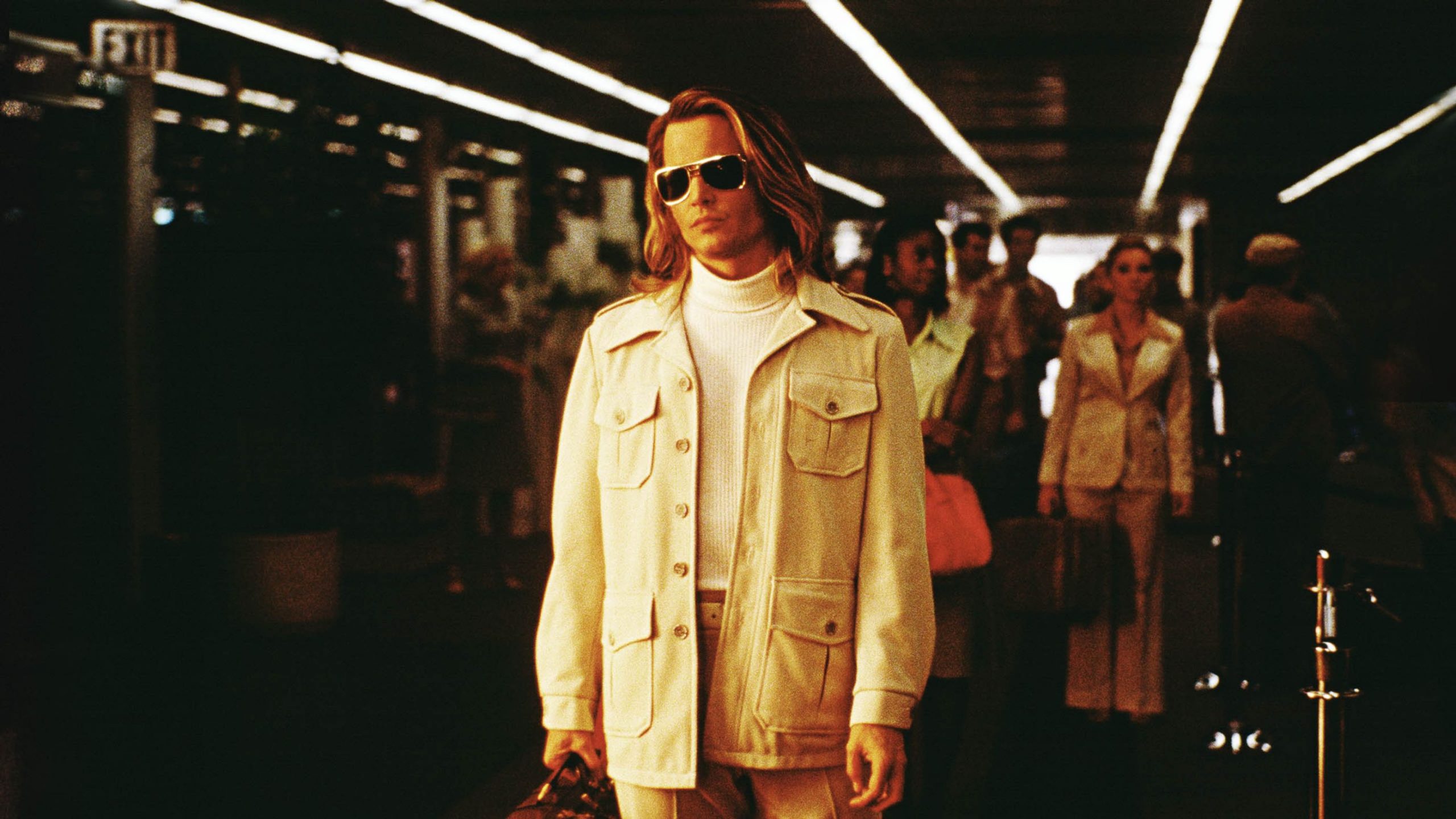
The True Story of George Jung: Fact vs. Fiction in the Movie Blow
The true story of George Jung, the central figure in the 2001 film Blow, is a complex narrative of the American drug trade's evolution during the 1970s and 1980s. While the movie portrays Jung as a sympathetic protagonist who revolutio...
The true story of George Jung, the central figure in the 2001 film Blow, is a complex narrative of the American drug trade's evolution during the 1970s and 1980s. While the movie portrays Jung as a sympathetic protagonist who revolutionized the cocaine industry, the reality involves a high-stakes criminal career that significantly contributed to the rise of the Medellín Cartel in the United States.
Contents
George Jung, often referred to as "Boston George," was a prolific drug smuggler who transitioned from transporting Mexican marijuana to becoming the primary conduit for Pablo Escobar’s cocaine. His life story, while dramatized for the silver screen, remains a foundational case study in the history of international narcotics trafficking. As of 2026, despite his passing in 2021, Jung’s legacy continues to spark debate regarding the glorification of organized crime versus the historical reality of the "Cocaine Cowboy" era.
The Origins of "Boston George"
Born in 1942 in Weymouth, Massachusetts, George Jung did not initially seem destined for a life of high-level crime. His early years were characterized by a middle-class upbringing, though his father’s struggling heating business reportedly left a lasting impression on George regarding financial instability. In the late 1960s, after moving to Southern California, Jung discovered a burgeoning market for high-quality marijuana.
Jung’s entry into the drug trade was pragmatic rather than ideological. He realized that the profit margins on "pot" were astronomical if one could bypass the middlemen. Along with his friend "Tuna" (portrayed in the film), Jung began flying suitcases of marijuana from Puerto Vallarta, Mexico, to various points in California and New England.
By the early 1970s, Jung was earning an estimated $250,000 a month—an incredible sum at the time. However, this success led to his first major arrest in 1974. He was apprehended in Chicago with 660 pounds of marijuana. It was this legal failure that ironically provided the gateway to his massive future in the cocaine trade.
The Danbury Connection: The "Harvard" of Smuggling
The most pivotal moment in the "Blow" true story occurred within the walls of the Federal Correctional Institution in Danbury, Connecticut. Jung was paired with a cellmate named Carlos Lehder, a young Colombian-German man with radical ideas and connections to the Medellín Cartel.
Jung often described his time in Danbury as more of a postgraduate education than a punishment. Lehder introduced Jung to the world of cocaine, a drug that was then virtually unknown to the American masses but was highly profitable due to its compact nature compared to marijuana. While marijuana was bulky and difficult to hide, cocaine could be transported in smaller quantities for much higher returns.
Together, they devised a plan: Jung would provide the logistics and pilots, and Lehder would provide the source in Colombia. This partnership was the catalyst that transformed the American drug landscape. Upon their release in the mid-1970s, they began using small private planes to transport cocaine from Colombia to the United States via the Bahamas.
Building the Medellín Cartel’s Bridge
By 1976, Jung and Lehder were the primary distributors for Pablo Escobar. They utilized a staging ground at Norman's Cay in the Bahamas, which Lehder eventually transformed into a private fortress. The logistics were revolutionary for the time: they moved hundreds of kilograms of cocaine per flight, bypassing traditional maritime routes that were more heavily patrolled.
At the peak of his involvement, Jung claimed that he was responsible for roughly 85% of the cocaine entering the United States. While historians and DEA officials suggest this figure might be an exaggeration, there is no denying that Jung’s transportation network was the essential link between the Medellín production labs and the American consumer.
The financial rewards were staggering. Jung reportedly stashed millions of dollars in Panamanian banks. However, the partnership with Lehder eventually soured. Lehder, becoming increasingly erratic and hungry for total control, eventually cut Jung out of the Norman’s Cay operation. Despite this betrayal, Jung continued to work directly with Escobar for a period, though his "golden era" was beginning to wane as law enforcement agencies, including the newly aggressive DEA, began to close in.
Fact-Checking the Film: Accuracy vs. Creative License
The film Blow, starring Johnny Depp, is based on the book by Bruce Porter. While it captures the spirit of Jung’s life, several key elements were altered for narrative impact:
- The "Diego Delgado" Character: In the movie, Jung’s partner is named Diego Delgado. In reality, this was Carlos Lehder. The name change was likely for legal or creative reasons, as Lehder was a living historical figure of significant notoriety.
- The Relationship with His Mother: The film portrays Jung’s mother, Ermine, as a cold woman who repeatedly turned him in to the authorities. While their relationship was strained, the real Jung noted in interviews that the movie’s portrayal was particularly harsh and that her role in his arrests was more nuanced.
- The Final Arrest: The movie shows Jung being "set up" for a final deal by old friends in a sting operation. While Jung was indeed caught in a sting in 1994 with 1,760 pounds of cocaine, the cinematic version emphasizes the betrayal of his daughter’s trust as the primary emotional beat, whereas the real-life arrest was the result of a long-term DEA investigation.
Comparison Table: Movie Representation vs. Historical Reality
| Feature | Movie Portrayal (Blow) | Historical Fact |
|---|---|---|
| Partner Name | Diego Delgado | Carlos Lehder |
| Primary Drug | Cocaine (entirely) | Started with Marijuana, then Cocaine |
| Betrayal | Portrayed as a tragic personal betrayal | Result of cartel politics and Lehder's power grab |
| Daughter's Visit | Ending implies she never visits him in prison | Kristina Sunshine Jung visited George later in life |
| Total Wealth | Depicted as lost entirely to Panama/Law | Most wealth was seized or lost; lived modestly post-prison |
| Status in 2026 | (N/A) | Deceased (Died May 5, 2021) |
The Emotional Core: Kristina Sunshine Jung
A central theme of the movie is George Jung’s relationship with his daughter, Kristina. The film ends on a heartbreaking note, with a projected hallucination of his daughter visiting him in prison, followed by a text crawl stating she never actually came.
In reality, the story is more complex. For many years, the two were indeed estranged due to George’s repeated incarcerations and lifestyle. However, following his release from prison in 2014, George and Kristina began a slow reconciliation. Public records and social media updates from that era showed them together, attempting to mend their relationship after decades of distance.
Kristina Sunshine Jung has since maintained a public profile, occasionally speaking about her father’s legacy and the difficulty of growing up in the shadow of his criminal notoriety. By 2026, her perspective remains the most cited account of the personal toll the drug trade took on the families of the perpetrators.
The Final Act: Release and Death
George Jung was released from the Federal Correctional Institution in Fort Dix on June 2, 2014, after serving nearly 20 years for his 1994 conviction. At the time of his release, he was 71 years old. Unlike many of his contemporaries who were either killed or vanished into witness protection, Jung entered the public eye, participating in interviews, podcasts, and even a reality show pilot.
His final years were spent in relative modesty compared to the excess of the 1980s. He struggled with health issues common to his age but remained a charismatic storyteller until the end. George Jung died on May 5, 2021, at his home in Weymouth, Massachusetts. His death marked the end of an era for the original "Cocaine Cowboys."
Historical analysis of Jung's career often focuses on the "Why." Jung himself often claimed he was not a violent man, but a "smuggler" who viewed his work as a logistical challenge rather than a moral failing. However, the DEA and various justice departments emphasize that the infrastructure Jung built paved the way for the violence and addiction that ravaged American cities throughout the late 20th century.
Common Misconceptions About George Jung
Several myths persist regarding Jung's role in the drug trade. Many believe he was the "founder" of the Medellín Cartel, which is incorrect. The cartel was a Colombian organization led by the Ochoa brothers, Jose Gacha, and Pablo Escobar. Jung was an essential contractor—a distributor—but he was not part of the cartel's inner leadership circle.
Another misconception is that Jung was the only American working at this level. While he was certainly one of the most successful, the DEA has documented several other American pilots and logistics experts who operated during the same period. Jung’s fame is largely due to the success of the film and his willingness to document his life in the book Blow.
For more detailed historical records on the Medellín Cartel's operations, the Federal Bureau of Investigation (FBI) Vault contains declassified documents regarding the era's narcotics investigations. Additionally, the DEA Museum provides context on the evolution of smuggling tactics during the 1970s and 80s.
FAQ: The Reality of George Jung
How much money did George Jung actually make?
At his peak, Jung claimed to be making $15 million to $30 million per shipment. However, his total net worth was never officially verified. Most of his money was either seized by the U.S. government, stolen by Panamanian officials, or lost to the high costs of maintaining a fugitive lifestyle and legal fees.
Did George Jung ever see the movie Blow?
Yes, George Jung saw the movie and reportedly met with Johnny Depp while still in prison to help the actor prepare for the role. Jung praised Depp’s performance, stating that the actor captured his mannerisms and personality with remarkable accuracy.
Was the "Miramar" arrest real?
Yes, the movie depicts an arrest at a birthday party in a house in Miramar. This event was based on a real 1987 arrest where Jung was caught after a former associate turned informant. This was one of the many times Jung nearly escaped but was caught due to the betrayal of his inner circle.
What happened to Carlos Lehder?
Carlos Lehder was captured in Colombia in 1987 and extradited to the United States. He was sentenced to life without parole plus 135 years. However, after testifying against Manuel Noriega, his sentence was reduced. In 2020, Lehder was released and deported to Germany, where he reportedly resides today.
Where can I find official accounts of Jung's crimes?
The primary legal accounts are found in the 1994 federal indictment records. Detailed investigative journalism on his life can be found in the archives of The New York Times and The Boston Globe, which covered his various arrests and his death in 2021.
Final Recommendation for Researchers and Fans
For those seeking the most accurate understanding of the "Blow" true story, it is recommended to read the original biography by Bruce Porter, Blow: How a Small-Town Boy Made $100 Million with the Medellín Cocaine Cartel and Lost It All. While the movie is an excellent piece of cinema, the book provides the technical details of the smuggling routes, the legal proceedings, and the socio-economic impact of Jung’s actions that the film glosses over for the sake of drama. Understanding George Jung requires a balance between acknowledging his logistical genius and recognizing the catastrophic consequences of the industry he helped build.
Image Gallery