Understanding the Categorization of Cloud Security Challenges in 2026
Cloud security challenges are primarily categorized into seven distinct types: configuration errors, identity and access management failures, insecure interfaces and APIs, supply chain vulnerabilities, data privacy and legal compliance...
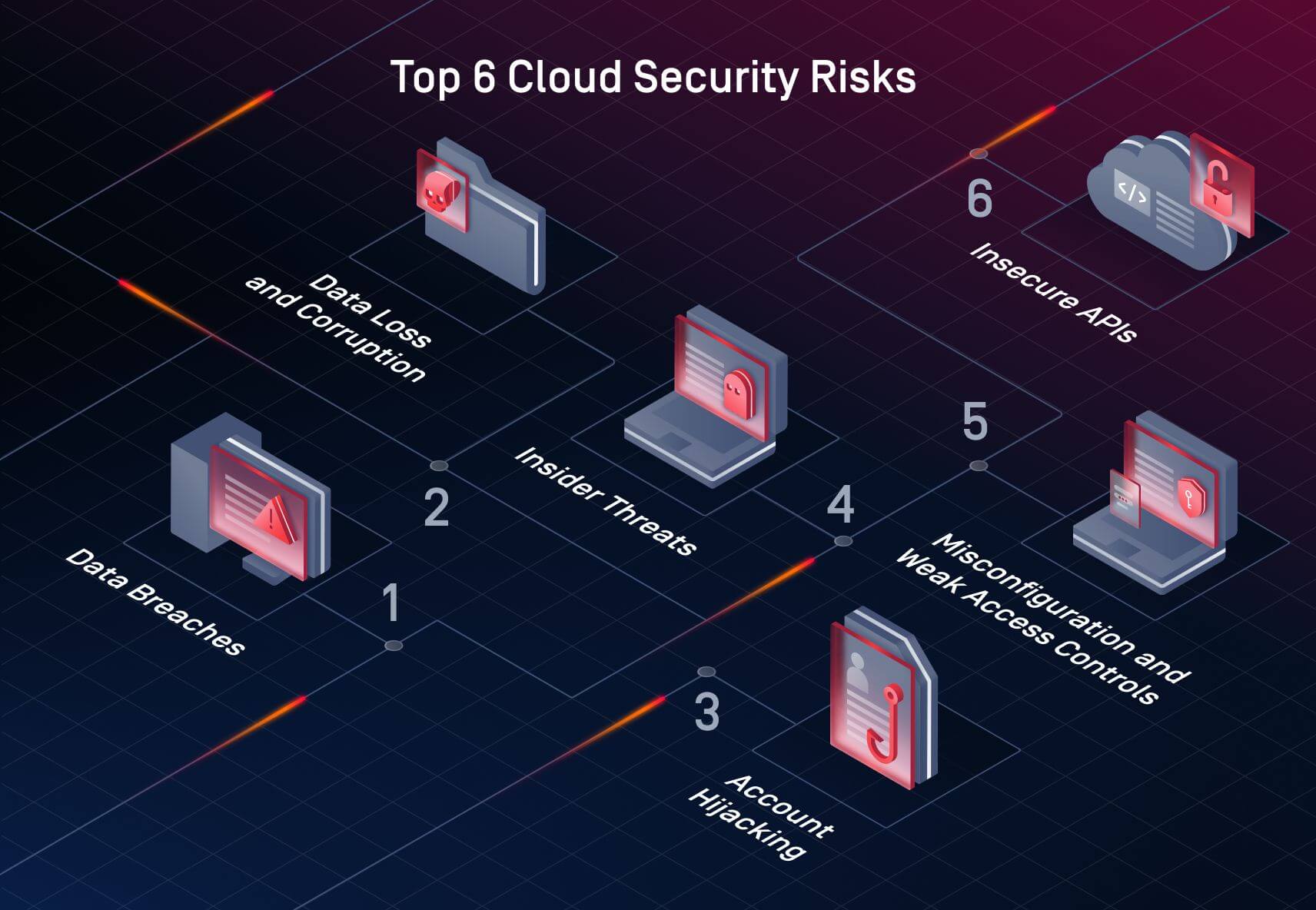
Cloud security challenges are primarily categorized into seven distinct types: configuration errors, identity and access management failures, insecure interfaces and APIs, supply chain vulnerabilities, data privacy and legal compliance issues, internal threats, and lack of operational visibility. While specific threats evolve, these domains represent the foundational risks inherent in cloud-native environments.
Contents
Cloud security is no longer a niche concern for IT departments; in 2026, it is the cornerstone of enterprise resilience. As organizations have shifted almost entirely to multi-cloud and hybrid-cloud architectures, the complexity of securing these environments has increased exponentially. Understanding "how many types" of challenges exist requires more than a simple list; it demands a deep dive into the thematic categories that define the modern threat landscape.
Industry frameworks, such as those provided by the Cloud Security Alliance (CSA), often group these risks to help organizations prioritize their defensive posture. By categorizing challenges, security teams can move away from reactive "firefighting" and toward a proactive, architectural approach to risk management.
1. Technical Misconfigurations and Infrastructure Weaknesses
Misconfigurations remain the most prevalent type of cloud security challenge. As of 2026, the shift toward Infrastructure as Code (IaC) has automated deployment, but it has also automated the replication of errors. A single line of misconfigured code in a Terraform or Ansible script can expose thousands of records across multiple regions instantly.
The primary issue with misconfiguration is that it often occurs in the "shadows." Default settings on cloud buckets, overly permissive security groups, and unencrypted storage volumes are frequently overlooked during rapid development cycles. The challenge is exacerbated by "configuration drift," where manual changes made to a live environment deviate from the original secure template, creating vulnerabilities that automated scanners might miss if they only check the code repository.
To mitigate this, enterprises are adopting "Policy as Code," ensuring that security requirements are baked into the deployment pipeline. However, the sheer scale of cloud resources—often numbering in the tens of thousands for a single organization—makes absolute elimination of misconfiguration an ongoing operational struggle.
2. Identity and Access Management (IAM) Failures
In the cloud, identity is the new perimeter. Traditional network boundaries have dissolved, leaving Identity and Access Management as the primary gatekeeper. IAM challenges involve the mismanagement of credentials, lack of multi-factor authentication (MFA), and the proliferation of "over-privileged" accounts.
A significant sub-type of this challenge is the management of non-human identities. In 2026, service accounts, bots, and automated workloads outnumber human users by a factor of ten to one. These machine identities often have long-lived credentials and excessive permissions, making them prime targets for attackers. If a single API key for an automated backup service is compromised, an attacker could potentially gain read/write access to the entire data estate.
Furthermore, the "Identity Sprawl" caused by using multiple cloud providers (AWS, Azure, Google Cloud) often results in fragmented visibility. Without a centralized identity fabric, revoking access for a terminated employee or a compromised service becomes a manual, error-prone task that can take hours or days, during which the environment remains vulnerable.
3. Insecure Interfaces and APIs
Modern cloud applications are built on a web of APIs (Application Programming Interfaces). These interfaces allow different software components to communicate, but they also represent significant entry points for malicious actors. API-based attacks have become a top-tier challenge because APIs often bypass traditional web application firewalls (WAFs) if they are not specifically tuned for API traffic.
Common API challenges include:
- Broken Object Level Authorization (BOLA): Where an attacker manipulates an ID in an API request to access data belonging to another user.
- Excessive Data Exposure: When an API returns more data than the client needs, relying on the client to filter the information, which an attacker can easily intercept.
- Mass Assignment: Allowing users to update data fields they shouldn't have access to by guessing the underlying software's property names.
In 2026, the rise of microservices has led to "API sprawl," where organizations are often unaware of how many APIs they have exposed to the public internet. Securing these requires a shift toward "Zero Trust" API security, where every call is authenticated, authorized, and inspected for anomalous behavior.
4. Cloud Supply Chain and Third-Party Vulnerabilities
The cloud does not exist in a vacuum. Organizations rely on a vast ecosystem of third-party libraries, managed services, and software-as-a-service (SaaS) providers. This dependency introduces supply chain risks, where a vulnerability in a third-party component can compromise the entire cloud environment.
The 2026 security landscape is heavily focused on the Software Bill of Materials (SBOM). If a popular logging library or a base container image contains a critical vulnerability, every application built on top of it becomes a target. This is not just a theoretical risk; it is a structural challenge because the organization does not own the code of the third-party service and cannot always patch it directly.
Moreover, "Service Provider Lock-in" and the lack of transparency in how providers manage their own internal security can leave enterprises in the dark. If a major cloud provider experiences a breach at the hypervisor level, the "Shared Responsibility Model" dictates that the customer is protected, but the operational fallout remains the customer's burden to manage.
5. Data Privacy, Sovereignty, and Regulatory Compliance
As data moves to the cloud, it often crosses international borders, triggering a complex web of legal and regulatory challenges. In 2026, data sovereignty—the idea that data is subject to the laws of the country where it is physically stored—has become a major hurdle for global enterprises.
Different jurisdictions have different requirements for data residency, encryption, and "the right to be forgotten." The challenge for cloud users is twofold:
- Technical Implementation: Ensuring that data is physically stored and processed only within specific geographic regions.
- Continuous Compliance: Proving to auditors that security controls are effective in real-time.
The cost of non-compliance is no longer just a fine; it can involve the loss of a license to operate in key markets. Cloud security teams must now work closely with legal departments to ensure that the technical architecture aligns with evolving frameworks like the GDPR, CCPA, and newer 2026-specific AI governance acts.
6. Internal Threats: Malicious and Negligent
While external hackers grab the headlines, the "insider threat" remains a persistent type of cloud security challenge. This category is split into two distinct sub-types:
- The Malicious Insider: An employee or contractor who uses their legitimate access to steal data or sabotage systems. In a cloud environment, a malicious admin can delete entire production environments or exfiltrate massive datasets with a few commands.
- The Negligent Insider: Well-meaning employees who bypass security protocols for the sake of convenience. Examples include using unsanctioned SaaS tools ("Shadow IT"), sharing passwords, or accidentally making a private database public.
The challenge in the cloud is that insider actions can be hard to distinguish from legitimate administrative tasks. Detecting these threats requires advanced Behavioral Analytics and User and Entity Behavior Analytics (UEBA) to identify patterns that deviate from a user’s typical historical activity.
7. Lack of Visibility and "Shadow IT"
You cannot secure what you cannot see. The ease of spinning up cloud resources means that departments outside of IT often deploy their own infrastructure without central oversight. This "Shadow IT" creates massive blind spots in an organization’s security posture.
A lack of centralized visibility means that security teams may be unaware of:
- Which data is stored where.
- Which third-party apps have been granted access to the corporate environment via OAuth.
- The current patch status of ephemeral workloads (containers that only exist for minutes).
In 2026, the multi-cloud reality means that visibility must be unified. Using native tools from AWS, Azure, and GCP separately often leads to "Console Fatigue," where security alerts are missed because they are buried in different interfaces.
Comparison of Major Cloud Security Challenge Types
| Challenge Type | Primary Impact | Root Cause | Typical Mitigation |
|---|---|---|---|
| Misconfiguration | Data Exposure / System Downtime | Human Error / Poor Automation | Policy as Code (PaC) / CSPM Tools |
| IAM Failures | Unauthorized Access / Lateral Movement | Over-privileged Accounts / Weak MFA | Zero Trust / Just-in-Time (JIT) Access |
| API Insecurity | Data Exfiltration / Logic Attacks | Lack of Input Validation / Poor Auth | API Gateways / Continuous Testing |
| Supply Chain | Inherited Vulnerabilities | Third-party Dependencies | SBOM / Third-party Risk Management |
| Compliance | Legal Fines / Loss of Trust | Data Residency / Sovereignty Laws | Automated Compliance Monitoring |
| Visibility | Blind Spots / Shadow IT | Decentralized Cloud Procurement | CASB / Unified Observability Platforms |
FAQs
Is the number of cloud security challenges increasing?
Technically, the "types" of challenges remain relatively stable (around seven to ten major categories), but the specific threats within those categories are increasing in complexity. For example, while "IAM Failures" have always been a challenge, the advent of AI-driven phishing and automated credential stuffing in 2026 has made managing those identities significantly harder than it was five years ago.
What is the "Shared Responsibility Model" in cloud security?
The Shared Responsibility Model is a framework defining which security tasks are handled by the cloud service provider (CSP) and which are handled by the customer. Generally, the provider is responsible for the security of the cloud (physical hardware, global infrastructure), while the customer is responsible for security in the cloud (data, IAM, network configuration). Misunderstanding this division is a major driver of security incidents.
How does "Zero Trust" address these challenges?
Zero Trust is a security model based on the principle of "never trust, always verify." It addresses challenges like IAM failures and insider threats by requiring strict identity verification for every person and device trying to access resources on a private network, regardless of whether they are sitting inside or outside of the network perimeter.
What role does AI play in cloud security challenges in 2026?
AI is a double-edged sword. On one hand, attackers use AI to find misconfigurations and vulnerabilities at machine speed. On the other hand, organizations use AI-driven security tools to analyze vast amounts of log data, predict potential breaches, and automate the response to threats. In 2026, AI-governance has become its own sub-type of security challenge, focusing on protecting the integrity of the data used to train security models.
Can a single tool solve all types of cloud security challenges?
No single tool can address every challenge. Comprehensive cloud security requires a "Defense in Depth" strategy involving several layers: Cloud Security Posture Management (CSPM) for configurations, Cloud Infrastructure Entitlement Management (CIEM) for IAM, and Cloud Workload Protection Platforms (CWPP) for the workloads themselves. Integration between these tools is the key to a robust defense.
Recommended Next Actions
To effectively manage the diverse range of cloud security challenges, organizations should transition from manual security checks to an automated, platform-based approach. The first step is to implement a Cloud Security Posture Management (CSPM) tool to gain immediate visibility into existing misconfigurations and compliance gaps across all cloud environments. Following this, enterprises should adopt a Zero Trust architecture, prioritizing the securing of identities and APIs, as these are the most frequently exploited vectors in 2026. Finally, regular "Red Teaming" exercises—where security professionals simulate real-world attacks—can help identify hidden weaknesses in the supply chain and internal response procedures before they are exploited by malicious actors.
Image Gallery