How to Use the Work Injury Report Form Properly in 2026
To use a work injury report form, you must accurately document the time, location, and specific circumstances of the incident while identifying any witnesses and the nature of your injuries. This formal document serves as the foundatio...
To use a work injury report form, you must accurately document the time, location, and specific circumstances of the incident while identifying any witnesses and the nature of your injuries. This formal document serves as the foundation for workers' compensation claims and federal safety compliance, requiring factual, objective language and timely submission to your employer’s HR or safety department.
Contents
The Critical Role of the Work Injury Report Form
The work injury report form is more than a simple administrative hurdle; it is a vital legal and medical document that bridges the gap between an accident and the recovery of benefits. In 2026, while many organizations have transitioned to digital health and safety management systems, the core data requirements remain anchored in statutory necessity. This form initiates the official record of a workplace incident, providing the evidentiary basis for insurance adjusters, medical providers, and legal counsel to evaluate a claim.
Properly completing this form ensures that your rights are protected under labor laws. It serves as a contemporaneous record, which is far more reliable in the eyes of a court or an insurance board than a memory recounted weeks after the event. Furthermore, these forms are essential for the Occupational Safety and Health Administration (OSHA) or equivalent regional bodies, as they allow regulators to track workplace hazards and mandate safety improvements to prevent future occurrences.
Prerequisites: Immediate Steps Before Documentation
Before you pick up a pen or open a digital filing portal, certain immediate actions must be prioritized to ensure both your physical safety and the integrity of your report.
Seek Medical Attention
Your health is the primary concern. Even if an injury appears minor, such as a dull back strain or a slight head bump, immediate medical evaluation is necessary. Internal injuries often manifest hours or days later. From a documentation standpoint, the medical report generated during this visit acts as a "point of origin" for your claim. Without a professional medical assessment occurring close to the time of the incident, it becomes significantly harder to prove that the injury was work-related.
Notify a Supervisor
Verbal notification should occur as soon as humanly possible. Most jurisdictions require employees to notify their employer within a specific timeframe—often ranging from 24 hours to 30 days—to remain eligible for benefits. A verbal report does not replace the written form, but it establishes the timeline and allows the employer to secure the scene if a hazard exists.
Identify Witnesses and Evidence
If the environment is safe, take a moment to identify who saw the incident. Collect their names and contact information. If your workplace allows, take photographs of the scene, including any faulty equipment, spills, or lack of safety signage. These visual elements will provide critical context when you are filling out the "Description of Incident" section of the form.
Understanding the Different Types of Forms
Not all injury reports are the same. Depending on your location and the severity of the incident, you may be required to complete several different documents.
- Internal Incident Report: This is a company-specific form used for internal tracking and safety audits. It is often the first document you will encounter.
- State or Provincial Workers’ Compensation Claim Form: This is a legal document (such as a Form C-3 in New York or a DWC-1 in California) that officially starts the insurance claim process.
- OSHA Form 301 (Injury and Illness Incident Report): In the United States, employers must complete this for every recordable injury. While the employer usually fills this out, they will use the information you provide in your initial report.
| Form Type | Primary Purpose | Who Completes It? | Recipient |
|---|---|---|---|
| Internal Report | Workplace safety tracking and hazard mitigation. | Employee and Supervisor | HR/Safety Department |
| Claim Form (e.g., DWC-1) | Initiates the insurance payment and medical benefit process. | Employee | Workers' Comp Insurance |
| OSHA Form 301 | Federal regulatory compliance and safety monitoring. | Employer | OSHA (on request) |
| Medical Report | Clinical verification of injury and work capacity. | Treating Physician | Insurance/Employer |
Step-by-Step Guide to Filling Out the Form
When you are ready to complete the form, approach it with a focus on objectivity. Avoid emotional language or speculation.
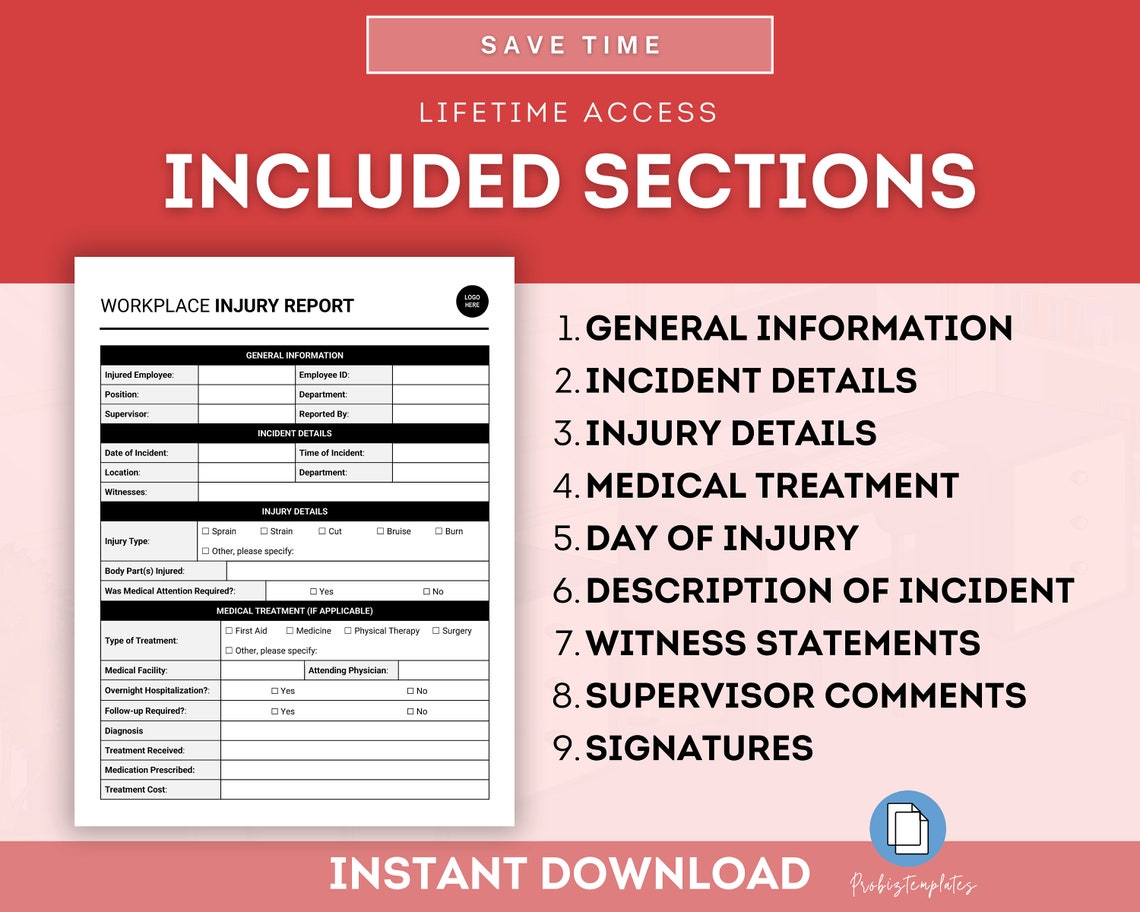
Section 1: Personal and Employment Information
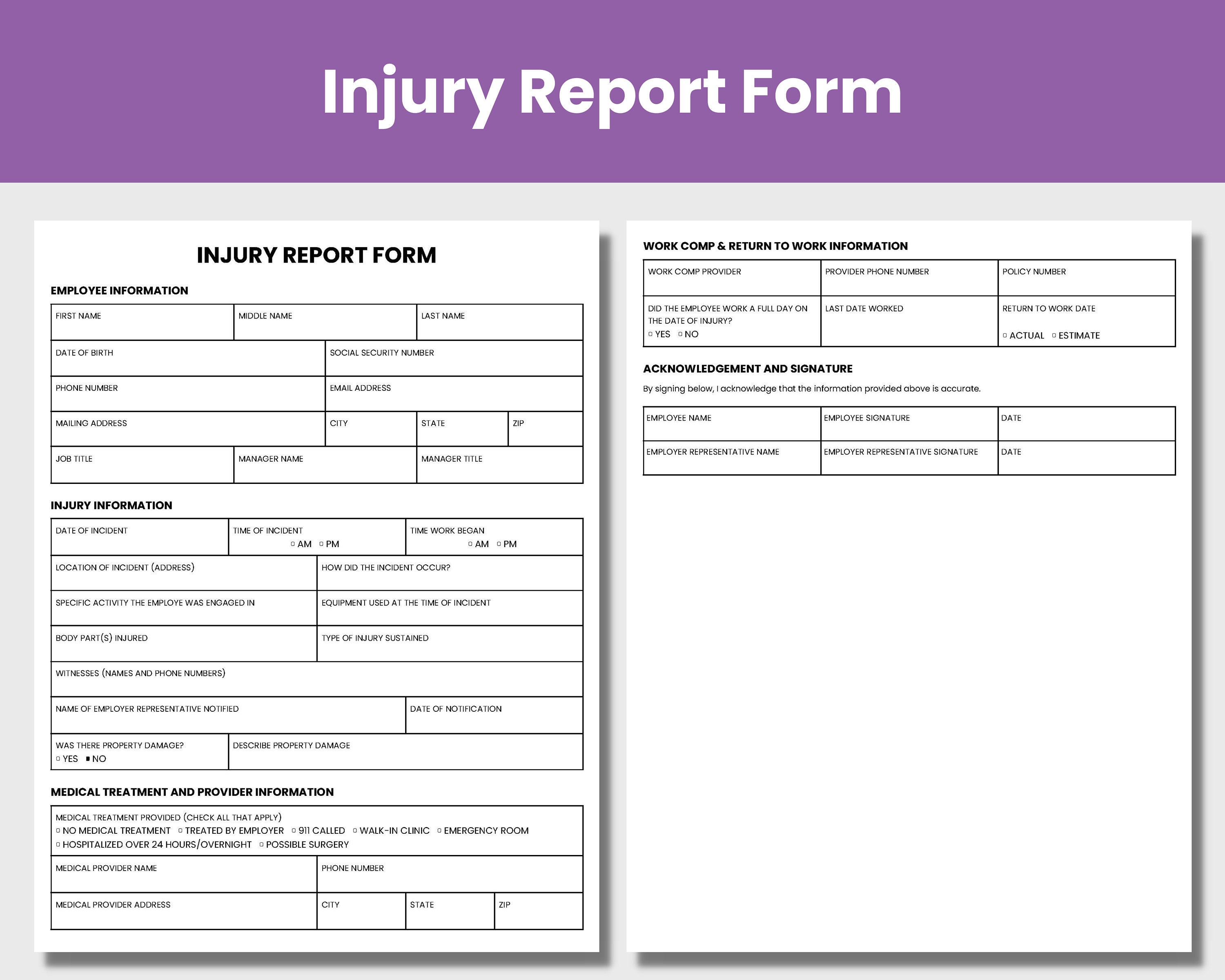
This section is straightforward but requires precision. Ensure your name matches your legal payroll records. Include your job title, department, and the exact shift you were working when the injury occurred. If you were working overtime or an unscheduled shift, note that specifically, as it may be relevant to fatigue or supervision levels.
Section 2: Incident Logistics (Date, Time, and Location)
Be exact. "Tuesday afternoon" is insufficient. Write "Tuesday, April 14, 2026, at approximately 2:15 PM." For the location, be specific: "In the Northeast corner of Warehouse B, near the Loading Dock 4 ramp." If the injury occurred off-site while you were traveling for business or performing a remote task, provide the specific address or GPS coordinates if known.
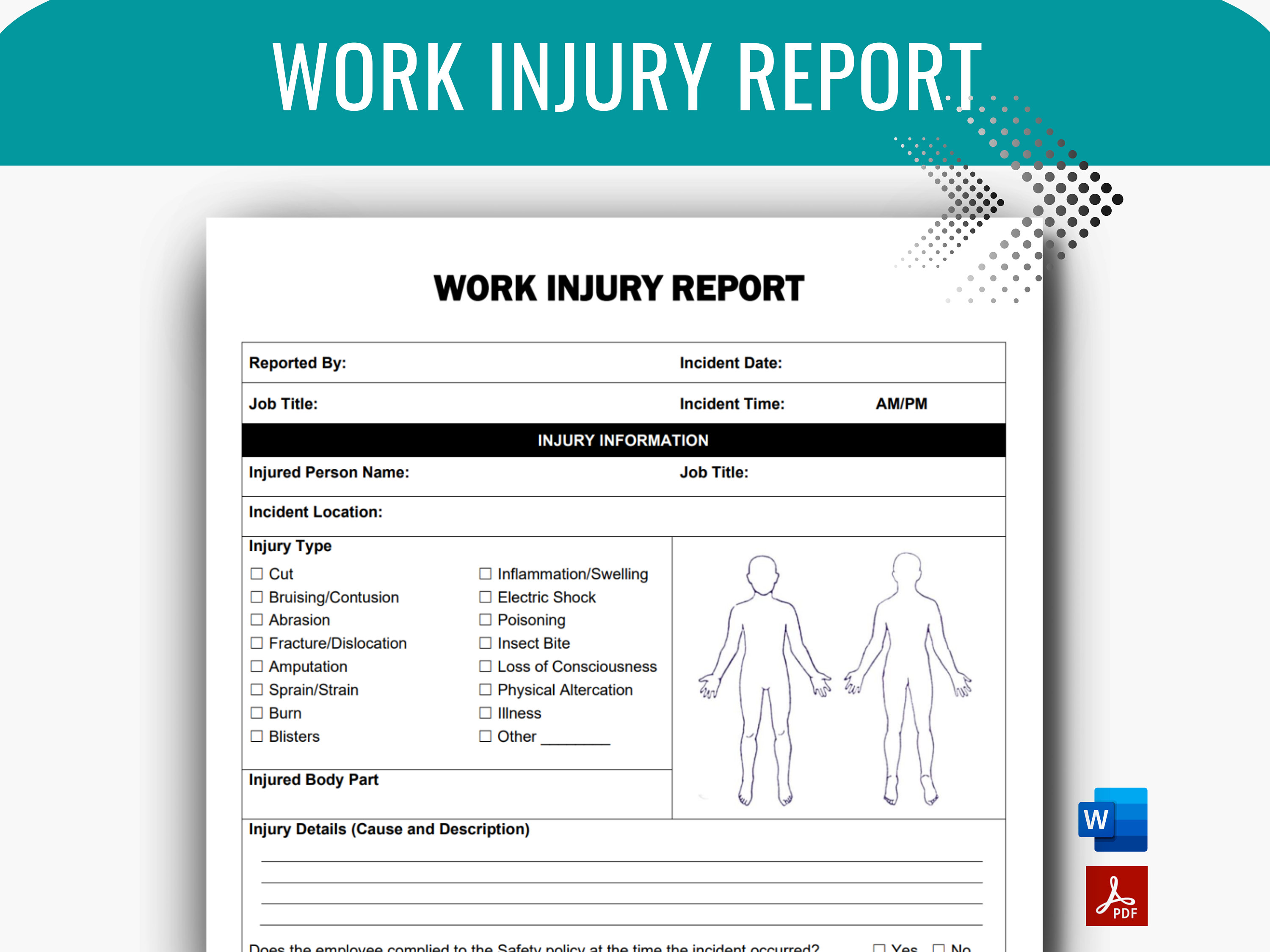
Section 3: The Narrative Description
This is the most critical part of the form. You must describe what happened in a chronological, factual manner.
- What you were doing: "I was lifting a 40-pound crate from the conveyor belt to a pallet."
- The triggering event: "The pallet jack behind me slipped, causing me to twist my torso suddenly to avoid a collision."
- The immediate result: "I felt a sharp, stabbing pain in my lower right back and was unable to stand upright."
Avoid Guesswork: Do not say "The floor was probably slippery." Instead, say "I observed a clear liquid on the floor where I slipped." If you do not know what caused a piece of machinery to fail, simply state "The machine stopped functioning correctly," rather than guessing at a mechanical fault you are not qualified to diagnose.
Section 4: Nature of the Injury
List all affected body parts. If you fell and hurt your knee, but also scraped your palm and have a headache, list all three. Often, an injury that seems primary (the knee) can mask a secondary injury (the head) that becomes more serious later. Using terms like "pain," "stiffness," "numbness," or "laceration" is helpful for the initial report.
Common Mistakes to Avoid in 2026
Even with the best intentions, certain errors can jeopardize your claim or lead to a denial of benefits.
- Missing the Deadline: Many employees wait to see if the pain goes away. In 2026, statutory deadlines are strictly enforced. Filing even one day late can result in a total forfeiture of your rights to medical coverage and wage replacement.
- Inconsistency with Medical Records: Ensure that what you write on the work injury report form matches what you tell the doctor. If you tell your boss you fell off a ladder, but tell the doctor you hurt your back gardening at home, the discrepancy will be flagged as potential fraud.
- Omission of Prior Injuries: If you had a previous injury to the same body part, do not hide it. Simply state the current incident exacerbated a previous condition. Failure to disclose prior injuries can be interpreted as a lack of transparency, whereas disclosure allows the medical experts to differentiate between old and new damage.
- Signing Blank Forms: Never sign a report form that has not been completely filled out. Some unscrupulous managers may offer to "finish it for you" to save time; this is a significant risk, as they may omit details regarding employer negligence.
Employer Responsibilities and Your Rights
Once you submit the form, the responsibility shifts largely to the employer. They are legally required to provide you with a copy of the completed form and to file the necessary paperwork with their insurance carrier and the state labor board.
In 2026, anti-retaliation laws are robust. It is illegal for an employer to fire, demote, or harass an employee for filing a work injury report. This documentation is a protected activity. If you feel that your employer is discouraging you from filing the form—perhaps by suggesting it will "ruin the team's safety record" or affect your bonus—you should contact a legal professional or your local labor board immediately.
Privacy and Data Security
With the rise of integrated HR software, your injury report will likely be stored in a digital cloud. Under privacy regulations like HIPAA (in the US) or similar data protection acts elsewhere, your medical information must be kept confidential. Only those with a "need to know"—typically HR, the insurance adjuster, and your direct supervisor—should have access to the specific details of your injury. You have the right to ask your employer how your data is being protected and who has access to your file.
FAQ
What if the injury was my fault? Workers' compensation is generally a "no-fault" system. This means that even if you made a mistake—such as tripping over your own feet or failing to follow a safety protocol—you are still usually entitled to benefits. The form should still be filled out truthfully. The only common exceptions are injuries caused by willful self-infliction or intoxication.
Do I need a lawyer to fill out the form? Usually, no. For the initial report, you should be able to complete it yourself. However, if the injury is severe, if your employer disputes the claim, or if the form is unnecessarily complex, consulting with a legal professional who specializes in workers' compensation can be beneficial.
Can I edit the form after I have submitted it? If you realize you made a factual error or omitted a detail, you should submit an "amended report" as soon as possible. Do not try to "white out" or change the original. Instead, provide a signed and dated addendum explaining the correction.
What if my employer refuses to provide the form? If your employer refuses to give you a form, you can often download the official state or provincial version from the relevant government website. Submit it to your employer via certified mail or another traceable method to prove that you attempted to report the injury within the legal timeframe.
What is the difference between an incident and an injury? An "incident" is an event that could have caused harm (a "near miss") or did cause harm. An "injury" is the physical or psychological damage resulting from that incident. You should report incidents even if no immediate injury is apparent, as this helps prevent future accidents.
Final Recommendation
After submitting your work injury report form, keep a physical or digital copy for your personal records. Note the date, time, and the person to whom you delivered the document. Follow up with your HR department within 48 hours to confirm that the claim has been forwarded to the insurance carrier. Active tracking of your documentation is the most effective way to ensure a smooth transition from injury to recovery and return-to-work status.
Image Gallery