Metra Northwest Line Schedule: Complete Commuter Guide and Operations for 2026
Navigating the Metra Northwest (NW) Line requires an understanding of its weekday and weekend timetables, historical station layouts from Chicago Ogilvie Transportation Center to Harvard, and operational updates in 2026. The Northwest...
Navigating the Metra Northwest (NW) Line requires an understanding of its weekday and weekend timetables, historical station layouts from Chicago Ogilvie Transportation Center to Harvard, and operational updates in 2026. The Northwest Line serves thousands of daily commuters across Cook and McHenry counties, offering express and local services designed to balance suburban growth with downtown Chicago access.
Contents
Understanding the Metra Northwest Line Route and Operational Framework
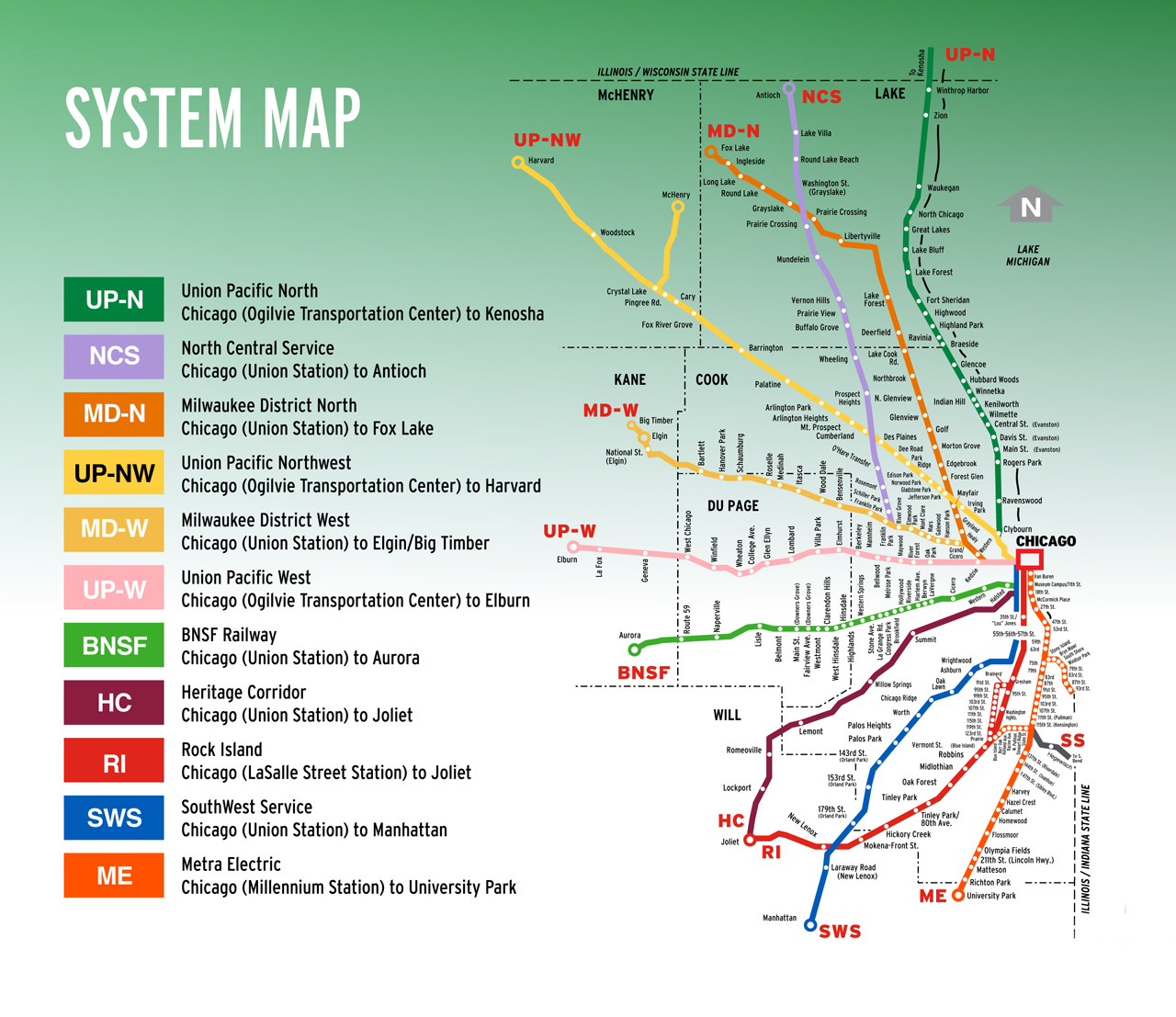
The Metra Northwest Line operates over a 63-mile stretch of track, connecting downtown Chicago's Ogilvie Transportation Center with Harvard, Illinois, and a specific branch terminating at Crystal Lake or McHenry. Understanding the structural layout of this commuter rail corridor is essential for planning daily travel, calculating transit times, and anticipating schedule shifts.
The corridor is characterized by a mix of densely populated urban neighborhoods in Chicago, inner-ring suburbs like Park Ridge and Des Plaines, and outer-ring communities like Barrington, Woodstock, and Harvard. Because the line shares tracks and operational coordination with freight carriers, maintaining punctuality requires adherence to precise timetable windows.
Key Terminal Points and Branch Splits
- Chicago Ogilvie Transportation Center (OTC): The downtown Chicago terminus located at Madison and Canal streets, providing direct connections to CTA buses, Ogilvie's lower-level concourse, and pedway systems.
- Crystal Lake Station: A major operational hub where many trains terminate or split into the Harvard branch and the McHenry branch.
- Harvard Station: The outer terminus of the main Northwest Line branch, situated near the Illinois-Wisconsin border.
- McHenry Branch: A secondary branch splitting off at Crystal Lake, serving Pingree Road and McHenry stations with a more limited peak-direction service schedule.
Weekday Versus Weekend Timetable Structures
Metra structures its timetables around distinct travel patterns. Weekday schedules prioritize peak-hour inbound capacity toward Chicago in the morning and outbound capacity in the evening, supplemented by reverse-commute trains and midday off-peak runs. Weekend schedules provide consistent, hourly or bi-hourly service tailored to leisure travelers, shoppers, and reverse commuters heading toward suburban commercial centers or O'Hare-adjacent feeder buses.
Weekday Peak and Off-Peak Dynamics
During weekday morning rush hours (typically inbound from 5:30 AM to 9:00 AM), express trains bypass several outer and middle-tier stations to shave travel time for long-distance commuters originating in McHenry County and outer Cook County. Conversely, evening rush hours (outbound from 3:30 PM to 7:00 PM) mirror this express pattern.
Off-peak weekday trains operate on an hourly cadence, serving all stations along the line. This local service pattern ensures that passengers traveling between intermediate suburbs—such as Arlington Heights to Mount Prospect, or Palatine to Barrington—have reliable mid-day transit options.
Weekend and Holiday Operating Profiles
Weekend timetables run on a modified clock-face schedule, usually offering service every one to two hours from early morning until late evening. The Saturday and Sunday schedules eliminate peak-hour express runs, requiring all scheduled trains to make all or most station stops. Ridership spikes during summer weekends due to events in downtown Chicago, festivals in the Northwest suburbs, and recreational trips to McHenry County conservation areas.
Core Metra Northwest Line Station Directory and Infrastructure
| Station Name | Distance from OTC (Miles) | Parking Availability | Connecting Transit Services | ADA Accessibility Status |
|---|---|---|---|---|
| Chicago Ogilvie | 0.0 | Commercial Garages | CTA Bus, CTA Rail, Amtrak | Fully Accessible |
| Clybourn | 2.8 | Limited / Metered | CTA Bus #74, #54 | Fully Accessible |
| Irving Park | 6.0 | Limited Street Parking | CTA Blue Line, CTA Bus | Partially Accessible |
| Jefferson Park | 8.8 | Commuter Lot (City) | CTA Blue Line, CTA Bus | Fully Accessible |
| Edison Park | 11.0 | Daily Fee / Permit | CTA Bus | Partially Accessible |
| Park Ridge | 12.9 | Daily Fee / Permit | Pace Bus | Fully Accessible |
| Des Plaines | 16.9 | Daily Fee / Garage | Pace Bus | Fully Accessible |
| Mount Prospect | 20.1 | Daily Fee / Permit | Pace Bus | Fully Accessible |
| Arlington Heights | 22.3 | Daily Fee / Garage | Pace Bus | Fully Accessible |
| Palatine | 26.1 | Daily Fee / Garage | Pace Bus | Fully Accessible |
| Barrington | 32.1 | Daily Fee / Permit | Pace Bus | Fully Accessible |
| Cary | 38.4 | Daily Fee / Permit | Pace Bus | Partially Accessible |
| Crystal Lake | 43.3 | Daily Fee / Garage | Pace Bus | Fully Accessible |
| Woodstock | 51.5 | Daily Fee / Permit | Pace Bus | Fully Accessible |
| Harvard | 63.0 | Free / Permit | Limited Local Transit | Partially Accessible |
Fare Structures, Ticket Purchasing, and Ventra Integration
Metra utilizes a zone-based fare system measured by the number of zones traveled between the origin and destination stations, rather than a flat rate. The Northwest Line spans across Zone 1 (Chicago OTC) out to Zone 5 (Harvard).
Passengers must purchase tickets prior to boarding to avoid onboard cash surcharges. The Ventra mobile application serves as the primary digital ticketing platform, allowing commuters to buy one-way tickets, day passes, and monthly passes directly on smartphones.
Available Ticket Types and Fare Options
- One-Way Ticket: Valid for travel between specific zones in a single direction within a limited time window.
- Day Pass (Day Pass 5-Pack): Offers unlimited rides within designated zones for a single calendar day, ideal for multi-stop trips or weekend excursions.
- Monthly Pass: Provides unlimited travel across designated zones for the calendar month, offering the highest value for traditional five-day-a-week commuters.
- Reduced Fare Program: Eligible seniors, students, children, and military personnel qualify for half-fare rates upon presenting valid identification or Ventra reduced-fare cards.
Real-Time Tracking and Schedule Management
Maintaining schedule reliability requires active monitoring of train locations, weather disruptions, and maintenance windows. Metra provides official real-time train tracker tools via its website and the Ventra app, displaying GPS-based vehicle locations and estimated time of arrival (ETA) data for every active run on the Northwest Line.
Commuter Advisory on Service Disruptions: Monitoring Tools: Always verify live train trackers during severe winter weather or heavy summer thunderstorms, as temperature extremes can trigger signal maintenance or speed restrictions across freight-shared track segments. Notification Systems: Sign up for Metra's text or email service alerts specific to the Northwest Line to receive immediate notifications regarding delays, track changes at Ogilvie, or unscheduled bus bridges.
Step-by-Step Guide to Planning Your Northwest Line Journey
Successfully navigating a commute on the Metra Northwest Line involves a systematic approach to route planning, ticketing, and platform navigation.
- Identify Origin and Destination Zones: Review the Metra zone map to determine how many zone boundaries your trip crosses between your boarding station and Chicago Ogilvie Transportation Center (or your suburban destination).
- Consult the Official Timetable: Access the current Northwest Line schedule PDF or digital planner to identify whether you require an express train during peak hours or a local train during off-peak times.
- Acquire Fare Media: Open the Ventra app to purchase a mobile ticket or pass before entering the platform. Alternatively, purchase paper tickets from station ticket agents or ticket vending machines where available.
- Arrive Early at the Platform: Arrive at least 5 to 10 minutes prior to scheduled departure. Listen closely to station public address announcements regarding track assignments at Ogilvie or inbound delays.
- Board and Validate: Board the passenger car. Conductors will collect or scan tickets after departure. If using a digital Ventra ticket, activate it immediately before or upon boarding as instructed by the app interface.
Comparison of Northwest Line Service Options
| Service Characteristic | Peak Express Trains | Off-Peak Local Trains | Weekend Recreational Trains |
|---|---|---|---|
| Frequency | Every 15-30 minutes during rush hours | Hourly cadence midday and late evening | Every 1-2 hours all day Saturday/Sunday |
| Station Coverage | Skips inner and middle-tier stations | Stops at all 23 active line stations | Stops at all 23 active line stations |
| Average Speed | Higher average speed due to fewer stops | Lower average speed due to frequent stops | Moderate speed with uniform dwell times |
| Primary User Base | 5-day commuters heading to downtown Chicago | Midday errand runners, reverse commuters | Shoppers, festival-goers, weekend visitors |
Troubleshooting Common Commuter Challenges
Commuters occasionally encounter operational hurdles that disrupt travel routines. Understanding how to resolve these issues minimizes friction during transit.
- Missed Connections: If you miss an outbound peak express train at Ogilvie, check the departure board for the subsequent local train, which will make all stops to Crystal Lake or Harvard, albeit with a longer total travel time.
- Ticket Activation Errors: If your Ventra app fails to load a ticket due to poor cellular connectivity inside terminal waiting areas, connect to station Wi-Fi or visit the ticket window before boarding to avoid conductor penalties.
- ADA Boarding Assistance: Passengers requiring wheelchair lifts or boarding ramps should notify the train crew or station personnel in advance, or position themselves near the designated ADA lift car, typically located immediately behind the locomotive or cab car.
Practical Recommendations for Daily Commuters
To optimize your daily experience on the Metra Northwest Line, establish a consistent routine anchored by technology and preparation. Download the Ventra app well in advance of your first trip and store a backup payment method. Maintain familiarity with secondary parking options at your home station, as high-demand commuter lots in communities like Palatine and Arlington Heights often fill up by early morning peak hours. Finally, build buffer time into your schedule when connecting to downtown CTA rapid transit lines or suburban Pace buses to ensure seamless multimodal transit transitions.
Image Gallery