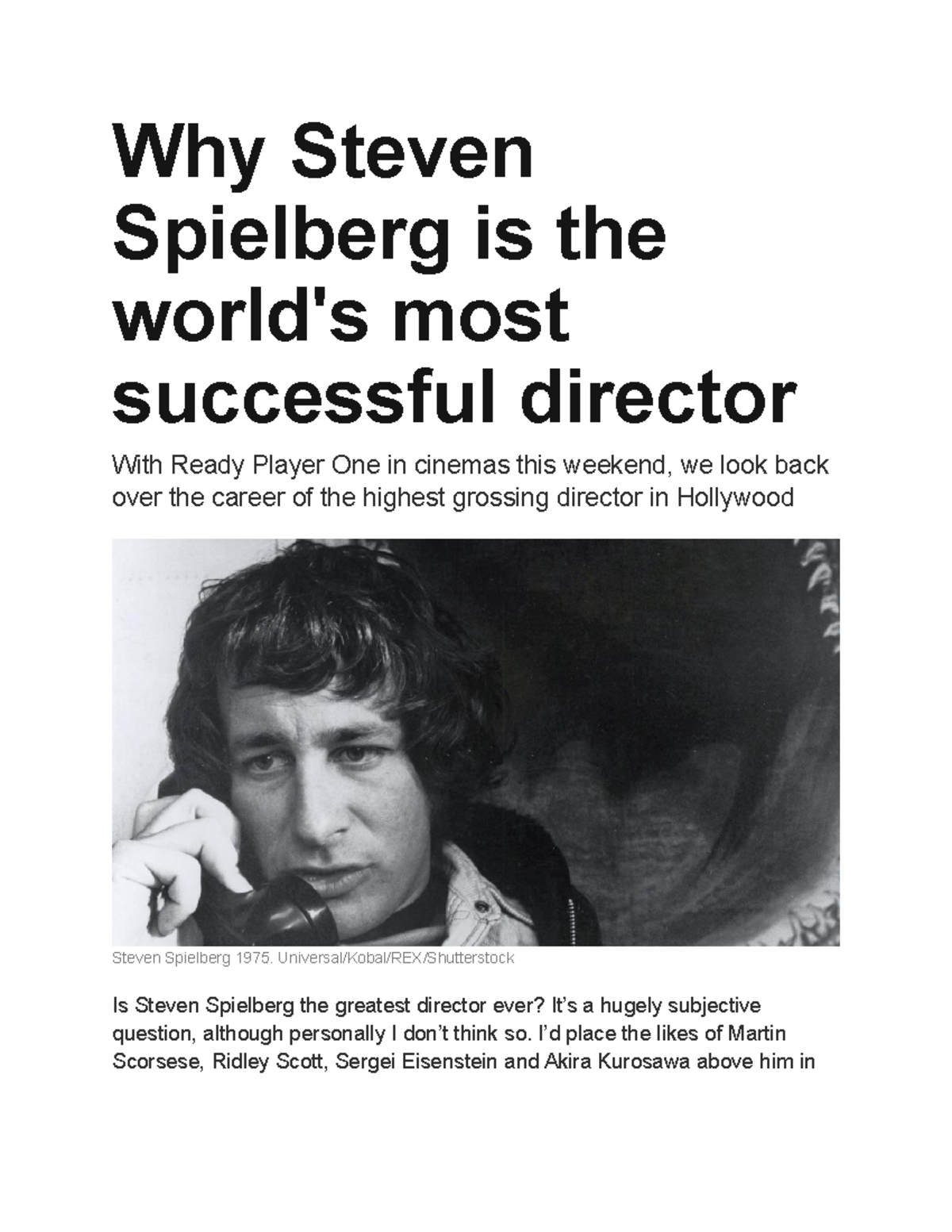
Why the Most Successful Directors Matter to Film Fans
Successful directors matter to film fans because they serve as a reliable "seal of quality," blending distinct artistic visions with the technical mastery required to execute large-scale stories. They act as cultural anchors, providing...
Successful directors matter to film fans because they serve as a reliable "seal of quality," blending distinct artistic visions with the technical mastery required to execute large-scale stories. They act as cultural anchors, providing a recognizable "auteur" voice that guarantees a specific aesthetic or thematic experience, thereby reducing the perceived risk for audiences in a crowded media landscape.
Contents
The Auteur Theory and the Director as a Brand
In the eyes of a dedicated film fan, the director is often the primary "author" of a cinematic work. This concept, known as Auteur Theory, suggests that despite the collaborative nature of filmmaking, a director’s personal influence is so strong that it overrides the contributions of the studio or the screenwriter. For fans, a director's name functions much like a high-end brand name. When a viewer sees "A Film by Christopher Nolan" or "Directed by Greta Gerwig," they aren't just looking at a credit; they are anticipating a specific set of stylistic choices, thematic preoccupations, and technical standards.
By 2026, the branding of directors has become more critical than ever. In an era where streaming platforms release thousands of titles annually, the most successful directors—those who have consistently delivered both critical acclaim and commercial viability—act as filters for the audience. Fans follow these individuals because their track records suggest a high probability of satisfaction. This relationship creates a unique feedback loop where the fan's loyalty allows the director to take greater creative risks, which in turn deepens the fan's appreciation for the director's evolution.
The "director-as-brand" phenomenon is particularly evident in how fans discuss "visual grammar." Whether it is the symmetry and pastel palettes of Wes Anderson or the gritty, high-contrast realism of David Fincher, successful directors provide fans with a visual language they can recognize and celebrate. This recognition fosters a sense of community among fans, who often bond over their ability to identify these stylistic signatures.
Technical Innovation and the Push for Cinematic Excellence
Successful directors often command the largest budgets in the industry, and with that capital comes the responsibility—and the opportunity—to innovate. Film fans value successful directors because these creators often push the boundaries of what is technologically possible. From the pioneering use of performance capture in James Cameron’s Avatar franchise to the insistence on 70mm IMAX film by directors like Nolan and Denis Villeneuve, these filmmakers provide experiences that justify the "big screen" tradition.
For the technical-minded film fan, these directors represent the vanguard of the medium. They are the ones demanding better sound design, more realistic visual effects (VFX), and higher frame rates. When a director achieves massive commercial success, they gain the leverage necessary to challenge studio mandates, such as the push toward purely digital releases or the over-reliance on "safe" CGI.
The Impact of Directorial Leverage on Production Standards
- Format Preservation: Directors with high status can insist on shooting on physical film, preserving the organic texture of cinema that many purists adore.
- Practical Effects: Success allows directors like Christopher Nolan or Tom Cruise (working with high-level directors) to demand practical stunts and sets, which fans generally perceive as more immersive than digital alternatives.
- Extended Runtimes: Only the most successful directors can secure "final cut" privilege, allowing them to release three-hour epics that delve deeper into character and world-building than a standard 90-minute studio edit would permit.
The Director as a Cultural Compass
Beyond the technical and the stylistic, successful directors matter because they shape the cultural zeitgeist. A director like Steven Spielberg or Martin Scorsese does not just make movies; they define eras of storytelling. For fans, these directors are the architects of the "Event Movie." In 2026, we see this clearly in how the release of a major auteur’s work becomes a global conversation, transcending the box office to influence fashion, political discourse, and social trends.
The success of a director often grants them a "pulpit" from which they can highlight specific social issues or historical periods. When a successful director chooses a subject, they bring an army of fans with them, effectively elevating the topic into the mainstream consciousness. This is why fans feel a deep connection to these figures; the director’s success is seen as a victory for the types of stories the fans want to see told on a grand scale.
Comparing Types of Directorial Success
Not all successful directors are measured by the same metrics. For fans, "success" can be categorized into commercial dominance, critical adoration, or cult-like influence. Each type of success offers a different value proposition to the audience.
| Success Type | Primary Metric | Value to Film Fans | Example Figures (Legacy & Modern) |
|---|---|---|---|
| Commercial Titans | Global Box Office | Guarantees high-budget, "spectacle" experiences. | James Cameron, the Russo Brothers |
| Critical Auteurs | Award Wins / Metacritic | Provides intellectual depth and prestige storytelling. | Martin Scorsese, Bong Joon-ho |
| Cultural Disruptors | Social Media Engagement / Trends | Creates "must-see" moments that define the year. | Greta Gerwig, Jordan Peele |
| Technical Visionaries | Technical Oscars / Patents | Pushes the limits of cinematography and VFX. | Christopher Nolan, Denis Villeneuve |
The Reliability Factor in the "Peak Content" Era
One of the most practical reasons successful directors matter to fans in 2026 is the "decision fatigue" caused by the sheer volume of content available. For a casual film fan, choosing a movie can be an overwhelming task. A director with a proven track record of success simplifies this process.
The most successful directors provide a psychological "safety net." Even if a specific film from a legendary director isn't their absolute best work, the fan knows that the craft—the lighting, the acting, the pacing—will meet a certain professional standard. This reliability is a form of currency. In an industry where "content" is often treated as a disposable commodity, the successful director maintains the sanctity of "cinema" as a distinct, high-effort art form.
Furthermore, these directors often act as talent magnets. A fan of a specific actor is more likely to watch a film if it is helmed by a prestigious director, knowing that the director will likely extract a career-best performance from that actor. This synergy between directorial success and acting excellence is a major draw for audiences who value high-level performances.
Mentorship and the Longevity of the Medium
Successful directors also matter because they serve as the "guardians" of the industry’s future. High-profile directors often use their success to produce films for up-and-coming talent or to advocate for the preservation of film history. For fans who care about the long-term health of the medium, the success of directors like Guillermo del Toro or Quentin Tarantino is vital because these individuals are vocal proponents of film education and archive preservation.
By supporting a successful director, fans are indirectly supporting the ecosystem that allows new directors to emerge. Successful directors often "pay it forward" by hiring young cinematographers, editors, and assistant directors who eventually become the masters of the next generation. For the dedicated film fan, the lineage of a director—who they studied under and who they are mentoring—is a fascinating part of the cinematic narrative.
Frequently Asked Questions
Does a director's box office success always mean the movie is good?
Not necessarily. While commercial success indicates that a director can appeal to a broad audience, film fans often distinguish between "financial success" and "artistic success." However, for many fans, high box office numbers are important because they provide the director with the "capital" (both literal and political) to make more ambitious films in the future.
Why do fans care about a director’s "Final Cut" rights?
Final Cut privilege is the ultimate sign of a successful director. It means the studio cannot re-edit the film without the director’s permission. For fans, this matters because it ensures that the version of the movie they see in theaters is the unfiltered vision of the artist, rather than a version designed by a marketing committee.
How has the role of the successful director changed by 2026?
By 2026, directors have had to adapt to a hybrid world of theatrical releases and high-end streaming. A successful director now matters because they are often the only ones who can bridge the gap—creating films that are "events" in theaters while still maintaining high viewership numbers on digital platforms. They have become the primary defenders of the theatrical experience.
Can a director be successful without winning an Oscar?
Absolutely. Many directors who matter most to film fans—such as Alfred Hitchcock or Stanley Kubrick—never won a competitive Academy Award for Best Director during their careers. Fans often measure success through "endurance"—the ability of a film to remain relevant and discussed decades after its release.
Why is the "Auteur Theory" still relevant today?
The Auteur Theory remains relevant because it helps fans organize their understanding of cinema. In a world of massive franchise filmmaking (like the MCU or Star Wars), fans look for the "auteur" voice to see how an individual artist can leave their mark on a pre-existing world. It satisfies the human desire to connect with a single creative mind rather than a faceless corporation.
Final Recommendation for Film Fans
To truly appreciate why successful directors matter, fans should move beyond simply watching the latest releases. To gain a deeper understanding, study a director’s entire filmography in chronological order. Observing how a director’s themes and technical skills evolve as they gain more "success" provides a masterclass in the intersection of art and industry. Additionally, look for "Director’s Commentaries" or "Behind-the-Scenes" documentaries (such as Long Shot or The Shark is Still Working) to see the immense logistical and creative pressure these individuals navigate to bring a vision to life.
Image Gallery