The Ultimate Guide to Golf Club Fitting in Houston, TX (2026)
Professional golf club fitting in Houston is a data-driven process that customizes equipment to a golfer's unique swing mechanics, physical stature, and performance goals. By utilizing advanced launch monitors and specialized software,...
Professional golf club fitting in Houston is a data-driven process that customizes equipment to a golfer's unique swing mechanics, physical stature, and performance goals. By utilizing advanced launch monitors and specialized software, expert fitters in the Greater Houston area help players of all skill levels optimize ball speed, accuracy, and consistency.
Contents
Whether you are navigating the tight fairways of Memorial Park or tackling the winds at a coastal course near Galveston, your equipment plays a pivotal role in your scorecard. In Houston’s competitive golf market, custom fitting has transitioned from a luxury for touring professionals to an essential service for any amateur looking to improve. As of 2026, the technology behind fitting has reached new heights, integrating artificial intelligence with high-speed imaging to provide an unprecedented level of detail regarding clubhead delivery and ball flight.
Why Precision Fitting Matters for Houston Golfers
The Houston golf environment presents unique challenges. The region's high humidity, heavy air at sea level, and predominant use of Bermuda grass require specific equipment considerations. A generic "off-the-shelf" set of clubs often fails to account for these variables, leading to suboptimal launch angles and spin rates.
Overcoming the "Sea Level" Factor
Houston’s low elevation means the air is denser than in many other golfing hubs. This density increases drag on the ball, which can significantly reduce carry distance if a golfer’s launch conditions are not optimized. A professional fitting session focuses on maximizing "smash factor"—the efficiency of energy transfer from the club to the ball—ensuring that you aren't leaving yards on the table due to incorrect loft or shaft profiles.
Turf Interaction and Lie Angle
The aggressive grain of Bermuda grass common in Southeast Texas can grab the leading edge of a club if the lie angle is incorrect. If your clubs are too upright, the heel will dig into the turf, causing the face to shut and sending the ball left (for a right-handed golfer). Conversely, a club that is too flat will result in toe-heavy contact and a right-bound trajectory. Custom fitting ensures that your clubs sit flush at impact, promoting cleaner strikes even in the thickest Houston rough.
The Core Components of a Professional Fitting
A comprehensive fitting session is divided into several specialized segments. While some golfers only seek a driver fitting or a putter fitting, a "full bag" analysis provides the most cohesive results.
1. Launch Monitor Technology
In 2026, the industry standard in Houston remains high-end systems like Trackman 4 and the Foresight Sports GCQuad. These devices use dual-radar technology and quadrascopic imaging to measure dozens of data points, including:
- Club Path: The direction the clubhead is moving at impact.
- Face Angle: The orientation of the clubface relative to the target line.
- Spin Axis: The tilt of the ball's rotation, which determines curvature (hooks or slices).
- Dynamic Loft: The actual loft of the club at the moment of impact.
2. Shaft Dynamics and Loading
The shaft is often called the "engine" of the golf club. During a fitting, the technician analyzes your tempo, transition, and release point. They aren't just looking for "Stiff" or "Regular" flex; they are looking at the shaft's EI Profile (stiffness at the tip, mid, and butt sections). In a city like Houston, where windy conditions are frequent, many players benefit from lower-launching, "low-spin" shafts that help the ball pierce through the Gulf breeze.
3. Loft and Lie Calibration
Even brand-new clubs from major manufacturers can have slight variances in loft and lie. A professional fitter uses a digital loft/lie machine to bend irons and wedges to exact specifications. This ensures that your "gapping"—the distance between each club—is consistent, preventing situations where you have two clubs that go the same distance or a 20-yard gap that leaves you stranded between clubs.
Top Locations for Golf Club Fitting in Houston, TX
Houston is home to some of the most advanced fitting studios in the United States. Depending on your budget and preference for brand-agnostic versus brand-specific fitting, several elite options are available.
Boutique fitting Studios
- Club Champion: Located in areas like Sugar Land and near the Willowbrook Mall, Club Champion offers a brand-agnostic approach with over 65,000 clubhead and shaft combinations. They specialize in "pured" shafts and high-end builds.
- Cool Clubs: Known for their proprietary software and rigorous testing protocols, Cool Clubs provides a premium experience for golfers seeking tour-level precision.
- PXG Houston: Located in the Katy area, this center focuses specifically on PXG equipment, offering a deep dive into their unique weighting systems and specialized clubheads.
Retail and Performance Centers
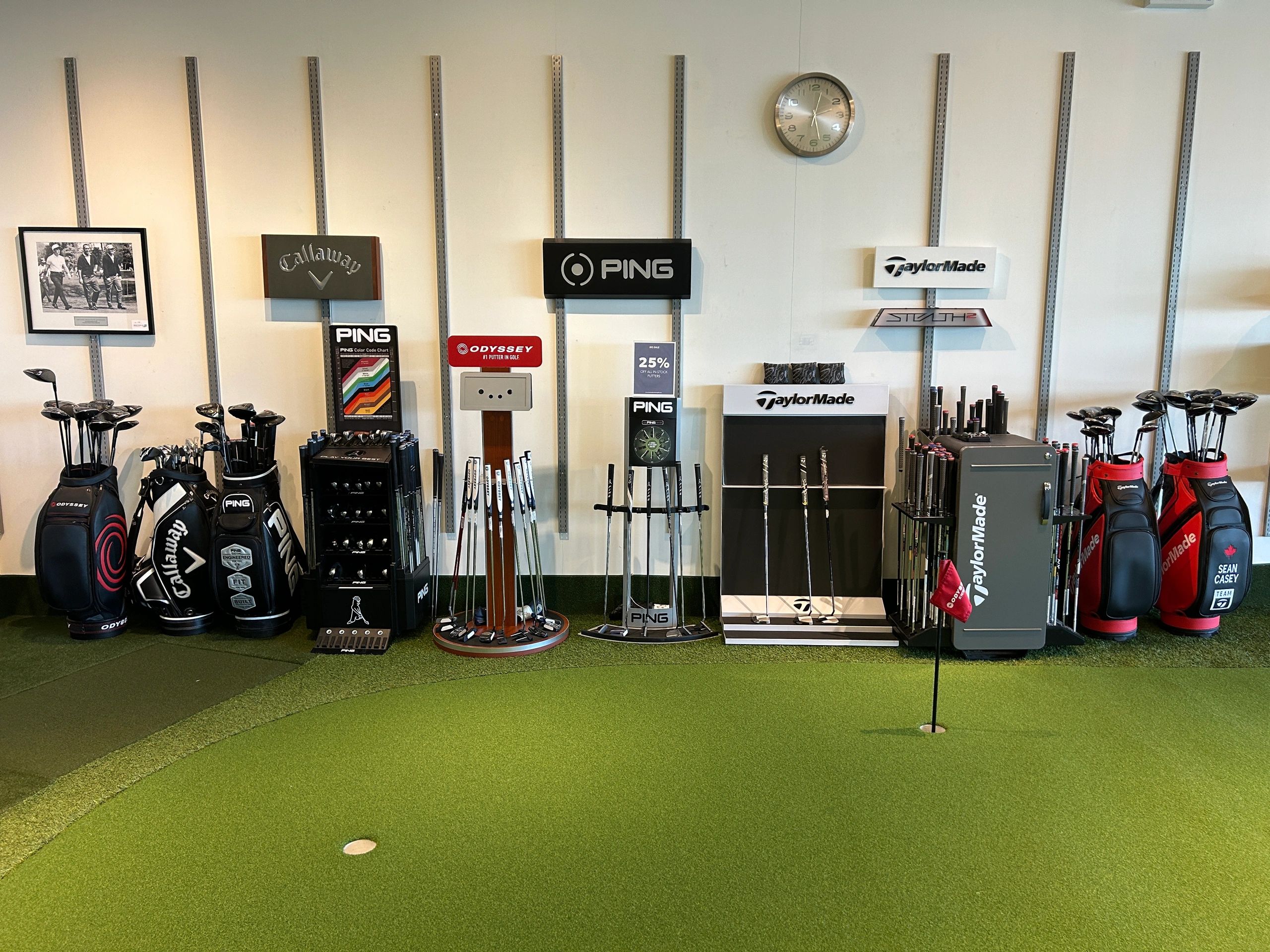
- PGA TOUR Superstore (The Woodlands, Katy, and Sugar Land): These massive facilities offer "Studio" fittings and "Performance" fittings. They are excellent for golfers who want to compare all major brands like TaylorMade, PING, Callaway, and Titleist in one sitting.
- Golf Galaxy Performance Center: Featuring Trackman bays and certified fitters, these locations provide a reliable mid-tier fitting experience with a wide selection of in-stock components.
What to Expect During Your Fitting Session
A professional fitting is a physical and mental workout. For a full-bag fitting, you should expect to be at the facility for three to four hours.
The Initial Interview
Your fitter will begin by asking about your current game, your "miss" (the shot that costs you the most strokes), and your goals. Do you want more distance off the tee, or are you looking to tighten your dispersion with your irons? They will also measure your current clubs to establish a baseline.
Data Analysis and Iterative Testing
You will begin hitting shots with your current equipment to generate baseline data. From there, the fitter will introduce various head and shaft combinations. It is a process of elimination. As the data narrows down the best performers, the fitter will fine-tune the details, such as grip size and swing weight.
The Recommendation Report
At the end of the session, you won't just be told which clubs to buy. You will receive a detailed report containing your optimal specifications. This includes length, lie angle, loft, shaft model, tipping instructions, and grip type. Most Houston studios allow you to order the clubs directly through them, often with the fitting fee discounted from the purchase price.
Comparison of Fitting Service Levels in Houston
| Fitting Type | Average Cost (2026) | Duration | Best For | Technology Used |
|---|---|---|---|---|
| Boutique Brand-Agnostic | $150 - $400 | 2 - 4 Hours | Low handicappers & Gear enthusiasts | Trackman / GCQuad |
| Retail Performance Fitting | $50 - $150 | 45 - 90 Mins | Mid-to-high handicappers | GCVisual / FlightScope |
| Manufacturer Demo Day | Free / $25 | 30 Mins | Brand-loyalists | Brand-specific monitors |
| Outdoor Professional Fitting | $100 - $250 | 1 - 2 Hours | Players who need to see ball flight | Trackman / Range balls |
Cost Analysis: Fitting Fees vs. Club Investment
One of the most common questions for Houston golfers is whether the fitting fee is worth the investment. In 2026, a premium set of custom irons can range from $1,200 to $2,500, while a high-performance driver can exceed $600.
A fitting fee typically represents less than 10% of the total equipment cost. However, it ensures that the remaining 90% of your investment is actually working for your swing. Furthermore, custom-fitted clubs have better resale value in the local Houston market because they often feature premium shafts and components that are in high demand on secondary markets.
Common Mistakes to Avoid When Getting Fitted
- Fitting During a Swing Change: If you are currently taking lessons and your swing is in a state of flux, wait until your new mechanics are somewhat baked in. A fitting captures a "snapshot" of your swing; you want that snapshot to represent how you intend to play.
- Using "Range" Balls for Data: If you are at an outdoor facility, ensure they are using "premium" fitting balls. Range balls have different flight characteristics and spin rates than the Titleist Pro V1 or TaylorMade TP5 you use on the course.
- Ignoring the Putter: Most golfers spend 40% of their shots on the green, yet putter fitting is the most neglected service. A fitting can determine if you need a blade or a mallet, and exactly how much "toe hang" your stroke requires.
- Chasing Distance Only: It is easy to get seduced by a 300-yard drive on the simulator. However, if that drive only happens once out of ten swings, it isn't the right club. Focus on dispersion—the circle of where all your shots land.
Frequently Asked Questions
Do I need to be a "good" golfer to get fitted in Houston?
No. In fact, high-handicap golfers often see the most dramatic improvements. Beginners often struggle with clubs that are too long or shafts that are too stiff, which forces them to develop bad swing habits to compensate. A fitting levels the playing field by providing equipment that works with your current abilities.
How often should I get my clubs checked?
Given the heat and humidity in Houston, the epoxy in your clubs can experience significant stress if left in a hot car trunk. It is recommended to have your loft and lie angles checked at least once a year, as the soft forged metal in many player-distance irons can migrate over time with repeated turf impact.
Can I get fitted for my existing clubs?
Yes, this is known as a "Retro-fit." A professional fitter can analyze your current bag and determine if adjustments to the length, lie, or even the shafts can improve performance without the need to buy entirely new clubheads.
Does the humidity in Houston affect my fitting data?
Indoor fitting studios are climate-controlled to standard conditions. However, advanced launch monitors like Trackman have "Optimizer" features that allow fitters to normalize the data or simulate how the ball will behave in Houston’s specific 90-degree, 80% humidity summer days.
What should I bring to my fitting?
You should bring your current set of clubs, your golf shoes, and the specific brand of ball you usually play. Wear the clothing you typically wear on the course to ensure your range of motion is identical to a real round of golf.
Practical Recommendations for Houston Golfers
If you are ready to book a fitting, start by auditing your current game. If your biggest struggle is "three-putting," look for a specialized SAM PuttLab or Quintic fitting in the Houston area. If you are struggling with "duffed" iron shots, prioritize a lie-angle analysis.
For those in the North Houston/Woodlands area, the PGA TOUR Superstore provides an excellent starting point due to its sheer volume of options. If you are a competitive player in West Houston or Katy, a session at a boutique studio like Club Champion or the PXG Retail Studio will provide the granular data needed to shave those last few strokes off your handicap. Always ask your fitter for a copy of your "data sheet"—it is a valuable document to keep for your records and for any future coaches you may work with.
Image Gallery