Drop Fade Long Curly Hair: The Complete Style, Barber, and Maintenance Guide
The drop fade long curly hair haircut pairs voluminous, natural curls on top with a perimeter fade that curves dynamically behind the ear down to the nape of the neck. This contrast accentuates natural texture while keeping the sides s...
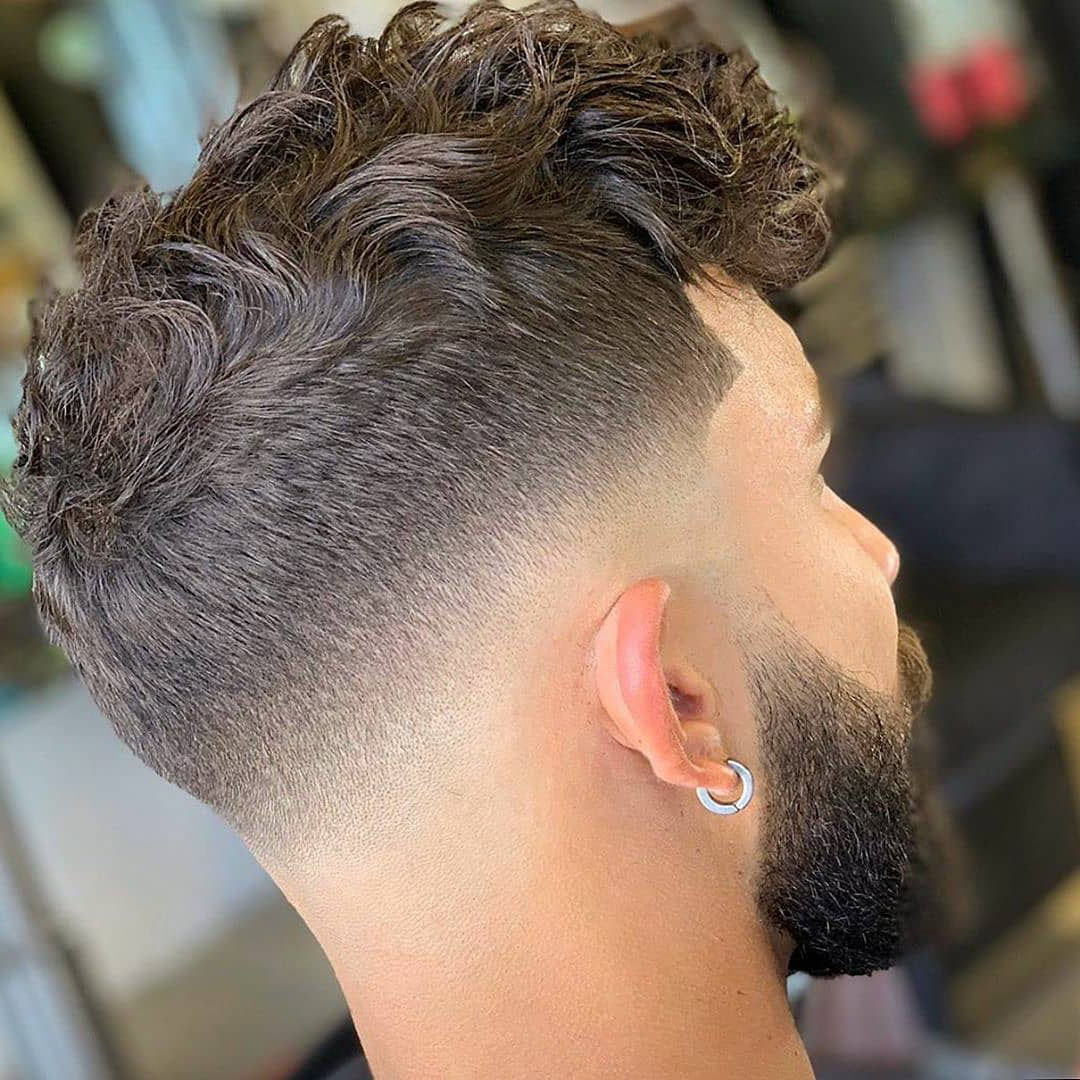
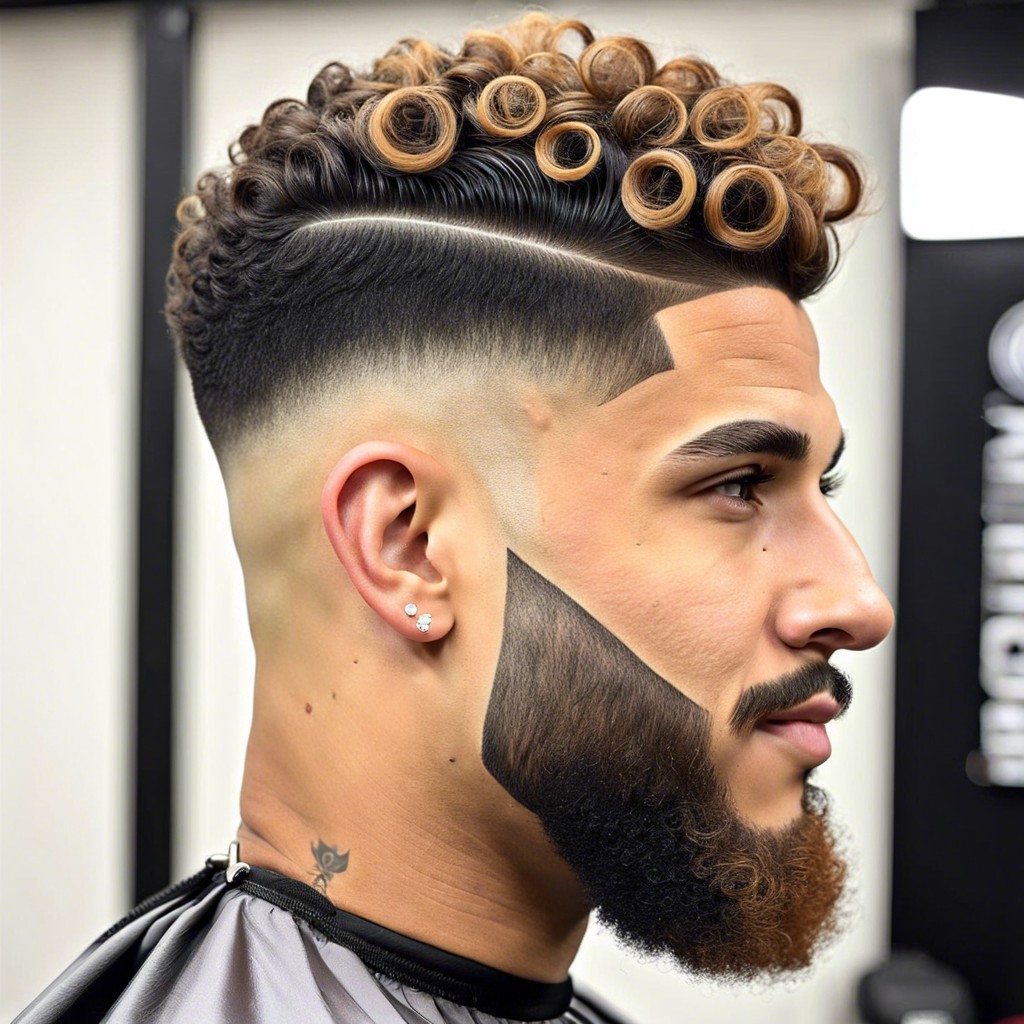
The drop fade long curly hair haircut pairs voluminous, natural curls on top with a perimeter fade that curves dynamically behind the ear down to the nape of the neck. This contrast accentuates natural texture while keeping the sides sharp, clean, and low-maintenance. It suits Type 3 ringlets and Type 4 coils across diverse face shapes.
Contents
Understanding the Drop Fade Architecture for Curly Textures
The drop fade is a specialized variation of the classic fade haircut. Instead of maintaining a uniform horizontal line around the circumference of the head, the drop fade lowers its blend line behind the ear, following the natural curve of the skull down to the occipital bone and nape. When paired with long curly hair, this cut creates a distinct structural balance between sharp, precision line work on the perimeter and organic weight, volume, and movement on the crown.
(Ensure NO code blocks are used anywhere in output - check double backticks)
Correction check: Ensure ZERO backticks or code tags are used.
How the Arc Drop Complements Natural Curl Patterns
Curly hair expands outward and upward due to its natural follicle shape and structural elasticity. Traditional straight-line fades can create harsh, boxy silhouette transitions on curly hair, especially around the parietal ridge (the area where the sides of the head begin to curve into the top).
The curved path of a drop fade respects the anatomical contours of the head:
- Preserves Nape Coverage: Dropping the fade low at the back leaves enough mass to prevent the crown curls from looking top-heavy or floating unnaturally.
- Frames the Face: By tapering short around the temples and behind the ears, the cut highlights the cheekbones and jawline while letting long ringlets fall over the forehead or sweep back naturally.
- Softens the parietal transition: The lower arc creates a longer gradient zone, allowing barbers to hand-blend curly weight lines into skin or shadow transitions without creating abrupt line breaks.
Low vs. Mid vs. High Drop Fade Variations
Choosing the drop depth dictates the overall dramatic impact and daily upkeep of the hairstyle:
- Low Drop Fade: The fade stays within an inch of the natural hairline, dropping sharply just behind the ear lobule down to the hairline base. This variation retains maximum bulk and works best for professional environments or men growing out their curls for the first time.
- Mid Drop Fade: The drop begins just above the temple line and sweeps downward in a smooth arc ending at the middle of the occipital bone. It offers an ideal middle ground between high-contrast modern styling and balanced curl volume.
- High Drop Fade: Starting high near the crown or upper parietal ridge, the fade drops aggressively toward the lower nape. This creates maximum contrast, highlighting long, bouncy curls while keeping the bulk of the head completely exposed and cool.
Matching Drop Fade Curves to Curl Types and Face Shapes
To ensure the drop fade works harmoniously with your features, you must evaluate both your specific hair texture (using the Andre Walker Hair Typing System) and your facial morphology.
Hair Texture Considerations (Type 3 vs. Type 4)
The structural integrity of a drop fade depends directly on hair elasticity and shrinkage rates. Type 3 ringlets require weight-conscious length management to avoid triangular silhouette flare, whereas Type 4 coils require precise edge-lining to maintain clean separation between the faded skin and textured top.
- Type 3A to 3C (Loose Ringlets to Corkscrews): Type 3 hair benefits from longer length on top (4 to 8 inches) because weight helps pull curls downward, creating a cascading effect over the dropped fade line. Barbers should use point-cutting or interior layering rather than thinning shears to prevent unwanted surface frizz.
- Type 4A to 4C (Dense Coils and Kinks): Type 4 hair expands visually and displays high shrinkage rates (up to 75% of actual length). A drop fade on long Type 4 hair creates a striking vertical profile. It relies on sharp outline work (tapered temples and a pristine neck drop) to ground the natural height and density of the crown.
Face Shape Compatibility Matrix
- Round Face Shape: High or Mid Drop Fades add vertical height on top while eliminating side width, effectively lengthening the perceived face structure.
- Square Face Shape: A Low or Mid Drop Fade highlights a strong, angular jawline while the curved fade line softens harsh bone structures behind the ears.
- Oval Face Shape: Highly versatile; accommodates Low, Mid, or High drop variations without distorting natural facial symmetry.
- Oblong or Long Face Shape: Low Drop Fades are strongly recommended. Avoid high drop variations, as excessive height on top paired with bare sides can elongate the face uncomfortably.
Technical Comparison: Drop Fade vs. Alternative Haircut Styles
Understanding how the drop fade compares to other popular curly haircuts helps clarify why this cut remains a top recommendation for managing long top textures.
| Feature / Metric | Drop Fade with Long Top | Classic Skin Taper Fade | High Burst Fade | Disconnected Undercut |
|---|---|---|---|---|
| Fade Line Contour | Dynamic arc dropping behind the ear to nape | Straight perimeter taper (temples & nape only) | Circular burst centered strictly around the ear | Sharp, straight horizontal disconnection line |
| Side & Back Coverage | Very low at nape; tight around ears | Moderate coverage across mid and low skull | Open around the neck; concentrated drop at ears | Uniformly shaved or cut short all around |
| Curl Weight Balance | Excellent; prevents top-heavy silhouette | High bulk retention around parietal ridge | Focused volume over crown and occipital region | High weight exposure; zero gradient blending |
| Maintenance Cycle | Every 2 to 3 weeks (sides and line-up) | Every 3 to 4 weeks | Every 2 to 3 weeks | Every 3 to 5 weeks |
| Styling Versatility | High (Wash-and-go, man bun, half-up) | Moderate (Standard afro, messy top) | High (Mohawk, faux hawk, crest styles) | Moderate (Slick back, hanging fringe) |
Barber Consultation Blueprint: How to Request the Cut
Communicating effectively with your barber ensures you walk out with the exact drop fade depth and top proportions you desire. Never simply ask for "a drop fade with long hair on top"—bring clear reference photos and use standard technical terms.
Key Barber Terminology to Use
- Specify the Fade Baseline: State whether you want a Skin/Zero Drop Fade (shaved down to smooth skin) or a Shadow Drop Fade (lowest guard #0.5 or #1 left visible).
- Define the Drop Location: Instruct the barber where the dip should peak. For example: "I want a mid drop fade that starts at the eyebrow line in front and curves 2 inches down behind my ears to the base of my neck."
- Clarify the Parietal Blend: Ask your barber to preserve the weight line or soften the transition with shear-over-comb techniques. State clearly if you prefer a disconnected look where long curls hang over the fade, or a blended transition where shorter curls step up into the top length.
- Detail the Hairline / Edge-Up: Decide if you want a sharp line-up at the forehead and temples (popular with Type 4 textures) or a natural, feathered hairline (popular with Type 3 loose ringlets).
Recommended Guard Steps for Your Barber
Barbers crafting a drop fade on long curly hair generally follow a structured step-up sequence: start with the open lever (#0) establishing the drop guideline, use a #1 guard open to close for the mid-zone transition, and transition into a #2 and #3 guard via hand-blending into the parietal ridge. The top length should always be sectioned away using duckbill clips prior to clipper work to prevent accidental cutting of top ringlets.
Complete Daily Maintenance and Styling Routine
Long curly hair requires consistent moisture management, while the faded sides demand scalp health and razor line care. Without a structured routine, long top curls become frizzy and unmanageable, clouding the crisp contrast of the drop fade.
(Ensure NO code blocks are used anywhere in output - check blockquote guidelines)
Step-by-Step Wash and Conditioning Protocol
- Sulfate-Free Cleansing (1-2 Times Per Week): Avoid harsh sulfates that strip natural scalp oils. Wash hair using a hydrating shampoo or a dedicated cleansing conditioner (co-wash) to preserve structural curl moisture.
- Deep Conditioning and Detangling (In-Shower): Apply a high-slip conditioner or deep-conditioning mask. Detangle curls exclusively while wet, using a wide-tooth comb or wet-brush, working from the ends upward to the roots to prevent breakage.
- Cool Water Rinse: Rinse conditioner out with cool water to seal the hair cuticle, lock in moisture, and increase natural shine.
Product Application: The LOC / LCO Method
To achieve maximum curl definition without weighing down the long top, apply styling products to dripping wet hair immediately after showering:
- L (Liquid/Leave-in): Apply a lightweight leave-in conditioner to supply underlying water-based moisture.
- C (Cream): Work a curl-defining cream through sectioned curls using the "pray hands" technique or finger-coiling to form distinct ringlet groups.
- O (Oil or Gel): Apply a light botanic oil (like argan or jojoba) or a medium-hold styling gel/foam to seal the moisture layer and create a soft gel cast that guards against environmental humidity.
Drying Techniques
- Air Drying: Best for maintaining natural drop length and avoiding heat damage. Do not touch your hair while drying, as friction breaks the curl cast and causes immediate surface frizz.
- Plopping / Microfiber Drying: Gently cup curls upward toward the scalp using a microfiber towel or cotton t-shirt to squeeze out excess water. Never rub with a standard terry cloth towel.
- Diffusing: Attach a diffuser cone to your blow dryer. Set to low heat and medium speed. Cup sections of curls into the diffuser basin and lift upward to the scalp to encourage maximum volume and shrink-definition without disrupting the drop fade line.
Preserving Curls and Fades Overnight
Protecting your style overnight prevents friction-induced matting and flattened curls:
- The Pineapple Method: Gather all long top curls to the very front peak of your head using a loose silk or satin scrunchie. Do not pull tightly; let the ends rest loosely.
- Satin/Silk Pillowcase or Bonnet: Sleep on a satin pillowcase or wear a silk bonnet. Traditional cotton fabrics absorb moisture from the hair fiber and create micro-friction that ruins both curl definition and short fade edges.
Troubleshooting Common Drop Fade Curly Hair Issues
Even with an excellent cut, long curly top hair paired with short faded sides presents unique daily styling challenges. Here is how to resolve the most common issues:
Issue 1: Parietal Ridge Overhang and "Mushrooming"
- The Cause: Top curls grow down over the faded sides, causing an unsightly bulge at the widest part of the skull.
- The Remedy: Schedule a mid-cycle "maintenance cut" every 2 to 3 weeks. Have your barber clean up only the side fade and outline edge without cutting any length off the top curls. Alternatively, use a light styling pomade or curl cream to brush and train the lower layer of top curls backward behind the ear path.
Issue 2: Excessive Frizz and Loss of Ringlet Definition
- The Cause: Lack of moisture, sleeping on cotton, or touching hair while it dries.
- The Remedy: Introduce a daily morning refresh spray. Mix 80% distilled water with 20% leave-in conditioner in a spray bottle. Mist curls lightly, scrunch gently upward, and allow to air-dry. Avoid applying heavy wax-based products, which weigh curls down into greasy, limp strands.
Issue 3: Scalp Irritation and Razor Bumps Along the Drop Line
- The Cause: Sensitive skin reacting to close zero-blade or foil razor work around the lower neck and nape line.
- The Remedy: Apply an alcohol-free, soothing post-shave balm containing aloe vera, tea tree oil, or witch hazel immediately after haircut appointments. Keep the lower drop fade zone hydrated daily with a lightweight scalp moisturizer.
Frequently Asked Questions (FAQ)
How often do I need to get a drop fade retouched?
You should refresh the fade every 2 to 3 weeks to keep the drop shape crisp and clean. The long curly top only needs trimming every 8 to 12 weeks to remove split ends and maintain weight distribution.
Does a drop fade work on fine, thin curly hair?
Yes, a drop fade works well on fine curly hair because taking the sides short creates an optical contrast that makes thin top curls look significantly denser and fuller. Opt for a Low or Mid Drop Fade to prevent exposing too much bare scalp.
What is the minimum top length required for a drop fade with long curly hair?
You need at least 3 to 4 inches of stretched hair length on top to create a noticeable "long" curly look. For true cascading ringlets over a drop fade, 6 to 8 inches or more is recommended.
Can I tie back long curly hair with a drop fade?
Yes, long top curls with a drop fade can easily be tied into a man bun, top knot, or half-up style. The curved drop fade creates a remarkably clean profile when top hair is tied up, exposing the faded gradient along the sides and neck.
What is the difference between a drop fade and a burst fade?
A drop fade lowers its line uniformly across the entire back perimeter from behind the ear to the nape. A burst fade creates a localized, circular sunburst pattern rounded specifically around the ear, leaving more length visible at the back of the neck.
Practical Recommendation & Next Steps
The drop fade long curly hair style remains one of the most versatile, high-impact haircuts available for textured hair. It balances the sharp, professional edge of a precision clipper cut with the expressive volume of natural ringlets and coils.
To get started:
- Grow Out Top Length: Ensure you have at least 4 inches of healthy top curl growth before attempting a full high-contrast drop cut.
- Find a Texture Specialist: Choose a barber who demonstrates proven expertise cutting curly hair textures with both clippers and shears.
- Establish a Hydration Routine: Invest in quality sulfate-free cleansers, leave-in conditioners, and satin sleep gear before your appointment to preserve your cut from day one.
Image Gallery