Understanding Portable AC Without Water: A Technical Guide to Refrigerant-Based Cooling
True "portable air conditioning" is defined by a closed-loop refrigeration cycle that removes heat and moisture from the air without the need for added water. While many consumers confuse these units with "evaporative coolers"—often ma...
True "portable air conditioning" is defined by a closed-loop refrigeration cycle that removes heat and moisture from the air without the need for added water. While many consumers confuse these units with "evaporative coolers"—often marketed as "swamp coolers"—a genuine portable AC relies on a compressor, refrigerant, and an exhaust hose to move heat outside. If you are seeking a cooling solution that does not require manual water filling or constant drainage of reservoirs, you must prioritize mechanical compressor-based systems that vent hot air through a window or wall outlet.
Contents
The Distinction Between Refrigerated AC and Evaporative Cooling
To identify the right equipment, you must first clarify the fundamental difference between mechanical cooling and evaporative cooling. A portable air conditioner is a heat pump; it absorbs heat from your room and exhausts it through a flexible duct. It does not require water to function, though it will naturally condense moisture from the air, which is either evaporated out through the exhaust hose or collected in an internal bucket that requires periodic emptying.
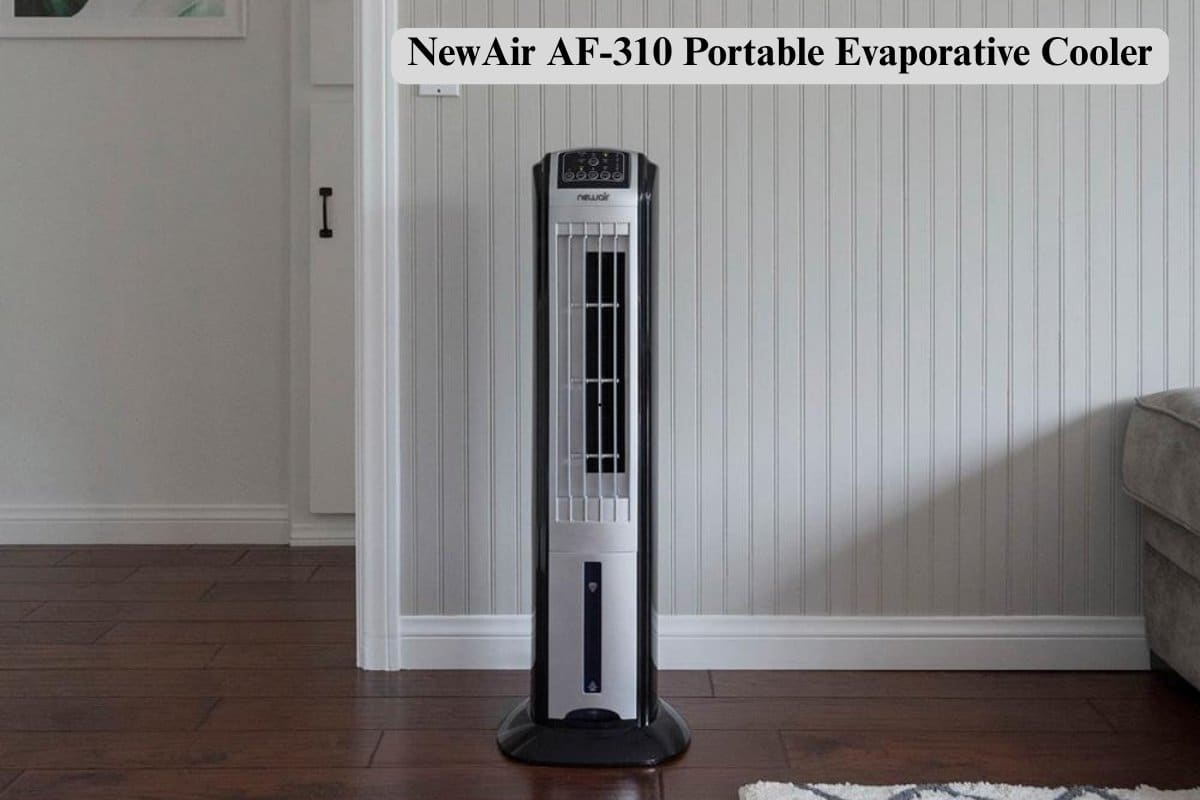
In contrast, an evaporative cooler uses water to lower the air temperature. These units are not air conditioners in the technical sense because they do not utilize a refrigerant cycle to remove heat. They simply add humidity to the air, which can be counterproductive in humid climates. If your goal is to cool a space effectively without the manual labor of adding water, you are looking for a refrigerated portable air conditioner.
How Compressor-Based Portable AC Units Function
Portable air conditioners function identically to standard central air systems but are condensed into a mobile unit. The internal cycle involves four primary components:
- Evaporator: The indoor air is pulled over cold coils, where it loses heat and humidity.
- Compressor: This component pressurizes the refrigerant gas, raising its temperature so it can release heat.
- Condenser: Hot refrigerant passes through these coils, releasing heat to the outside air via the exhaust hose.
- Expansion Valve: The refrigerant is rapidly cooled, readying it to repeat the cycle at the evaporator.
Because this process generates heat as a byproduct, it is physically impossible for a portable AC to cool a room without a vent. The "no water" aspect of these machines refers specifically to the cooling mechanism, not the condensation byproduct.
Evaluation Criteria for Portable Air Conditioners
When shopping for a portable AC in 2026, you should disregard marketing terms like "waterless cooling" and instead focus on technical specifications that determine performance and ease of maintenance.
Cooling Capacity (BTU)
The British Thermal Unit (BTU) rating determines the unit’s power. A unit that is too small for your room size will run constantly without lowering the temperature, while a unit that is too large will cycle on and off too frequently, leading to poor humidity control.
Self-Evaporative Technology
Most modern portable ACs feature "self-evaporative" systems. This technology recycles a portion of the condensation to cool the internal coils, which improves efficiency and reduces the need to empty the water tray. This is the closest functionality to a truly "no maintenance" water system, as the machine vents the excess moisture as vapor through the exhaust hose.
Exhaust Requirements
A portable AC without water must have a way to move heat out of your living space. This requires a window kit—a plastic or foam slider that seals the window around the exhaust hose. If you cannot vent the hose, the unit will not effectively cool the room, as the heat extracted from the air will simply be pushed back into the same environment.
Comparison Table: Portable AC vs. Evaporative Coolers
| Feature | Portable Air Conditioner | Evaporative Cooler |
|---|---|---|
| Cooling Method | Refrigerant/Compressor | Evaporation of Water |
| Water Input | None Required | Must Refill Reservoir |
| Ventilation | Window/Wall Exhaust Required | Not Required |
| Humidity Impact | Reduces Humidity | Increases Humidity |
| Best Use Case | Sealed rooms, hot/humid weather | Dry climates, outdoor patios |
Installation and Maintenance Best Practices
Proper installation is critical for the efficiency of any portable cooling system. Even though these units do not require water as a coolant, they are sensitive to the physical environment.
Securing the Window Seal
The exhaust hose must be as short and straight as possible. Every bend in the hose creates resistance, forcing the internal fan to work harder and reducing the unit's cooling efficacy. Ensure the window kit is properly sealed using weather stripping to prevent hot outside air from infiltrating the room.
Managing Condensation
Even if your unit is labeled "self-evaporative," high humidity levels in your local environment may exceed the unit's capacity to exhaust moisture. In these cases, the internal water reservoir will fill up, and the unit will automatically shut off to prevent overflow. Always keep the secondary drainage port accessible, and if you live in a high-humidity area, consider connecting a continuous gravity drain hose to a floor drain or a larger external basin.
Filter Maintenance
Clean the air filters every two to four weeks. Clogged filters restrict airflow, causing the evaporator coils to freeze over. If your unit begins to drip water or lose cooling power, the filter is the first place you should check.
Troubleshooting Common Issues
If you believe your portable AC is failing to perform or is leaking, consider these common variables:
- Unit isn't cooling: Ensure the unit is in "Cool" mode rather than "Fan" or "Dehumidify" mode. Verify the set temperature is at least 3-5 degrees lower than the current room temperature.
- Excessive water accumulation: This usually indicates high ambient humidity. If you live in a humid region, you may need to manually drain the unit more frequently than the manual suggests, despite the self-evaporative features.
- The unit shuts off repeatedly: This is often a safety feature triggered by a full water tank or an overtaxed compressor. Ensure the exhaust hose is not kinked and that the intake vents are not blocked by furniture or curtains.
Frequently Asked Questions
Are there portable air conditioners that don't need a hose? No. Any device claiming to be a "portable AC" that does not use an exhaust hose is not a true air conditioner; it is an evaporative cooler. Refrigeration requires the removal of heat from the space, which necessitates a vent to the outside.
Do I have to drain water from a portable AC? In most modern units, no—at least not regularly. Thanks to self-evaporative technology, moisture is turned into vapor and exhausted through the hose. However, in extremely humid conditions, the internal tank may reach capacity, requiring a manual drain.
Can I run a portable AC in a room without windows? Only if you can route the exhaust hose to an alternative ventilation point, such as a drop ceiling, an internal wall vent, or a dedicated ventilation duct. Without a path to move heat outside, the unit will only recirculate the hot air it removes.
Why does my AC blow air that feels like it has moisture in it? If the unit is set to "Dehumidify" mode, it will remove water from the air, but some units may struggle to evaporate that water quickly enough, leading to a humid discharge. Ensure the unit is set to "Cool" and that the fan speed is adequate.
How often should I service the unit? Beyond cleaning the filters, professional servicing is rarely required unless the unit loses refrigerant. If the air coming out is not cold after checking the filters and settings, the sealed refrigerant system may have a leak, which requires a qualified technician to repair or a replacement of the unit.
Final Recommendation
When purchasing a cooling system, verify that it contains a compressor and utilizes a refrigerant. Look for models explicitly listing a BTU capacity—typically ranging from 8,000 to 14,000 BTUs—to ensure it matches the square footage of your space. Avoid any product described as "no-hose" or "water-cooled" if you require true temperature reduction rather than just a breeze. By choosing a reputable brand that incorporates self-evaporative technology, you will minimize the need for manual maintenance while maintaining a comfortable, climate-controlled environment.
Image Gallery