UIUC Mechanical Engineering Course Map: Navigating the Curriculum in 2026
Navigating the UIUC mechanical engineering course map requires a strategic approach to foundational mathematics, core technical mechanics, and specialized technical electives. This comprehensive guide outlines the required course seque...
Navigating the UIUC mechanical engineering course map requires a strategic approach to foundational mathematics, core technical mechanics, and specialized technical electives. This comprehensive guide outlines the required course sequencing, prerequisite structures, and institutional milestones for engineering students at the University of Illinois Urbana-Champaign in 2026.
Contents
Understanding the Mechanical Science and Engineering (MechSE) Curriculum Structure
The mechanical engineering undergraduate program at the University of Illinois Urbana-Champaign is structured to transform incoming students into analytical problem solvers through a carefully calibrated sequence of classes. The curriculum balances theoretical foundations with hands-on laboratory experiences, computational design, and multidisciplinary systems thinking.
Students must navigate several distinct curricular tiers:
- Foundational mathematics and basic sciences during the freshman year.
- Core engineering sciences establishing the mechanics of solids, fluids, and thermal systems during the sophomore and junior years.
- Capstone design experiences, advanced technical electives, and professional development during the senior year.
Adhering strictly to the prescribed prerequisite chain is essential for timely graduation. Many upper-level courses are offered only once per academic year, making proper long-term academic planning vital for all MechSE majors.
Foundational Mathematics and Science Prerequisites
Before entering advanced mechanical engineering coursework, students must build an unshakeable foundation in calculus, physics, and chemistry. These courses provide the analytical tools required for all subsequent engineering analysis.
| Course Code | Course Title | Credit Hours | Primary Focus Area |
|---|---|---|---|
| MATH 221 / 231 | Calculus I & II | 8 | Limits, derivatives, integrals, and infinite series |
| MATH 241 | Calculus III | 4 | Multivariable calculus and vector analysis |
| MATH 285 | Intro to Differential Equations | 3 | Ordinary differential equations and linear algebra applications |
| PHYS 211 / 212 | University Physics: Mechanics & E&M | 8 | Classical Newtonian mechanics, electricity, and magnetism |
| CHEM 102 / 103 | General Chemistry I and Lab | 4 | Atomic structure, stoichiometry, and chemical bonding |
Mastery of differential equations and multivariable calculus is non-negotiable. Concepts from MATH 241 and MATH 285 are applied directly in sophomore-level mechanics courses such as TAM 211 and TAM 251.
Core Mechanical Engineering Sequence
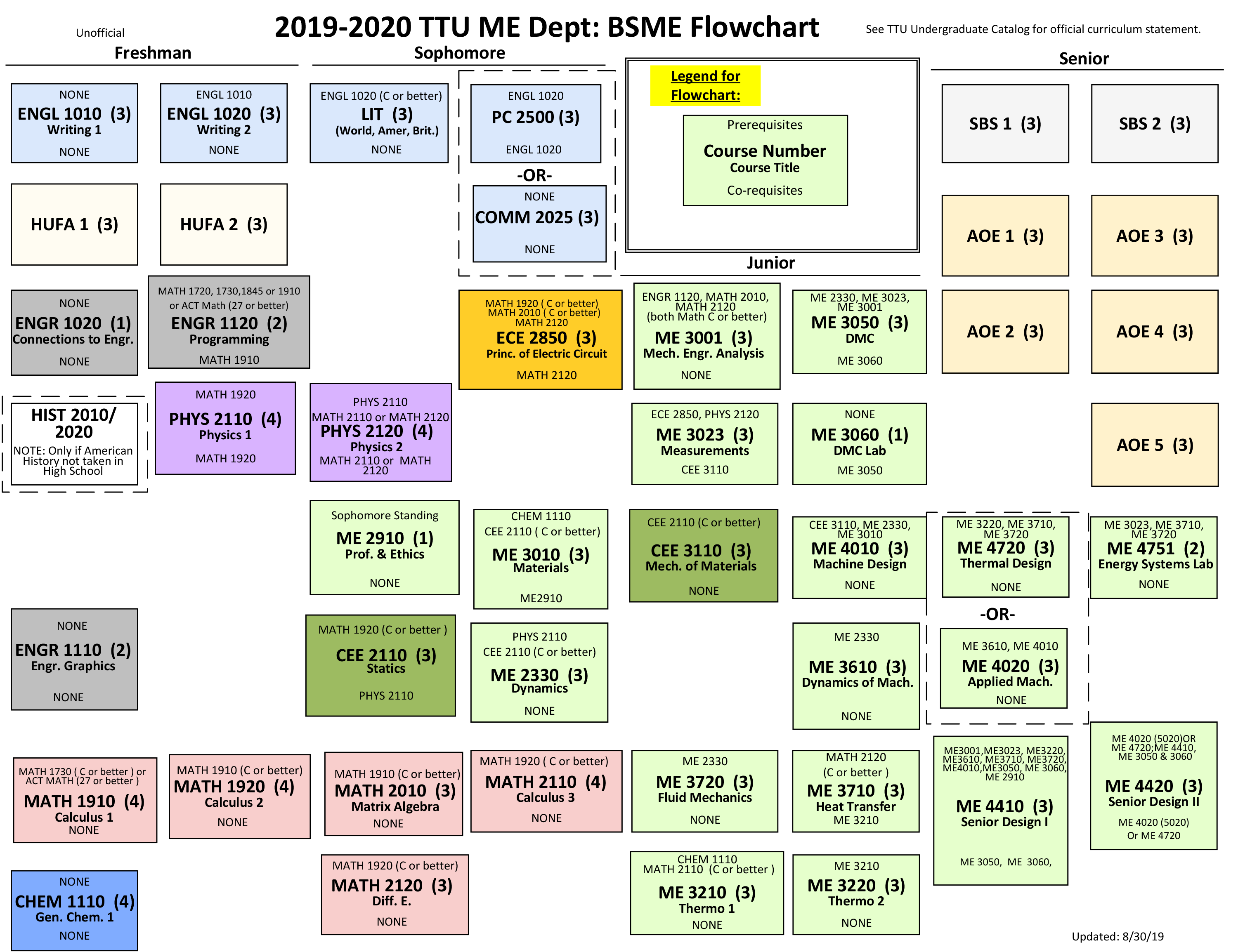
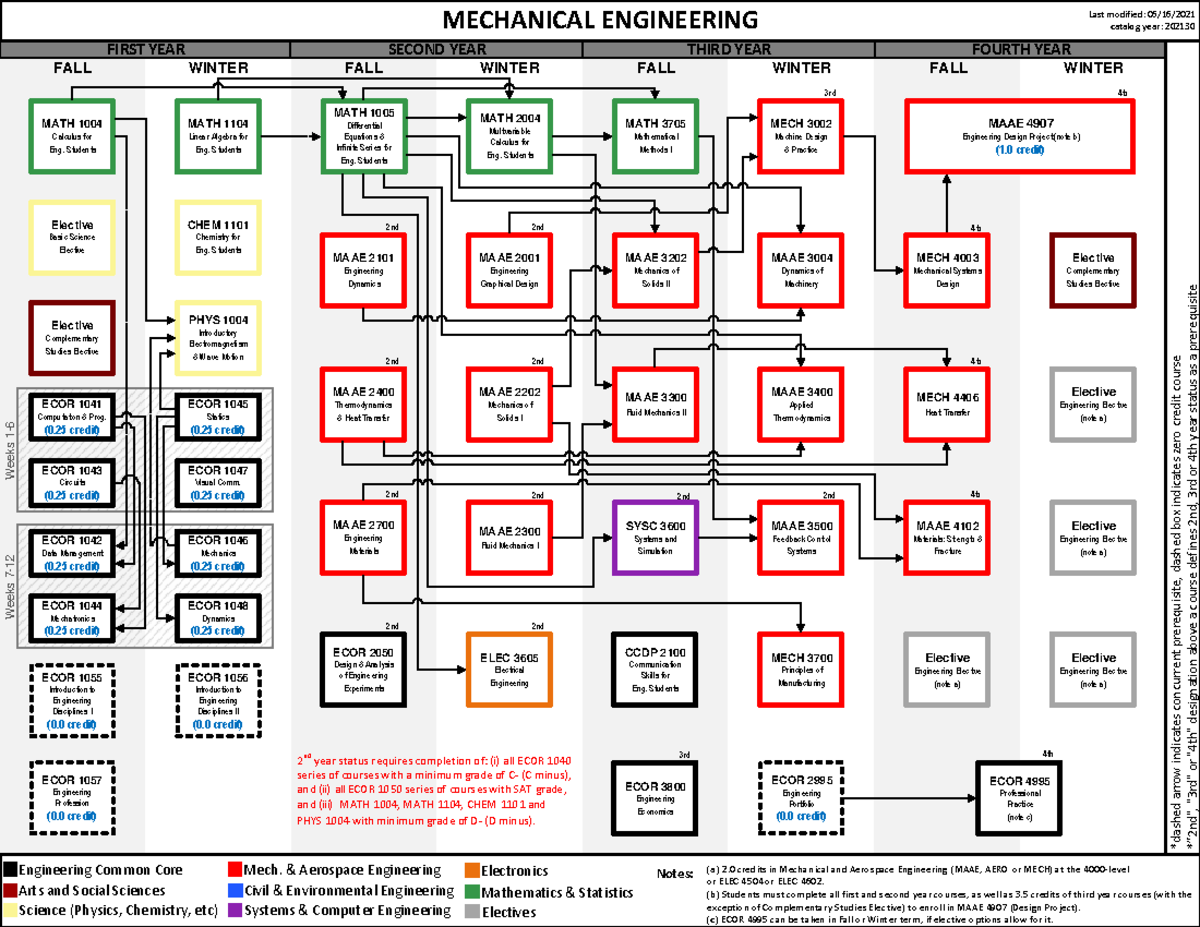
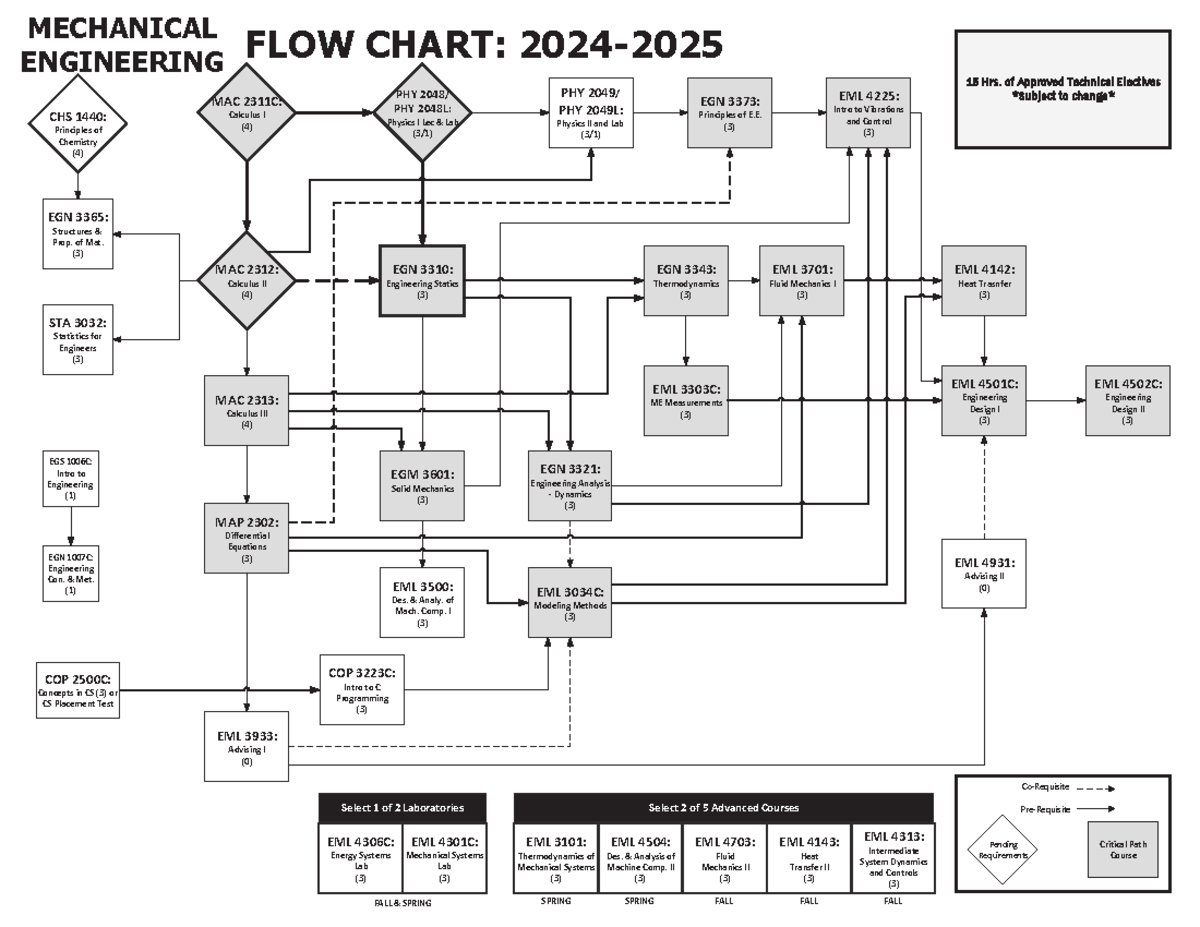
The core technical sequence bridges theoretical science with physical machine behavior. This phase of the UIUC mechanical engineering course map introduces students to rigid body dynamics, thermodynamics, fluid mechanics, and materials science.
Sophomore Year Milestones
The sophomore year marks the official entry into foundational engineering principles. Students transition from general physics to applied mechanics via the Theoretical and Applied Mechanics (TAM) department.
- TAM 211 (Statics): Analysis of forces acting on stationary structures and mechanical components in equilibrium.
- TAM 212 (Introductory Dynamics): Kinematics and kinetics of particles, systems of particles, and rigid bodies.
- TAM 251 (Solid Mechanics): Stress, strain, torsion, bending, and deflection of structural members.
- ME 270 (Design for Manufacturability): Introduction to manufacturing processes, tolerances, and design optimization.
Junior Year Transition
The junior year intensifies the analytical workload by combining thermodynamics, fluid mechanics, and systems analysis.
- ME 200 (Thermodynamics): First and second laws, property relations, entropy, and thermodynamic cycles (Rankine, Otto, Diesel).
- ME 310 (Fundamentals of Fluid Dynamics): Fluid statics, control volume analysis, conservation laws, differential analysis of fluid flow, and viscous flows.
- ME 320 (Heat Transfer): Conduction, convection, radiation, and heat exchanger design.
- ME 340 (Dynamics of Mechanical Systems): Modeling, analysis, and simulation of lumped-parameter mechanical and electromechanical systems.
Laboratories, Electronics, and Computational Methods
Mechanical engineers at UIUC must possess strong experimental and computational capabilities. The curriculum integrates laboratory work and programming early to prepare students for modern industry standards.
- ME 360 (Fluid Mechanics Laboratory): Hands-on experimentation involving pressure measurements, flow visualization, and data acquisition systems.
- ME 370 (Mechanical Engineering Design): Application of machine component design principles, failure theories, and fatigue analysis.
- ECE 205 (Electrical and Electronic Circuits): Circuit analysis, operational amplifiers, diodes, transistors, and electromechanical actuators relevant to mechatronic systems.
- CS 101 or CS 125 equivalent: Computational problem solving utilizing modern programming languages such as Python or C++ for engineering simulations.
Senior Design Capstone and Technical Electives
The culmination of the UIUC mechanical engineering course map is the senior capstone design experience, supported by tailored technical electives that allow students to specialize.
- Senior Year Curriculum Path
- ME 470: Senior Capstone Design Project
- Technical Electives (Robotics, Thermal, HVAC)
- Professional Development & Safety Seminars
Navigating Technical Elective Tracks
Students can choose to generalize or concentrate their studies in specific technological domains:
- Thermal-Fluids Track: Advanced thermodynamics, computational fluid dynamics (CFD), and renewable energy systems.
- Dynamic Systems and Robotics Track: Kinematics, feedback control systems, mechatronics, and autonomous vehicle design.
- Materials and Manufacturing Track: Composite materials, advanced polymers, and micro-machining processes.
The capstone project requires multidisciplinary teams to design, prototype, and test an engineered system, often sponsored by industrial partners or research laboratories.
Pros and Cons of the UIUC MechSE Curriculum
Evaluating the structural advantages and potential challenges of the program helps students allocate their time and mental energy effectively.
- Pros:
- Highly prestigious program with exceptional career placement rates across tech, automotive, aerospace, and energy sectors.
- Access to world-class laboratory facilities, machine shops, and research centers.
- Robust alumni network and dedicated corporate career fairs.
- Cons:
- Intense academic rigor and heavy workload can lead to high levels of student stress.
- Rigid prerequisite hierarchies mean failing a single core course can delay graduation by an entire year.
- Large lecture sizes in foundational sophomore courses require high levels of independent self-study.
Step-by-Step Guide to Planning Your Semester Schedule
Successfully executing your path through the UIUC mechanical engineering course map requires proactive planning and consultation with academic advisors.
- Audit Your Degree Audit System (DARS): Review your progress regularly to ensure general education, cultural studies, and core engineering requirements are being met simultaneously.
- Map Prerequisite Chains Backward: Identify your target senior electives and trace their prerequisites back to your current semester to avoid bottlenecks.
- Balance Analytical and Design Workloads: Avoid pairing heavy analytical courses like ME 320 and ME 340 with intensive lab courses in the same semester if possible.
- Consult MechSE Advising: Schedule mandatory or elective advising appointments well before registration windows open to secure spots in high-demand classes.
- Incorporate Professional Experiences: Plan semesters to accommodate summer internships, co-op rotations, or undergraduate research (ME 397/497) without overloading your credit limit.
Frequently Asked Questions
What is the most critical prerequisite chain in the UIUC mechanical engineering curriculum?
The mathematics sequence (Calculus through Differential Equations) coupled with Theoretical and Applied Mechanics (TAM 211, 212, and 251) forms the absolute core. Without passing these courses, you cannot advance into junior-level design, fluid mechanics, or thermodynamics.
Can I take technical electives outside of the mechanical engineering department?
Yes, the department allows a specified number of technical elective hours to be fulfilled by approved 300- or 400-level courses in computer science, electrical engineering, industrial engineering, or theoretical and applied mechanics, subject to advisor approval.
How does the UIUC MechSE department handle prerequisite overrides?
Prerequisite overrides are strictly regulated. The department rarely grants overrides for core mechanical engineering sequences unless there are documented, extraordinary extenuating circumstances verified by academic advisors.
What computational software is standard across the UIUC mechanical course map?
Students routinely utilize MATLAB, Python, SolidWorks, ANSYS, and various computer-aided engineering (CAE) packages throughout coursework starting from sophomore design classes up to senior capstone projects.
How can transfer students align their incoming credits with the UIUC course map?
Transfer students must work closely with the MechSE advising office during orientation to map their external institution credits to exact UIUC equivalents, paying special attention to differential equations and foundational physics lab requirements.
Optimizing Your Mechanical Engineering Journey
Succeeding within the UIUC mechanical engineering course map demands resilience, disciplined time management, and proactive utilization of departmental resources. Leverage office hours, form collaborative study groups, and maintain continuous alignment with your academic advisor. By treating your course map as a dynamic, strategic roadmap, you will successfully transition from foundational theory to professional engineering practice.
Image Gallery