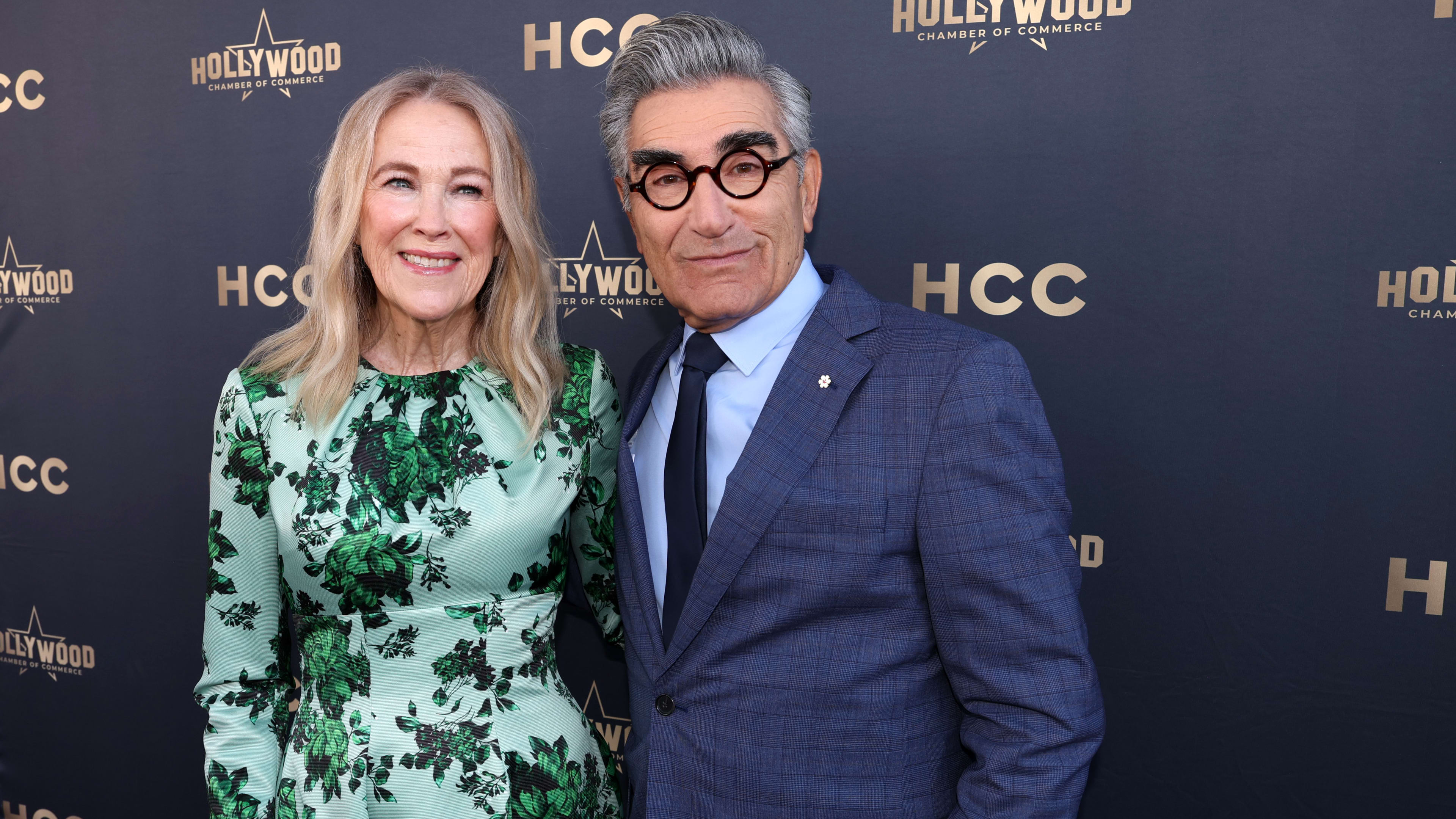
Eugene Levy Pronunciation Explained: How to Say the Iconic Actor's Name Correctly
The correct pronunciation of Eugene Levy's last name is "LEE-vee" (/ˈliːvi/), rhyming with "heave be," rather than "LEH-vee," which rhymes with "heavy." While the actor and comedian has occasionally joked about or accepted mispronuncia...
The correct pronunciation of Eugene Levy's last name is "LEE-vee" (/ˈliːvi/), rhyming with "heave be," rather than "LEH-vee," which rhymes with "heavy." While the actor and comedian has occasionally joked about or accepted mispronunciations over his decades-long career, his surname follows traditional Canadian and European Jewish phonetic roots.
Contents
Few cultural figures are as instantly recognizable as Eugene Levy. With his trademark bushy eyebrows, deadpan delivery, and illustrious career spanning SCTV, the American Pie film franchise, and the critically acclaimed sitcom Schitt's Creek, Levy has cemented his status as a comedy legend. Yet, despite his ubiquitous presence in popular culture—often alongside his son and co-star Dan Levy—fans, television announcers, and media outlets frequently mispronounce his surname. Understanding the mechanics of his name's pronunciation provides not only a lesson in phonetic accuracy but also a window into the actor's cultural background and entertainment history.
The Phonetic Breakdown of "Levy"
To understand how to pronounce Eugene Levy's last name correctly, it helps to examine its phonetic structure. The surname is broken down into two distinct syllables: the stressed first syllable and the unstressed second syllable.
The first syllable uses a long "E" sound, identical to the word "lee." The second syllable is a short "ee" sound attached smoothly, creating the cadence of LEE-vee. In International Phonetic Alphabet (IPA) notation, it is transcribed as /ˈliːvi/.
A common pitfall for many English speakers is substituting the long "E" for a short "E," turning the name into "LEH-vee" (rhyming with "kev-ee" or "heavy"). This error usually stems from the assumption that the single "e" in the middle of a short-looking surname dictates a lax vowel sound. However, in the case of this specific family name origin, the long vowel is the standard and historically accurate pronunciation used by the Levy family themselves.
Comparing the Two Common Pronunciations
| Pronunciation | Phonetic Spelling | Rhymes With | Accuracy Status |
|---|---|---|---|
| Levy (Correct) | LEE-vee | Heave be, free-fee | Official family pronunciation |
| Levy (Common Error) | LEH-vee | Heavy, bevy | Incorrect phonetic variant |
Linguistic Origins and Cultural Context
The surname Levy has deep historical roots, carrying significant meaning across various cultural and linguistic traditions. In the context of Eugene Levy's heritage, the name reflects a European Jewish lineage. Eugene Levy was born in Hamilton, Ontario, Canada, to a Jewish family of Scottish and Eastern European descent.
In many Anglo-Saxon and North American contexts, surnames of European origin undergo phonetic shifts as families integrate into English-speaking societies. Sometimes these changes are adopted formally, while in other cases, families fiercely retain the original phonetic pronunciation. For the Levy family, the long-V vowel sound has remained the definitive standard.
Interestingly, the surname itself shares etymological roots with the Hebrew given name Levi, meaning "joining" or "attached," historically associated with the Levites, one of the tribes of Israel. Across different diasporic communities globally, the surname has evolved into various spellings and pronunciations, including Levin, Levine, and Leavitt. However, for the Canadian icon, the two-syllable "LEE-vee" is the absolute standard.
Why Mispronunciations Happen in Media and Pop Culture
Even award-winning journalists, talk show hosts, and red-carpet announcers have occasionally stumbled over Eugene Levy's name. This phenomenon is not unique to Levy; public figures with names that sit on the boundary of intuitive English spelling frequently face phonetic adaptations by the public.
Several factors contribute to the ongoing confusion surrounding Eugene Levy's pronunciation:
- Visual Autopilot: English orthography often uses a single medial vowel followed by a consonant to denote a short vowel sound (e.g., levy versus leave). Readers scanning text rely on visual patterns that trigger the "LEH-vee" sound before conscious correction can occur.
- Frequency of Alternative Surnames: Other notable public figures, business leaders, and fictional characters spell or pronounce similar-looking names differently, creating cross-contamination in the public consciousness.
- The "Schitt's Creek" Effect: During the massive global success of Schitt's Creek, which Eugene created with his son Dan Levy, the name was spoken millions of times daily across social media platforms, podcasts, and news broadcasts. While this cemented awareness, it also amplified regional variations in how everyday fans said the name.
Despite these occasional slips, Levy has rarely made a public crusade out of correcting minor mispronunciations, embodying the amiable, self-deprecating humor that defines his comedic persona. Nevertheless, for media professionals, fans, and writers aiming for accuracy, using "LEE-vee" is the correct choice.
Frequently Asked Questions
How do you pronounce Eugene Levy's first name?
Eugene is pronounced yu-JEEN (/juːˈdʒiːn/). It is a classic Greek-derived name meaning "well-born" or "noble." When combined with his last name, the full name is properly pronounced yu-JEEN LEE-vee.
Do other members of his family use the same pronunciation?
Yes. Both his son, actor and writer Dan Levy, and his daughter, actress Sarah Levy, share the exact same family surname pronunciation: LEE-vee.
Did Eugene Levy ever change his name for Hollywood?
No. Eugene Levy was born with the name Eugene Levy in Hamilton, Ontario, and has used his given name throughout his entire career in television, film, and theater, beginning with his early work on The Second City and SCTV in the 1970s.
Is "Levy" pronounced differently in other countries or languages?
Yes. Depending on geographic and linguistic regions, variants of the surname exist. For example, in some French-speaking contexts or specific European lineages, the spelling and phonetic realization can vary, but for the Canadian actor specifically, the English long-E pronunciation applies.
Why do some people say "LEH-vee" instead of "LEE-vee"?
The mispronunciation "LEH-vee" is driven by standard English phonics rules, where a short "e" sound naturally follows a single vowel-consonant-vowel or closed syllable structure in the minds of native English readers. However, family tradition overrides these general phonetic assumptions.
Practical Next Actions for Speakers and Writers
If you are writing about, introducing, or discussing Eugene Levy in professional or casual settings, maintaining accuracy is a mark of respect for the artist's heritage and identity.
- Verify Pronunciation Before Speaking: If you are recording a podcast, hosting a presentation, or introducing a media segment, practice saying "LEE-vee" well in advance to avoid slipping into the more common phonetic trap of "LEH-vee."
- Double-Check Spelling and Typography: Ensure his full name is spelled correctly in written materials—Eugene Levy—without accidental alterations.
- Contextualize with His Body of Work: When discussing his extensive filmography—ranging from his mockumentary collaborations with Christopher Guest (Best in Show, A Mighty Wind) to his travel documentary series The Reluctant Traveler—accurate nomenclature establishes immediate credibility.
Image Gallery