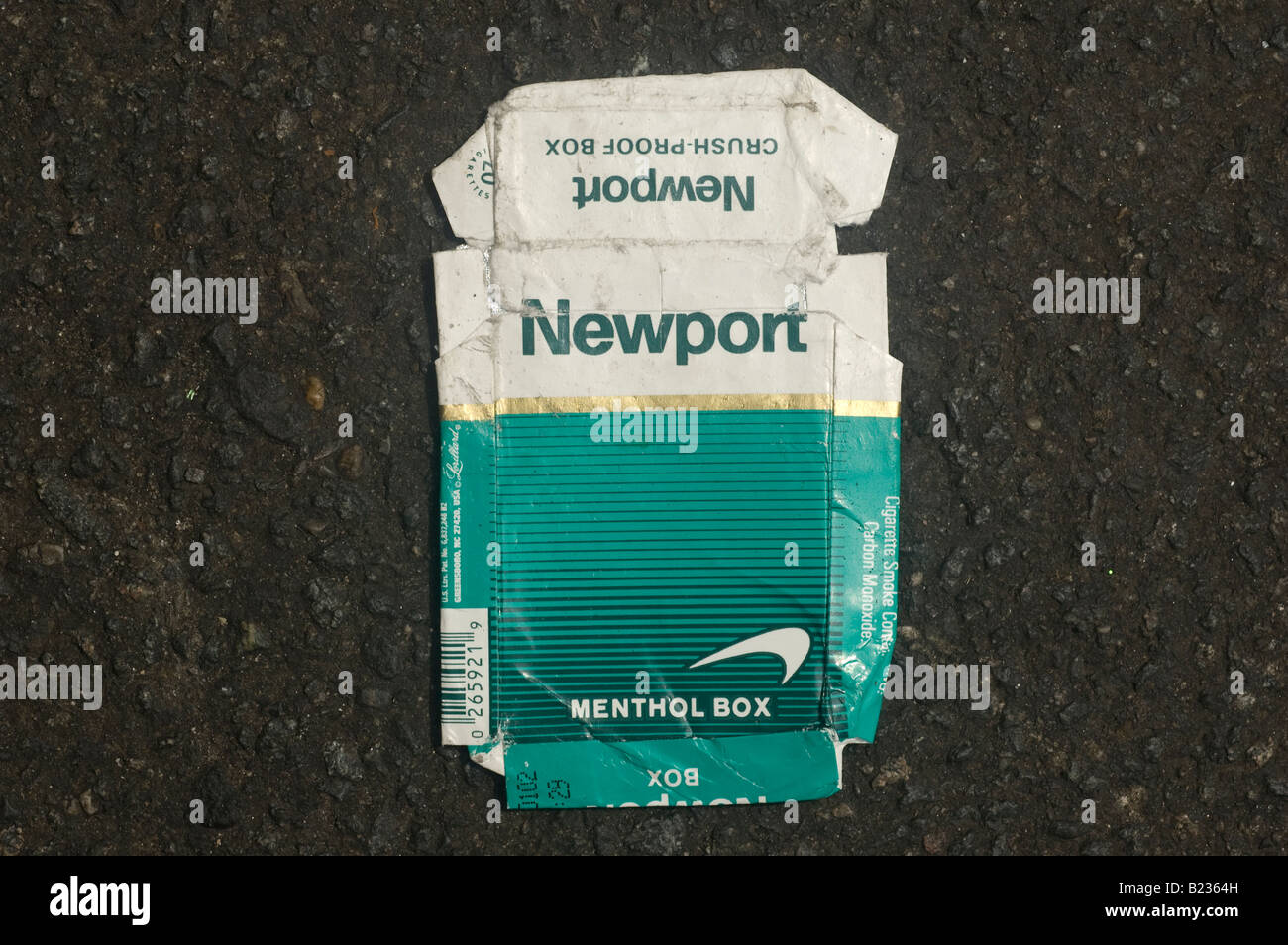
Newport Cigarettes Company History and Impact
Newport cigarettes, introduced by the Lorillard Tobacco Company in 1957, emerged as one of the most commercially successful menthol cigarette brands in the United States, profoundly shaping public health, corporate market strategies, a...
Newport cigarettes, introduced by the Lorillard Tobacco Company in 1957, emerged as one of the most commercially successful menthol cigarette brands in the United States, profoundly shaping public health, corporate market strategies, and cultural demographics over nearly seven decades of production.
Contents
Introduction to Newport Cigarettes
The history of Newport cigarettes is deeply intertwined with the evolution of the American tobacco industry, marketing innovation, and shifting public health landscapes. Launched by Lorillard—the oldest tobacco company in the United States—Newport was designed to capture a share of the growing filtered menthol cigarette market. Over the decades, the brand evolved from a minor regional offering into a dominant powerhouse, particularly within African American urban communities.
Understanding the history and impact of Newport requires examining multiple dimensions: corporate acquisitions and manufacturing shifts, targeted marketing strategies, public health ramifications, and the modern regulatory environment. As the tobacco industry faces unprecedented scrutiny and declining smoking rates, tracing the trajectory of Newport provides critical insight into how consumer products achieve enduring market dominance despite significant controversy.
Origins and Early Corporate History (1957–1970s)
When Lorillard introduced Newport in 1957, the American cigarette market was undergoing a rapid transformation. Driven by emerging health concerns regarding unfiltered tobacco, consumers increasingly sought out filtered varieties. Simultaneously, menthol cigarettes—which offered a cooler, smoother smoking experience—were carving out a distinct market segment, pioneered largely by brands like Brown & Williamson’s Kool.
Newport entered this landscape with a distinct product formulation. Unlike many of its competitors that used a heavy menthol additive, Newport utilized a lighter touch of mint combined with a full-flavored tobacco blend, positioning its product under the banner of a "refreshing" smoke. The brand's early marketing campaigns featured the iconic spinnaker sail logo, invoking themes of freshness, outdoor vitality, and coastal relaxation.
During the 1960s and 1970s, Lorillard heavily promoted Newport through television, print, and radio advertising before federal regulations banned broadcast tobacco advertising in 1971. These early promotional efforts successfully established Newport as a premium alternative in the menthol category, setting the stage for its aggressive expansion into major metropolitan markets across the United States.
Market Strategy and Demographic Evolution
The defining characteristic of Newport’s commercial history is its profound popularity among African American consumers. By the late 1970s and 1980s, market research and industry documents revealed that Newport had captured an overwhelming majority share of the Black menthol cigarette market. This demographic concentration was not accidental; it was the result of a deliberate, highly sophisticated marketing strategy deployed by Lorillard and subsequent corporate owners.
Tobacco companies increasingly utilized targeted marketing techniques, including:
- Urban Billboard Placement: Saturating high-density African American neighborhoods with large-format outdoor advertisements.
- Sponsorships: Funding cultural events, music festivals, and community organizations within urban centers.
- Retail Promos: Offering financial incentives, point-of-sale displays, and promotional pricing to urban convenience stores and bodegas.
- Menthol Appeal: Capitalizing on consumer perceptions—often reinforced by industry marketing—that menthol cigarettes were smoother and potentially less harsh than non-menthol varieties.
By the 1990s and 2000s, Newport had surpassed competitors to become the second-best-selling cigarette brand overall in the United States, trailing only Marlboro. Its flagship product, Newport Box 100s and regular box varieties, became cultural staples in urban centers such as New York, Chicago, Philadelphia, and Washington, D.C.
Corporate Restructuring and Ownership Changes
The corporate lineage of Newport reflects the broader consolidation and financial restructuring of the global tobacco industry over the late 20th and early 21st centuries. For decades, Newport was the crown jewel of the Lorillard Tobacco Company, which operated as an independent entity before becoming a subsidiary of Loews Corporation in the late 1960s.
In 2015, Reynolds American Inc.—the parent company of R.J. Reynolds Tobacco Company—acquired Lorillard in a multi-billion-dollar merger. To satisfy antitrust requirements set by the Federal Trade Commission (FTC) regarding market concentration, Reynolds divested several brands, including Newport, to Imperial Brands (operating through its subsidiary ITG Brands). Consequently, the manufacturing, distribution, and marketing rights for Newport transitioned to ITG Brands, where the portfolio continues to be managed alongside other legacy brands like Winston, Salem, and Kool.
| Era / Year | Corporate Owner | Key Market Developments |
|---|---|---|
| 1957 | Lorillard Tobacco Company | Introduction of Newport as a filtered menthol cigarette brand. |
| 1971 | Lorillard (Loews Corporation) | Adaptation to the federal broadcast advertising ban; shift to print and out-of-home marketing. |
| 2015 | Imperial Brands (ITG Brands) | Acquisition following Reynolds American's purchase of Lorillard, transferring manufacturing and distribution rights. |
| Present | ITG Brands | Continued management of the Newport portfolio amidst increasing federal and state flavor restrictions. |
Public Health Impact and Disproportionate Communities
The public health impact of Newport cigarettes has been a subject of intense scrutiny by medical researchers, public health advocates, and federal regulators. Because menthol cools the throat and suppresses the cough reflex, it allows smokers to inhale deeper and retain smoke longer in the lungs, potentially increasing exposure to toxic compounds.
Public health analyses consistently highlight the disproportionate burden borne by minority communities due to targeted marketing. Studies published in public health journals emphasize that:
- African American smokers exhibit higher rates of menthol cigarette use—often exceeding 80%—compared to smokers of other racial and ethnic backgrounds.
- Menthol smoking is associated with lower smoking cessation success rates, making it harder for individuals to quit.
- The concentration of tobacco advertising in low-income neighborhoods contributes to persistent health disparities, including higher rates of cardiovascular disease, lung cancer, and stroke among African Americans.
Organizations such as the African American Tobacco Control Leadership Council (AATCLC) have campaigned aggressively for decades to highlight these disparities, framing menthol tobacco products as a social justice and civil rights issue rather than merely a consumer preference.
Regulatory Landscape and the Push for Menthol Bans
The regulatory environment surrounding Newport has transformed dramatically in the 21st century. The Family Smoking Prevention and Tobacco Control Act of 2009 granted the U.S. Food and Drug Administration (FDA) the authority to regulate tobacco products. While the 2009 legislation immediately banned characterizing flavors (such as strawberry, chocolate, and clove) in cigarettes, it notably exempted menthol, while mandating scientific reviews of its impact on public health.
Subsequent scientific evaluations by the FDA concluded that menthol increases experimentation, regular smoking initiation, and addiction while decreasing cessation success among menthol smokers. This led to significant regulatory actions:
- Proposed Federal Bans: The FDA advanced proposed product standards to prohibit menthol as a characterizing flavor in cigarettes and to ban all flavors in cigars.
- State and Local Prohibitions: Several jurisdictions enacted local sales bans on menthol cigarettes, most notably the state of Massachusetts (effective 2020) and cities such as California's statewide ban implemented in 2023 following a voter referendum upholding a legislative ban.
- Litigation and Compliance: ITG Brands and other manufacturers have faced continuous legal challenges, regulatory reporting requirements, and shifts in retail distribution models as the footprint of legal menthol sales contracts nationwide.
These regulatory pressures represent the most substantial existential challenge to Newport’s business model since the brand's inception.
Economic and Cultural Footprint
Beyond public health and corporate history, Newport occupies a complex space in American popular culture and urban economics. In many urban communities, convenience stores, bodegas, and independent retail operators rely heavily on tobacco sales—particularly premium brands like Newport—to drive daily foot traffic and maintain profit margins.
Culturally, Newport has been referenced extensively in hip-hop music, urban art, and films, reflecting its deep entrenchment in the social fabric of American inner cities during the late 20th century. However, as cultural attitudes toward smoking have shifted and smoking rates have declined across all demographics, the brand's cultural visibility has also receded from mainstream media.
Frequently Asked Questions
When were Newport cigarettes first introduced?
Newport cigarettes were introduced to the American market in 1957 by the Lorillard Tobacco Company as a filtered menthol cigarette brand featuring a light mint flavor profile.
Who currently manufactures Newport cigarettes?
Newport is manufactured and distributed by ITG Brands, a subsidiary of Imperial Brands. ITG Brands acquired the portfolio in 2015 as part of regulatory divestitures following Reynolds American's acquisition of Lorillard.
Why are Newport cigarettes particularly popular among African American smokers?
Decades of internal corporate documents and independent research have shown that tobacco companies utilized targeted marketing strategies, including heavy outdoor advertising in urban neighborhoods, community sponsorships, and retail promotions, which disproportionately established menthol products like Newport within African American communities.
What are the health implications of smoking menthol cigarettes?
Research indicates that menthol numbs the throat and suppresses the cough reflex, enabling deeper inhalation and prolonged smoke retention in the lungs. Studies also suggest that menthol cigarettes are more addictive and harder to quit than non-menthol varieties.
What is the current regulatory status of menthol cigarettes in the United States?
While federal regulatory agencies have pursued nationwide product standards to ban menthol as a characterizing flavor in cigarettes, implementation has faced delays and complex political debates. However, several state-level bans—such as those in Massachusetts and California—have successfully prohibited the sale of flavored tobacco products, including menthol cigarettes, within their borders.
Conclusion and Strategic Outlook
The history of Newport cigarettes is a multifaceted narrative of corporate marketing ingenuity, rapid commercial expansion, and severe public health controversy. From its 1957 launch by Lorillard to its current management under ITG Brands, the brand transformed the American menthol cigarette landscape while capturing an enduring demographic foothold. As federal and state regulators advance restrictions on menthol products, Newport faces a historic inflection point that will test the long-term viability of one of the tobacco industry's most recognizable and impactful brands.
Image Gallery