2012 Toyota RAV4 AWD Overview: Performance, Reliability, and Buying Guide
The 2012 Toyota RAV4 AWD remains a top-tier choice for used car buyers seeking a balance of cargo utility, mechanical simplicity, and ruggedness. As the final production year of the third-generation (XA30) model, it benefits from years...
The 2012 Toyota RAV4 AWD remains a top-tier choice for used car buyers seeking a balance of cargo utility, mechanical simplicity, and ruggedness. As the final production year of the third-generation (XA30) model, it benefits from years of incremental refinements, making it one of the most reliable iterations of Toyota’s compact SUV.
Contents
A Legacy of Utility and Power
The 2012 Toyota RAV4 AWD represents a specific era of automotive design where utility and mechanical robustness took precedence over complex infotainment and soft-touch aesthetics. Entering the market in 2026, the 2012 RAV4 has transitioned from a standard commuter vehicle to a sought-after used asset, particularly for those who value the "overbuilt" nature of Toyota's mid-2000s engineering.
This model year is distinguished by its choice between a frugal four-cylinder engine and a potent V6, a rarity in the compact SUV segment today. Furthermore, its cavernous interior and side-hinged rear door offer a functional layout that many modern crossovers have sacrificed for aerodynamic styling.
Engine and Drivetrain Specifications
The 2012 RAV4 AWD was available with two distinct powertrains, each catering to different driving priorities. Understanding these options is critical for any prospective owner or technician.
2.5L Four-Cylinder (2AR-FE)
The base engine is the 2.5-liter dual overhead cam (DOHC) four-cylinder. It produces 179 horsepower and 172 lb-ft of torque. This engine is paired with a four-speed automatic transmission. While a four-speed unit may seem archaic by 2026 standards, its simplicity is its greatest strength. It is remarkably durable and easy to service compared to modern continuously variable transmissions (CVTs) or high-gear-count automatics.
3.5L V6 (2GR-FE)
The "sleeper" option for the 2012 RAV4 is the 3.5-liter V6, which generates 269 horsepower and 246 lb-ft of torque. This engine utilizes a five-speed automatic transmission. The V6 version of the 2012 RAV4 AWD is famous for its surprising acceleration, capable of reaching 0–60 mph in roughly 6.3 seconds—a figure that still challenges many modern "sport" crossovers.
Technical Specifications Comparison
| Feature | 2.5L I4 AWD | 3.5L V6 AWD |
|---|---|---|
| Horsepower | 179 hp @ 6,000 rpm | 269 hp @ 6,200 rpm |
| Torque | 172 lb-ft @ 4,100 rpm | 246 lb-ft @ 4,700 rpm |
| Transmission | 4-Speed Automatic | 5-Speed Automatic |
| EPA Est. MPG (City/Hwy) | 21 / 27 | 19 / 26 |
| Towing Capacity | 1,500 lbs | 2,000 lbs (3,500 lbs with Tow Prep) |
| Curb Weight | ~3,450 lbs | ~3,675 lbs |
The Active Torque Control AWD System
The 2012 RAV4 utilizes Toyota’s Active Torque Control 4WD system. It is important to clarify that this is an "on-demand" system, not a permanent four-wheel-drive setup found on dedicated off-roaders like the 4Runner.
Under normal driving conditions on dry pavement, the system directs 100% of the engine's torque to the front wheels to maximize fuel efficiency. When the onboard sensors detect wheel slip or during aggressive acceleration, an electromagnetically controlled coupling in the rear differential engages, sending up to 45% of the torque to the rear wheels.
A key feature for 2012 models is the 4WD Lock switch. Located on the dashboard, this button allows the driver to manually force a near 50:50 torque split between the front and rear axles. This is particularly useful for extracting the vehicle from deep snow or mud. However, the system is programmed to disengage the lock automatically once the vehicle exceeds 25 mph to protect the drivetrain from binding and heat buildup.
Interior Versatility and Cargo Capacity
One of the primary reasons the 2012 RAV4 remains relevant in 2026 is its class-leading interior volume. The third-generation RAV4 was built on a longer wheelbase than its predecessors, allowing for an optional (though cramped) third-row seat, which was rare for the segment at the time.
Cargo Dimensions
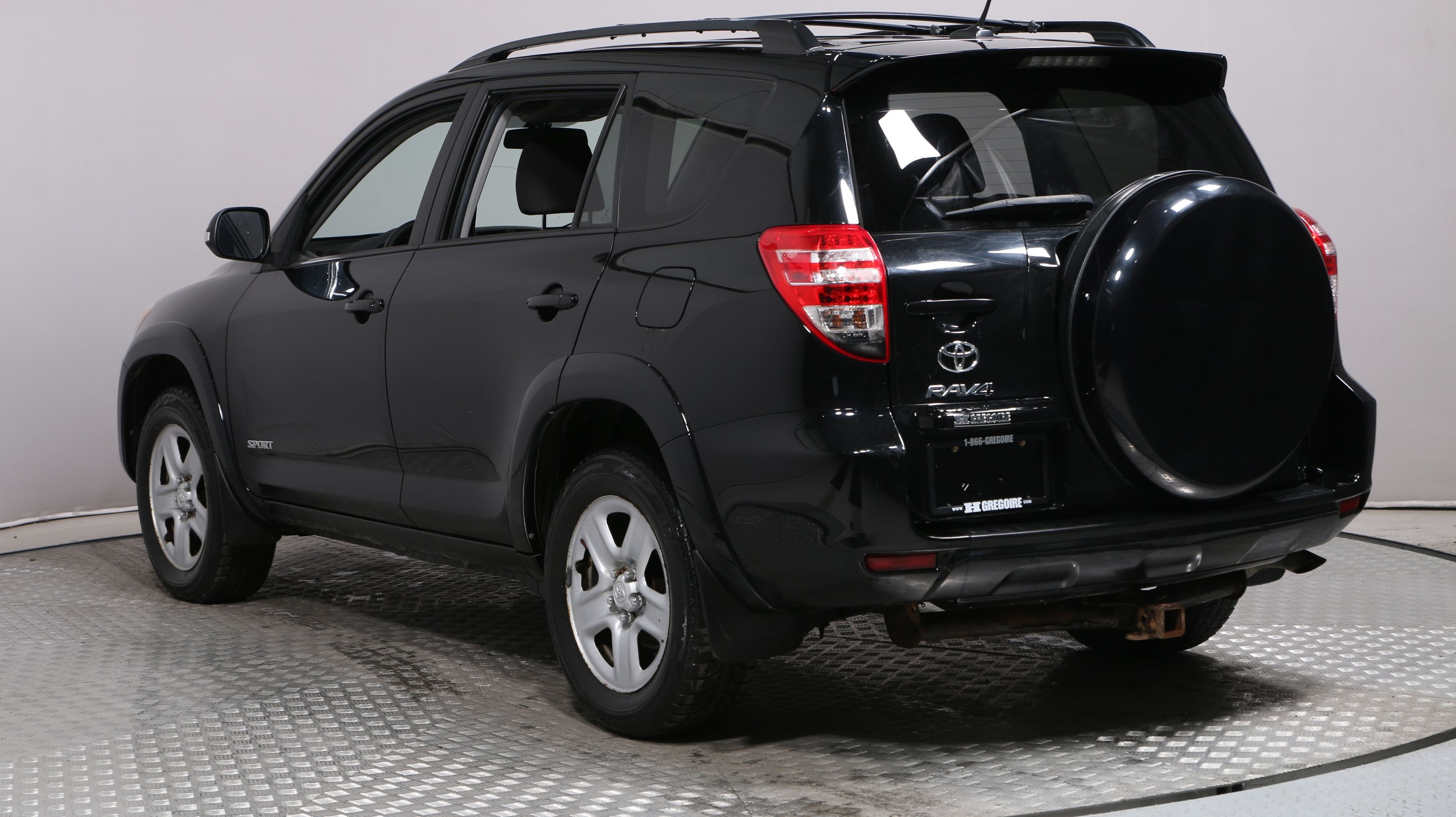
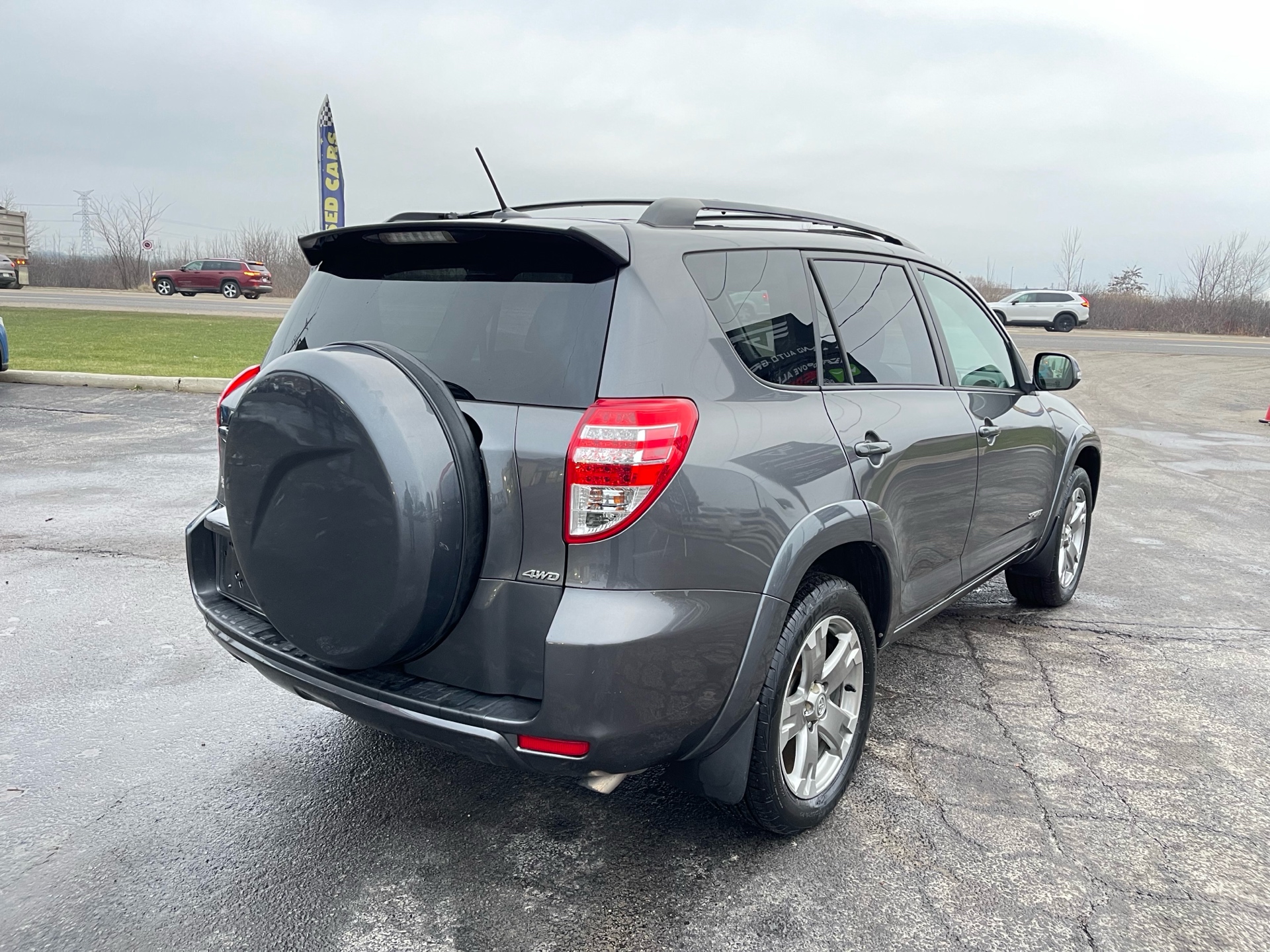
With the second-row seats folded flat using the convenient one-touch levers in the cargo area, the RAV4 offers 73.0 cubic feet of storage. Even with the seats up, there is 36.4 cubic feet available. The low load floor is a direct result of the spare tire being mounted on the exterior of the rear door, rather than under the trunk floor.
The Rear Door Debate
The 2012 RAV4 features a right-hand-hinged rear door rather than a traditional liftgate. While this allows for a lower cargo floor and prevents the need to duck under a heavy door in low-clearance garages, it can be cumbersome when parallel parked on a busy street, as the door opens toward the curb in right-hand traffic regions.
Safety and Technology Standards
By 2026 standards, the technology in a 2012 RAV4 is decidedly analog, which many enthusiasts now view as a benefit for long-term ownership.
- Star Safety System: This was Toyota’s suite of safety tech at the time, including Vehicle Stability Control (VSC), Traction Control (TRAC), Anti-lock Braking System (ABS), Electronic Brake-force Distribution (EBD), and Brake Assist.
- Airbags: It comes standard with dual-stage advanced front airbags, front seat-mounted side airbags, and roll-sensing side curtain airbags for the first and second rows.
- Infotainment: Standard models features a simple CD/AM/FM radio with an auxiliary jack. Higher trims like the Limited offered a basic touchscreen and Bluetooth connectivity, though most 2012 models found on the market today have been upgraded with aftermarket Apple CarPlay/Android Auto head units.
Reliability and Common Issues to Inspect
As a 14-year-old vehicle in 2026, the 2012 RAV4 AWD requires a discerning eye during the inspection process. While generally robust, there are specific mechanical areas to monitor:
- Water Pump (V6 Engine): The 2GR-FE V6 is known for water pump failures around the 100,000 to 120,000-mile mark. Because of the tight engine bay, this is a labor-intensive (and therefore expensive) repair. Look for pink crusty coolant residue around the pulleys.
- Steering Intermediate Shaft: A common "clunking" or "knocking" sensation felt through the steering wheel when turning at low speeds usually indicates a worn intermediate shaft. While not a safety failure, it is a persistent annoyance.
- Rear Differential Couplings: If you hear a high-pitched whining or growling sound from the rear of the vehicle while driving, the electromagnetic coupling in the AWD system may be failing. Regular fluid changes (every 30,000 to 60,000 miles) are the best preventative measure.
- Oil Consumption: While the 2012 2.5L engine (2AR-FE) largely corrected the severe oil consumption issues found in the older 2.4L (2AZ-FE) engines, it is still wise to check service records for consistent oil change intervals.
Living with the 2012 RAV4 AWD in 2026
Driving a 2012 RAV4 AWD today offers a "pure" mechanical experience. The steering is hydraulically assisted, providing more feedback than modern electric power steering systems. The visibility is exceptional due to the large glass area and thin A-pillars, which contrast sharply with the "tank-like" visibility of newer SUVs designed for high-impact safety standards.
For those living in rust-prone climates, the 2012 RAV4’s undercarriage should be inspected for corrosion on the rear subframe and fuel tank straps. If the chassis is clean, these vehicles can easily exceed 250,000 miles with basic maintenance.
Why Choose the 2012 Over Newer Generations?
The transition to the fourth generation in 2013 saw the removal of the V6 engine and the exterior spare tire. For many, the 2012 model represents the "peak" of the RAV4's utility, offering the most power and the most versatile cargo arrangement in the model's history.
Frequently Asked Questions
Does the 2012 RAV4 AWD have a timing belt or a timing chain?
Both the 2.5L 4-cylinder and the 3.5L V6 engines in the 2012 RAV4 use timing chains. Unlike timing belts, these chains are designed to last the life of the engine and do not require periodic replacement, provided the oil is changed regularly to prevent tensioner wear.
Is the 2012 RAV4 AWD good in the snow?
Yes, the 2012 RAV4 AWD is highly capable in winter conditions. Its Active Torque Control system reacts quickly to slipping wheels, and the manual 4WD Lock button provides extra confidence in deep snow. With a set of dedicated winter tires, it performs as well as many larger, more expensive SUVs.
What is the real-world fuel economy for the V6 AWD model?
While the EPA rated the V6 AWD at 19 city and 26 highway, real-world drivers in 2026 typically report an average of 21–22 MPG in mixed driving. The V6 is remarkably efficient for its power output, often matching the 4-cylinder's fuel economy in hilly terrain because the engine does not have to work as hard.
Can I tow a trailer with a 2012 RAV4 AWD?
The 4-cylinder model is limited to 1,500 lbs, which is suitable for a small utility trailer. The V6 model, if equipped with the factory Tow Prep Package (which includes an upgraded radiator, fan, and alternator), is rated for up to 3,500 lbs. This makes it one of the few compact SUVs of its era capable of towing a small camper or boat.
Does the 2012 RAV4 have Bluetooth?
Bluetooth hands-free calling and music streaming were available on the Limited trim and as part of the "Upgrade Value Package" on the Base and Sport trims. If the vehicle has steering wheel controls for phone calls, it is likely equipped with Bluetooth.
Final Recommendation
The 2012 Toyota RAV4 AWD is an exceptional value in 2026 for drivers who prioritize reliability and mechanical longevity over modern frills. If you can find a well-maintained V6 Limited or Sport trim with the Tow Prep Package, you are securing one of the most versatile and durable vehicles Toyota ever produced. Prioritize vehicles with a documented service history and a clean frame to ensure another decade of dependable service.
Image Gallery