Why Cloud Security Configuration Issues Matter: Protecting Data in 2026
Cloud security configuration issues matter because they represent the primary gateway for data breaches in modern enterprise environments. While cloud providers secure the physical infrastructure, customers are responsible for the sett...
Cloud security configuration issues matter because they represent the primary gateway for data breaches in modern enterprise environments. While cloud providers secure the physical infrastructure, customers are responsible for the settings that protect their data. Misconfigurations often bypass traditional defenses, allowing unauthorized access to sensitive assets within seconds of deployment.
Contents
The Foundation of Cloud Security: The Shared Responsibility Model
To understand why configuration matters, one must first grasp the Shared Responsibility Model. This framework, utilized by major providers like Amazon Web Services (AWS), Microsoft Azure, and Google Cloud Platform (GCP), defines the security obligations of both the provider and the user. As we navigate 2026, the complexity of this model has only increased with the proliferation of serverless architectures and multi-cloud strategies.
The cloud service provider (CSP) is generally responsible for the security of the cloud—this includes the physical data centers, hardware, and the virtualization layer. However, the customer is responsible for security in the cloud. This involves managing the guest operating system, network firewall configurations, identity and access management (IAM), and the encryption of data at rest and in transit.
When a configuration error occurs, it is rarely a failure of the CSP’s hardware. Instead, it is a failure of the customer to properly toggle a setting, restrict an IP range, or rotate a cryptographic key. Because the cloud is programmable and accessible via the public internet, a single "Allow All" rule in a security group can expose an entire database to the global web, rendering even the most robust physical security measures irrelevant.
Why Misconfigurations Are the Leading Threat in 2026
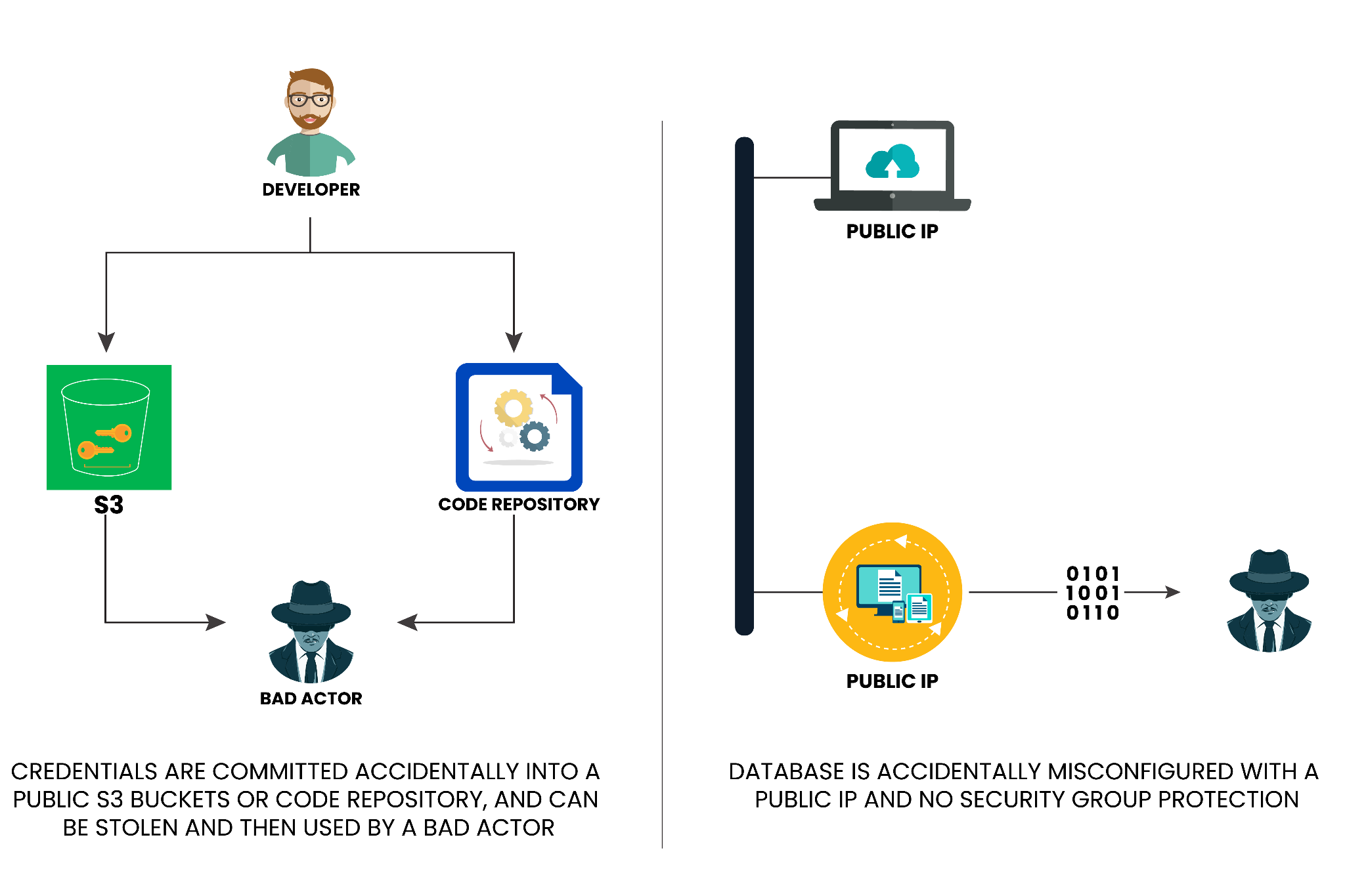
By 2026, the speed of exploitation has reached a critical threshold. Automated botnets and AI-driven scanning tools now scan the entire IPv4 and reachable IPv6 space for open storage buckets and misconfigured ports in near real-time. If a developer launches a staging environment with default credentials or an open S3 bucket, it is often identified by malicious actors within minutes.
The Complexity of Scale
Modern cloud environments are no longer composed of a few virtual machines. They are massive, interconnected ecosystems of microservices, containers, and serverless functions. Manually tracking the configuration of every resource is impossible. A small change in a Terraform script or an AWS CloudFormation template can replicate a security flaw across thousands of instances instantly. This "security at scale" problem means that a minor oversight becomes a catastrophic systemic risk.
Lack of Visibility
Visibility remains a significant challenge. Organizations often suffer from "shadow IT," where departments spin up cloud resources without the knowledge of the central IT or security teams. These unmanaged resources frequently bypass corporate security policies, leading to "ghost" configurations that are never audited and remain vulnerable indefinitely.
Critical Areas Where Configuration Fails
Configuration issues are not limited to a single service. They permeate every layer of the cloud stack. Below are the most frequent areas where misconfigurations lead to security incidents.
Identity and Access Management (IAM)
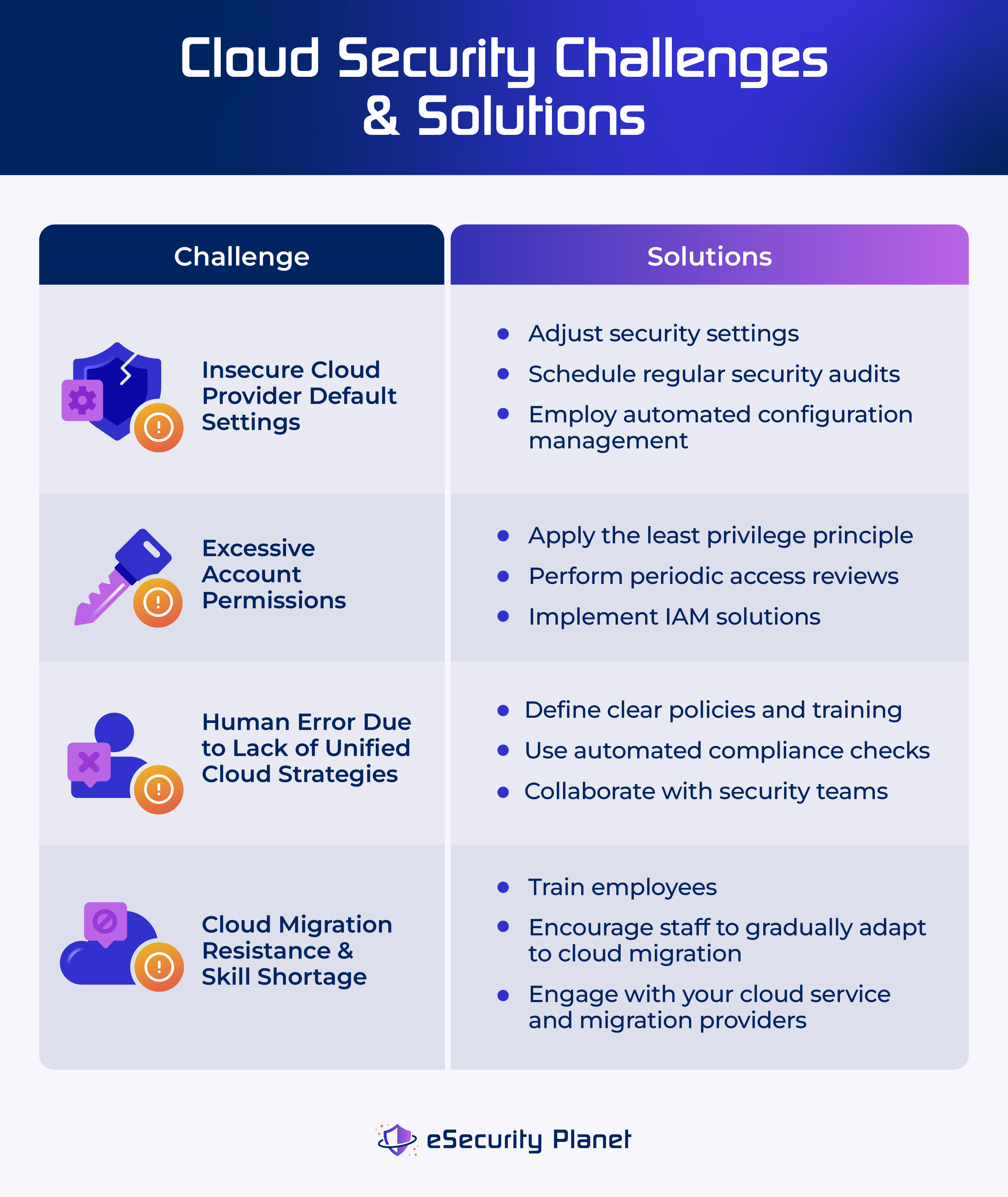
IAM is the new perimeter in 2026. Traditional network firewalls are less effective in a world of remote work and API-driven services. Misconfigured IAM roles often grant "Administrator Access" to service accounts that only need read-only permissions. If an attacker compromises a single over-privileged function, they can move laterally through the environment, escalating their privileges and eventually seizing control of the entire cloud account.
Storage and Database Exposure
Publicly accessible storage buckets (such as Amazon S3 or Azure Blobs) continue to be a leading cause of massive data leaks. These often occur because developers use public access for testing and forget to revert the settings before moving to production. Similarly, databases like MongoDB or Elasticsearch are sometimes deployed without authentication requirements, assuming they are "hidden" within a private network when they are actually reachable via misconfigured VPC peering.
Insecure Network Settings
Network security groups and Access Control Lists (ACLs) act as virtual firewalls. A common configuration error is leaving port 22 (SSH) or port 3389 (RDP) open to the entire internet (0.0.0.0/0). This invites brute-force attacks. Furthermore, failing to implement proper VPC flow logs prevents security teams from detecting anomalous traffic patterns that indicate a breach in progress.
Comparing Security Tooling for Configuration Management
As organizations attempt to mitigate these risks, they rely on various categories of security tools. The following table compares the primary solutions used in 2026 to manage cloud security posture.
| Tool Category | Primary Focus | Best For | Key Limitation |
|---|---|---|---|
| CSPM (Cloud Security Posture Management) | Continuous monitoring of cloud settings against best practices. | Detecting misconfigured buckets, IAM roles, and logging. | Often identifies issues after they are deployed. |
| IaC Scanning (Infrastructure as Code) | Analyzing scripts (Terraform, Ansible) before deployment. | "Shifting Left" to prevent misconfigurations in the pipeline. | Cannot detect "drift" caused by manual changes in the console. |
| CIEM (Cloud Infrastructure Entitlement Management) | Managing and rightsizing IAM permissions. | Solving the "Principal of Least Privilege" across multi-cloud. | Can be complex to integrate with legacy applications. |
| CNAPP (Cloud-Native Application Protection Platform) | An integrated suite of CSPM, CIEM, and workload protection. | Unified visibility across the entire cloud lifecycle. | Higher cost and requires significant expertise to manage. |
The Financial and Regulatory Consequences
Configuration issues are not just technical problems; they are massive financial liabilities. Under regulations like the General Data Protection Regulation (GDPR) and the California Consumer Privacy Act (CCPA), companies can be fined millions of dollars for failing to protect consumer data. Regulators in 2026 increasingly view "default configurations" as a sign of negligence rather than a simple mistake.
Beyond fines, the cost of remediation is significant. This includes the forensic investigation to determine what was stolen, the cost of notifying affected customers, and the long-term damage to brand reputation. For many mid-sized enterprises, a single major data breach resulting from a misconfigured cloud database can lead to insolvency.
How to Establish a Secure Configuration Strategy
To address why cloud security issues configuration matter, organizations must move from a reactive to a proactive stance. This involves a multi-layered approach:
- Adopt Policy as Code (PaC): Use tools like Open Policy Agent (OPA) to codify security requirements. If a resource does not meet the "Encrypted" or "Private" requirement, the deployment should be automatically blocked by the CI/CD pipeline.
- Enable Automated Remediation: High-maturity organizations use CSPM tools that don't just alert on a public S3 bucket but automatically flip it back to private. This reduces the "mean time to remediate" (MTTR) from hours to seconds.
- Implement Regular Audits: Even with automation, human oversight is necessary. Regular architectural reviews ensure that the cloud design still aligns with the business's risk tolerance.
- Continuous Training: Developers should be trained on the specific security nuances of the cloud platforms they use. Understanding how "Default VPCs" work or how "Resource-Based Policies" differ from "Identity-Based Policies" is essential for writing secure code.
Troubleshooting Common Configuration Errors
When a security alert is triggered, the response must be methodical. The first step is to isolate the affected resource. For example, if a virtual machine is detected with an open port, the security group should be modified immediately to restrict access to a specific corporate IP range.
Next, perform a "Root Cause Analysis" (RCA). Was the misconfiguration a result of a manual change (drift) or a flaw in the deployment template? If it was a template flaw, the fix must be applied to the source code to prevent the issue from reappearing during the next update. Finally, check the access logs (such as AWS CloudTrail or Azure Activity Logs) to determine if any unauthorized entity accessed the resource during the period it was exposed.
FAQ
Does using a managed service (PaaS) eliminate configuration risks?
No, it does not. While Platform-as-a-Service (PaaS) solutions like Azure SQL or AWS Lambda reduce the amount of infrastructure you manage, you are still responsible for configuring access controls, encryption, and integration settings. In some cases, PaaS can introduce unique risks because the underlying "magic" of the service can hide complex permission sets from the user.
Why is "Cloud Drift" dangerous for security?
Cloud Drift occurs when the actual state of your cloud resources deviates from the defined state in your Infrastructure as Code (IaC) files. This usually happens when an admin makes a manual change in the cloud console to "fix" a quick problem. This creates a blind spot because the security team may think the environment is secure based on the code, while the actual live environment is vulnerable.
Can AI help fix cloud configuration issues?
Yes, in 2026, AI is heavily utilized in CSPM and CNAPP platforms to identify patterns of over-privilege that human analysts might miss. AI can suggest "right-sized" IAM roles based on actual usage data. However, automated AI fixes should be tested in staging environments first to ensure they do not break application functionality.
Is multi-cloud more secure than single-cloud?
Not necessarily. Multi-cloud increases complexity, which is the enemy of security. Managing configuration across different providers (e.g., trying to map Azure AD roles to AWS IAM) requires specialized knowledge of both systems. Misunderstandings between how different providers handle "Public" vs. "Authenticated" access are a common source of configuration errors.
What is the first step a small business should take to secure its cloud?
The first step is to turn on multi-factor authentication (MFA) for all users, especially those with administrative access. The second step is to enable "Block Public Access" at the account level for all storage services. These two simple configuration changes mitigate a vast majority of common cloud attacks.
Final Recommendation
To minimize the risks associated with cloud security configuration, organizations must transition to an Automated Governance model. Relying on manual checks is no longer viable in the high-speed environment of 2026. Prioritize the implementation of a Cloud-Native Application Protection Platform (CNAPP) that provides a "single pane of glass" view into your IAM, network, and storage settings. By treating "Security as Code," you ensure that your defense posture evolves as quickly as your infrastructure.
Image Gallery