The Complete History of the Original Baywatch: From Cancellation to Global Phenomenon
The original Baywatch series is one of the most remarkable success stories in television history. Premiering on NBC in 1989, the lifeguard drama was canceled after a single low-rated season. Lead actor David Hasselhoff and creators Mic...
The original Baywatch series is one of the most remarkable success stories in television history. Premiering on NBC in 1989, the lifeguard drama was canceled after a single low-rated season. Lead actor David Hasselhoff and creators Michael Berk, Douglas Schwartz, and Gregory J. Bonann subsequently revived the series in first-run syndication in 1991, transforming it into a global broadcast empire that reached over one billion weekly viewers across 140 countries.
Contents
The Origins and Creation of Baywatch (1989)
The concept for Baywatch originated from the real-life experiences of Gregory J. Bonann, who worked as a Los Angeles County lifeguard while pursuing a career as a television producer and director. Bonann recognized that the sun-drenched beaches of Southern California, combined with the daily high-stakes rescue operations of professional lifeguards, offered an ideal setting for an episodic action-drama.
Together with experienced television writers and producers Michael Berk and Douglas Schwartz, Bonann developed a pilot script centered on the interpersonal dynamics, personal sacrifices, and aquatic rescue missions of the Los Angeles County Lifeguard Service. The core narrative revolved around Mitch Buchannon, a dedicated senior lifeguard balancing public safety responsibilities, administrative pressures, and single fatherhood.
The Baywatch Resurrection
- 1989: NBC Premiere
- Canceled after Season 1 (Low Ratings)
- 1991: First-Run Syndication
- Global Hit (140+ Countries)
When the team pitched the series to major American broadcast networks in the late 1980s, NBC picked up the pilot. Baywatch officially premiered on NBC on September 22, 1989. The initial cast featured:
- David Hasselhoff as lead character Mitch Buchannon
- Parker Stevenson as Craig Pomeroy
- Shawn Weatherly as Jill Riley
- Billy Warlock as Eddie Kramer
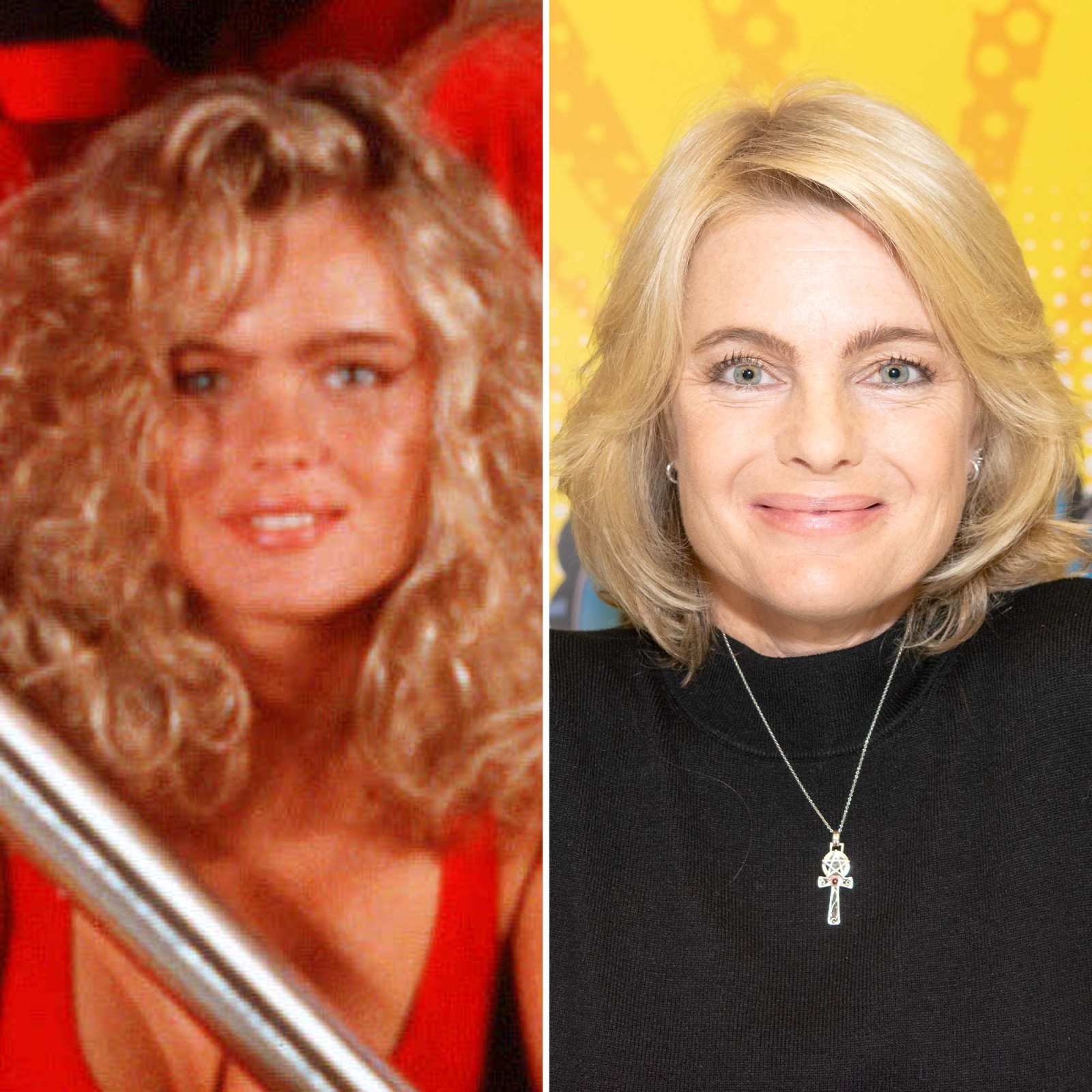
- Erika Eleniak as Shauni McClain
- Brandon Call as Hobie Buchannon (later recast with Jeremy Jackson)
Despite strong visuals and an established lead actor fresh off the success of Knight Rider, the network broadcast environment of 1989 presented steep competitive challenges.
The First Season Cancellation and the Syndication Miracle (1989–1991)
The inaugural 1989–1990 season of Baywatch struggled to find a consistent audience on NBC. Positioned against established prime-time programming, the show finished 73rd out of 103 network shows in the seasonal Nielsen ratings. Compounding the poor domestic ratings was the financial collapse of GTG Entertainment, the production company co-owned by legendary executive Grant Tinker and Gannett, which had financed the initial season.
Facing abysmal domestic viewership and a bankrupt production partner, NBC canceled Baywatch in 1990. Under standard television industry practices of the era, a single-season broadcast failure would have ended the series permanently. However, the show's creators and star recognized two crucial factors:
- International Demand: International television distributors had reported surprisingly robust sales and enthusiast viewer responses across European networks, where bright, visual action content dubbed easily into local languages.
- First-Run Syndication Potential: The early 1990s marked the growth of independent U.S. television stations seeking affordable prime-time content outside the traditional three major networks (NBC, CBS, ABC).
David Hasselhoff, convinced of the program's international appeal, agreed to take a significant reduction in upfront acting salary in exchange for taking on an active role as Executive Producer and securing a substantial share of future backend royalties.
- Production Team: Berk / Schwartz / Bonann
- Lead Actor & Exec Producer: David Hasselhoff
- Syndication Partner: All American Television
- Result: Global First-Run Syndication Enterprise (1991)
The production team bought back the rights to Baywatch from GTG Entertainment for a nominal fee. They partnered with All American Television (a distribution company later absorbed into Pearson Television and subsequently Fremantle) to launch the series in first-run syndication for the 1991–1992 season.
By bypassing network executives, selling directly to local television stations across the United States, and pre-selling broadcast rights across international markets, the production team lowered per-episode production budgets while retaining creative control. This risk paid off immediately; Baywatch returned to the airwaves in September 1991 as a self-sustaining syndication powerhouse.
Visual Style, Global Impact, and Cast Evolution
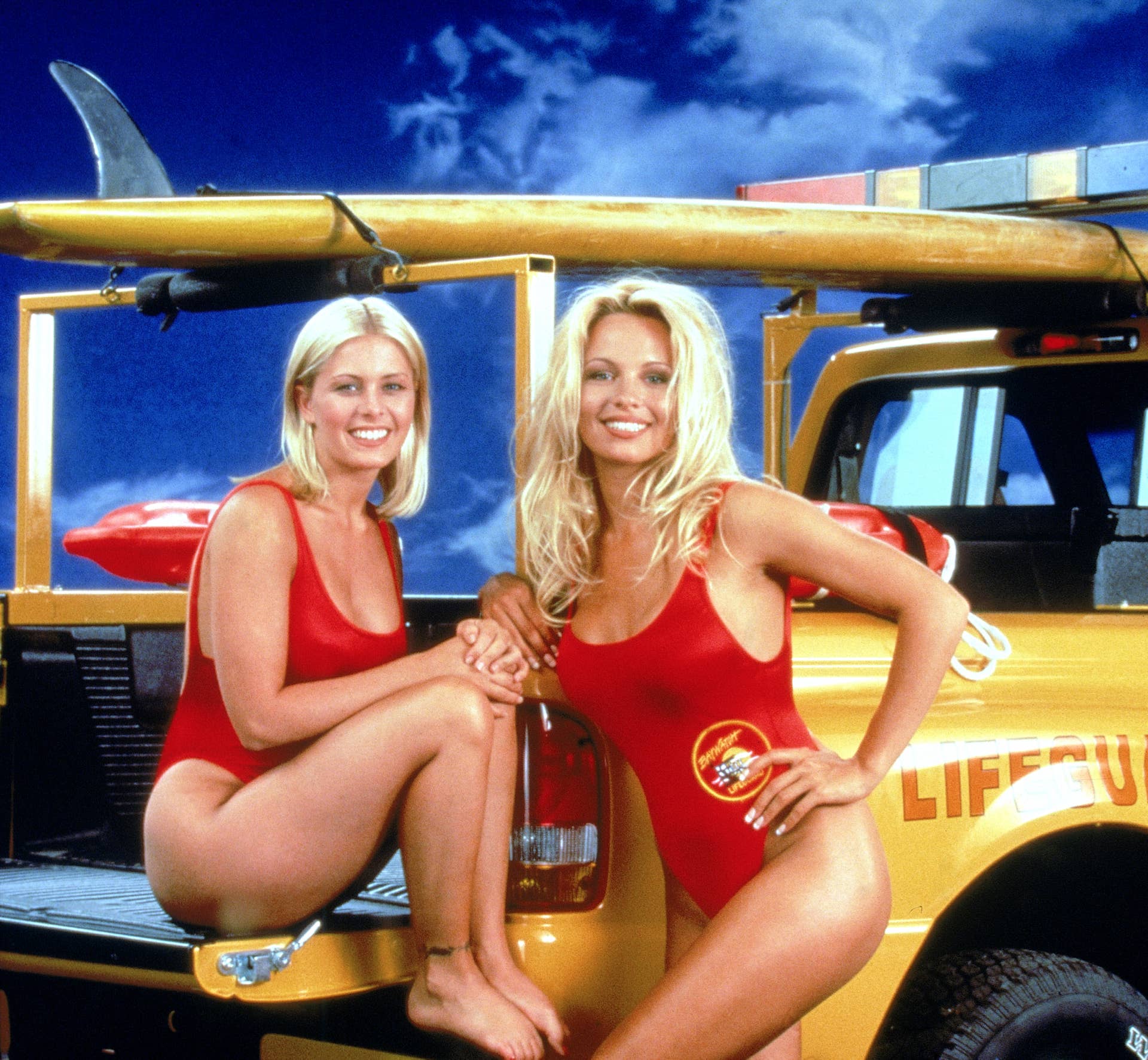
The resurrected Baywatch established a distinct visual signature that defined 1990s pop culture. The series utilized slow-motion sequences of lifeguards running along the shore in bright red swimwear, shot with telephoto lenses against golden-hour Southern California sunsets. While often parodied, this stylistic choice was originally implemented as an economical editing technique to stretch episode running times without incurring expensive stunt or dialogue setups.
| Core Elements of the Baywatch Formula | Description |
|---|---|
| 1. Visual Aesthetic | Slow-motion running, telephoto sunlit shots |
| 2. Musical Montages | Contemporary pop tracks driving action sequences |
| 3. Dynamic Ensemble | Rotating cast of accessible, athletic leads |
| 4. Universal Themes | Physical heroism, rescue, personal redemption |
Music also played a fundamental operational role. Episodes frequently incorporated full-length musical montages featuring contemporary pop, rock, and adult-contemporary tracks. The iconic main theme song, "I'm Always Here" performed by Jimi Jamison (former lead singer of the band Survivor), became globally recognizable alongside the instrumental end-credits theme, "Current of Love," sung by David Hasselhoff.
Cast Evolution and Key Characters
As the series expanded throughout the 1990s, the ensemble cast evolved continuously. While David Hasselhoff remained the steady anchor of the series as Captain Mitch Buchannon, the introduction of new cast members dramatically boosted worldwide ratings:
- Pamela Anderson (C.J. Parker): Joining in Season 3 (1992), Anderson became the breakout star of the franchise. Her character, Casey Jean "C.J." Parker, mixed practical lifeguarding skill with an interest in alternative wellness and spirituality, transforming Anderson into one of the most recognized global media personalities of the decade.
- Alexandra Paul (Stephanie Holden): Appearing from Seasons 3 through 7, Paul played a principled, highly organized lieutenant who provided an authoritative counterweight to Mitch's intuitive leadership style.
- Yasmine Bleeth (Caroline Holden): Introduced in Season 4 as Stephanie's younger sister, Bleeth became a central fan favorite, driving major romantic and family storylines through Season 7.
- David Chokachi (Cody Madison): Introduced in Season 6, Chokachi brought athletic, competitive surfing elements to the lifeguard tower, filling the romantic lead space for younger viewers.
- Gena Lee Nolin (Neely Capshaw) & Traci Bingham (Jordan Tate): Added during the mid-to-late 1990s as part of regular casting refreshes designed to maintain international audience engagement.
At its peak in the mid-1990s, Baywatch was broadcast in more than 140 countries and translated into dozens of languages. The Guinness Book of World Records designated Baywatch as the most-watched television series in the world, with an estimated weekly audience exceeding 1.1 billion viewers.
Key Milestones and Series Timeline
The historical trajectory of Baywatch spans eleven seasons, multiple geographical settings, and major production shifts. The following table outlines the timeline and operational transformations of the original series:
| Era / Season Span | Location / Setting | Major Cast & Production Milestones | Distribution & Commercial Status |
|---|---|---|---|
| Season 1 (1989–1990) | Los Angeles County (Will Rogers State Beach) | David Hasselhoff, Parker Stevenson, Shawn Weatherly, Erika Eleniak, Billy Warlock. Created by Bonann, Berk, & Schwartz. | Broadcast on NBC network; canceled after 22 episodes due to low domestic ratings. |
| Seasons 2–3 (1991–1993) | Santa Monica & Malibu, California | Syndication launch. Pamela Anderson (C.J. Parker) and Alexandra Paul join. Jeremy Jackson takes over as Hobie. | First-run syndication via All American Television; rapid international sales growth. |
| Seasons 4–8 (1993–1998) | Will Rogers State Beach / Santa Monica Headquarters | Yasmine Bleeth, David Chokachi, Gena Lee Nolin, Donna D'Errico, Carmen Electra join ensemble. Peak global footprint. | Reaches #1 syndicated drama status globally; cited by Guinness World Records (>1B viewers). |
| Season 9 (1998–1999) | Southern California Coastline | Transition season. Exit of several core cast members; rising California production costs impact margins. | Ratings begin domestic decline; international pre-sales remain profitable. |
| Seasons 10–11 (1999–2001) | Oahu, Hawaii (Baywatch Hawaii) | Relocation to Hawaii. Hasselhoff leaves mid-Season 10. Jason Momoa (Jason Ioane) makes acting debut alongside Michael Bergin and Simmone Jade Mackinnon. | Retitled Baywatch Hawaii; production ends in May 2001 after 242 total episodes. |
Spin-Offs, Format Shifts, and Relocation to Hawaii
The success of Baywatch encouraged the producers to expand the franchise through spin-offs, television movies, and radical location changes to preserve financial viability.
Baywatch Nights (1995–1997)
In 1995, executive producers launched Baywatch Nights, a direct spin-off intended to capitalize on the success of the parent show while branching into a distinct genre. The series followed Mitch Buchannon as he pursued a secondary career as a private investigator alongside detective Garner Ellerbee (Gregory Alan Williams) and detective Ryan McBride (Angie Harmon).
During its first season, Baywatch Nights operated as a conventional noir detective drama. However, in response to soft ratings and the rising popularity of sci-fi network hits like The X-Files, the producers overhauled the second season to focus entirely on supernatural phenomena, sea monsters, and alien encounters. The drastic creative pivot failed to build a sustainable audience, leading to the show's cancellation in 1997 after 44 episodes.
Baywatch Franchise Branches
- Baywatch (Original Series: 1989–1999, CA Beach Ops)
- Baywatch Nights (Spin-Off: 1995–1997, Noir / Sci-Fi)
- Baywatch Hawaii (Rebrand: 1999–2001, Oahu Base)
- Hawaiian Wedding (TV Reunion Movie: 2003)
Relocation: Baywatch Hawaii (1999–2001)
By 1999, rising production costs in Southern California, coupled with changing union fee structures and declining domestic syndication fees, threatened the financial model of the main series. Furthermore, long-time star David Hasselhoff decided to step back from full-time acting duties during the tenth season.
To keep the series economically viable, the production team negotiated a financial incentive agreement with the state of Hawaii. Production relocated to the island of Oahu, and the show was officially rebranded as Baywatch Hawaii for Seasons 10 and 11.
The relocation introduced a new, localized setting—the Haleiwa Training Center on Oahu's North Shore—and incorporated local culture, water-craft rescues, and a fresh young cast. Notably, Baywatch Hawaii marked the screen acting debut of Jason Momoa, who starred as young lifeguard Jason Ioane.
Despite the scenic refresh and updated action sequences, changing global television distribution markets led to the final wrap of production in 2001. Over its 11-year run, the original franchise aired 242 episodes.
Technical Legacy, Remastering, and Streaming Distribution
The legacy of the original Baywatch extends beyond nostalgia into the structural economics of modern media distribution. The show demonstrated that television properties could achieve global profitability independently of major American broadcast networks, proving the power of overseas syndication markets.
In 2018, rights-holder Fremantle completed a comprehensive digital remastering of all 242 episodes. The original 35mm film negatives were scanned and re-scanned in high-definition 1080p, transitioning the series from its native 4:3 standard-definition broadcast format into a modern 16:9 widescreen presentation.
- Original 35mm Film Negatives
- Digital Scanning & 1080p Remastering (2018)
- Re-cleared Music & 300+ New Contemporary Tracks
- Global FAST Channels & HD Streaming Networks
Because the original music rights for many pop tracks used in the 1990s were licensed only for standard-definition broadcast television, Fremantle commissioned composer Corey Lerue and various indie artists to record over 300 new tracks to replace un-cleared songs.
This remastered edition allowed Baywatch to transition into 21st-century distribution platforms, where it currently streams across Free Ad-supported Streaming Television (FAST) platforms, premium subscription services, and digital video channels worldwide.
Frequently Asked Questions
Why was original Baywatch canceled after its first season?
NBC canceled Baywatch in 1990 due to low domestic Nielsen ratings (ranking 73rd out of 103 prime-time shows) combined with the financial bankruptcy of its production company, GTG Entertainment. It was only saved when lead star David Hasselhoff and the creators bought back the rights and transitioned the show to first-run syndication.
Who created the original Baywatch series?
The series was co-created by Gregory J. Bonann, Michael Berk, and Douglas Schwartz. Bonann was a real-life Los Angeles County lifeguard whose firsthand experiences on California beaches formed the foundational premise of the show.
How many seasons and episodes did the original series run?
The original Baywatch ran for a total of 11 seasons and 242 episodes between 1989 and 2001. This includes the final two seasons produced in Hawaii under the title Baywatch Hawaii.
Where was original Baywatch filmed?
For Seasons 1 through 9 (1989–1999), the series was primarily filmed on location in Southern California, specifically at Will Rogers State Beach, Santa Monica, and Malibu. For Seasons 10 and 11 (1999–2001), production relocated to the island of Oahu, Hawaii.
Did David Hasselhoff own the rights to Baywatch?
David Hasselhoff did not own the franchise outright, but he acquired a significant ownership stake and became an Executive Producer when the show moved to syndication in 1991. He took a reduced upfront acting salary in exchange for backend royalties, which proved extraordinarily lucrative as international sales expanded.
What was the title of the original Baywatch theme song?
The primary theme song for the syndication years was "I'm Always Here," co-written and performed by Jimi Jamison, the former lead singer of Survivor. The Season 1 NBC theme song was "Save Me," performed by Peter Cetera.
Practical Recommendations for Television Historians and Viewers
For researchers, media scholars, and classic television enthusiasts exploring the history of Baywatch, the following actions provide deeper technical and historical context:
- Compare Broadcast vs. Remastered Editions: To examine how 1990s network television was adapted for modern displays, compare original 4:3 standard-definition home video releases with the 2018 Fremantle 16:9 HD remastered prints, paying specific attention to framing, color grading, and audio replacement.
- Analyze the First-Run Syndication Business Model: Study Baywatch alongside contemporary 1990s syndicated hits like Star Trek: The Next Generation, Hercules: The Legendary Journeys, and Xena: Warrior Princess to understand how independent station groups disrupted legacy network distribution.
- Explore Archive Facilities: Consult the archives of the Paley Center for Media or the Directors Guild of America for behind-the-scenes documentation, original production call sheets, and oral history interviews detailing the marine safety protocols and aquatic filming setups developed by Gregory J. Bonann.
Image Gallery