The Rome Gas Station Explosion and Its Aftermath: Safety Lessons and Legal Impact
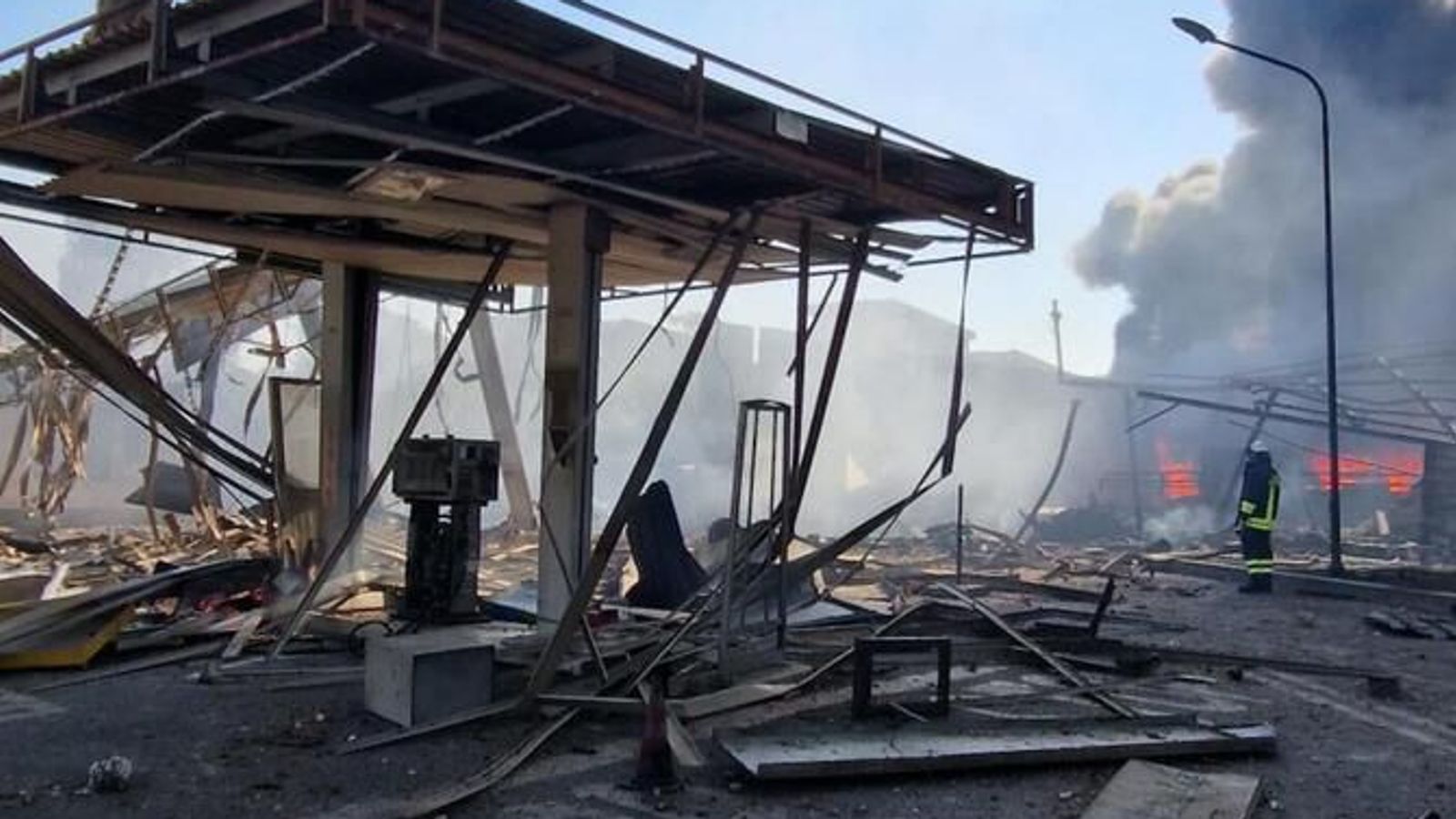
The Rome gas station explosion occurred on December 5, 2018, along the Via Salaria near Borgo Quinzio. Triggered by an LPG tanker fire during a fuel transfer, the blast killed two people and injured over twenty others. Its aftermath sp...
The Rome gas station explosion occurred on December 5, 2018, along the Via Salaria near Borgo Quinzio. Triggered by an LPG tanker fire during a fuel transfer, the blast killed two people and injured over twenty others. Its aftermath sparked rigorous safety audits, legal investigations into transport protocols, and significant reforms in Italian fuel station emergency response standards.
Contents
The incident remains a pivotal case study for European fire safety experts and fuel logistics companies. By examining the technical failures, the heroic but tragic first response, and the subsequent legislative shifts, we can understand how industrial safety has evolved in the years leading up to 2026.
Chronology of the Via Salaria Disaster
The event began on a cold December afternoon at a fuel station located at kilometer 39 of the Via Salaria, a major artery connecting Rome to Rieti. A tanker truck was in the process of discharging Liquefied Petroleum Gas (LPG) into the station’s underground tanks. According to official reports from the Vigili del Fuoco (the Italian National Fire Corp), a fire broke out during the transfer process.
The initial fire was intense but localized to the tanker. Firefighters arrived on the scene almost immediately, establishing a perimeter and attempting to cool the tank to prevent a catastrophic failure. However, while the first responders were mid-operation, the internal pressure of the tanker reached a critical point. The resulting explosion was a Boiling Liquid Expanding Vapor Explosion (BLEVE), a phenomenon where a vessel containing a pressurized liquid above its boiling point ruptures violently.
The force of the blast was immense. It destroyed the station infrastructure, sent the tanker’s wreckage hundreds of meters away, and caused a massive fireball that engulfed the surrounding area. Among the casualties was Stefano Colasanti, a veteran firefighter who was off-duty but stopped to assist his colleagues. A civilian, Andrea Maggi, who was waiting nearby, also lost his life. The explosion injured approximately 20 others, including several firefighters who suffered severe burns and trauma from the shockwave.
Technical Analysis of the BLEVE Phenomenon
To understand the aftermath, one must first understand the technical severity of the explosion. A BLEVE is among the most feared events in the fuel transport industry. When an external fire heats a tank containing pressurized liquid (like LPG), the liquid begins to boil, increasing the internal pressure. Simultaneously, the structural integrity of the tank wall—specifically the portion not cooled by the liquid inside—weakens due to the extreme heat.
When the tank finally fails, the pressurized liquid instantly flashes into vapor, expanding its volume by 200 to 300 times in a fraction of a second. This expansion creates a powerful shockwave and, if the substance is flammable, a massive fireball. In the Rome gas station case, the investigation focused on several technical points:
- Valve Failure: Investigators examined whether the safety relief valves (SRVs) on the tanker were functioning correctly or if they were overwhelmed by the rate of pressure increase.
- Transfer Hose Integrity: Initial reports suggested a leak in the connection between the tanker and the station’s intake, potentially caused by mechanical failure or human error during the coupling process.
- Emergency Shut-off Systems: The aftermath focused heavily on why the remote emergency shut-off valves did not prevent the initial fire from escalating into a full tank breach.
Legal Consequences and Liability
The legal aftermath of the Rome gas station explosion spanned several years, involving complex litigation under Italian penal and civil codes. The Rieti Public Prosecutor's Office opened an investigation into "omission of safety measures" and "culpable disaster."
Corporate and Personal Accountability
The investigation scrutinized three main entities: the transport company responsible for the tanker, the manufacturer of the tanker’s safety components, and the management of the fuel station. Key legal questions addressed in the subsequent years included:
- Maintenance Records: Were the tanker’s safety valves and structural components inspected according to the ADR (Accord Dangereux Routier) standards?
- Personnel Training: Had the driver and the station operator received adequate training for managing high-risk fuel transfers?
- Site Compliance: Did the gas station meet the updated fire safety distances required for LPG storage near high-traffic highways?
By the early 2020s, several indictments were handed down. The case highlighted a "chain of negligence" rather than a single point of failure. It served as a warning to the Italian fuel industry that liability extends beyond the immediate operator to the entire logistics and maintenance supply chain.
Evolution of Safety Regulations (2018–2026)
In the years following the disaster, Italy implemented several legislative updates to prevent a recurrence. These changes focused on both the infrastructure of gas stations and the technical specifications of transport vehicles.
Infrastructure Hardening
New regulations mandated that LPG discharge points be equipped with advanced thermal imaging sensors. These sensors are designed to detect "hot spots" during the transfer process and automatically trigger high-volume foam suppression systems before a fire can reach the tanker’s main hull. Furthermore, the mandatory safety distance between LPG tanks and public roads was recalculated to account for the blast radius of modern high-capacity tankers.
Enhanced ADR Requirements
The ADR (the international treaty governing the transport of dangerous goods by road) saw heightened enforcement in Italy. Since 2022, there has been a significant push for "smart tankers" equipped with real-time pressure and temperature monitoring accessible by both the driver and a central dispatch office. This allows for earlier intervention if a tank begins to over-pressurize during transit or delivery.
Comparison of Safety Protocols: Pre-2018 vs. 2026 Standard
| Feature | Pre-2018 Protocol | 2026 Standard |
|---|---|---|
| Emergency Shut-off | Manual or basic pneumatic | Automated via thermal/pressure sensors |
| Staff Training | General safety certification | Specialized LPG Hazard & BLEVE Mitigation |
| Site Monitoring | Visual inspection by operator | Integrated CCTV and 24/7 remote sensors |
| Tanker Protection | Standard insulation | Enhanced passive fire protection (PFP) coatings |
| First Response | Standard water cooling | High-expansion foam and robotic monitors |
The Impact on First Responder Protocols
The death of Stefano Colasanti led to a fundamental shift in how the Vigili del Fuoco approach fuel fires. The disaster demonstrated that "cooling the tank" with standard water hoses is sometimes insufficient when the internal pressure has already crossed a critical threshold.
Modern protocols now emphasize the use of unmanned monitors (robotic water cannons) for cooling tanks. If sensors indicate that a tank is nearing a BLEVE state, commanders are now authorized—and encouraged—to establish a much larger "no-go" zone, even if it means allowing the fire to burn until specialized equipment arrives. The priority has shifted from saving the asset to absolute life safety for both responders and the public.
Community and Infrastructure Recovery
The physical recovery of the Via Salaria site took months, but the psychological impact on the local community near Borgo Quinzio lasted much longer. For years, residents petitioned for the relocation of high-risk fuel stations away from residential centers.
As of 2026, urban planning in the Lazio region has integrated stricter "Risk Zones" into its development maps. New gas stations are rarely approved if they are in close proximity to schools, hospitals, or high-density housing, especially if they intend to provide LPG or hydrogen—the latter of which presents similar high-pressure risks.
Frequently Asked Questions
What was the primary cause of the Rome gas station explosion?
The explosion was a BLEVE (Boiling Liquid Expanding Vapor Explosion) caused by an LPG tanker catching fire during a fuel transfer. While the exact spark source was debated in court, the catastrophic failure resulted from the tanker’s internal pressure exceeding the structural strength of the heat-weakened tank walls.
Who was held responsible for the 2018 Salaria explosion?
Responsibility was distributed across multiple parties. Legal proceedings focused on the transport company for maintenance oversights and the station's management for failing to implement adequate emergency shutdown procedures. The courts emphasized systemic failures in safety compliance rather than a single individual's error.
How many people died in the Rome gas station explosion?
Two people died in the incident. Stefano Colasanti, a veteran firefighter who stopped to help while off-duty, and Andrea Maggi, a civilian in the vicinity. Around 20 others suffered injuries ranging from severe burns to shrapnel wounds.
How have LPG safety rules changed since the explosion?
Since the event, Italy has introduced stricter automated suppression requirements for LPG stations, enhanced "smart monitoring" for tankers, and increased the mandatory safety buffer zones between fuel infrastructure and public areas. Training for personnel handling hazardous materials has also become more rigorous.
Is the Via Salaria gas station still operational?
The specific site at kilometer 39 underwent extensive remediation. While fuel services in the region were restored, the site was rebuilt with significantly enhanced safety barriers and modern monitoring technology that exceeded the requirements in place at the time of the 2018 disaster.
Final Recommendations for Safety Compliance
For operators and logistics companies, the Rome gas station explosion serves as a permanent reminder that safety is a proactive, not reactive, discipline. In 2026, compliance should move beyond the minimum legal requirements. Companies should invest in Passive Fire Protection (PFP) for all pressurized vessels and implement redundant automated shutdown systems that do not rely on human intervention.
For the general public, it is essential to respect the safety perimeters established by first responders during any fuel-related incident. As the Salaria disaster proved, the danger zone of a pressurized tank fire can expand from a few meters to several hundred in a matter of seconds.
Image Gallery