Understanding Marine Corps MARADMINs: The 2026 Guide to Administrative Messages
Marine Corps Administrative Messages (MARADMINs) are official communications used by Headquarters Marine Corps (HQMC) to disseminate non-policy information, announce urgent policy changes, or provide temporary guidance. In 2026, they r...
Marine Corps Administrative Messages (MARADMINs) are official communications used by Headquarters Marine Corps (HQMC) to disseminate non-policy information, announce urgent policy changes, or provide temporary guidance. In 2026, they remain the essential source for personnel regarding promotion board schedules, fiscal year retention bonuses, uniform regulation updates, and critical operational directives for all active and reserve components.
Contents
The Strategic Role of MARADMINs in 2026
As of 2026, the Marine Corps continues its evolution under the refined Force Design frameworks, making the MARADMIN system more critical than ever. Unlike permanent Marine Corps Orders (MCOs), which undergo lengthy revision cycles, MARADMINs allow the Commandant and various Deputy Commandants to push immediate, actionable information to the Fleet Marine Force (FMF). These messages ensure that every Marine, from a Private at Parris Island to a General at the Pentagon, receives the same directive simultaneously.
The MARADMIN serves as the bridge between long-term institutional policy and the daily realities of military service. Whether it is the announcement of the FY2026 Sergeant Major through Master Sergeant Selection Board or an update to the Pregnancy and Postpartum Physical Fitness Test (PFT) exemptions, these messages are the legal and administrative authority for unit-level operations.
In the current 2026 operational environment, MARADMINs are increasingly used to manage "Talent Management" initiatives. This includes lateral move opportunities into high-demand Military Occupational Specialties (MOS), such as cyber security and unmanned aerial systems, and the implementation of decentralized promotion authorities.
Anatomy of a MARADMIN: How to Read and Interpret Messages
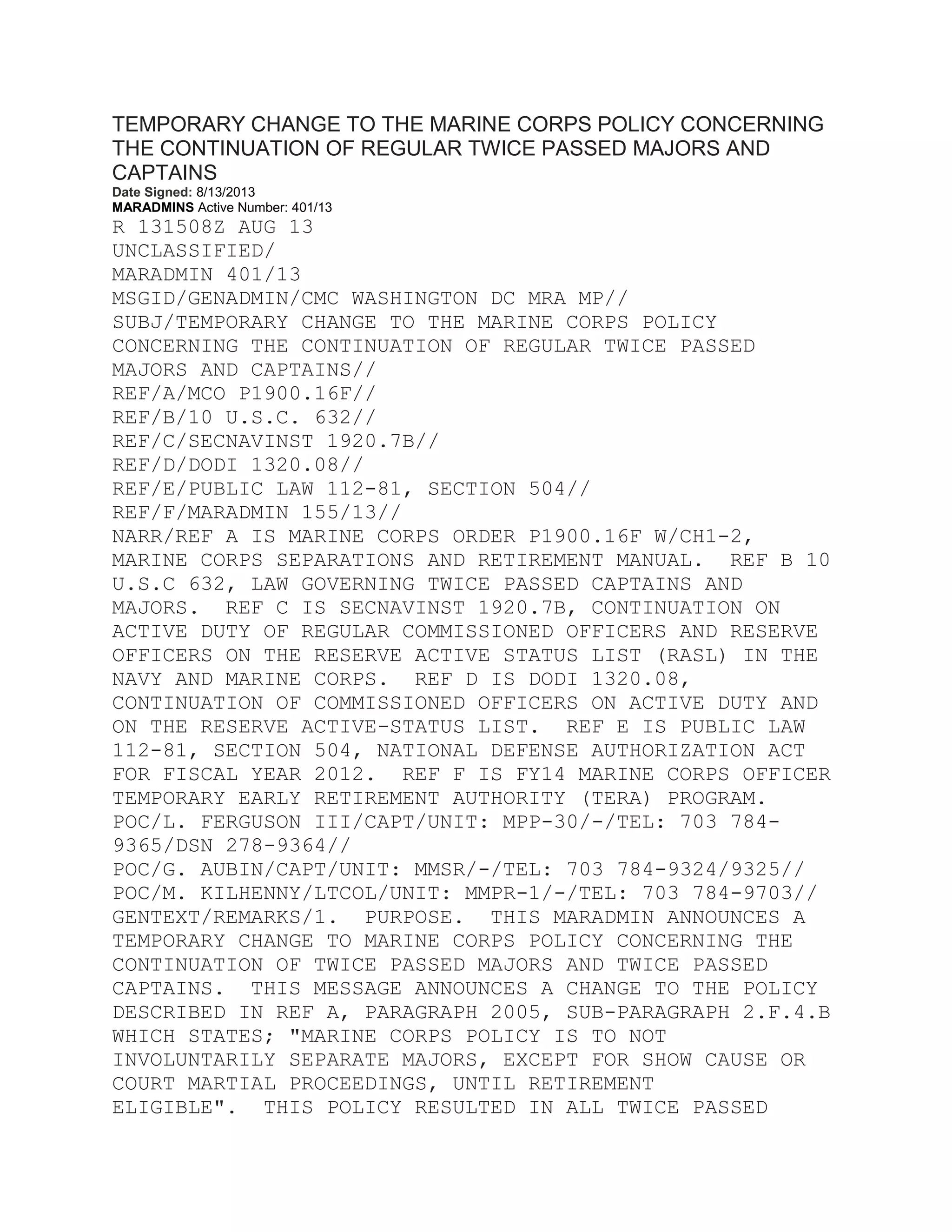
Navigating a MARADMIN requires an understanding of its structured format. Every message follows a standardized template to ensure clarity and legal sufficiency. In 2026, while the delivery systems have become more integrated with mobile platforms, the technical structure remains consistent.
The Header Section
Every MARADMIN begins with a header that contains the Message Identification (MSGID). This is formatted as MARADMIN XXX/26, where "XXX" is the sequential number of the message and "26" represents the year 2026. This numbering system is vital for referencing older messages that may still be in effect or for identifying which messages have been superseded.
The Subject and Originator
The "SUBJ" line provides a concise summary of the message's intent. The "ORIG" line identifies which department at HQMC is issuing the message. Common originators include:
- CMC MRA: Manpower and Reserve Affairs (the most common source for personnel-related messages).
- CMC PP&O: Plans, Policies, and Operations.
- CMC I&L: Installations and Logistics.
References and Point of Contact
The "REF" section lists existing Marine Corps Orders, previous MARADMINs, or Department of Defense (DoD) instructions that the current message modifies or relies upon. It is a critical error to read a MARADMIN in isolation without checking the listed references. Finally, every message concludes with a Point of Contact (POC), typically a subject matter expert (SME) at HQMC who can provide clarification on the technical aspects of the directive.
Key 2026 MARADMIN Categories and Their Impact
Throughout 2026, several categories of MARADMINs dominate the administrative landscape. Understanding these categories helps Marines and administrative officers (S-1) prioritize their workflow.
Manpower and Promotion Boards
The 2026 board schedule is released via a series of MARADMINs early in the fiscal year. These messages provide the "cutoff" dates for photographs, Fitness Report (FITREP) submissions, and the eligibility criteria for "in-zone" and "above-zone" candidates. Missing a deadline found in an FY26 board MARADMIN can result in a Marine being "passed over," which has significant career implications.
Retention and Incentive Programs
For 2026, the Marine Corps has placed a heavy emphasis on retaining experienced NCOs and SNCOs. MARADMINs detailing the Selective Retention Bonus (SRB) program are among the most read documents in the Corps. These messages outline which MOSs are eligible for "kicker" bonuses and the specific reenlistment windows required to secure financial incentives.
Uniform and Grooming Regulations
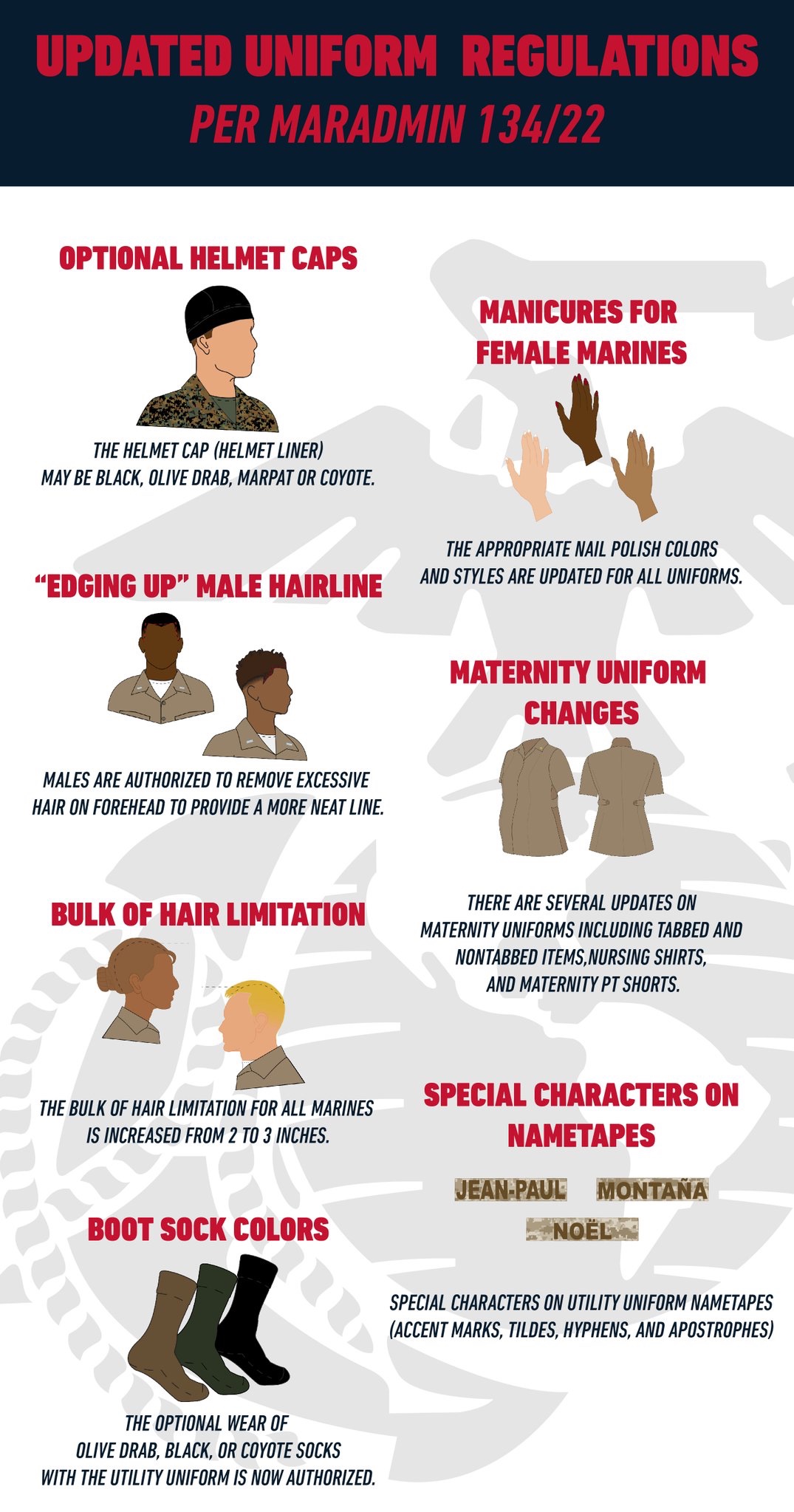
Periodic updates to MCO 1020.34H (Uniform Regulations) are almost always disseminated via MARADMIN first. In 2026, these messages have covered topics ranging from the authorized wear of commercial-off-the-shelf (COTS) gear in training environments to updated standards for female hair styles and the wear of tactical equipment during garrison duties.
Comparison of Marine Corps Communication Directives
It is common for personnel to confuse different types of messages. The following table clarifies the distinctions between the primary communication vehicles used by HQMC in 2026.
| Directive Type | Purpose | Duration | Target Audience |
|---|---|---|---|
| MARADMIN | Administrative updates, board announcements, and temporary policy. | Temporary (usually until incorporated into an MCO). | All Marines and relevant civilian staff. |
| ALMAR | High-level messages from the Commandant or Secretary of the Navy. | Permanent or significant duration. | All Marines (All Marines Message). |
| MCO | Formal, permanent policy and institutional regulations. | Permanent (until formally revised/cancelled). | Universal Marine Corps application. |
| MCBUL | Marine Corps Bulletin; provides instructions for a specific event. | Limited (typically 12 months or less). | Specific units or occupational groups. |
| NAVMC | Forms and instructional manuals for specific tasks. | Operational duration. | Functional users (e.g., S-1 clerks, range safety). |
Accessing MARADMINs in 2026: Official Sources and Search Tips
Finding the correct MARADMIN is a fundamental skill for any Marine. As of 2026, the primary source remains the official United States Marine Corps website (Marines.mil).
Official Access Procedures
The Marines.mil Archive The most reliable way to find a message is through the "Messages" tab on the official USMC portal. Users can filter by year (e.g., 2026), category, or keyword. It is the only legally recognized source for active administrative directives.
The Role of CAC Authentication While most MARADMINs are public, some messages containing sensitive personnel data or specific operational security (OPSEC) details require Common Access Card (CAC) authentication via the Manpower and Reserve Affairs (M&RA) portal.
Subscription Services Many S-1 shops and leaders utilize automated RSS feeds or email subscription services provided by HQMC to receive real-time notifications when a new 2026 MARADMIN is published.
Effective Search Strategies
When searching for a specific topic, such as "Tattoo Policy" or "FY26 Boatspaces," use the following tips:
- Use the Year Modifier: Always include "/26" or "/25" in your search to ensure you aren't looking at outdated guidance.
- Keyword Specificity: Use exact MOS codes or board titles (e.g., "0311" or "Staff Sergeant Selection Board").
- Check the "Cancels" Line: Always look at the first paragraph to see if the message cancels a previous MARADMIN. In 2026, many messages are "interim" and may be superseded within months.
Critical 2026 Policy Shifts Reflected in Administrative Messages
In 2026, several significant shifts in Marine Corps policy have been codified through the MARADMIN system. These changes reflect the broader DoD push toward modernization and personnel readiness.
Performance Evaluation System (PES) Updates
The transition to the "PES 2.0" digital interface was finalized in 2026. Several MARADMINs have been issued to guide Reporting Seniors (RS) and Reviewing Officers (RO) on the new narrative requirements and the removal of certain legacy scoring metrics. These messages provide the technical specifications for the new software and the deadlines for "MRO" (Marine Reported On) submissions.
Deployment Readiness and Medical Standards
With the increased focus on the Indo-Pacific theater, 2026 MARADMINs have frequently updated the "Individual Medical Readiness" (IMR) standards. This includes specific vaccination requirements for various Areas of Responsibility (AORs) and new protocols for Periodic Health Assessments (PHAs) that must be completed prior to deployment.
Financial Management and Travel (DTS)
The 2026 MARADMINs regarding the Defense Travel System (DTS) and Government Travel Charge Card (GTCC) regulations have introduced stricter compliance measures. These messages outline the mandatory use of the GTCC for all permanent change of station (PCS) travel and the specific reimbursement rates for the 2026 fiscal year.
Troubleshooting Common MARADMIN Issues
Despite the standardized system, Marines often encounter issues with administrative messages. Below are common challenges and professional remedies for 2026.
- Conflicting Guidance: If a 2026 MARADMIN appears to contradict an older Marine Corps Order, the MARADMIN generally takes precedence as it represents the "most current commander's intent," unless the MCO specifically states otherwise. Always consult with a Career Planner or Adjutant to verify.
- Broken Links and Attachments: HQMC often references external "Enclosures" or websites. In 2026, if a link within a MARADMIN is dead, the standard procedure is to check the "Related Files" section on the M&RA portal or contact the POC listed at the bottom of the message.
- Eligibility Questions: If you believe you meet the criteria for a program (like an FY26 retention bonus) but are told otherwise, print the relevant MARADMIN and highlight the specific paragraph. The MARADMIN is your "receipt" for administrative rights.
Frequently Asked Questions (FAQ)
What is the difference between a MARADMIN and an ALMAR?
An ALMAR (All Marines) message is usually reserved for high-level announcements from the Commandant of the Marine Corps, while a MARADMIN handles specific administrative and technical tasks. ALMARs typically address the entire force on matters of culture, heritage, or major leadership changes. MARADMINs are the "nuts and bolts" messages that tell you how to apply for a school, when your board meets, or how to wear a specific uniform item.
How long does a MARADMIN stay in effect?
A MARADMIN remains in effect until it is formally cancelled by a subsequent message, expires on a date specified within the text, or is incorporated into a permanent Marine Corps Order. Many administrative messages in 2026 contain a specific "Expiration" paragraph (usually the last or second to last paragraph) that provides a "self-cancel" date, often one year from the date of issuance or upon the completion of the fiscal year.
Can a MARADMIN change a Marine Corps Order?
Yes, a MARADMIN can serve as an interim change to an MCO until the full order is rewritten. This is common when a policy needs to change immediately for safety or operational reasons, but the formal process of updating a multi-hundred-page MCO would take too long. The MARADMIN will state "This message constitutes a change to MCO [Number]."
Where can I find MARADMINs from previous years?
Archives for MARADMINs going back several decades are maintained on the official Marines.mil website. While messages from 2026 are the most relevant for current operations, historical messages are often needed for legal reviews, record corrections (BCMR), or tracing the evolution of a specific policy.
Why can't I find a MARADMIN that was just released?
There is often a short delay between a message being signed by HQMC and it appearing on the public-facing website. In 2026, most messages appear within 24 to 48 hours of their "date-time group." If it is a sensitive message, it may only be available on the CAC-protected Manpower and Reserve Affairs portal rather than the public Marines.mil site.
Professional Advice for Success in 2026
To stay competitive and informed in the 2026 Marine Corps, you must be your own best advocate. Do not rely solely on word-of-mouth or "scuttlebutt" regarding policy changes. Make it a professional habit to check the MARADMIN index at least once a week. For NCOs and officers, this is a leadership requirement; you cannot effectively lead Marines if you are operating on outdated administrative information.
When a new message is released that affects your MOS or your career path, print a physical copy. Digital systems are efficient, but having a hard copy of the FY26 Promotion Board requirements or your SRB eligibility can be invaluable during counseling sessions or when resolving pay discrepancies with IPAC. The MARADMIN system is designed to provide transparency and equity across the force—utilize it to master your career.
Image Gallery