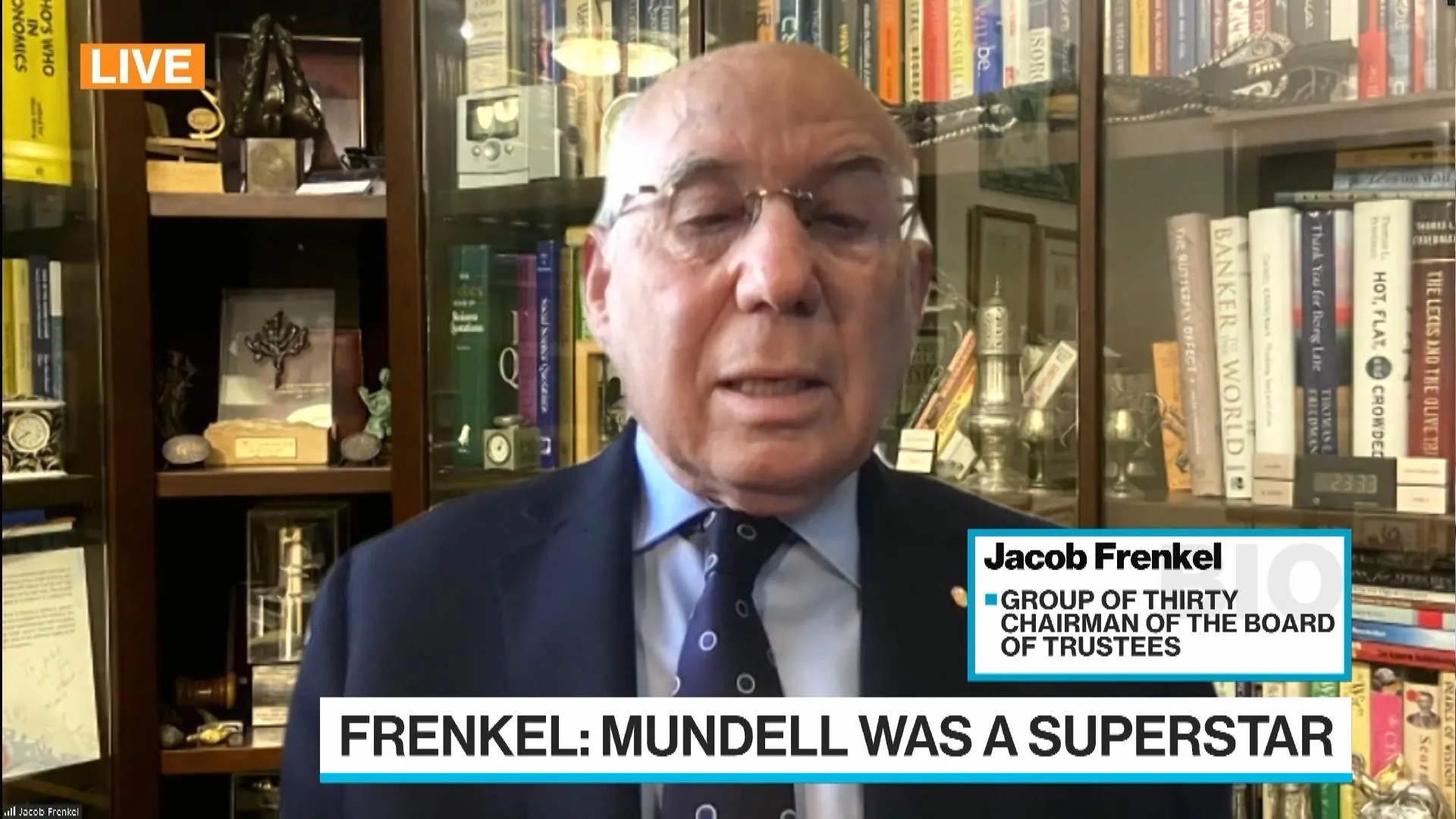
Jacob Frenkel Net Worth Explained: A Comprehensive Financial and Career Analysis
Jacob Frenkel’s net worth is a reflection of a legendary career spanning the highest levels of academia, international policymaking, and global investment banking. While a specific public filing does not exist for his total private ass...
Jacob Frenkel’s net worth is a reflection of a legendary career spanning the highest levels of academia, international policymaking, and global investment banking. While a specific public filing does not exist for his total private assets, financial analysts estimate Jacob Frenkel’s net worth to be between $20 million and $50 million as of 2026. This valuation is based on his decade-long tenure as Chairman of JPMorgan Chase International, senior executive roles at AIG, and his extensive work with the IMF and the Bank of Israel.
Contents
The Professional Foundation of Jacob Frenkel’s Wealth
To understand the financial standing of Jacob Frenkel, one must look beyond a simple salary figure. His wealth is the result of "human capital" converted into high-level executive compensation over several decades. Frenkel is not a founder of a technology firm or a real estate mogul; rather, he represents the pinnacle of the "economist-statesman" class—individuals whose expertise in monetary policy makes them invaluable to the world’s largest financial institutions.
His career is broadly divided into three high-earning phases: his time in international organizations (IMF), his transformative decade as the Governor of the Bank of Israel, and his senior leadership roles in the private sector at Merrill Lynch, AIG, and JPMorgan Chase. Each transition significantly escalated his earning potential, moving from public service stipends to multi-million dollar executive packages.
Academic and Early Career Contributions
Frenkel’s financial journey began in academia. After earning his Ph.D. from the University of Chicago—a hub for neoliberal economic thought—he held prestigious professorships. While academic roles at institutions like the University of Chicago or Tel Aviv University provide comfortable six-figure salaries, they are rarely the source of multi-million dollar net worths. However, they provided the intellectual pedigree required for his next stage.
In the late 1980s, Frenkel served as the Economic Counselor and Director of Research at the International Monetary Fund (IMF). Salaries for top-tier IMF directors are tax-exempt for many international officials and typically range in the high hundreds of thousands of dollars, supplemented by extensive benefits and pension plans. This period established his global reputation, making him a "blue-chip" candidate for both central banking and private finance.
The Bank of Israel Era (1991–2000)
Jacob Frenkel served two terms as the Governor of the Bank of Israel. During this time, he was credited with reducing Israel's hyperinflation and liberalizing the country's foreign exchange markets.
From a net worth perspective, the role of a Central Bank Governor is prestigious but not excessively lucrative compared to the private sector. In the 1990s, the salary for the Governor of the Bank of Israel was regulated by public sector scales. However, the true value of this tenure was the "revolving door" potential it created. By the time he stepped down in 2000, Frenkel was one of the most respected central bankers in the world, often mentioned in the same breath as Alan Greenspan.
Private Sector Transition: AIG and Merrill Lynch
Frenkel’s move to the private sector in the early 2000s marked the most significant period of wealth accumulation. He joined Merrill Lynch as Chairman of the Sovereign Advisory Group and later transitioned to American International Group (AIG) as Vice Chairman.
Executive compensation at AIG during the mid-2000s was substantial. As Vice Chairman, Frenkel would have received a combination of:
- Base Salary: Typically exceeding $1 million.
- Performance Bonuses: Often doubling or tripling the base salary.
- Equity Grants: Stock options and restricted stock units (RSUs) that vest over several years.
Even during the 2008 financial crisis, while AIG faced immense scrutiny, the accumulated earnings from the preceding years remained a core part of his portfolio. His expertise in global markets and sovereign debt made him a critical asset for firms navigating the complexities of international regulation.
The JPMorgan Chase International Tenure (2009–2020)
In 2009, Jacob Frenkel was appointed Chairman of JPMorgan Chase International. This role is distinct from the CEO of the retail or investment bank; it is a strategic position focused on high-level relationships with heads of state, finance ministers, and central bank governors.
During his eleven years at JPMorgan, Frenkel’s compensation was aligned with the firm’s performance. Senior Chairmen at "Bulge Bracket" investment banks like JPMorgan Chase often command total compensation packages ranging from $3 million to $7 million annually.
Breakdown of Potential Earnings at JPMorgan:
- Direct Compensation: Over a decade, gross earnings from salary and bonuses likely exceeded $40 million.
- Stock Ownership: JPMorgan Chase stock (JPM) performed exceptionally well between 2009 and 2020. Any equity-based compensation granted during this period would have appreciated significantly by 2026.
- Advisory Fees: Beyond his base role, senior figures often have arrangements for specific client introductions or high-stakes sovereign negotiations.
Board Memberships and the Group of Thirty (G30)
As of 2026, Frenkel remains a prominent figure in the Group of Thirty (G30), an international body of leading financiers and academics. While the G30 itself is a non-profit consultative group, the prestige associated with being its Chairman of the Board of Trustees facilitates other lucrative opportunities.
Frenkel has served on numerous corporate and advisory boards, including:
- The Boston-Israel Business Council.
- Various University Boards of Trustees.
- Private Equity Advisory Roles.
Corporate board seats in the financial sector typically pay between $200,000 and $400,000 per year in cash and equity. When an individual holds multiple such positions over twenty years, the cumulative impact on their net worth is substantial.
Career Summary and Financial Impact
The following table outlines the different phases of Jacob Frenkel's career and their typical compensation structures, which contribute to his current estimated net worth.
| Career Phase | Primary Organization | Role | Estimated Annual Compensation Tier |
|---|---|---|---|
| Academic | University of Chicago / Tel Aviv University | Professor / Dept. Chair | $150k – $300k |
| Public Policy | IMF | Director of Research | $300k – $500k (Tax-advantaged) |
| Central Banking | Bank of Israel | Governor | $200k – $350k (Public Scale) |
| Private Sector | AIG | Vice Chairman | $2M – $5M+ |
| Investment Banking | JPMorgan Chase | Chairman, International | $3M – $7M+ |
| Advisory/Board | Various | Board Member / Trustee | $250k – $500k (per board) |
Estimating the Total Net Worth in 2026
When calculating the net worth of a high-level economist like Frenkel, we must account for taxes, lifestyle expenses, and investment growth.
Assuming a gross career earning of approximately $80 million to $100 million from his private sector roles (AIG, Merrill Lynch, JPMorgan) and board seats, and accounting for a 40-50% effective tax rate and high-end lifestyle maintenance, his liquid net worth would naturally sit in the $20 million to $50 million range.
This does not account for potential appreciation in private investments or real estate holdings in New York, London, or Israel, which could push the figure toward the higher end of that estimate. Frenkel’s wealth is characterized by stability; unlike tech founders, his assets are likely diversified into blue-chip equities, municipal bonds, and high-value real estate.
Frequently Asked Questions
Did Jacob Frenkel receive a "golden parachute" from AIG?
There is no public record of a specific "golden parachute" for Jacob Frenkel comparable to those of CEOs. However, as Vice Chairman, his departure would have been governed by standard executive contract terms, which usually include the vesting of previously granted stock and severance pay. His move to JPMorgan shortly after his time at AIG suggests a standard transition rather than a distressed exit.
How much did Jacob Frenkel earn at the Bank of Israel?
As Governor of the Bank of Israel in the 1990s, his salary was public knowledge and tied to the Israeli government's senior official pay scale. While it provided a high-middle-class lifestyle in Israel, it was a fraction of what he later earned in New York. The role was about influence and policy impact rather than wealth accumulation.
Is Jacob Frenkel a billionaire?
No. While $20 million to $50 million is a massive amount of wealth by global standards, it is far below the billion-dollar threshold. Billionaire status usually requires founding a major company or managing a massive hedge fund (with "carry" interest). Frenkel is a highly compensated executive and advisor, not a principal owner of a global enterprise.
What is Jacob Frenkel's most lucrative role?
His most lucrative role was undoubtedly his tenure at JPMorgan Chase International. Serving as Chairman for over a decade during a period of massive growth for the bank allowed him to accumulate significant cash compensation and JPM equity, which has seen substantial dividends and price appreciation leading up to 2026.
Does his work with the Group of Thirty (G30) pay a salary?
The Group of Thirty is a private, non-profit organization. While it covers expenses for its members and may provide stipends for administrative leadership roles, it is not a primary source of income for its members. Its value lies in the networking and global influence it provides, which indirectly supports a member's ability to command high fees in the private sector.
Final Perspective: Wealth as a Byproduct of Influence
Jacob Frenkel’s net worth is a secondary story to his influence on the global economy. For a man who helped steer Israel through economic collapse and advised the world's largest bank through a global financial crisis, his wealth is a byproduct of his expertise. In the world of high finance, "economist-statesmen" like Frenkel are compensated not for the hours they work, but for the "judgment" they provide. In 2026, his financial standing remains a testament to a career spent at the intersection of government policy and private capital.
Image Gallery