Why Rob Lowe’s Quote About Sobriety Matters: A Blueprint for Long-Term Recovery
Rob Lowe’s quotes about sobriety matter because they redefine recovery as an aspirational lifestyle rather than a life of deprivation. By framing his 36-year journey as the "best thing he ever did," Lowe dismantles the stigma of addict...
Rob Lowe’s quotes about sobriety matter because they redefine recovery as an aspirational lifestyle rather than a life of deprivation. By framing his 36-year journey as the "best thing he ever did," Lowe dismantles the stigma of addiction and provides a pragmatic, hopeful framework for individuals seeking long-term wellness and personal accountability in 2026.
Contents
As we look at the landscape of mental health and addiction recovery in 2026, the influence of public figures who have maintained decades of sobriety cannot be overstated. Rob Lowe, who achieved sobriety on May 10, 1990, stands as a premier example of how life can not only continue but flourish after addiction. His public discourse on the subject has moved beyond mere "celebrity news" to become a set of guiding principles for those navigating the complexities of modern recovery.
The Catalyst for Change: Understanding the "Rock Bottom"
To understand why Rob Lowe’s words resonate, one must look at the specific event that triggered his transformation. In 1988, Lowe was involved in a high-profile scandal in Atlanta, which served as his public "rock bottom." However, his quotes often emphasize that the external scandal was less important than the internal realization that he could no longer manage his life.
Lowe often remarks that "the world will provide you with a reason to get sober, but you have to be the one to take it." This highlights a critical psychological threshold in recovery: the transition from external pressure (legal issues, family demands, career problems) to internal desire. In the context of 2026, where digital transparency and social media pressure are at an all-time high, Lowe’s insistence on personal agency remains a vital lesson. He teaches that while shame may be the catalyst, it cannot be the fuel for a lifelong commitment.
Decoding the Quote: "Sobriety is a Gift"
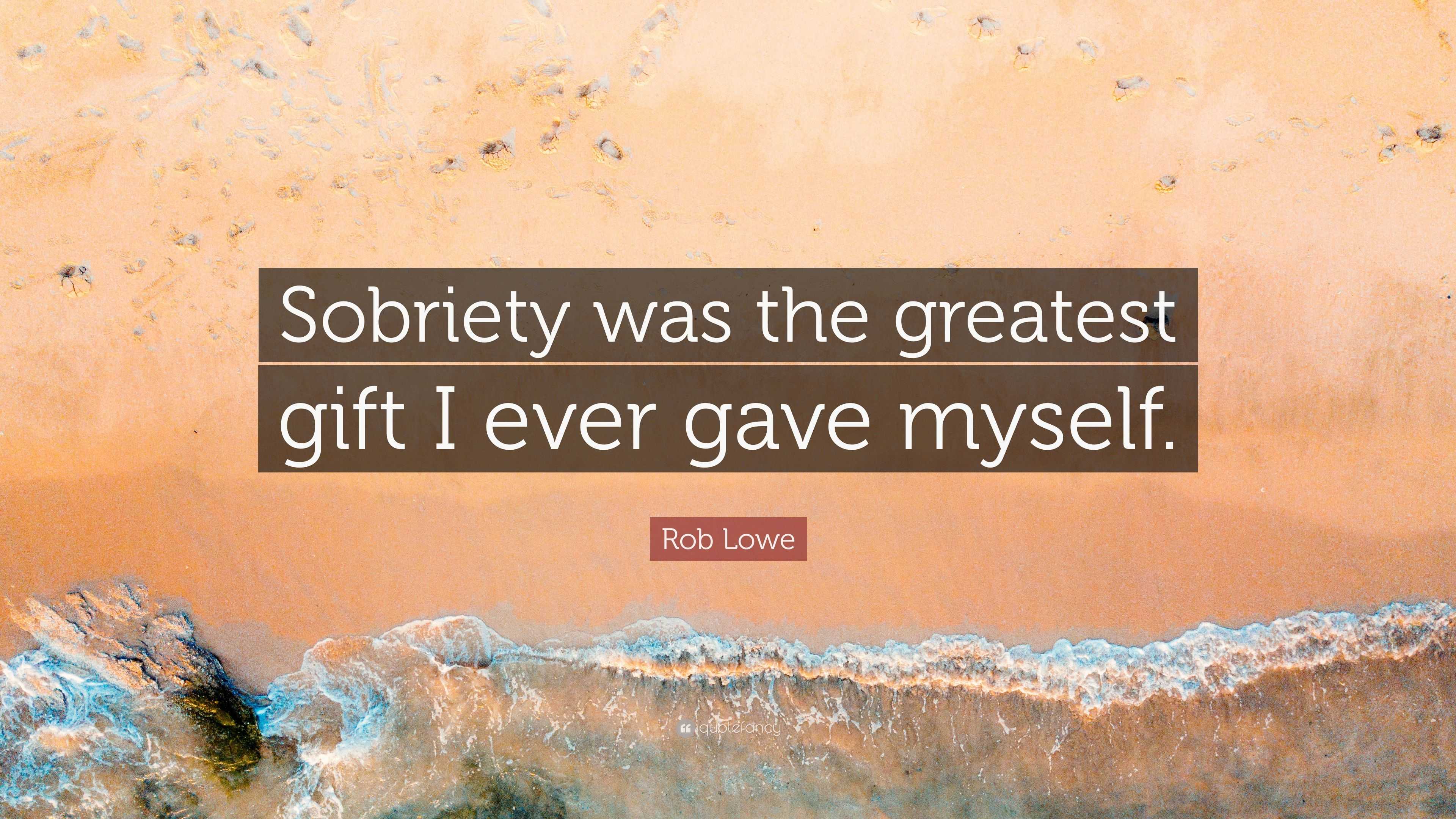
One of Lowe’s most frequently cited sentiments is that his recovery is a "gift" and a "design for living." This language is rooted in the traditions of 12-step programs, but Lowe has popularized it for a secular, mainstream audience.
The Shift from Deprivation to Abundance
For many, the prospect of sobriety feels like a funeral for their social life. Lowe’s quote matters because it flips this narrative. He characterizes sobriety as a tool that unlocked his potential, rather than a restriction that limited it. By describing it as a "gift," he suggests that he hasn't "given up" alcohol; rather, he has "gained" a life of clarity, better health, and meaningful relationships.
The "Design for Living"
When Lowe speaks of a "design for living," he refers to the structured habits and mental frameworks required to stay sober. This isn't just about avoiding a substance; it’s about how one handles stress, resentment, and success. In 2026, with the rise of "California Sober" trends and various pharmacological aids for addiction, Lowe’s emphasis on a foundational "design" or philosophy of life provides a necessary anchor for those who find that medication alone does not solve the underlying emotional issues of addiction.
Why Visibility Matters: Breaking the "High-Functioning" Myth
For years, the stereotype of an alcoholic was someone who had lost everything—their job, their home, and their dignity. Rob Lowe was the quintessential "high-functioning" addict: successful, handsome, and working steadily. His quotes about the struggle behind the scenes are essential for a specific demographic that often avoids seeking help.
Lowe’s openness serves as a "permission slip" for other high-achieving individuals. It suggests that you don't have to wait until your life is in ruins to decide that you deserve better. By 2026, the concept of "gray area drinking" has become a major topic in wellness circles, and Lowe’s decades-old message anticipated this shift, proving that sobriety is a valid choice even for those who seem to "have it all" on the outside.
Comparison: Traditional Views vs. Rob Lowe’s Perspective on Recovery
| Feature | Traditional Stigma of Sobriety | Rob Lowe’s Advocacy Perspective |
|---|---|---|
| Motivation | Fear of consequences and punishment. | Pursuit of a "better, more vibrant" life. |
| Identity | Defined by past mistakes and "brokenness." | Defined by current discipline and growth. |
| Social Impact | Seen as the end of fun and social relevance. | Seen as the foundation for authentic connection. |
| Duration | A temporary "fix" or a struggle to endure. | A lifelong "design for living" and ongoing gift. |
| Visibility | Something to be hidden or discussed in shadows. | A point of pride and a leadership quality. |
The Role of Personal Accountability
Lowe’s quotes often touch on the idea that "nothing happens without work." He is famously disciplined, often discussing his fitness routines and professional preparation alongside his sobriety. This connection between physical health and mental clarity is a hallmark of his message.
In an era where many seek "bio-hacks" or quick fixes for mental health, Lowe’s consistent message for over 35 years has been that there are no shortcuts to the peace of mind that comes with long-term recovery. He emphasizes that while the "gift" is free, the maintenance requires daily effort. This focus on accountability is a powerful counter-narrative to the victim-mentality that can sometimes permeate discussions around addiction.
Impact on Modern Advocacy and Mental Health
In 2026, the conversation around sobriety has expanded into the "Sober Curious" movement and a general focus on "longevity." Rob Lowe’s quotes have provided the vocabulary for this movement. He proved that sobriety is the ultimate longevity hack. His physical appearance and career longevity at age 62 (in 2026) are often cited as tangible proof that his "design for living" works.
Furthermore, his advocacy has paved the way for other celebrities to be open about their journeys, creating a cascading effect that reduces the isolation felt by everyday people struggling with substance use disorders. When a figure like Lowe speaks about sobriety as a "superpower," it changes the internal monologue of the person considering their first day of recovery.
Frequently Asked Questions
What is Rob Lowe’s specific "design for living" quote?
Rob Lowe frequently refers to sobriety as a "design for living" that allows him to navigate life's ups and downs without the need for substances. This phrase is a nod to the Alcoholics Anonymous (AA) Big Book, which uses the term to describe the 12-step program. Lowe uses it to explain that sobriety isn't just about not drinking; it’s about having a toolkit to manage reality.
How many years has Rob Lowe been sober?
As of May 10, 2026, Rob Lowe has been sober for 36 years. He achieved sobriety in 1990 following a period of intense public scrutiny and personal reflection. He often celebrates these anniversaries publicly to encourage others and show that long-term recovery is possible.
Why did Rob Lowe decide to get sober in 1990?
While his 1988 scandal was a public turning point, Lowe has stated in interviews that the true motivation was a realization that he was not living up to his potential. He has described a moment of looking in the mirror and realizing he couldn't live the way he was living anymore, emphasizing that the decision must ultimately be a personal one.
Does Rob Lowe suggest that everyone needs to be sober?
Lowe typically frames his advice through his own experience rather than as a universal mandate. He speaks to those who feel that their relationship with alcohol or drugs is preventing them from living their best life. His message is one of "attraction rather than promotion," showing how much better his life became to inspire others to make their own choices.
What does Rob Lowe mean when he says sobriety is a "superpower"?
In several interviews leading up to 2026, Lowe has used the term "superpower" to describe the clarity, energy, and emotional stability that sobriety provides. He argues that in a world where many people are numbing themselves, being fully present and clear-headed gives a person a distinct advantage in both their personal and professional life.
Practical Recommendations for Applying Lowe's Philosophy
If you are inspired by Rob Lowe’s perspective on sobriety, the following steps can help translate his words into action:
- Shift Your Mindset: Stop thinking about what you are "giving up" and start listing what you want to "gain." Focus on clarity, better sleep, and more reliable relationships.
- Seek a Community: Lowe often credits his success to the support of others. Whether it is a traditional 12-step program, a secular recovery group, or a specialized therapy, do not attempt the journey in isolation.
- Establish a Routine: Adopt a "design for living" that includes physical exercise, mindfulness, and professional goals. Sobriety thrives in an environment of structure.
- Practice Radical Accountability: Take ownership of your past and your daily choices. As Lowe suggests, the world might provide the reason, but you must provide the will.
- Focus on Longevity: Look at sobriety as a long-term investment in your future self. Use Lowe’s 36-year milestone as evidence that the benefits of recovery compound over time.
Rob Lowe’s quotes matter because they provide a bridge between the grueling reality of early recovery and the vibrant potential of a life well-lived. By viewing sobriety as a "gift" and a "design for living," he offers a roadmap that is as relevant in 2026 as it was when he first began his journey in 1990.
Image Gallery