Is EMDR Online Effective? Evaluating Telehealth Trauma Therapy
Eye Movement Desensitization and Reprocessing (EMDR) online is effective for many individuals seeking trauma treatment, offering clinical outcomes comparable to traditional in-person sessions when delivered by trained, licensed profess...
Eye Movement Desensitization and Reprocessing (EMDR) online is effective for many individuals seeking trauma treatment, offering clinical outcomes comparable to traditional in-person sessions when delivered by trained, licensed professionals using appropriate video platforms and bilateral stimulation techniques.
Contents
As telehealth mental health services continue to expand, evaluating whether virtual trauma therapy matches the efficacy of face-to-face treatment is essential for patients and practitioners alike. EMDR is an evidence-based psychotherapy designed to alleviate the distress associated with traumatic memories. Traditionally conducted in a quiet clinician’s office using physical objects like light bars or tactile tappers for bilateral stimulation (BLS), the modality has successfully transitioned into digital environments. Research and clinical consensus indicate that virtual delivery—often referred to as tele-EMDR—retains its therapeutic potency under specific conditions, though it requires careful consideration of technological readiness, clinical suitability, and safety protocols.
Understanding EMDR Therapy and the Mechanics of Bilateral Stimulation
Eye Movement Desensitization and Reprocessing relies on an eight-phase treatment framework aimed at processing distressing memories and changing how they are stored in the brain. Central to this process is dual attention stimulation, most commonly executed through bilateral stimulation. BLS can be visual, auditory, or tactile, forcing the client's brain to process external stimuli while simultaneously recalling a traumatic event. This dual focus is theorized to tax working memory, reducing the emotional intensity and vividness of the traumatic memory and allowing for adaptive resolution.
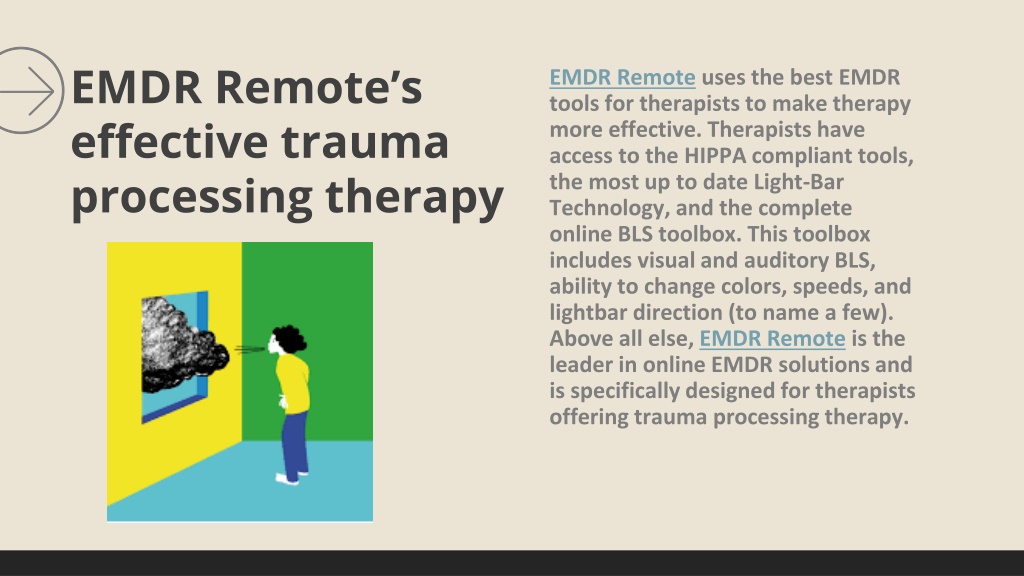
In an office setting, visual BLS often involves following a therapist’s moving finger, a dedicated light bar, or alternating tones through headphones. When transitioning to an online format, therapists must adapt these mechanisms for digital screens. Virtual platforms utilize specialized web applications that project a moving ball or dot across the client's monitor, enable self-administered tactile tapping, or stream alternating auditory tones through standard headphones. Understanding these mechanical adaptations is the first step in assessing whether digital trauma therapy can replicate the clinical environment.
Clinical Research on Tele-EMDR Efficacy
Clinical evaluation of tele-EMDR has advanced significantly, driven by broader adoption of telehealth across healthcare sectors. Empirical studies and clinical observations suggest that remote delivery maintains high standards of efficacy for post-traumatic stress disorder (PTSD), anxiety, and depression.
What Studies Show About Remote Trauma Treatment
Initial hesitancy regarding virtual psychotherapy stemmed from concerns about therapeutic rapport and the safety of processing deep trauma outside a controlled clinical office. However, clinical trials and peer-reviewed studies published in journals such as the Journal of EMDR Practice and Research indicate that patients undergoing tele-EMDR experience comparable symptom reduction to those treated in person.
Factors influencing successful outcomes in online formats include:
- Therapeutic Alliance: The strength of the relationship between the therapist and client remains a primary predictor of success, which translates effectively through secure video channels.
- Adaptability of Protocols: Therapists trained in standard EMDR can successfully navigate the eight phases remotely without losing fidelity to the model.
- Symptom Reduction: Standardized measures of PTSD and trauma symptoms show statistically significant decreases following courses of tele-EMDR.
Technical and Environmental Requirements for Effective Online EMDR
The success of online EMDR depends heavily on technical reliability and the client's physical environment. Unlike traditional talk therapy, which requires only an audio-visual connection, tele-EMDR demands specific technical configurations to ensure that bilateral stimulation functions smoothly without latency or distraction.
| Component | Requirement for Effective Tele-EMDR |
|---|---|
| Internet Connection | High-speed broadband with minimal latency to prevent lag. |
| Hardware | Desktop or laptop computer (smartphones are discouraged). |
| Audio | Quality headphones for optimal auditory BLS delivery. |
| Software | HIPAA-compliant video platform with screen-share capability. |
| Environment | Private, secure room with zero interruptions or safety risks. |
Clients must use devices with screens large enough to track visual stimuli comfortably—typically a laptop or desktop computer rather than a mobile phone or tablet. Furthermore, privacy is non-negotiable. Because trauma processing can evoke intense emotional releases, the client must be in a completely private space where they feel safe and free from household disturbances for the duration of the session.
Advantages and Limitations of Virtual Trauma Treatment
Choosing between online and in-person EMDR involves weighing distinct operational benefits against inherent clinical limitations.
Benefits of Remote Delivery
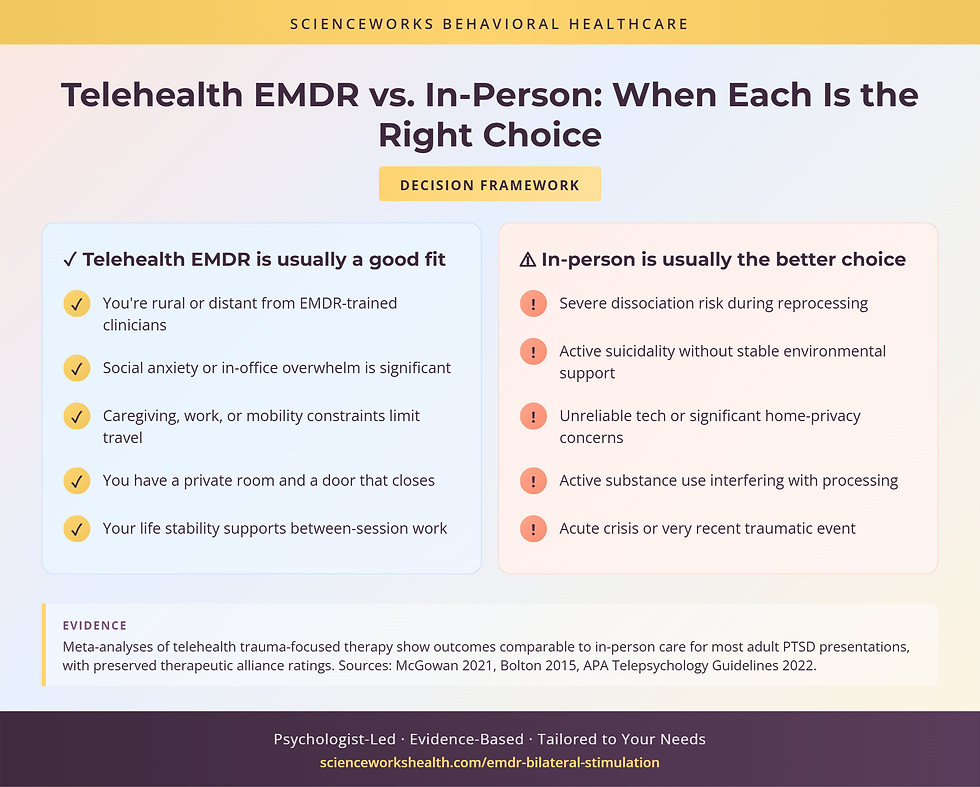
- Accessibility: Patients living in rural areas, individuals with mobility limitations, or those with packed schedules can access specialized trauma therapists who might be geographically distant.
- Comfort and Safety: Processing trauma from the familiar, safe environment of one's home can lower initial anxiety for certain clients, making them more willing to begin treatment.
- Continuity of Care: Relocation, travel, or minor illnesses do not disrupt treatment momentum, as sessions can proceed uninterrupted.
Limitations and Challenges
- Technological Barriers: Internet outages, software glitches, or unfamiliarity with digital tools can disrupt the delicate flow of trauma processing.
- Non-Verbal Cues: Therapists may miss subtle physical manifestations of distress, such as micro-tremors or slight posture shifts, due to camera angles or lower video resolution.
- Containment Difficulties: If a session ends while a client is still emotionally activated, remote containment requires careful planning, as the therapist cannot physically intervene or escort the client out of an office.
Suitability: Who Benefits Most from Online EMDR?
Not every client is an ideal candidate for virtual trauma therapy. Clinical suitability is determined during a thorough intake and stabilization phase conducted by a licensed mental health professional.
Clients with strong emotional regulation skills, stable living environments, and mild-to-moderate PTSD symptoms often thrive in tele-EMDR formats. Conversely, individuals experiencing active psychosis, severe dissociative disorders, acute substance abuse, or domestic instability typically require the containment and safety of an in-person clinical setting. Therapists must conduct a rigorous risk assessment before initiating remote trauma work to ensure the client has adequate local support systems.
Frequently Asked Questions
Is online EMDR as effective as in-person sessions?
Current clinical data indicates that tele-EMDR can be just as effective as in-person therapy for many individuals with PTSD and trauma-related conditions. The core mechanisms of bilateral stimulation and the standard eight-phase protocol translate well to secure video platforms when managed by a trained professional.
How does bilateral stimulation work over a computer screen?
Therapists use specialized software applications that display a visual moving dot or ball across the client's screen for eye movements. Alternatively, therapists guide clients in self-administered tactile tapping on their own shoulders or knees, or stream alternating auditory tones through headphones.
What equipment do I need for online EMDR therapy?
You need a reliable computer (desktop or laptop) with a webcam, a stable high-speed internet connection, a pair of headphones for audio clarity, and a private, secure, and quiet room where you will not be interrupted during the session.
Can online EMDR trigger severe flashbacks without a therapist present?
Trauma processing can naturally bring up intense emotions and memories. However, trained EMDR therapists spend significant time in the preparation phase teaching grounding and containment techniques to ensure clients can manage these responses before deeper trauma work begins.
How do I find a qualified online EMDR therapist?
Look for licensed mental health professionals (such as psychologists, licensed professional counselors, or clinical social workers) who have completed formal training approved by the EMDR International Association (EMDRIA) and who explicitly state that they offer secure telehealth services.
Next Actions for Prospective Patients
If you are considering online EMDR, your first step is to consult a licensed mental health professional certified or trained in EMDR methodology. During your initial consultation, ask specifically about their experience with telehealth delivery, the digital platforms they use for bilateral stimulation, and how they handle emotional containment at the end of remote sessions. Ensuring your therapist is experienced in virtual adaptations will help maximize the safety and effectiveness of your healing journey.
Image Gallery