Understanding Tax Lien Investment for Steady Returns
Tax lien investing is a specialized financial strategy where an investor pays the delinquent property taxes owed to a local government, effectively purchasing a legal claim against the real estate. In return, the property owner must pa...
Tax lien investing is a specialized financial strategy where an investor pays the delinquent property taxes owed to a local government, effectively purchasing a legal claim against the real estate. In return, the property owner must pay back the tax amount plus statutory interest to clear the lien. If the owner fails to satisfy this debt within a defined redemption period, the investor may eventually gain the right to foreclose on the property, potentially acquiring it for a fraction of its market value.
Contents
The Mechanics of Tax Lien Certificates
At its core, a tax lien is a government-mandated debt. When a property owner fails to pay their property taxes, the local jurisdiction—typically a county or municipality—places a lien on the property. To recover these funds, the local government holds a tax sale where they auction off the right to collect that debt to private investors.
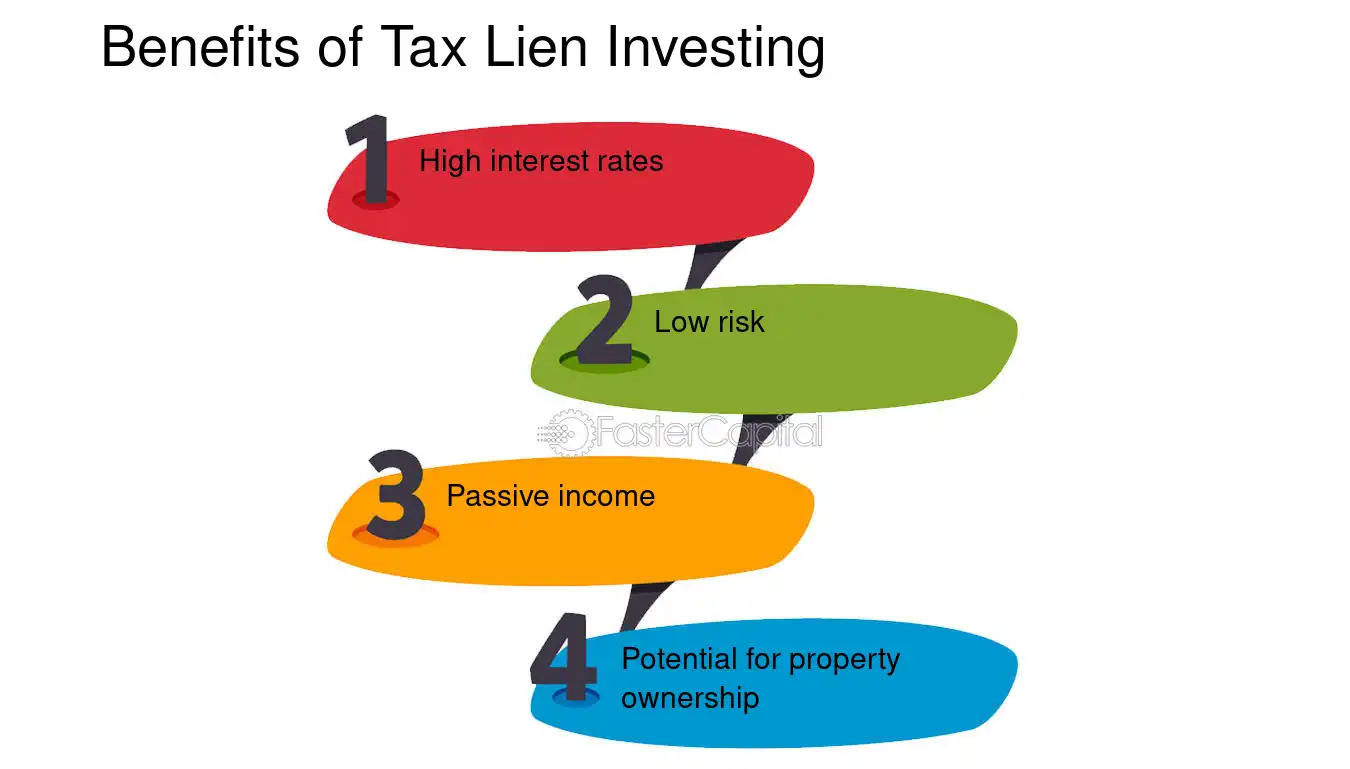
When you purchase a tax lien certificate, you are not buying the property itself; you are buying the right to collect the taxes owed, plus the interest mandated by state statute. This interest rate is often set at a premium, sometimes reaching double-digit percentages annually, making it an attractive proposition for those seeking alternatives to traditional fixed-income investments. Because the debt is secured by the underlying real estate, the investment is theoretically shielded by the value of the property, providing a layer of security that unsecured investments lack.
Prerequisites and Legal Frameworks
Before attempting to participate in tax lien auctions, it is essential to recognize that this is a highly regulated, jurisdiction-specific activity. Every state, and often every county, has its own set of statutes governing the auction process, interest rates, and redemption procedures.
- Jurisdictional Variability: Some states operate under a tax lien system, where you purchase the debt. Others operate under a tax deed system, where the winning bidder purchases the property title directly at auction. It is critical to confirm that your target region uses the lien system if you are looking for interest-based returns rather than immediate property acquisition.
- Registration Requirements: Most auctions are conducted by county treasurers or tax collectors. Participation often requires pre-registration, the submission of a W-9 tax form, and, in many cases, a significant refundable deposit or proof of funds.
- Due Diligence Capacity: Investors must possess the ability to perform title searches. A tax lien is only as strong as its priority over other claims. While government tax liens generally hold "super-priority" status, understanding potential environmental hazards, bankruptcy filings by the property owner, or existing mortgage encumbrances is vital to evaluating risk.
Evaluating Risk and Potential Returns
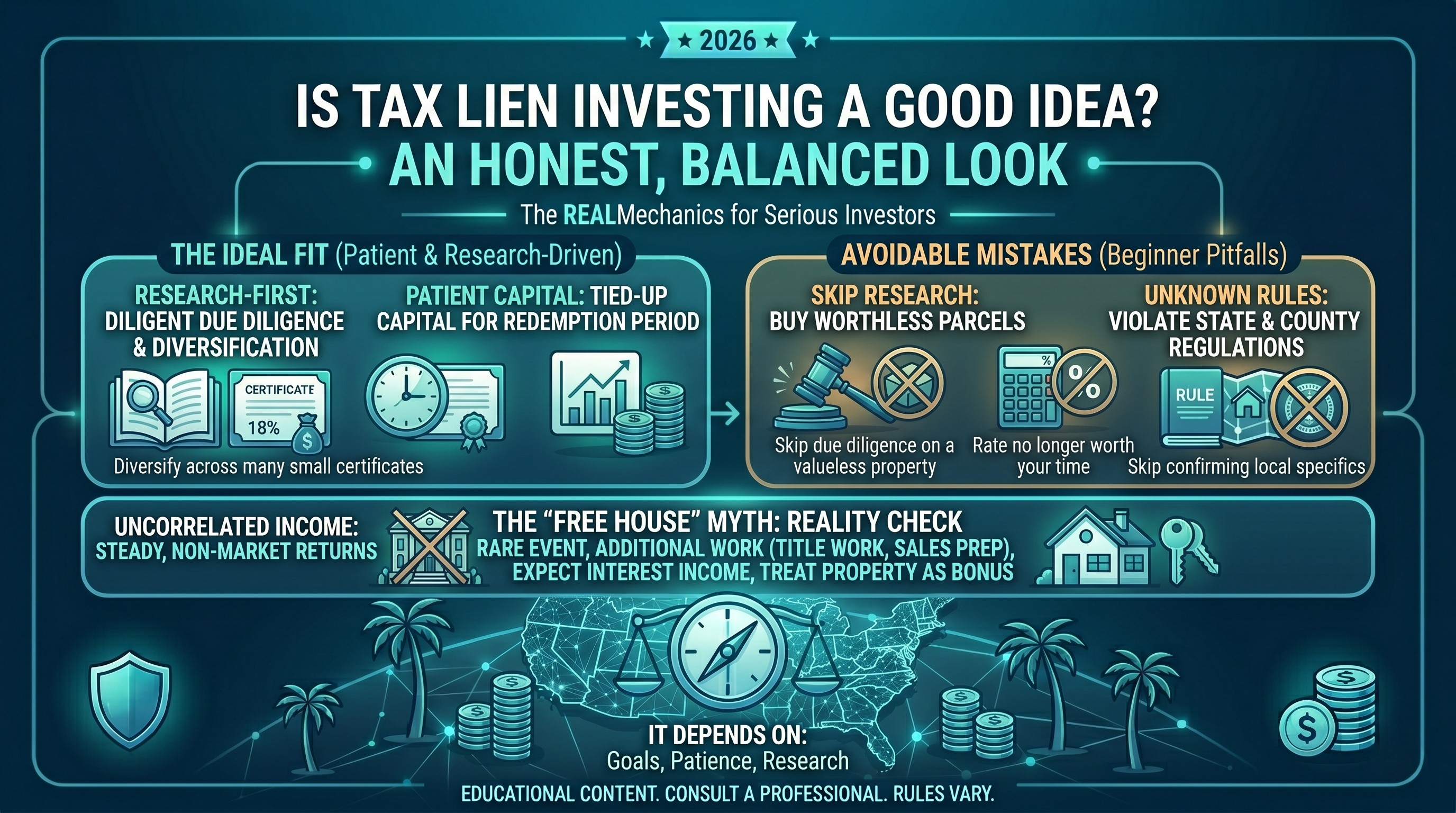
While tax lien investing is often marketed as a high-yield, low-risk instrument, this characterization requires nuance. The "steady" nature of the return depends heavily on the borrower’s ability and willingness to redeem the lien.
| Risk Factor | Description | Potential Mitigation |
|---|---|---|
| Redemption Risk | The owner pays the debt quickly, ending your interest accrual. | Reinvesting capital into new, longer-term liens. |
| Property Condition | The asset may be dilapidated, lowering resale value if foreclosed. | Physical inspection or tax-roll valuation analysis. |
| Bankruptcy | An owner filing for bankruptcy can stay the foreclosure process. | Avoiding liens on properties with known legal disputes. |
| Administrative Costs | Foreclosure legal fees can erode profit margins significantly. | Calculating break-even points before bidding. |
The primary risk is not that you will lose your principal, but that the process of recovering it—or the property—may become legally complex or time-consuming. In some jurisdictions, if a property is eventually foreclosed upon, the investor must ensure they have performed the legal requirements for "due process," such as notifying all lienholders of record. Failure to follow these strictly can invalidate the foreclosure.
Step-by-Step Approach to Your First Investment
To begin, start by focusing on a specific, manageable geography. Do not attempt to invest across multiple states simultaneously, as the varying legal requirements will create significant administrative burdens.
- Research the State Laws: Visit the official websites of state tax authorities to download the statutory code governing tax sales. Look specifically for the "statutory interest rate" and the "redemption period."
- Target the Auction: Use county websites to access the list of delinquent properties. These are public records. Filter these lists to exclude properties that are clearly undesirable, such as small, non-buildable strips of land or properties with massive environmental liabilities.
- Title and Asset Verification: Use online property records to verify the assessed value of the property. A rule of thumb is to look for tax liens that are a small percentage of the total market value of the home, as this makes it more likely the owner will prioritize paying the debt to save the asset.
- Bidding Strategy: Auctions can be live, sealed-bid, or online. In some jurisdictions, the interest rate is bid down rather than the price bid up. Know the bidding mechanism before you enter the room.
- Monitoring and Foreclosure: Once the certificate is issued, monitor the redemption status. If the redemption period ends and the tax remains unpaid, you must consult with a real estate attorney to initiate the foreclosure process if that is your desired outcome.
Common Mistakes to Avoid
The most frequent error among novice investors is failing to conduct a site visit or failing to check for "super-liens." For instance, a municipality might have a separate lien on a property for municipal code violations (like grass cutting or debris removal). In some jurisdictions, these can take priority over or complicate the tax lien you are purchasing.
Furthermore, do not overestimate the "free property" outcome. Most tax liens are redeemed. The goal should be the interest rate, not the property itself. Investors who enter the space hoping for a $50,000 house for $2,000 often find themselves disappointed by the reality of the redemption process or the poor quality of the properties that actually go to deed.
Frequently Asked Questions
Is tax lien investing considered passive income? Tax lien investing is generally considered "active-passive" income. While you are not managing a tenant or a property, you are responsible for monitoring redemption windows, tracking payments, and managing the legal requirements for potential foreclosure. It requires ongoing administrative attention.
What happens if the property owner never pays the taxes? If the redemption period expires and the taxes remain unpaid, you generally gain the right to foreclose on the property. This process varies by state but typically involves hiring an attorney to issue formal legal notice to the property owner and other interested parties, followed by a court action to receive a deed to the property.
Can I use a self-directed IRA to invest in tax liens? Yes, many investors use Self-Directed IRAs (SDIRAs) to hold tax liens. Because the earnings from the liens are tax-deferred or tax-free (depending on the account type), this is a common strategy for retirement planning. However, the SDIRA custodian must handle the transaction to ensure compliance with IRS rules.
How do I find out when auctions are held? Auctions are almost always managed by the county treasurer or tax collector. Their websites will post the "Notice of Tax Sale," which lists the dates, times, and rules for upcoming auctions. Signing up for email alerts from your target county offices is the most reliable way to stay informed.
What is the difference between a tax lien and a tax deed? A tax lien certificate is a claim against the property that earns interest. A tax deed is the actual ownership of the property sold at a public auction. In tax deed states, you become the owner immediately upon winning the auction, rather than acting as a creditor to the original owner.
Next Steps for the Aspiring Investor
To transition from theory to practice, identify one county in your home state that holds annual tax sales. Spend time reviewing the last two years of tax sale records. Look at the properties that were sold, track how many were redeemed versus how many went to foreclosure, and analyze the types of properties that were involved. Before committing capital, consult with a qualified local real estate attorney who specializes in tax sales to ensure your understanding of local regulations is accurate and compliant with current 2026 statutes.
Disclaimer: This information is provided for educational purposes and does not constitute financial, legal, or tax advice. Laws governing tax liens vary significantly by jurisdiction. Consult with a qualified professional before making any investment decisions.
Image Gallery