Do You Pay Taxes on Life Insurance? Key Facts and IRS Rules
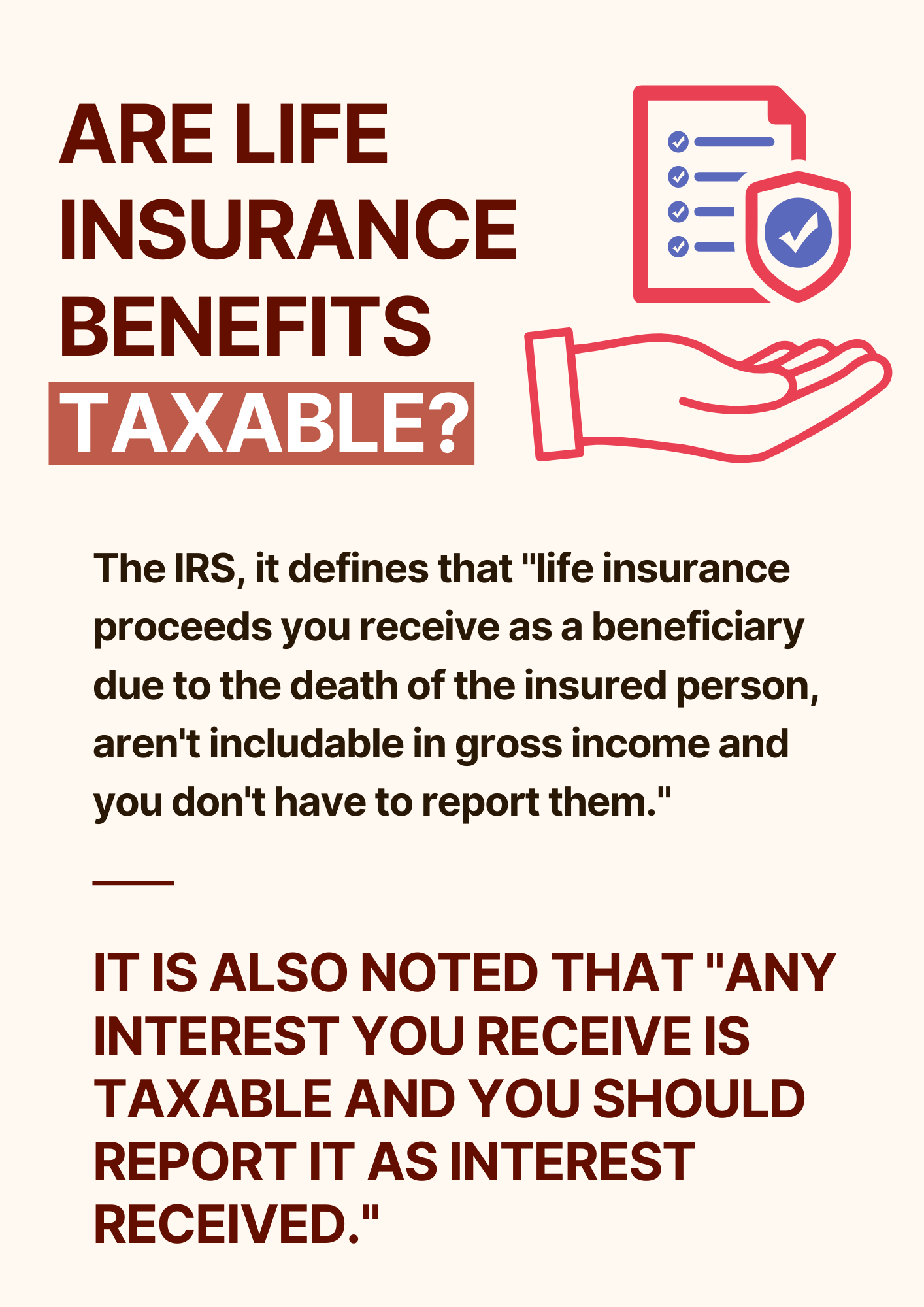
In most standard situations, beneficiaries do not pay federal income tax on life insurance death benefits received as a lump sum. However, tax liabilities can arise if the payout earns interest, if the policy is transferred for valuabl...
In most standard situations, beneficiaries do not pay federal income tax on life insurance death benefits received as a lump sum. However, tax liabilities can arise if the payout earns interest, if the policy is transferred for valuable consideration, if living cash value exceeds the policy's cost basis, or if the benefit forms part of a taxable estate.
Contents
The Core Rule: Tax-Free Death Benefits
Under Internal Revenue Code (IRC) Section 101(a), gross income generally does not include amounts received under a life insurance contract if those amounts are paid by reason of the death of the insured. This fundamental rule applies to both individual policies (such as term life, whole life, and universal life) and employer-provided group life insurance plans.
When an insured individual passes away, the primary beneficiary receives the face amount of the policy—also known as the death benefit. Because these funds are intended to replace lost income, pay off debts, or cover final expenses, federal tax law treats the core death benefit as non-taxable capital rather than earned income. Beneficiaries do not need to report a standard lump-sum death benefit as gross income on their federal income tax returns.
However, this tax-free status is not absolute. The IRS enforces strict exceptions where portions of a life insurance payout—or living distributions during the policyholder's lifetime—become subject to income tax, capital gains tax, or federal estate tax.
5 Scenarios Where Life Insurance Proceeds Are Taxed
While the base death benefit is typically tax-exempt, specific administrative arrangements, policy transfers, and estate structures can trigger tax obligations.
1. Interest Earned on Delayed Payouts or Installment Plans
When a beneficiary elects to receive the death benefit in installment payments or leaves the funds with the insurance company to accumulate interest, the interest portion of the payout is fully taxable as ordinary income.
According to IRS guidance on life insurance proceeds, any interest accrued after the date of death must be reported. For example, if a $500,000 death benefit is held by an insurer for six months while probate resolves, and the insurer pays out $505,000, the $500,000 death benefit remains tax-free, but the $5,000 in earned interest is reportable income. Insurers typically issue a Form 1099-INT to the beneficiary reflecting this earned interest.
2. The Transfer-for-Value Rule
If a life insurance policy is transferred or sold to another party in exchange for cash, property, or other valuable consideration, the tax-free status of the death benefit is usually forfeited under IRC Section 101(a)(2).
Under the Transfer-for-Value Rule, the purchaser or transferee will owe ordinary income tax on the portion of the death benefit that exceeds the total consideration paid plus any subsequent premiums paid to keep the policy in force.
Exceptions to the Transfer-for-Value Rule: The death benefit remains tax-free if the policy is transferred to:
- The insured person.
- A partner of the insured.
- A partnership in which the insured is a partner.
- A corporation in which the insured is a shareholder or officer.
- A recipient whose tax basis is determined by reference to the original owner's basis (such as tax-free corporate reorganizations or gifts).
3. Employer-Owned Life Insurance (IRC Section 101(j))
Employers often purchase key-person life insurance to protect against the loss of vital executives or specialists. Under IRC Section 101(j), death benefits paid to a business from an employer-owned policy are taxable as ordinary income unless specific notice and consent requirements were met before the policy was issued.
To maintain tax exemption on employer-owned life insurance proceeds, the business must:
- Provide written notice to the employee stating the employer intends to insure their life and the maximum face amount for which they may be insured.
- Obtain written consent from the employee agreeing to the coverage and allowing the employer to remain the beneficiary after employment ends.
- Ensure the employee was a director, highly compensated employee, or key individual at the time the policy was issued.
4. Group Term Life Insurance Coverage Exceeding $50,000
Under IRC Section 79, employers can provide up to $50,000 of group term life insurance coverage to employees as a tax-free fringe benefit. However, the cost of coverage exceeding $50,000 must be included in the employee's gross income as taxable imputed income.
The IRS calculates this imputed value using "Table I" rates based on the employee's age. The employer adds the imputed cost minus any after-tax employee contributions to the employee's Form W-2 as taxable wages subject to Social Security and Medicare taxes, though the eventual death benefit paid to the beneficiary remains income-tax-free.
5. Federal and State Estate Tax Inclusion
While death benefits are generally free from income tax, they are not automatically immune from estate tax. Under IRC Section 2042, the full face value of a life insurance policy is included in the policyholder’s gross estate if:
- The proceeds are payable directly to the estate or used to discharge estate debts.
- The deceased policyholder possessed any incidents of ownership in the policy at the time of death (or within three years prior to death under IRC Section 2035).
Incidents of ownership include the right to change beneficiaries, surrender or cancel the policy, assign the policy, pledge it for a loan, or borrow against its cash value. If the total gross estate—including the life insurance proceeds—exceeds federal estate tax exemption thresholds, federal estate taxes (ranging up to 40%) may apply.
How Living Benefits and Cash Value Are Taxed
Permanent life insurance policies—such as whole life, universal life, and variable universal life—build internal accumulation known as cash value. Tax rules governing cash value depend on whether funds remain inside the policy or are extracted via withdrawals, policy loans, or full surrenders.
- Permanent Life Insurance
- Inside the Policy
- Tax-Deferred Growth (IRS Sec 7702)
- Extracted Funds
- Taxed Depends On Extraction Method:
- Withdrawals: FIFO (Tax-free up to basis)
- Policy Loans: Tax-free if policy stays active
- Full Surrender: Taxed on gain above basis
- MEC Status: LIFO (Earnings taxed first + penalty)
- Taxed Depends On Extraction Method:
- Inside the Policy
Tax-Deferred Growth Inside the Policy
Under IRC Section 7702, growth of cash value within a qualifying life insurance contract accumulates on a tax-deferred basis. As long as the earnings stay within the policy, the policyholder pays no annual income tax on interest, dividends, or capital gains generated inside the account.
Withdrawals and the FIFO Rule
When a policyholder takes a partial surrender or cash withdrawal from a standard life insurance contract, the IRS applies a First-In, First-Out (FIFO) tax treatment:
- Cost Basis (Premiums Paid): Withdrawals are treated as coming from cumulative paid premiums first. These funds represent a tax-free return of capital.
- Gain (Earnings): Once total withdrawals exceed the accumulated cost basis, any additional withdrawals represent taxable ordinary income.
Example: If a policyholder paid $40,000 in total premiums and the cash value grew to $60,000, taking a $35,000 withdrawal is completely tax-free. If the withdrawal is $45,000, $40,000 is tax-free return of basis, and the remaining $5,000 is taxed as ordinary income.
Policy Loans
Policy loans offer access to cash value without triggering immediate tax liability. Because a loan creates an obligation to repay (backed by the policy's cash value), the IRS does not treat borrowed cash value as taxable income—even if the loan amount exceeds the policy's cost basis.
Critical Risk: If a policy lapses, terminates, or is surrendered while an outstanding loan exists, the unpaid loan balance is treated as a distribution. If the total outstanding loan plus net surrender value exceeds the policy's cost basis, the resulting gain is taxed as ordinary income in the year the policy lapses.
Full Surrender of a Policy
If a policyholder completely surrenders a permanent life insurance contract, the insurer pays out the net cash value. The taxable gain is calculated as follows:
$$\text{Taxable Gain} = \text{Gross Cash Surrender Value} - \text{Total Net Premiums Paid (Cost Basis)}$$
Any positive gain is taxed as ordinary income, not as a long-term capital gain.
Special Classifications: MECs and Policy Dividends
Certain policy structures and distributions follow distinct IRS regulations that alter standard life insurance tax advantages.
Modified Endowment Contracts (MECs)
To prevent life insurance from being used purely as an investment vehicle, Congress created the Modified Endowment Contract (MEC) classification under IRC Section 7702A. A policy becomes a MEC if cumulative premiums paid within the first seven years exceed strict federal funding limits (known as the 7-Pay Test).
If a policy is classified as a MEC:
- The death benefit remains income-tax-free to beneficiaries.
- Cash value growth continues to accumulate on a tax-deferred basis.
- Distributions (loans, withdrawals, and pledges) are taxed on a Last-In, First-Out (LIFO) basis. Earnings are withdrawn first and taxed as ordinary income before cost basis can be accessed.
- Distributions taken prior to age 59½ are generally subject to an additional 10% IRS penalty tax on the taxable portion, unless an exception applies.
Policy Dividends
Participating whole life policies may pay annual dividends to policyholders. According to IRS Publication 525, life insurance dividends are generally treated as a return of premium and are non-taxable until total cumulative dividends received exceed total premiums paid.
However, two exceptions apply to dividends:
- Interest on Dividends: If you direct the insurance company to hold your dividends in an interest-bearing account, any interest earned on those accumulated dividends is taxable ordinary income in the year it is credited.
- Dividends Paid in Cash or Surrendered: If total accumulated dividends exceed total premiums paid into the policy, any excess distribution is treated as taxable gain.
Accelerated Death Benefits for Terminal or Chronic Illness
Under IRC Section 101(g), accelerated death benefit payments received prior to death are generally exempt from federal income tax if the insured meets statutory criteria:
- Terminally Ill Individuals: Certified by a physician as having an illness or physical condition reasonably expected to result in death within 24 months.
- Chronically Ill Individuals: Certified as unable to perform at least two activities of daily living (ADLs) without substantial assistance, subject to per diem IRS limits.
Life Insurance Taxability at a Glance
| Transaction / Event | Income Tax Status | Basis of Tax Calculation | Primary IRS Code Section |
|---|---|---|---|
| Lump-Sum Death Benefit | Non-Taxable | $0 taxable (100% tax-exempt) | IRC § 101(a) |
| Interest on Delayed Death Benefit | Taxable | Taxed as ordinary income on accrued interest | IRC § 101(d) |
| Transferred Policy Death Benefit | Taxable | Death Benefit minus (Purchase Price + Premiums Paid) | IRC § 101(a)(2) |
| Employer-Owned Payout (Non-compliant) | Taxable | Total proceeds taxed as ordinary corporate income | IRC § 101(j) |
| Group Term Life > $50,000 (Premiums) | Taxable | Imputed income added to W-2 via IRS Table I | IRC § 79 |
| Cash Value Growth (Internal) | Tax-Deferred | $0 taxed while retained in active policy | IRC § 7702 |
| Cash Value Withdrawal (Standard) | Tax-Free up to Basis | Ordinary income tax on distributions exceeding cost basis (FIFO) | IRC § 72(e) |
| Policy Loans (Active Policy) | Non-Taxable | $0 taxed (loan is not considered gross income) | IRC § 72(e) |
| Full Policy Surrender | Taxable on Gain | Net Cash Surrender Value minus Cumulative Basis | IRC § 72(e) |
| MEC Withdrawals / Loans | Taxable First (LIFO) | Ordinary income on earnings + 10% penalty if under 59½ | IRC § 7702A |
| Accelerated Death Benefits (Terminal) | Non-Taxable | $0 taxable for qualifying 24-month terminal illness | IRC § 101(g) |
Strategic Planning to Avoid Unintended Taxes
Because life insurance involves distinct tax regimes—income, gift, and estate tax—proper structure is essential to preserve wealth.
Utilizing Irrevocable Life Insurance Trusts (ILITs)
To remove life insurance proceeds from a taxable estate under IRC Section 2042, individuals often establish an Irrevocable Life Insurance Trust (ILIT).
When structured properly:
- The trust purchases and owns the life insurance policy.
- The trust is named the direct beneficiary of the policy.
- The insured maintains no "incidents of ownership" over the policy or the trust.
Upon death, proceeds pass into the ILIT income-tax-free and estate-tax-free, allowing trustees to distribute funds to named beneficiaries or provide liquidity to pay estate administrative costs without inflating the gross estate.
The 3-Year Transfer Rule Warning
If an individual transfers ownership of an existing life insurance policy to another person or into an ILIT and passes away within three years of the transfer date, IRC Section 2035 automatically pulls the full face value of the policy back into the deceased's gross estate for estate tax calculations. To avoid this outcome, setting up an ILIT to purchase a new policy directly is often preferred over transferring an old one.
Frequently Asked Questions
Are life insurance premiums tax-deductible?
No. For individuals, premiums paid for personal life insurance are considered non-deductible personal expenses under IRS rules. Businesses generally cannot deduct life insurance premiums either if the business is directly or indirectly a beneficiary under the policy (IRC Section 264).
Do beneficiaries receive a Form 1099 for a life insurance payout?
A beneficiary receiving a simple, lump-sum death benefit will generally not receive a tax form because the payout is non-taxable. However, if the benefit generated interest prior to payout, the insurer will issue a Form 1099-INT for the interest portion. If the transaction involved a surrender, living withdrawal, or MEC distribution, a Form 1099-R will be issued showing the taxable gain.
Is the cash value of life insurance taxable upon the death of the insured?
No. When the insured passes away, the cash value merges into the ultimate death benefit paid to the beneficiary. The total death benefit (including any value derived from cash accumulation) is paid income-tax-free under IRC Section 101(a). The policyholder's original cost basis and cash value tax calculations become moot at death.
What happens if I surrender a policy that has an outstanding loan?
If you surrender a policy with an outstanding loan, the insurance company uses the remaining cash value to satisfy the debt. The IRS views this transaction as if you received the full cash value, including the borrowed amount. If total gross cash value (net cash plus loan payoff) exceeds your total paid premiums, that gain is taxed as ordinary income.
Are life insurance proceeds subject to state income taxes?
Most states conform to federal income tax definitions regarding life insurance proceeds. In almost all jurisdictions, if a death benefit is tax-exempt at the federal level under IRC Section 101(a), it is also exempt from state income taxes. However, state-level estate or inheritance taxes may still apply depending on state-specific exemption limits and beneficiary relationships.
Summary and Practical Guidance
Life insurance remains one of the most tax-efficient wealth preservation tools available. The primary death benefit is almost always received free of federal income tax. However, tax implications rapidly emerge when managing living cash values, taking withdrawals from MECs, transferring policy ownership, or managing large estates subject to federal tax thresholds.
Before taking large withdrawals, borrowing against a permanent policy, transferring ownership, or structuring business coverage, consult with a licensed tax professional or certified estate planning attorney to ensure full compliance with current IRS tax regulations.
Image Gallery