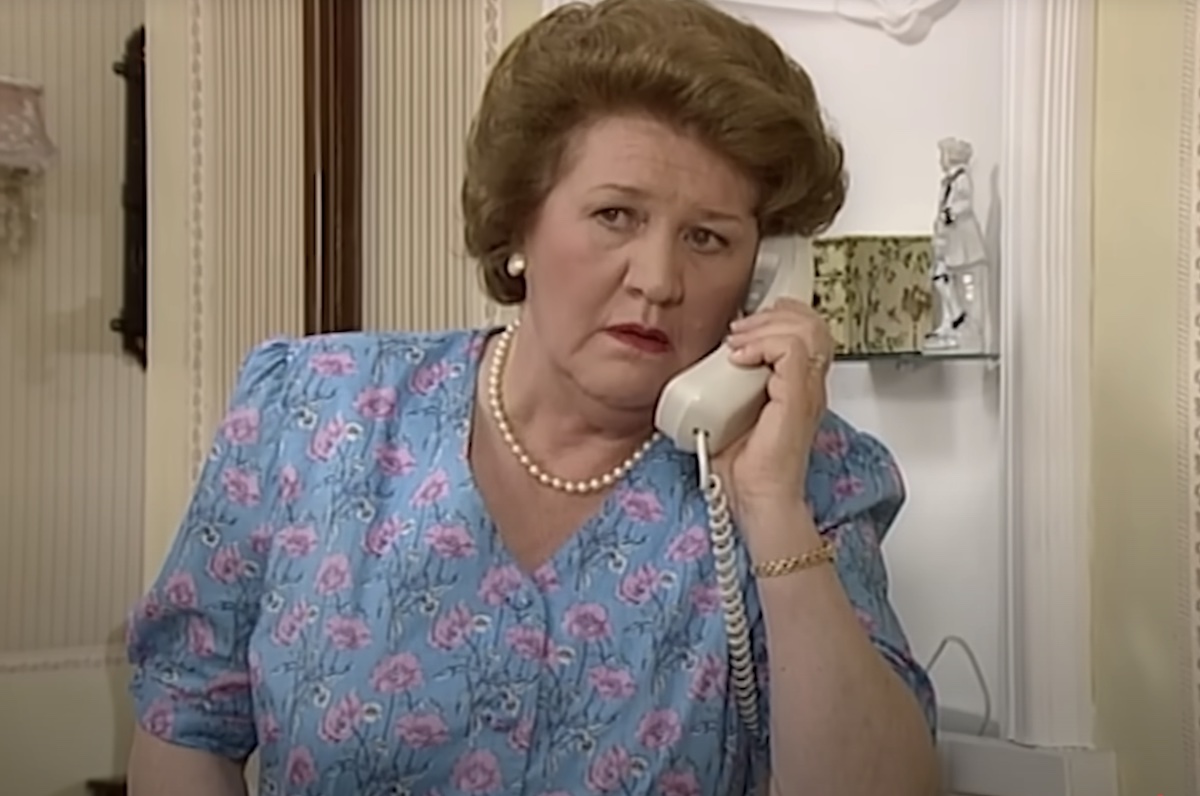
Patricia Routledge and the Legacy of Keeping Up Appearances
Patricia Routledge’s portrayal of Hyacinth Bucket in Keeping Up Appearances remains a cornerstone of British comedy due to her impeccable timing and the show’s sharp satire of social pretension. Decades after its final episode, the ser...
Patricia Routledge’s portrayal of Hyacinth Bucket in Keeping Up Appearances remains a cornerstone of British comedy due to her impeccable timing and the show’s sharp satire of social pretension. Decades after its final episode, the series continues to thrive as a global cultural export, celebrated for its masterclass in character-driven humor and Routledge's unrivaled technical precision.
Contents
The Architectural Precision of Patricia Routledge
By 2026, the legacy of Keeping Up Appearances is often viewed through the lens of modern streaming metrics, but the show's endurance is rooted in the rigorous theatrical training of its lead, Dame Patricia Routledge. Before she ever donned Hyacinth’s signature floral hats, Routledge was a powerhouse of the stage, winning a Tony Award for Darling of the Day (1968) and an Olivier Award for Candide (1988). This background in musical theater and classical drama provided her with a unique "technical toolkit" that most sitcom actors lacked.
Routledge did not merely play Hyacinth; she engineered her. Every "H-eye-acinth" correction and every frantic dive for the telephone was choreographed with the precision of a ballet. In the context of 2026, where digital performances are often edited for pace, Routledge’s long-form physical comedy stands out as a relic of a more disciplined era of television. Her ability to transition from a shrill, commanding social climber to a vulnerable, desperate woman in a single frame is what prevents Hyacinth from becoming a two-dimensional caricature.
The character of Hyacinth Bucket—pronounced "Bouquet," as she would insist—is a study in the British obsession with class. In the mid-1990s, this was a contemporary satire of "middle-class-itis," but in 2026, it serves as a historical document of late-20th-century suburban aspirations. Routledge’s performance ensures that the humor remains evergreen because the core human desire for status is universal.
The Roy Clarke Formula: Repetition and Rhythm
The success of Keeping Up Appearances cannot be discussed without the contribution of writer Roy Clarke. Clarke, also known for Last of the Summer Wine and Open All Hours, understood the power of the "sitcom loop." The show relied on a series of repetitive motifs that, in the hands of a lesser cast, might have become stale.
The Recurring Motifs of the Bucket Household
- The "Sherry Person" Telephone Calls: Hyacinth’s interactions with her "white, slim-line telephone with last-number redial" were masterclasses in one-sided dialogue.
- The Candlelight Suppers: These off-screen events became legendary for their supposed elegance, serving as a constant source of anxiety for the neighbor, Elizabeth Warden.
- The Royal Connection: Hyacinth’s frequent, unsubstantiated claims of being invited to high-society events or having a "stately home" lifestyle.
- The Foil of the "Lower" Class: The juxtaposition of Hyacinth’s pristine semi-detached house with the cluttered, chaotic home of her sister Daisy and brother-in-law Onslow.
Clarke’s writing provided the rhythmic skeleton, but Routledge provided the heartbeat. The chemistry between Routledge and Clive Swift, who played her long-suffering husband Richard, was the show’s secret weapon. Swift’s understated, weary performance acted as the perfect "straight man" to Routledge’s high-octane delusion. In 2026, critics still point to the "Richard and Hyacinth" dynamic as the gold standard for comedic counter-balance.
A Global Export: Why Hyacinth Conquered the World
One of the most remarkable aspects of the legacy of Keeping Up Appearances is its international reach. According to BBC Studios (formerly BBC Worldwide) data over the decades, the show has been one of the broadcaster's most exported programs, sold to hundreds of territories ranging from the United States to Nigeria and Scandinavia.
The reason for this global appeal is the universality of social climbing. While the specific markers of British class—such as Royal Doulton china with hand-painted periwinkles—might be culturally specific, the underlying anxiety of "keeping up appearances" resonates in any society with a hierarchy. In the United States, the show became a staple of PBS, where American audiences fell in love with the absurdity of British suburban life. In 2026, the show remains a top-performing title on global streaming platforms like BritBox, proving that the comedy of manners transcends both time and geography.
| Component | Description | Legacy Impact (as of 2026) |
|---|---|---|
| Lead Actress | Patricia Routledge (Dame Commander) | Recognized as a masterclass in character acting and physical timing. |
| Primary Scriptwriter | Roy Clarke | Established the "repetitive motif" structure used in modern sitcoms. |
| Global Reach | 200+ Territories | Ranked as the BBC's most exported sitcom for several years running. |
| Cultural Archetype | "The Hyacinth" | A dictionary-adjacent term for someone overly concerned with social status. |
| Supporting Foil | Clive Swift (Richard Bucket) | Defined the "stoic husband" trope in late-century television. |
The Supporting Cast: Building the World of Wane-a-lot
The world of Keeping Up Appearances was populated by characters who were just as vital to the legacy as Hyacinth herself. Each character represented a different reaction to Hyacinth's overbearing personality:
- Elizabeth Warden (Josephine Tewson): The nervous neighbor whose constant trembling and coffee-spilling provided a physical manifestation of the stress Hyacinth caused.
- Onslow (Geoffrey Hughes): The antithesis of Hyacinth’s values. His "vest-wearing," beer-drinking, and television-watching lifestyle was a constant threat to Hyacinth’s carefully curated image.
- Daisy and Rose (Judy Cornwell and Mary Millar/Shirley Stelfox): Representing the "unfortunate" family members Hyacinth tried to hide, their storylines often humanized the show, adding a layer of warmth to the satire.
- Emmet (David Griffin): The terrified musical director whose attempts to avoid Hyacinth’s "singing" provided some of the show’s most frantic comedic set pieces.
The ensemble’s ability to treat Hyacinth as a natural force—something to be survived rather than reasoned with—created a believable, albeit heightened, reality. This "ensemble survivalism" is a trope that has been emulated in numerous sitcoms since, but rarely with the same level of consistent execution.
The Decision to End and the Damehood
A significant part of Patricia Routledge’s legacy is her decision to end the show while it was at the peak of its popularity. In 1995, after five seasons and 44 episodes, Routledge chose to step away to pursue other roles, most notably the lead in the detective series Hetty Wainthropp Investigates.
This decision preserved the show's quality. By 2026, television history is littered with sitcoms that "stayed too long at the fair," diluting their brand with declining writing quality. Keeping Up Appearances remains "pure"—a finite collection of episodes that never lost their sharp edge.
In recognition of her vast contributions to theater and television, Patricia Routledge was made a Dame Commander of the Order of the British Empire (DBE) in 2017. As we look back from 2026, this honor serves as the formal validation of her status as a national treasure. Her work on Keeping Up Appearances is seen not just as a "funny show," but as a significant contribution to the British performing arts.
Socio-Cultural Relevance in the 2020s
In the current era of social media, where "curating an image" is a daily task for millions, Hyacinth Bucket feels more relevant than ever. The character was essentially a 1990s "influencer" without an Instagram account. Her obsession with "candlelight suppers" and her horror at anything "common" mirrors the modern anxiety regarding digital aesthetics and social standing.
Sociologists often cite Hyacinth as the ultimate example of status anxiety. She is a woman caught between her reality (the wife of a retired civil servant) and her aspirations (the aristocracy). This tension is the engine of the show’s comedy, but it is also a poignant reflection of the human condition. Patricia Routledge’s genius was in allowing the audience to see the effort behind the facade. When Hyacinth’s mask slips—usually when dealing with her father or her "unfortunate" relatives—we see a woman who is exhausted by her own standards.
Frequently Asked Questions
Why did Patricia Routledge stop filming Keeping Up Appearances?
Patricia Routledge decided to end the show in 1995 because she felt that the character had been fully explored and she did not want the show to become repetitive. She was also eager to return to more serious dramatic and theatrical roles, eventually leading to her successful run in Hetty Wainthropp Investigates.
Is Keeping Up Appearances based on a true story?
While the show is a work of fiction, Roy Clarke based many of the characters and their social anxieties on observations of British suburban life in the North of England. The character of Hyacinth is a composite of various "social climbers" common in mid-century British society.
How many seasons of Keeping Up Appearances were made?
There were five seasons produced between 1990 and 1995, totaling 44 episodes, including several Christmas specials. Despite its relatively short run, its frequent syndication makes it feel as though there are many more episodes.
Did Patricia Routledge do her own singing in the show?
Yes. Patricia Routledge is a highly accomplished, classically trained singer who won a Tony Award for her performance in a Broadway musical. Hyacinth’s "bad" or overly operatic singing was a deliberate choice by Routledge, utilizing her professional vocal control to create comedic effect.
What is the "Young Hyacinth" prequel?
In 2016, a one-off prequel titled Young Hyacinth was produced as part of the BBC's Landmark Sitcom Season. It starred Kerry Howard as a young Hyacinth working as a maid in the 1950s. While it provided backstory for the character, it did not feature Patricia Routledge.
Final Recommendations for Viewers
To fully appreciate the legacy of Patricia Routledge, viewers in 2026 should look beyond the "catchphrases" and focus on the physicality of her performance. Pay close attention to her facial expressions when things go wrong; the micro-expressions of horror and the rapid recovery of her "social mask" are where the true artistry lies. For those interested in the evolution of comedy, comparing Keeping Up Appearances to modern social satires reveals just how much today’s writers owe to the foundational work of Roy Clarke and the incomparable Dame Patricia Routledge.
Image Gallery