The Evolution of the Manchester United White Jersey: A Century of Design and Glory
The Manchester United white jersey serves as the club’s primary alternative to its iconic red home shirt, embodying a history of triumph, resilience, and stylistic evolution. From the 1909 FA Cup final to the high-performance fabrics o...
The Manchester United white jersey serves as the club’s primary alternative to its iconic red home shirt, embodying a history of triumph, resilience, and stylistic evolution. From the 1909 FA Cup final to the high-performance fabrics of 2026, the white kit has transitioned from a functional "clash" garment to a powerful symbol of the club’s global identity and heritage.
Contents
The Genesis of the White Identity: 1909 and the Rose of Lancaster
While Manchester United is synonymous with red, the club’s first major success was achieved in white. In the 1909 FA Cup Final against Bristol City, both teams naturally wore red. To resolve the color clash, United commissioned a special white jersey featuring a deep V-neck and a large red Rose of Lancaster on the left breast. This was not merely an aesthetic choice but a nod to the club’s regional roots.
The victory in that final cemented white as a "lucky" alternative. For the early part of the 20th century, kit regulations were less rigid than they are today, but the precedent was set: when red could not be worn, white was the preferred standard. This era was characterized by heavy, long-sleeved cotton shirts that offered little in the way of breathability but provided the durability required for the physical nature of early English football.
Post-War Modernization and the Busby Era
Following the Second World War, under the leadership of Sir Matt Busby, Manchester United entered a period of unprecedented growth. During the 1950s and 1960s, the away kit often fluctuated between white and blue. However, the white shirt began to take on a more streamlined, modern silhouette.
The jerseys of the 1960s, manufactured largely by Umbro, moved away from the heavy collars of the past toward a "crew neck" or simple "V-neck" design. These shirts were minimalist, often featuring nothing more than the club crest (when used in high-profile matches) and a clean white base. It was during this time that the club began to standardize the use of white shirts paired with black or white shorts, creating a visual aesthetic that felt distinct from the "all-white" look associated with rivals like Real Madrid or Leeds United.
The Adidas Revolution and the Advent of Sponsors (1980–1992)
The 1980s marked a significant shift in the history of the Manchester United white jersey. In 1980, the club signed a deal with Adidas, a partnership that would define the kit culture of the decade. This era introduced the famous "three stripes" on the sleeves and the Adidas trefoil logo on the chest.
One of the most iconic white jerseys of this period was the 1984–1986 away kit. It featured subtle vertical pinstripes and a sophisticated crossover V-neck collar with red and black trim. This period also saw the introduction of the club's first shirt sponsor, Sharp Electronics, in 1982. The "SHARP" logo, printed in bold red across the chest, became synonymous with United's white kits for nearly two decades.
The move from cotton to polyester blends during the 80s allowed for more intricate designs and a lighter feel. Fans of this era remember players like Bryan Robson and Norman Whiteside leading the charge in these crisp, striped designs that balanced sportswear utility with 80s fashion sensibilities.
The Umbro Nineties: Innovation and Cultural Impact (1992–2002)
When the Premier League launched in 1992, Umbro returned as the kit manufacturer. The 1990s were a period of rapid experimentation in jersey design. While the away kit was often blue or even the infamous "invisible" grey, white remained a recurring theme for third kits or alternating away seasons.
The 1996–1998 white away jersey stands out as a quintessential piece of 90s memorabilia. It featured a prominent button-down collar and a shadow-weave pattern throughout the fabric. This was an era where football shirts began to double as casual streetwear, and the white United jersey, with its clean look, was particularly popular.
Technically, this decade saw the introduction of moisture-wicking fabrics. Although early versions were somewhat rudimentary compared to 2026 standards, they represented a significant leap forward in player comfort. The crests also became more elaborate, often featuring embroidery and raised textures.
The Nike Years: Global Dominance and High Performance (2002–2015)
In 2002, Nike took over the manufacturing rights in a record-breaking deal. The Nike era was characterized by a "less is more" philosophy, focusing on athletic silhouettes and advanced fabric technology like "Dri-FIT."
The 2003–2005 white away kit was a masterclass in minimalism, featuring a simple black trim and a clean white body. However, perhaps the most significant white kit of this era was the 2008–2009 third kit. Though technically a third choice, it was worn during the 2009 UEFA Champions League Final in Rome. While United lost that match to Barcelona, the jersey remains a collector's item due to its association with the peak of the Sir Alex Ferguson era and players like Cristiano Ronaldo and Wayne Rooney.
Nike also experimented with "recycled polyester," beginning the club's journey toward more sustainable apparel—a trend that has become the industry standard by 2026.
The Return of Adidas and Retro-Modernism (2015–Present)
Returning to Adidas in 2015, Manchester United began a series of kits that leaned heavily into nostalgia while utilizing cutting-edge "Aeroready" and "Heat.Rdy" technologies. The white jerseys of the last decade have frequently paid homage to the 1980s and 1990s.
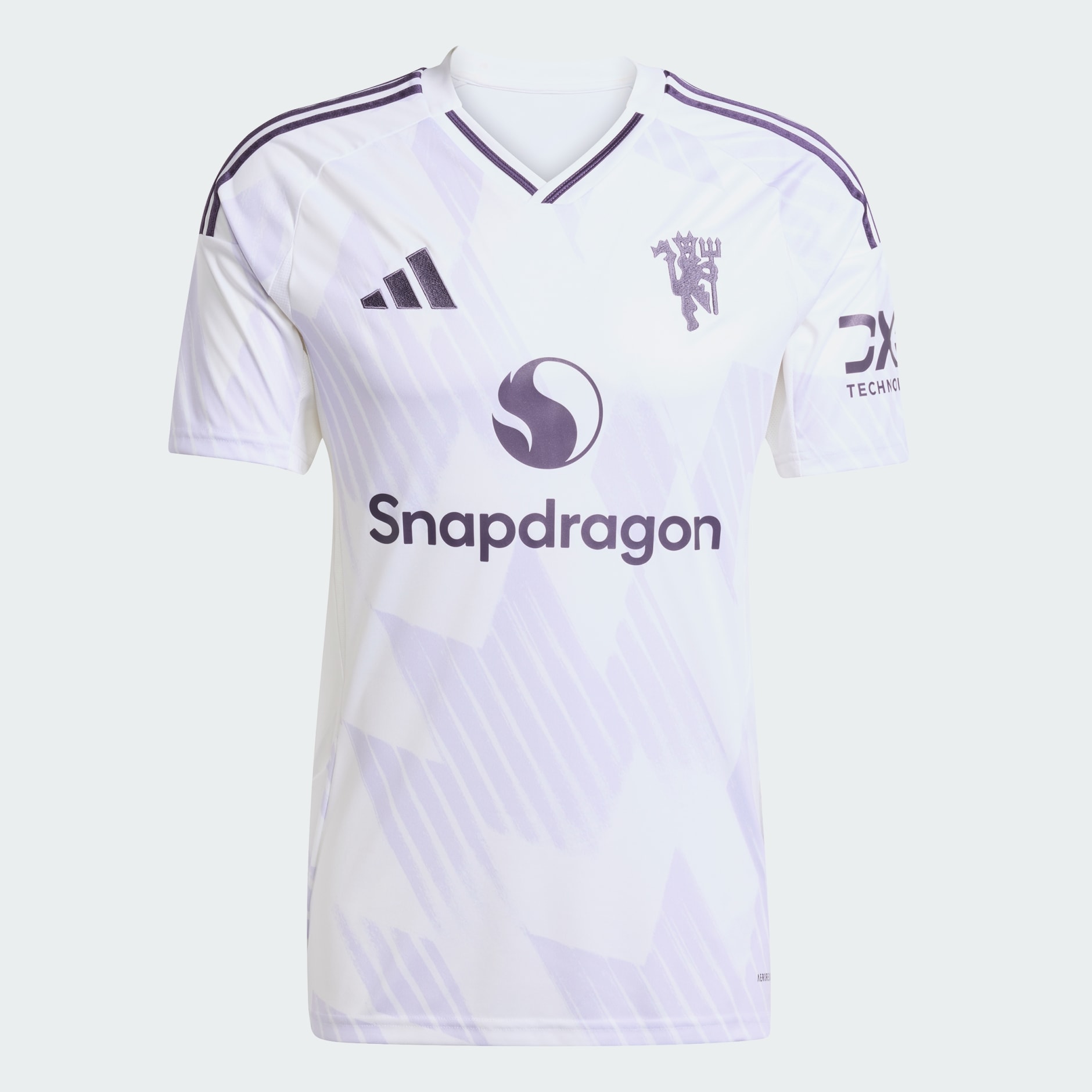
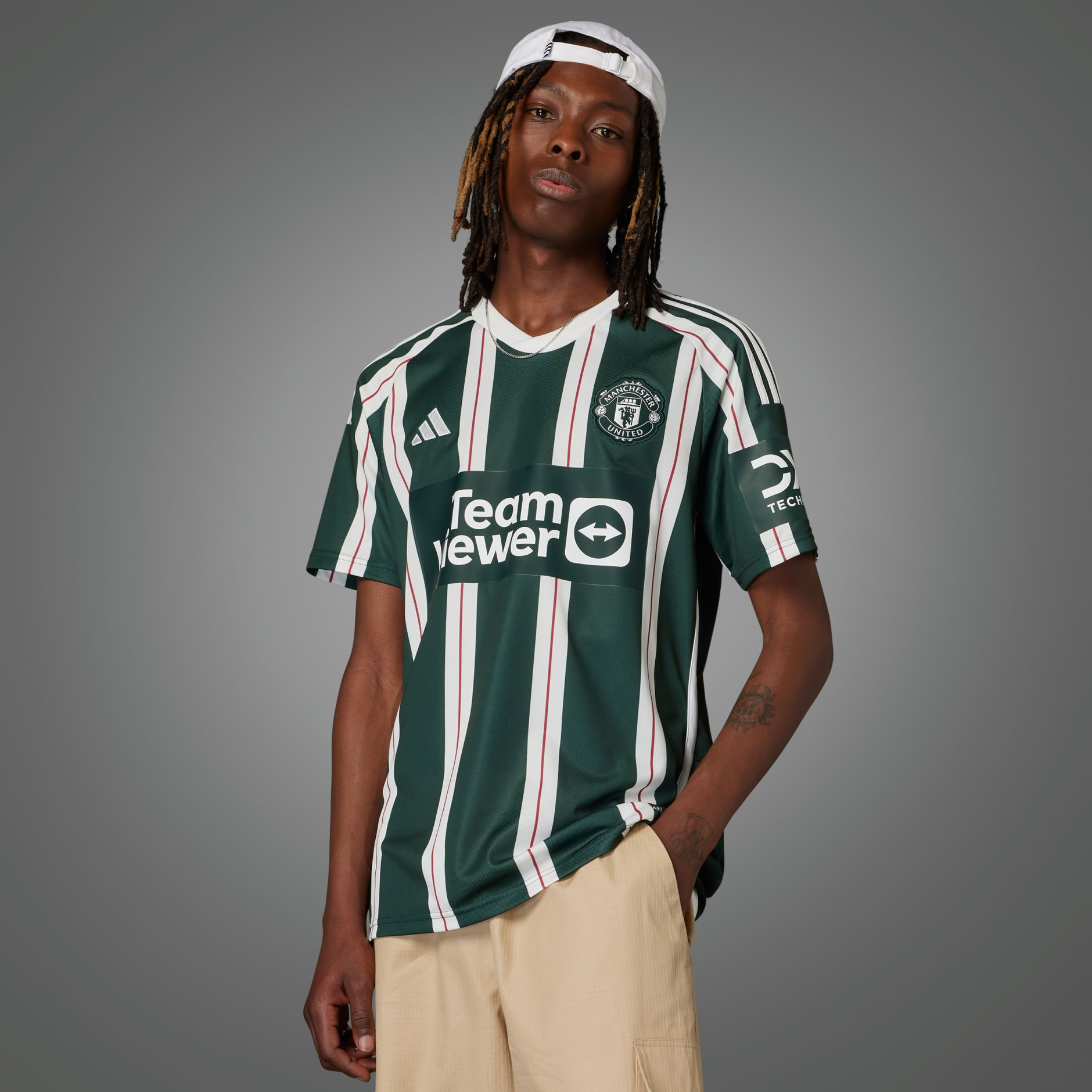
A standout example is the 2022–2023 white away kit, which featured a shielded club crest—a direct reference to the 1999 Treble-winning season and the early 90s designs. This jersey combined a classic "off-white" or "cloud white" base with black and red multi-colored detailing on the collar and sleeves.
By 2026, the design philosophy has moved toward "bio-mapped" fabrics that optimize airflow based on player heat zones. The white jersey remains a staple of the rotation, often alternating between a clean, minimalist away option and a more experimental third kit design.
Technical Specifications and Design Evolution
To understand the progression of the white jersey, one must look at the technical changes over the decades. The transition from heavy natural fibers to engineered synthetics changed not only how the players performed but how the kits looked and felt for fans.
| Era | Primary Manufacturer | Key Material Features | Iconic Design Element |
|---|---|---|---|
| 1900s–1950s | Various/Umbro | Heavyweight Cotton | Red Rose of Lancaster / Deep V-Necks |
| 1980s | Adidas | Polyester/Nylon Blends | Pinstripes & Trefoil Logo |
| 1990s | Umbro | Shadow-weave Polyester | Button-down Collars & Oversized Fits |
| 2000s | Nike | Dri-FIT / Mesh Panels | Minimalist trim & Tapered Athletic Fits |
| 2015–2026 | Adidas | Aeroready / Recycled Plastic | Retro Shield Crests & Sublimated Patterns |
The Cultural Significance of White
For many supporters, the white jersey represents Manchester United’s "European" identity. Because the club frequently wore white on their travels during continental competitions to avoid clashes, the color became associated with the glamour of the European Cup. It is often viewed as a "neutral" canvas that allows the red and black club colors to pop in the accents, making it a favorite for both on-pitch performance and lifestyle wear.
Furthermore, the white jersey has been the backdrop for several legendary individual performances. From George Best’s exploits in the 60s to the counter-attacking brilliance of the late 2000s, many of the club's most aesthetic goals were scored by players clad in white.
Frequently Asked Questions
Why does Manchester United wear white away from home?
Manchester United traditionally uses white (or occasionally blue) to ensure a clear visual contrast against teams that wear red or other dark colors. White has been the most consistent "change" color since the club's 1909 FA Cup victory.
What is the most famous Manchester United white jersey?
The 1909 "Lancashire Rose" shirt is the most historically significant. However, in modern terms, the 1984–86 Adidas pinstripe kit and the 2022–23 "shield" kit are among the most popular with fans and collectors.
When did sponsors first appear on the white jersey?
The first sponsor to appear on a Manchester United white jersey was "SHARP" in 1982, following the club's landmark sponsorship deal with Sharp Electronics.
How do modern (2026) kits differ from vintage ones?
Modern kits are significantly lighter and made from 100% recycled materials. They feature heat-pressed badges instead of heavy embroidery to reduce weight and friction, and the fabrics are engineered for specific moisture management.
Has Manchester United ever won a major trophy in a white kit?
Yes. Most notably, they won the 1909 FA Cup in a white jersey. They have also secured numerous crucial Premier League and European away wins wearing white throughout their history.
Recommendations for Collectors
If you are looking to acquire a piece of history, focus on jerseys from the mid-80s Adidas era or the mid-90s Umbro era, as these are currently the most sought-after in the vintage market. Ensure you verify the authenticity by checking the manufacturer's internal tags and the quality of the embroidery. For those interested in modern versions, the 2022–23 shield jersey remains a benchmark for how to successfully blend heritage with modern performance technology.
Image Gallery