Travel to St Helena Island: Comprehensive Access, Logistics, and Planning Guide
Planning a journey to one of the most remote inhabited islands on Earth requires meticulous preparation, an understanding of complex logistics, and an appreciation of the island's unique geographical constraints. Situated in the South...
Planning a journey to one of the most remote inhabited islands on Earth requires meticulous preparation, an understanding of complex logistics, and an appreciation of the island's unique geographical constraints. Situated in the South Atlantic Ocean, this British Overseas Territory is approximately 1,950 kilometers (1,210 miles) off the western coast of Africa and 4,000 kilometers (2,500 miles) from Rio de Janeiro. Because of its extreme isolation, traveling to St Helena demands a shift away from spontaneous vacation planning toward structured itineraries coordinated around scheduled transport services, specialized entry requirements, and careful financial budgeting.
Contents
Understanding St Helena's Geographic Isolation and History
St Helena Island covers an area of roughly 121 square kilometers (47 square miles) of volcanic terrain characterized by dramatic cliffs, verdant green interior peaks, and deep valleys known locally as "gates." Discovered by the Portuguese in 1502, the island gained global historical renown as the final place of exile for Napoleon Bonaparte from 1815 until his death in 1821. Beyond its Napoleonic heritage, the island served as a vital provisioning station for ships sailing between Europe, Asia, and South Africa before the opening of the Suez Canal.
For centuries, reaching the island was possible exclusively via a multi-day voyage on the RMS St Helena, the last operational Royal Mail Ship. This maritime era ended with the opening of St Helena Airport (HLE) in 2017, which finally brought commercial air service to the territory. Despite the advent of aviation, travelers must still contend with challenging meteorological conditions, wind shear, and limited flight frequencies that require robust contingency planning.
Entry Requirements, Visas, and Health Regulations
Before booking flights or accommodation, travelers must ensure they meet all legal and administrative criteria set by the St Helena Government (SHG). Entry policies are strictly enforced to protect the local population and manage island infrastructure capacity.
Passport and Immigration Protocols
Visitors of most nationalities, including citizens of the United Kingdom, European Union, United States, Canada, and South Africa, do not require a pre-arranged visa for stays up to 90 days. However, immigration authorities at St Helena Airport or Jamestown port will inspect the following mandatory documents upon arrival:
- A passport valid for at least six months beyond the planned departure date.
- A return or onward ticket out of St Helena.
- Proof of sufficient funds to cover the duration of the stay.
- Confirmation of accommodation bookings for the entirety of the visit.
- Comprehensive travel insurance that explicitly covers medical evacuation, as specialized medical transport off the island can incur exceptionally high costs.
Medical and Insurance Mandates
Travel insurance is not merely a recommendation; it is a strict regulatory prerequisite enforced by immigration officers. Given that St Helena has a local hospital capable of handling routine care but lacks facilities for major surgical procedures or advanced critical care, emergency medical evacuation to South Africa is sometimes necessary. Visitors must verify that their policy covers aeromedical evacuation without financial caps that fall short of actual charter costs.
Transportation Options: Flying Versus Sea Travel
The method of transportation chosen dictates the structure of the entire journey. Air travel is the standard choice for most modern tourists, while maritime options cater to niche travelers and cargo enthusiasts.
Arriving by Air
Commercial flights to St Helena Airport (HLE) are operated by Airlink, connecting the island to O.R. Tambo International Airport (JNB) in Johannesburg, South Africa. Flights typically operate weekly, with occasional seasonal frequency adjustments. The journey from Johannesburg takes approximately six hours, usually featuring a brief refueling stop at the airport in Walvis Bay, Namibia.
Travelers must pay close attention to airline baggage limitations and weight restrictions. Because aircraft payloads on the St Helena route are sensitive to wind conditions and runway length limitations, strict baggage caps apply, and passengers may occasionally face freight roll-over if loads exceed safe operational thresholds.
Arriving by Sea
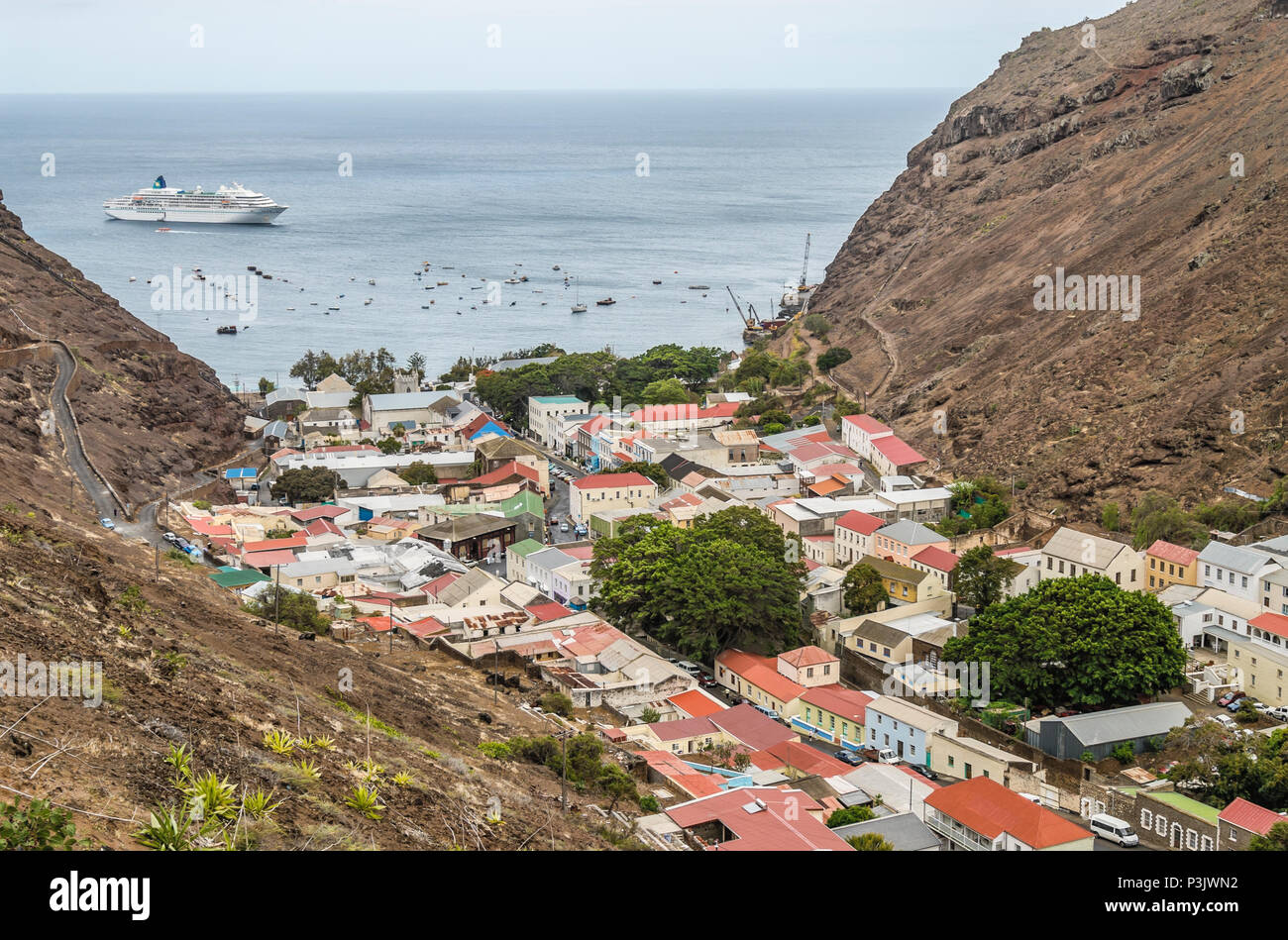
While the RMS St Helena is retired, sporadic cruise ships call at Jamestown harbor during their trans-Atlantic repositioning routes. Additionally, private yachts and specialized passenger-cargo vessels occasionally visit, though schedules are subject to weather delays and maritime conditions. Passengers arriving by sea disembark via local launches into Jamestown harbor, provided sea states permit safe transfer.
| Transport Mode | Point of Origin | Typical Duration | Frequency | Operational Risks |
|---|---|---|---|---|
| Commercial Flight | Johannesburg (JNB) via Namibia | Approx. 6 hours | Weekly (subject to season) | Wind shear, weather delays, strict payload limits |
| Cruise/Vessel | Varies (e.g., Cape Town, Europe) | Varies by origin | Infrequent / Seasonal | Rough seas, anchorage cancellations |
Accommodation, Logistics, and Financial Preparation
St Helena offers a curated selection of lodging choices, ranging from historic self-catering Georgian townhouses in Jamestown to boutique hotels, rural eco-lodges, and guesthouses. Advance booking is mandatory, as room inventory on the island is tightly constrained.
Currency and Financial Practicalities
The official currency is the St Helena Pound (SHP), which is pegged at parity to the British Pound Sterling (GBP). While British banknotes and coins circulate freely, local St Helena currency is not widely accepted outside the island.
- Credit and debit card acceptance is expanding within Jamestown, but cash remains essential for rural shops, taxis, and excursion guides.
- Automated Teller Machine (ATM) facilities are limited to the Bank of St Helena in Jamestown, and foreign card compatibility can occasionally be unpredictable. Travelers should carry sufficient cash reserves or ensure their banking institutions are notified of international travel.
Telecommunications and Connectivity
Mobile service on the island is provided by Sure St Helena. Visitors can purchase local prepaid SIM cards upon arrival to secure mobile data access, though speeds and coverage vary across the deep valleys and high ridges. Wi-Fi is available at major hotels, select cafes, and public hotspots, but continuous high-speed broadband is not universally guaranteed.
Exploring the Island: Key Attractions and Activities
St Helena offers diverse experiences centered around hiking, marine wildlife, and deep-rooted British imperial history.
- Jamestown and Plantation House: The capital, Jamestown, sits in a narrow ravine flanked by steep volcanic cliffs. It features pristine Georgian architecture, the historic Wharf, and Jacob’s Ladder—a vertiginous staircase of 699 steps built in 1829. Just outside the capital lies Plantation House, the official residence of the Governor and home to Jonathan, a critically old Seychelles giant tortoise.
- Napoleon’s Exile Sites: Visitors can explore Briars Pavilion (where Napoleon temporarily stayed), Longwood House (his primary residence during exile), and his original tomb site in Sane Valley before his remains were exhumed and returned to Paris.
- Marine Excursions and Diving: The surrounding Atlantic waters are renowned for seasonal populations of whale sharks (typically from December to February), humpback whales, dolphins, and robust endemic marine life suitable for scuba diving and snorkeling.
- Post Box Walks: The island maintains a network of 21 designated hiking trails, known as Post Box Walks, which lead hikers through varied microclimates to dramatic coastal viewpoints and historic fortifications.
Frequently Asked Questions
What is the best time of year to travel to St Helena?
The island enjoys a mild climate year-round due to its tropical maritime setting. However, the summer months from November to March bring warmer weather and calmer seas, making it ideal for swimming with whale sharks and diving. The winter months from June to September offer cooler temperatures that are well-suited for strenuous hiking along the Post Box Walk network.
Do I need a visa if I hold a British passport?
British citizens and nationals of many other countries do not require a pre-issued visa for tourist visits lasting up to 90 days. Immigration officials grant entry stamps upon arrival provided travelers present a valid passport, return ticket, accommodation booking, proof of funds, and mandatory medical evacuation insurance.
How reliable are the flights to St Helena Airport?
While Airlink maintains a regular weekly schedule from Johannesburg, flight operations are subject to strict safety margins regarding wind conditions and visibility. Passengers should build schedule buffers into their international flight connections, as weather-related delays can occasionally postpone departures by 24 to 48 hours.
What kind of electrical plugs are used on the island?
St Helena uses the standard British three-pin rectangular plug system (Type G operating at 240 volts, 50Hz). International travelers should pack appropriate adapters before departure, as electrical accessories are difficult to source locally.
Can I rent a car and drive independently on the island?
Yes, car rentals are available in Jamestown. Driving on St Helena requires navigating steep, narrow, and winding roads while driving on the left-hand side. International visitors must present a valid national driving license to local authorities to obtain a temporary local driving permit upon arrival.
Practical Next Steps for Your Journey
Begin your planning by securing your flight itinerary through Airlink and confirming accommodation on the island before locking in connecting flights from your home country to Johannesburg. Verify that your passport validity extends well beyond your intended return date and purchase comprehensive travel insurance featuring explicit medical evacuation coverage. By respecting the island’s logistical rhythms and booking essential services months in advance, your voyage to St Helena will unfold smoothly.
Image Gallery