Ronnie Wood: The Definitive Musician Biography for Rock Fans
Ronnie Wood is one of rock and roll’s most influential guitarists, renowned for his signature slide work, rhythm weaving, and vibrant stage presence. Best known as a member of The Rolling Stones since 1975, Wood previously defined the...
Ronnie Wood is one of rock and roll’s most influential guitarists, renowned for his signature slide work, rhythm weaving, and vibrant stage presence. Best known as a member of The Rolling Stones since 1975, Wood previously defined the sound of The Jeff Beck Group and Faces, shaping British blues-rock across six decades.
Contents
Early Life and Roots: From Thames Watermen to Ealing Art College
Ronald David Wood was born on June 1 War 1947 in Hillingdon, Middlesex, England, into a tight-knit family of "bargees"—Thames watermen—often described as English river gypsies. Growing up in a working-class household filled with music and eccentric charm, Wood was the youngest of three brothers. His older brothers, Art and Ted, were active in the emerging British jazz and rhythm-and-blues scenes, exposing young Ronnie to American blues records by Big Bill Broonzy, Muddy Waters, and Howlin' Wolf at an early age.
Wood’s creative talents developed simultaneously in two distinct disciplines: music and visual art. He attended St Martin's School of Art and later Ealing Art College—the legendary institution that also nurtured contemporary figures like Freddie Mercury and Pete Townshend. At Ealing, Wood refined a traditional drawing and painting style that would later evolve into a parallel commercial art career. However, the infectious rise of skiffle and R&B during the early 1960s ultimately pushed performance to the forefront of his early adult life.
By his mid-teens, Wood was playing acoustic guitar and dual-line R&B licks, taking inspiration from Electric blues pioneers like Hubert Sumlin and Chuck Berry. This duality between visual expression and musical instinct became the defining hallmark of his lifelong creative output.
The Early Bands: The Birds and The Jeff Beck Group
Wood’s professional music career began in 1964 when he formed The Birds (not to be confused with the American group The Byrds), an energetic British rhythm-and-blues outfit based in West London. As the lead guitarist and primary songwriter, Wood recorded several singles for Decca Records, including "Leaving Here" and "No Good Without You Baby." Although the band achieved modest chart recognition in London clubs, their fiery guitar work established Wood’s reputation as a gifted instrumentalist within the capital's competitive music scene.
Following a brief stint with the short-lived group Santa Barbara Machine Head alongside keyboardist Lord Sutch, Wood received a transformative career break in 1967. Virtuoso guitarist Jeff Beck invited Wood to join The Jeff Beck Group as a bass player. Despite having primarily been a rhythm and lead six-string guitarist, Wood adapted rapidly to the four-string bass, forging a heavy, fluid bottom-end anchor that complimented Beck’s erratic guitar genius and Rod Stewart’s raspy vocals.
- The Birds (1964–1967)
- Jeff Beck Group (1967–1969)
- Faces (1969–1975)
- The Rolling Stones (1975–Present)
The Jeff Beck Group released two seminal albums:
- Truth (1968): A blueprint for hard rock and heavy metal, introducing raw blues rearrangements like "Shapes of Things" and "You Shook Me."
- Beck-Ola (1969): A high-octane hard-rock showcase that cemented the group's reputation in North America, despite internal personality clashes that led to their dissolution on the eve of the original Woodstock festival.
The Faces Era: Loose Grooves and Rock 'n' Roll Camaraderie
When The Jeff Beck Group fractured in 1969, Ronnie Wood and Rod Stewart joined forces with the remaining members of Small Faces—bassist Ronnie Lane, keyboardist Ian McLagan, and drummer Kenney Jones—to form Faces. Truncating their name to reflect their expanded lineup, Faces emerged as one of the quintessential live bands of the early 1970s, celebrated for their loose, energetic performances, melodic warmth, and effortless stage banter.
Wood returned to his primary instrument, playing lead and slide guitar while contributing heavily as a co-writer and backing vocalist. His slide guitar riffs became the signature sound of classic tracks like "Stay with Me," "Had Me a Real Good Time," and "Cindy Incidentally." Concurrently, Wood played a major role in Rod Stewart's early solo albums, co-writing the timeless classic "Every Picture Tells a Story" (1971) and providing guitar arrangements across Stewart’s early releases.
Key Faces Albums:
- First Step (1970)
- Long Player (1971)
- A Nod Is As Good As a Wink... to a Blind Horse (1971)
- Ooh La La (1973)
By the release of Ooh La La in 1973, Wood was stepping up as a lead vocalist, singing the title track written by Ronnie Lane. However, as Stewart’s solo superstardom increasingly overshadowed the band's collective identity, internal friction grew, leaving Faces on uncertain footing by late 1974.
Joining The Rolling Stones: The "Ancient Art of Weaving"
Wood’s relationship with The Rolling Stones originated years before he joined the group. He shared a close personal and musical friendship with Keith Richards and Mick Jagger throughout the early 1970s, frequently hosting jams at his home studio in Richmond, London. In 1974, Wood released his debut solo album, I've Got My Own Album to Do, which featured major contributions from Richards, Jagger, and George Harrison. During those sessions, Wood co-wrote the track "It's Only Rock 'n Roll (But I Like It)," which ultimately became the title track for The Rolling Stones' 1974 album.
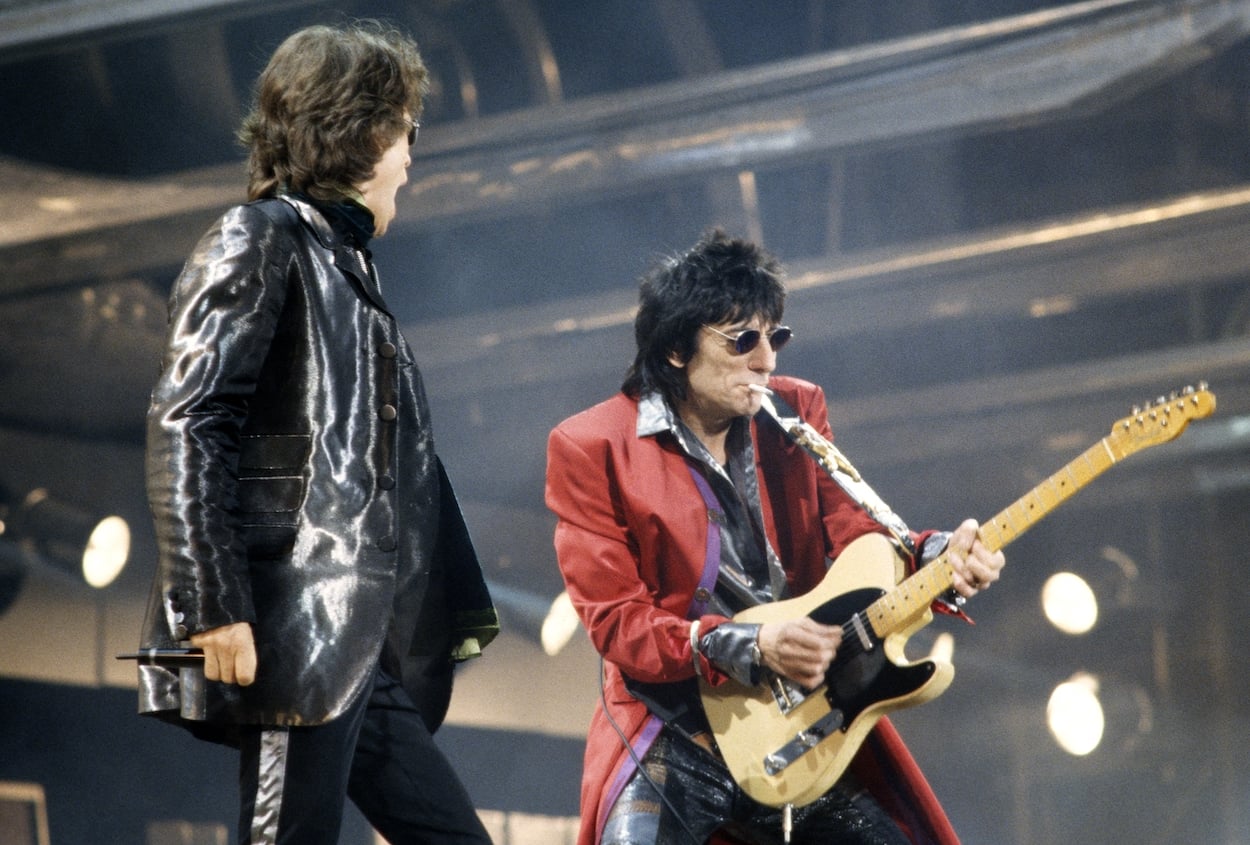
When lead guitarist Mick Taylor abruptly departed The Rolling Stones in December 1974, the band rehearsed with several prominent guitarists. Wood was invited to tour with the band across North America in 1975 while maintaining his commitments to Faces. Following the official disbandment of Faces in late 1975, Wood was announced as a full-time member of The Rolling Stones in 1976.
Guitar Weaving Exchange:
- Keith Richards (Rhythm)
- Ronnie Wood (Lead/Slide)
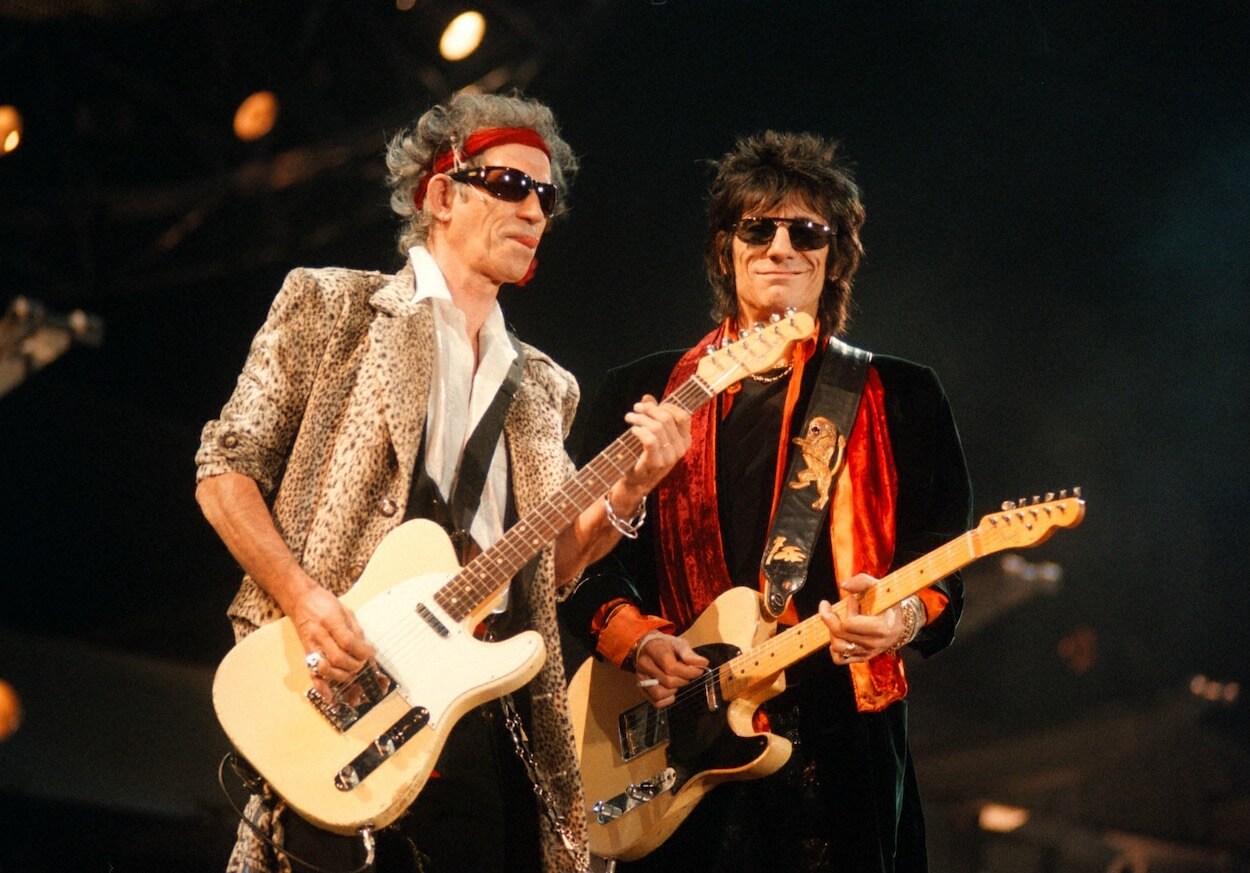
Wood’s entry revitalized the band's sonic chemistry. While Mick Taylor had brought intricate, virtuosic soloing, Wood re-established the dual-guitar interaction that Richards called the "ancient art of weaving." Instead of dividing roles rigidly into lead and rhythm, Wood and Richards swapped parts fluidly during songs, blending slide lines, sharp riffs, and syncopated R&B fills. This dynamic was fully realized on studio masterpieces like Some Girls (1978), Emotional Rescue (1980), and Tattoo You (1981), as well as decades of stadium tours.
Ronnie Wood’s Signature Playing Style, Gear, and Guitars
Ronnie Wood’s guitar style bridges early American R&B, delta slide, and melodic British rock. His technical approach favors feeling, timing, and dynamic tone over clinical speed.
Key Playing Characteristics
- Lap Steel and Pedal Steel: Wood introduced pedal steel and lap steel colors to both Faces ("Debris") and The Rolling Stones ("Far Away Eyes"), adding authentic country and gospel textures.
- Open Tunings and Slide: Utilizing open-E and open-G tunings, Wood uses a brass or glass slide to create crying, vocal-like melodies that weave around Keith Richards’ rhythmic pulse.
- Dual Rhythm Interaction: Wood’s ability to mirror and complement another guitarist's rhythm allows bands to maintain a heavy groove without cluttering the mid-range frequencies.
Primary Instruments and Amplification
| Instrument / Gear | Model / Era | Primary Usage / Notable Tracks |
|---|---|---|
| Zemaitis Disc Front | Custom Tony Zemaitis (1970s) | Signature Faces era live guitar; heavy R&B riffs |
| Fender Stratocaster | 1954 / 1955 Sunburst models | Main stay with The Rolling Stones for soloing and rhythm |
| Gibson Les Paul | Sunburst Standard & Custom models | Used throughout Jeff Beck Group and heavy Stones tracks |
| Duesenberg Ronnie Wood | Signature Artist Series | Custom lap steel and hollowbody designs for recent tours |
| Fender Twin Reverb | Vintage Blackface / Silverface | Core live and studio amplification for clean, edge-of-breakup tone |
| Vox AC30 | Vintage 1960s Top Boost | Early career drive with The Birds and Jeff Beck Group |
Life Beyond the Stage: Visual Art, Solo Work, and Recovery
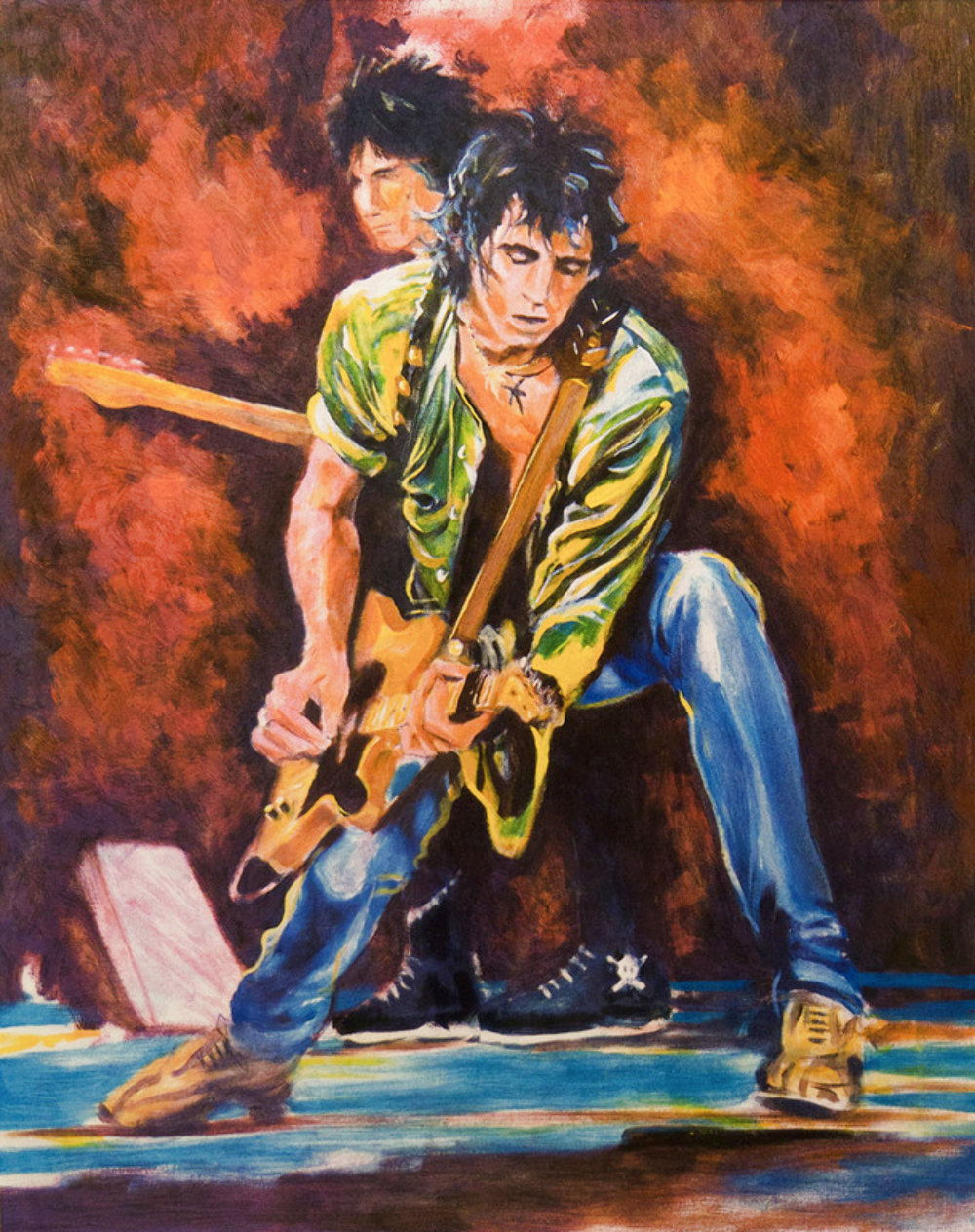
Outside of his work with The Rolling Stones, Ronnie Wood has cultivated an extensive career as a visual artist and solo musician. His artwork—comprising oil paintings, sketches, and limited-edition prints—frequently features portraits of his musical contemporaries, live stage action, and landscapes. Wood’s paintings have been exhibited in major galleries globally, establishing him as a respected figure in the fine art community independent of his rock star status.
Ronnie Wood's Creative Output:
- Lead & Slide Guitar (The Rolling Stones, Faces)
- Fine Art & Painting (Portraits, Fine Art Prints)
- Solo Albums (7 Studio Releases)
- Broadcasting (The Ronnie Wood Show on Radio/TV)
Wood has also released seven solo studio albums, including Slide on This (1992), Not for Beginners (2001), and I Feel Like Playing (2010). These records demonstrate his broad taste across blues, reggae, country, and hard rock.
Health, Sobriety, and Personal Life
Wood’s personal life was long associated with the high-maintenance rock lifestyle of the 1970s and 1980s. However, following multiple stints in rehabilitation, Wood achieved full sobriety in 2010. His personal renewal brought renewed focus to both his touring commitments and art studio work.
In subsequent years, Wood overcame significant health challenges, including a successful battle with lung cancer in 2017 and a secondary cancer diagnosis during 2020. Wood resides in the UK with his wife, theater producer Sally Humphreys, whom he married in 2012, and their twin daughters born in 2016.
Chronological Discography and Band Eras Timeline
The following table summarizes Ronnie Wood’s primary musical eras, key band roles, and milestone releases:
| Period | Group / Project | Primary Role | Milestone Albums / Releases |
|---|---|---|---|
| 1964–1967 | The Birds | Lead Guitar, Songwriter | Singles: "Leaving Here", "No Good Without You Baby" |
| 1967–1969 | The Jeff Beck Group | Bass Guitar | Truth (1968), Beck-Ola (1969) |
| 1969–1975 | Faces | Lead/Slide Guitar, Vocals | A Nod Is As Good As a Wink... (1971), Ooh La La (1973) |
| 1974 | Solo Debut | Lead Vocals, Guitars | I've Got My Own Album to Do (1974) |
| 1975–Present | The Rolling Stones | Guitar, Lap Steel, Backing Vocals | Some Girls (1978), Tattoo You (1981), Hackney Diamonds (2023) |
| 1992–2010 | Solo Projects | Lead Vocals, Guitars | Slide on This (1992), I Feel Like Playing (2010) |
Frequently Asked Questions
When did Ronnie Wood officially join The Rolling Stones?
Ronnie Wood first toured with The Rolling Stones in 1975 following the departure of Mick Taylor. He was officially announced as a full band member in February 1976, first appearing as an official member on the album Black and Blue.
What bass guitar did Ronnie Wood play with The Jeff Beck Group?
Wood primarily played a Gibson EB-3 bass and a Fender Precision Bass during his tenure with The Jeff Beck Group from 1967 to 1969, delivering melodic, overdriven bass lines that anchored the band's hard-rock sound.
Is Ronnie Wood a trained artist?
Yes. Wood formally studied fine art at St Martin's School of Art and Ealing Art College in London during the 1960s. He has continued to paint throughout his music career, and his artwork is exhibited and collected worldwide.
What is the "weaving" guitar style Wood plays with Keith Richards?
Guitar weaving is an interlocking performance technique where two guitarists trade rhythm and lead parts dynamically during a song, rather than sticking to fixed lead or rhythm roles. Wood and Keith Richards popularized this dual-guitar sound in rock music.
Has Ronnie Wood released solo music?
Yes. Wood has released seven solo studio albums. His debut solo album, I've Got My Own Album to Do, was released in 1974 and featured guest appearances by Keith Richards, Mick Jagger, and George Harrison.
Next Actions and Resources for Fans
To explore Ronnie Wood’s artistic and musical legacy further, fans can take the following practical steps:
- Essential Listening Sequence: Listen chronologically to capture his stylistic evolution:
- Truth – The Jeff Beck Group (1968)
- A Nod Is As Good As a Wink... to a Blind Horse – Faces (1971)
- I've Got My Own Album to Do – Solo (1974)
- Some Girls – The Rolling Stones (1978)
- Read the Official Autobiography: Consult Wood's 2007 memoir, Ronnie, which details his early life in Middlesex, his time in Faces, and his decades on the road with The Rolling Stones.
- Explore the Visual Art Catalog: Visit official fine art galleries or Wood’s official art portal to view his original paintings, stage sketches, and limited prints.
Image Gallery