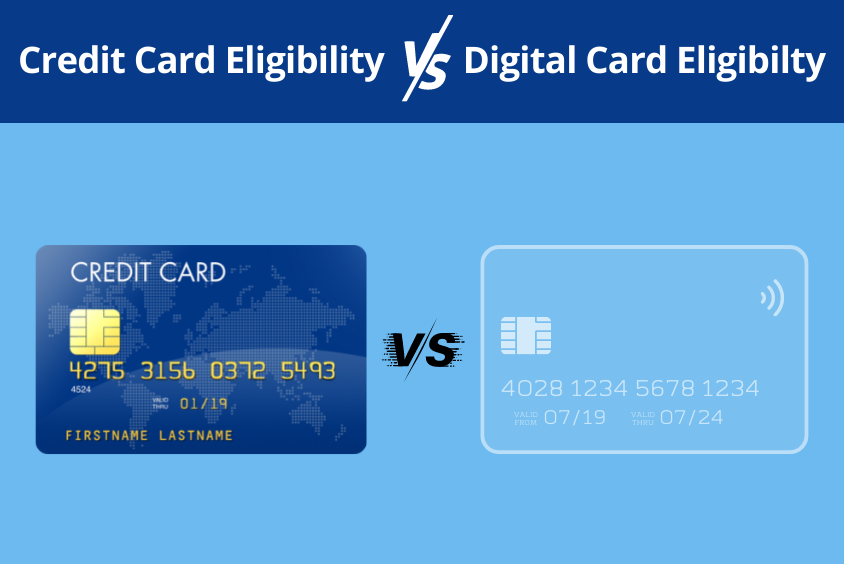
Credit Card Eligibility Rules: Complete Approval Guide & Requirements
Credit card eligibility depends on your FICO credit score, gross annual income, debt-to-income (DTI) ratio, employment stability, age, and legal residency status. Financial institutions evaluate these metrics using automated underwriti...
Credit card eligibility depends on your FICO credit score, gross annual income, debt-to-income (DTI) ratio, employment stability, age, and legal residency status. Financial institutions evaluate these metrics using automated underwriting models to determine your creditworthiness, credit limit, and interest rates, ensuring compliance with federal lending guidelines.
Contents
Core Pillars of Credit Card Eligibility Assessment
Securing approval for a credit card requires meeting specific criteria established by financial institutions and federal regulations. While every issuer maintains proprietary risk models, all underwriting processes assess five core pillars to calculate an applicant's default risk.
(Note: Ensure no code blocks or backticks are used in final output.)
Credit Score and Credit History Requirements
Your credit score serves as the primary screening filter for credit card applications. Major U.S. credit card issuers rely on FICO Score 8, FICO Score 9, or VantageScore 3.0/4.0 models compiled from data provided by Equifax, Experian, and TransUnion.
Issuers categorize credit score ranges to determine eligibility across different card tiers:
- Exceptional Credit (800–850): Qualifies for premium rewards cards, ultra-low APR offers, and high line-of-credit caps.
- Very Good Credit (740–799): Unlocks standard premium travel cards, competitive cash-back products, and favorable balance transfer terms.
- Good Credit (670–739): Meets the baseline eligibility threshold for most mainstream rewards and co-branded credit cards.
- Fair Credit (580–669): Generally limited to entry-level un-secured cards, rebuilding cards, or store-specific credit cards.
- Poor / Thin Credit (300–579 or No File): Requires secured credit cards, student cards, or credit-builder products.
Beyond the numerical score, underwriting algorithms evaluate your credit history depth (average age of accounts), payment history (on-time payment percentage), and the presence of any derogatory marks such as late payments, accounts in collection, or bankruptcy filings.
Minimum Income Standards and Debt-to-Income (DTI) Ratios
Credit card issuers are required by law to evaluate an applicant's ability to pay before approving a line of credit. The Credit Card Accountability Responsibility and Disclosure (CARD) Act mandates that issuers verify gross unencumbered income to prevent predatory lending.
Income does not necessarily mean traditional w-2 wage salary alone. Underwriters accept multiple verifiable income sources:
- W-2 wages, 1099 freelance earnings, or business net income.
- Spousal or partner income, provided the applicant is 21 or older and has a reasonable expectation of access to those funds.
- Investment dividends, interest income, capital gains, and trust payouts.
- Government assistance, social security, retirement pensions, and disability benefits.
- Regular allowances, scholarships, or grants (commonly used for student credit card applications).
Lenders weigh this income against your existing monthly debt obligations—including rent or mortgage payments, student loans, auto loans, and existing credit card minimum payments—to calculate your Debt-to-Income (DTI) ratio. A DTI ratio below 36% is considered optimal for credit card approval, whereas a DTI above 45% frequently leads to automatic rejection regardless of a high credit score.
Age, Legal Status, and Identification Requirements
Federal compliance laws establish strict identity verification standards to prevent fraud and financial crimes under Know Your Customer (KYC) guidelines.
To meet baseline eligibility, applicants must fulfill the following mandatory structural criteria:
- Minimum Age Requirement: Applicants must be at least 18 years old. Under CARD Act regulations, applicants between 18 and 20 years old must either demonstrate independent personal income (spousal income cannot be pooled for under-21 applicants) or present an eligible adult co-signer if the issuer permits it.
- Taxpayer Identification: Applicants must possess a valid Social Security Number (SSN) or Individual Taxpayer Identification Number (ITIN). Certain issuers offer specialized entry-level cards for international students or non-residents using passport data and alternative verification.
- Residency: Applicants must maintain a physical residential address within the issuing country (P.O. boxes are generally rejected for primary address verification).
- Government-Issued Photo ID: Lenders may require clear scans of a driver's license, state ID, or passport during manual identity reviews.
How Credit Card Issuers Evaluate Your Application
Modern credit scoring relies on advanced data analytics, algorithmic decisioning engine platforms, and real-time bureau pulls to process credit applications in seconds. Understanding this workflow helps applicants structure their submissions for maximum success.
Underwriting Insight: Automated application decision engines utilize hard pulls to query one or more credit bureaus simultaneously. If your application triggers a fraud alert or falls into an edge-case rule—such as a recent change of address—it transitions from an automated approval path into a manual underwriting queue where human credit analysts review income documentation and credit bureau notes.
Soft vs. Hard Credit Inquiries and Pre-Approval Tools
Before submitting an official application, consumers can utilize soft credit inquiries to evaluate eligibility without affecting their credit score.
- Soft Credit Inquiries: Occur when an individual checks their own score or when an issuer pre-screen checks a consumer profile for targeted offers. Soft pulls leave no footprint visible to prospective lenders and carry zero impact on credit scores.
- Hard Credit Inquiries: Triggered when a consumer officially submits a completed credit card application. The issuer requests a complete credit report file from Equifax, Experian, or TransUnion. A hard pull temporarily reduces a FICO score by 2 to 5 points and remains recorded on credit files for up to two years (though its impact on scoring algorithms diminishes after 12 months).
Utilizing pre-qualification or pre-approval tools hosted directly on bank websites allows applicants to check their eligibility odds via a soft pull before committing to a hard inquiry.
Automated Underwriting Algorithms and Manual Reviews
Once an application is submitted, it enters an automated risk engine. The system calculates a internal risk score based on the following automated workflow:
- Identity & KYC Validation: Cross-references names, SSN/ITIN, date of birth, and primary address against public databases and credit bureau headers.
- Credit Bureau Data Pull: Extracts payment history, utilization rates, age of credit file, and total open tradelines.
- Application Velocity & Rules Engine: Scans for recent account approvals or excessive hard inquiries within specific rolling timeframes.
- Capacity & DTI Calculation: Compares reported income against estimated housing costs and existing monthly debt repayments.
- Decision Output: Yields an instant "Approved," instant "Denied," or "Pending Review" result.
If your application receives a pending status, contacting the issuer's reconsideration line allows you to speak with a human analyst who can manually evaluate supplemental documentation, clarify income disclosures, or reallocate existing credit lines across open accounts to facilitate approval.
Credit Card Eligibility Criteria Matrix across Card Categories
Different tiers of credit cards require vastly different financial profiles. The following matrix outlines the standardized eligibility expectations across major card types.
| Card Category | Minimum FICO Score Range | Typical Annual Income Requirement | Recommended Max DTI | Core Eligibility Target & Prerequisites |
|---|---|---|---|---|
| Secured Credit Cards | 300 – 579 (or No Score) | $10,000+ (or steady stipend) | 50% | Requires a refundable cash security deposit (typically $200–$2,000) that serves as the line of credit limit. Designed for credit repair or rebuilding. |
| Student Credit Cards | 580 – 669 (or Limited File) | $5,000+ (includes financial aid/allowance) | 45% | Active enrollment in an accredited college, university, or trade program. Under-21 applicants must show independent income. |
| Entry-Level Rewards / Cash Back | 670 – 739 (Good Credit) | $25,000 – $40,000 | 40% | Minimum 12 to 24 months of established credit history with zero recent major derogatory marks (no 60+ day late payments). |
| Mid-Tier Travel & Premium Cash Back | 700 – 749 (Good to Very Good) | $50,000 – $75,000 | 35% | Established credit history (2+ years), low revolving credit utilization (under 30%), and stable proof of employment or unencumbered income. |
| Ultra-Premium Travel / Flagship Cards | 740 – 850 (Very Good to Exceptional) | $100,000+ | 30% | Extensive clean credit history (5+ years), high personal income, robust financial profile, and ability to handle annual fees ranging from $400 to $695+. |
| Subprime / Unsecured Rebuilding | 500 – 610 | $15,000+ | 45% | Designed for high-risk profiles; frequently involves upfront processing fees, higher annual fees, and elevated APRs. |
Key Factors That Lead to Credit Card Rejection
Understanding why credit applications get denied allows consumers to address vulnerability points before applying. Lenders are legally required under the Equal Credit Opportunity Act (ECOA) to provide an Adverse Action Notice explaining the precise reasons for denial when an application is turned down.
Application Velocity Rules
Even applicants with pristine credit scores can face rejection if they violate issuer-specific velocity rules designed to curb churners and mitigate sudden credit risk spikes:
- Chase 5/24 Rule: Chase will automatically reject applications for most of its cards if the applicant has opened 5 or more personal credit card accounts across any issuing bank in the preceding 24 months.
- Bank of America 2/3/4 Rule: Restricts applicants from being approved for more than 2 Bank of America cards in a 30-day window, 3 cards in a 12-month window, or 4 cards in a 24-month window.
- Citi 8/65 Rule: Limits applications to one card within 8 days and no more than two cards within a 65-day rolling window.
- Capital One Limits: Restricts consumer applications to one approved card every six months and typically caps total open Capital One consumer cards to two per individual.
Excessive Revolving Credit Utilization
Revolving credit utilization measures how much of your available credit lines you are actively using. It is calculated by dividing your total active credit balance by your total credit limit.
$$ \text{Credit Utilization Ratio} = \left( \frac{\text{Total Revolving Credit Balance}}{\text{Total Credit Limit}} \right) \times 100 $$
Carrying an overall credit utilization ratio above 30% signals financial distress to automated underwriting engines. Individual card utilization above 50% can also trigger automatic denials or reduced line-of-credit offers, even if your aggregate utilization appears low.
Derogatory Marks and Recent Credit Instability
Automated scoring algorithms flag recent negative marks as major indicators of potential default. Key derogatory drivers include:
- Delinquencies: Late payments of 30, 60, or 90+ days within the past 24 months.
- Public Records: Bankruptcy filings (Chapter 7 remains on reports for 10 years; Chapter 13 for 7 years) and active tax liens or civil judgments.
- Collection Accounts: Unpaid medical bills, defaulted utility accounts, or charge-offs sold to third-party collection agencies.
- Hard Inquiry Clustered Spikes: Accumulating 4 or more hard inquiries within a 90-day period across multiple lenders suggests aggressive credit hunting.
Step-by-Step Strategy to Increase Your Credit Card Eligibility
If your goal is to secure approval for a specific rewards card, premium travel product, or lower APR offer, taking calculated steps prior to submitting an application will dramatically increase your odds of approval.
(Note: Workflow formatted strictly using standard numbered steps.)
Audit Your Credit Reports for ErrorsObtain official, free annual credit reports from Experian, Equifax, and TransUnion via AnnualCreditReport.com. Carefully review every account status, address listing, and payment record. If you identify inaccurate late payments, duplicate collections, or unauthorized account openings, file formal disputes directly with the credit bureaus to clean your profile.
Optimize Your Revolving Balance Balances (AZEO Method)Reduce reported credit utilization below 10% across all accounts prior to applying. Advanced applicants employ the "All Zero Except One" (AZEO) method, where all credit cards report a $0 balance on their monthly statement closing dates except for one card, which reports a small balance under 5% of its limit.
Utilize Issuer Pre-Qualification ToolsBefore initiating a hard pull, navigate to the specific bank’s official pre-qualification portal. Enter your basic information to see if you have pre-approved offers waiting. Pre-qualification uses a soft pull and provides a highly reliable indication of whether your application will pass underwriting criteria.
Establish or Strengthen an Existing Banking RelationshipFinancial institutions frequently extend preferential eligibility rules to existing account holders. Opening a checking or savings account, maintaining a stable deposit balance, or holding investment accounts with issuers like Chase, Bank of America, or Wells Fargo establishes internal relationship history that can help override edge-case application denials.
Select Cards Aligned with Your Actual Credit ProfileTarget credit cards tailored to your current tier. If you have limited history, apply for student or secured cards rather than jumping straight to premium rewards cards. Building a 12-month track record of flawless on-time payments on an entry-level card establishes the foundational eligibility required for top-tier cards down the road.
Frequently Asked Questions About Credit Card Eligibility
What is the minimum credit score needed to get a credit card?
There is no single universal minimum credit score required to get a credit card because different cards serve different risk tiers. Secured credit cards and student cards can be approved with FICO scores as low as 580 or even for individuals with no prior credit history, while top-tier rewards cards typically require scores of 700 to 740 or higher.
For applicants with poor or limited credit, secured credit cards require a refundable cash collateral deposit that acts as your credit line, allowing almost anyone who passes basic identity checks to get approved and begin building credit safety.
Can I get a credit card if I am unemployed?
Yes, you can be approved for a credit card while unemployed provided you demonstrate access to reliable, verifiable non-wage income. Credit card issuers evaluate overall income capacity, not strictly employment status.
Eligible alternative income sources include spousal or partner income (for applicants 21+), investment payouts, rental property revenues, alimony, child support, retirement pensions, social security benefits, or disability payments. As long as your total unencumbered monthly income comfortably covers your current debt obligations and housing costs, you can meet the income eligibility threshold.
How does income affect my credit card eligibility and limit?
Your annual income determines your total debt capacity, which dictates both your initial approval odds and the credit limit assigned to your card. Higher annual income lowers your Debt-to-Income (DTI) ratio, signaling to issuers that you can handle larger revolving balances without defaulting.
While a high credit score gets your application approved, your gross income primarily drives the financial institution's decision on whether to grant a $1,000 credit line or a $25,000 credit line.
Will applying for multiple credit cards at once hurt my eligibility?
Yes, applying for multiple credit cards within a short timeframe significantly hurts your approval odds and damages your credit score. Each formal application triggers a hard inquiry, which temporarily drops your credit score by 2 to 5 points and signals urgent risk behavior to automated bank algorithms.
Additionally, financial institutions enforce strict application velocity rules (such as the Chase 5/24 rule). Spacing credit card applications at least six months apart allows your credit score to recover and keeps your profile within standard issuer velocity limits.
What should I do if my credit card application is denied?
If your credit card application is denied, review your Adverse Action Notice to identify the specific reasons cited by the lender, then contact the bank's reconsideration department to request a manual review.
Calling an issuer's reconsideration line allows you to explain recent application anomalies, clarify unverified income figures, or offer to move credit limits from an existing card with that bank to approve the new account. If reconsideration is unsuccessful, focus on lowering your credit utilization, fixing credit report errors, and waiting 3 to 6 months before applying again.
Taking Control of Your Credit Card Application Strategy
Navigating credit card eligibility requires balancing your credit score, total income, current debt utilization, and individual issuer policies. Rather than applying blindly and risking unnecessary hard inquiries, evaluate your profile against published card tier criteria, utilize soft-pull pre-qualification tools, and optimize your revolving balances beforehand. By maintaining low credit utilization, ensuring on-time payment records, and adhering to issuer application velocity timelines, you position your profile for consistent credit approvals and higher credit lines across any card tier.
Image Gallery