How Her Universe Reshaped Geek Fashion: The Revolution of Pop Culture Style
Her Universe reshaped geek fashion by transforming pop-culture apparel from unisex, ill-fitting promotional t-shirts into stylish, custom-tailored, and inclusive fashion lines designed specifically for fans. Founded in 2010 by actress...
Her Universe reshaped geek fashion by transforming pop-culture apparel from unisex, ill-fitting promotional t-shirts into stylish, custom-tailored, and inclusive fashion lines designed specifically for fans. Founded in 2010 by actress Ashley Eckstein, the brand introduced licensed "Everyday Cosplay," championed size inclusivity from XS to 5X, and created a competitive runway platform at San Diego Comic-Con that established fan-designed fandom apparel within mainstream retail.
Contents
The Pre-Her Universe Era: A Void in Fandom Apparel
Before 2010, the market for geek fashion was overwhelmingly homogenous and functionally exclusionary. Fandom merchandise was viewed primarily as a promotional afterthought by film studios and video game publishers rather than a distinct segment of the apparel industry. The standard offerings available at comic book shops, conventions, and mass-market retailers consisted almost entirely of standard unisex or men's graphic t-shirts.
For female, non-binary, and gender-nonconforming fans, finding merchandise that fit comfortably required significant DIY modification. Shoppers were forced to buy oversized men's shirts to cut, sew, and reshape them into wearable garments. When retail brands did attempt to cater to female demographics, they relied on a practice colloquially known as "shrink and pink"—taking a men's graphic tee, reducing its size, printing it on thin pink or pastel fabric, and often adding unnecessary rhinestones or glitter. These designs frequently sanitized the original source material, assuming female fans preferred soft aesthetics over canonical artwork, iconic ships, or complex story elements.
- PRE-2010 FANDOM MARKET
- Boxy unisex/men's t-shirts only
- Limited sizing options (typically S to XL)
- "Shrink and pink" design strategy
- Apparel viewed as cheap promotional material
- HER UNIVERSE LANDMARK LAUNCH (2010)
- Official Lucasfilm license for Star Wars women's line
- Tailored silhouettes, dresses, cardigans, and jackets
- Sizing inclusivity (XS to 5X) from early production
- MODERN GEEK FASHION ECOSYSTEM
- High-concept "Everyday Cosplay" and bounding
- Major retail integration (Hot Topic, Disney Parks, BoxLunch)
- SDCC Fashion Show platform for amateur designers
Furthermore, demographic data at the time contradicted the retail landscape. Women made up nearly half of the comic book, video game, and sci-fi audience, yet apparel licensing deals treated them as a niche minority. Retailers hesitated to order female-cut sci-fi apparel, claiming it would not sell. This created a self-fulfilling cycle: because well-made female fan apparel was not manufactured, it could not be purchased, which buyer networks misinterpreted as a lack of demand.
Ashley Eckstein’s Catalyst: From Voice Actor to Fashion Pioneer
The turning point for the industry occurred during the production of Star Wars: The Clone Wars. Ashley Eckstein, who provided the voice for Jedi Padawan Ahsoka Tano, sought to buy a simple Star Wars t-shirt designed for women to wear to press events and fan interactions. When she visited conventional retail stores and convention floors, she found virtually no options tailored for women.
When Eckstein approached existing licensees to ask why female-targeted apparel was absent, she was repeatedly informed that women were not buying sci-fi merchandise. Recognizing that the problem lay in supply rather than demand, Eckstein resolved to establish her own merchandise company.
Launching a fashion brand within established media franchises presented significant corporate hurdles:
- Licensing Bureaucracy: Securing a intellectual property (IP) license from a corporate titan like Lucasfilm required substantial capital, a proven supply chain, and explicit distribution plans—assets a new startup did not possess.
- Retail Resistance: Buyers from major retail chains were initially hesitant to allocate rack space to dedicated female geek apparel, forcing the brand to start as a direct-to-consumer online business.
- Product Validation: Eckstein had to prove to studio executives that female fans wanted authentic, canonical sci-fi imagery rather than watered-down floral reinterpretations.
Eckstein successfully secured an official Star Wars license from Lucasfilm in 2010. The initial line of Her Universe apparel debuted at Star Wars Celebration V and San Diego Comic-Con, instantly selling out of multiple items and proving the existence of an eager, underserved consumer base.
Core Innovations That Transformed Fandom Fashion
Her Universe did not merely sell clothes; it introduced structural changes to how fan merchandise is designed, sized, and marketed. By bridging the gap between costume design and everyday wear, the brand altered consumer expectations across pop-culture retail.
HER UNIVERSE DESIGN & MARKET MODEL
- EVERYDAY COSPLAY: Wearable, character-inspired garments.
- SIZE INCLUSIVITY: Standardized XS to 5X run without style compromises.
- AUTHENTICITY-FIRST IP LABS: Canon-accurate motifs, color palettes, and silhouettes.
1. "Everyday Cosplay" and Character Bounding
Before Her Universe, wearing fandom gear meant choosing between a screen-printed t-shirt or a full costume intended strictly for conventions or Halloween. Her Universe popularized "Everyday Cosplay"—fashionable garments that subtly evoke a character’s iconic look through color blocking, cut, embroidery, and hardware, without functioning as a literal costume.
Items such as a cardigan styled after Ahsoka Tano’s head-tails, a pleated dress mimicking a Hogwarts school uniform, or a structured faux-leather jacket inspired by Captain Marvel allowed fans to incorporate their passions into professional, academic, and casual environments.
2. Comprehensive Size Inclusivity
Historically, fan apparel was produced in limited size runs, frequently stopping at XL or XXL in junior sizing, which ran notoriously small. Her Universe made size inclusivity a foundational business requirement rather than a secondary consideration. The brand introduced extended sizing (XS through 5X or plus sizes 0 through 5) across its core inventory, utilizing fit models across the entire size spectrum to ensure that grading and drape remained consistent regardless of garment scale.
3. Authentic IP Integration
Instead of relying on generic logo slaps, Her Universe incorporated deep narrative lore into garment detailing. Key features include:
- Custom Lining: Jackets and blazers featuring interior prints of starship blueprints, comic book panels, or map graphics.
- Bespoke Hardware: Zipper pulls shaped like lightsaber hilts, enamel buttons with franchise insignia, and custom lace trims.
- Tailored Silhouettes: A-line dresses, high-waisted skirts, fitted blazers, and trench coats designed around specific pop-culture eras (such as 1940s vintage cuts for Agent Carter collections).
The Her Universe Fashion Show: Elevating Fan Creators
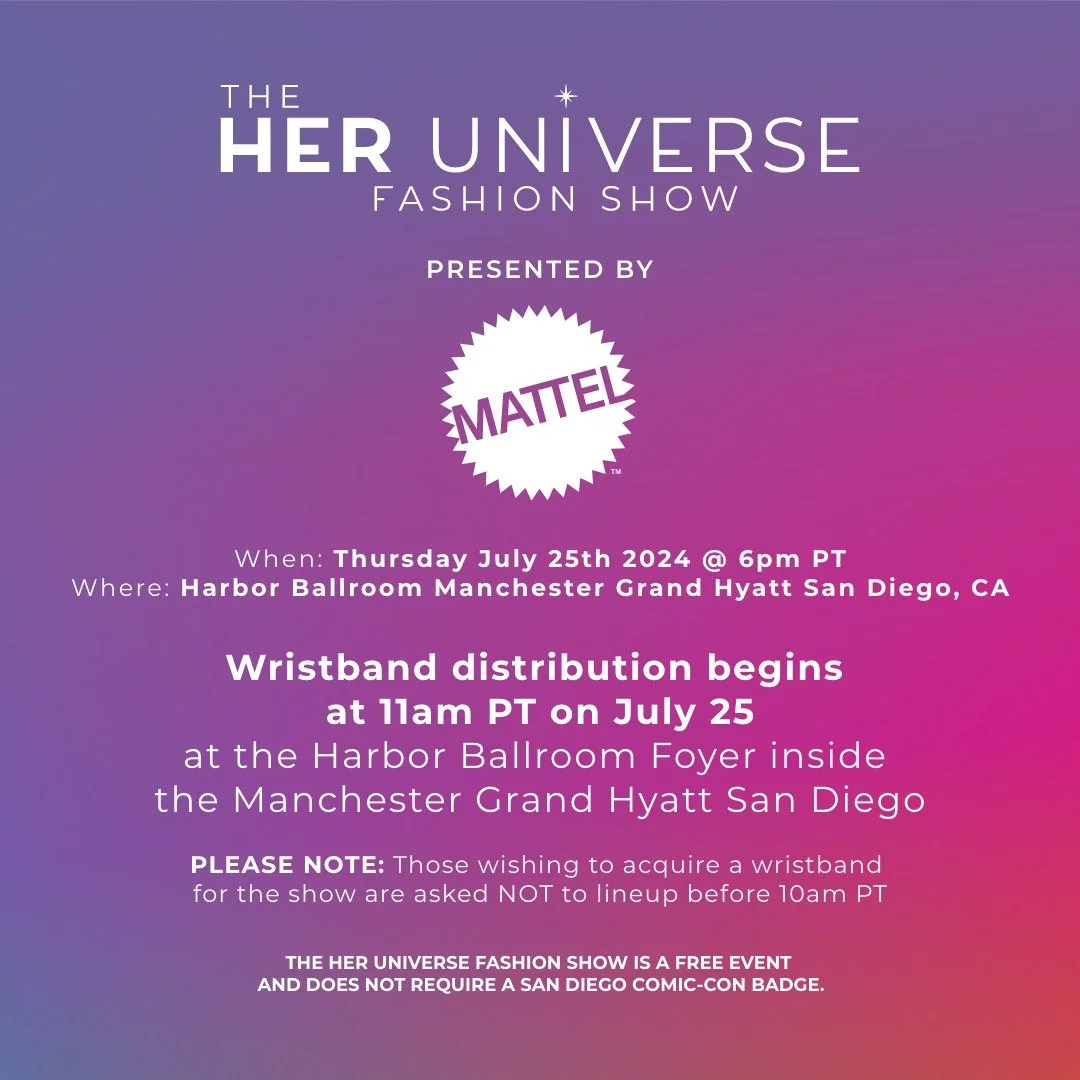
In 2014, Her Universe partnered with Hot Topic to launch the annual Her Universe Fashion Show at San Diego Comic-Con (SDCC). The event transformed how fandom fashion interacts with community couture, providing amateur and emerging designers with a professional runway platform.
SDCC HER UNIVERSE FASHION SHOW PROCESS
- Open Call Submission: Sketches & Concept Portfolios
- 20-25 Finalists Selected for Runway Competition
- Live SDCC Runway Event: Original Couture Cosplay
- Winner Selection:
- Judges' Winner Chosen
- Audience Winner Chosen
- Co-Design Retail Collection with Hot Topic/Her Universe
The fashion show operates as a competitive runway event where designers submit original geek couture garments. Between 20 and 25 finalists are selected to walk the runway in San Diego. The competition awards two primary prizes: a Judge’s Choice winner and an Audience Choice winner.
The reward extends beyond industry recognition: winners are hired to co-design a commercial fashion collection with Hot Topic and Her Universe, which is manufactured and distributed in physical stores and online worldwide. This initiative has launched professional careers in costume design, retail product development, and apparel manufacturing, turning fan enthusiasm into a viable career pathway.
Strategic Retail Expansion and Licensing Growth
What began as an online boutique focused on Star Wars rapidly expanded into a multi-franchise enterprise. As sales figures validated the business model, major entertainment studios actively sought licensing partnerships with the brand.
| YEAR | MILESTONE / EXPANSION EVENT |
|---|---|
| 2010 | Founded by Ashley Eckstein; launches with Star Wars license |
| 2012 | Expands licensing to include Syfy, Star Trek, and Doctor Who |
| 2014 | Launches 1st Her Universe Fashion Show at SDCC with Hot Topic |
| 2015 | Secures Marvel license; launches Avengers fashion collection |
| 2016 | Acquired by Hot Topic, Inc.; retains independent branding |
| 2018 | Debuts official Studio Ghibli and Disney Parks dress lines |
| 2021 | Expands brick-and-mortar footprint in major national retailers |
Corporate Acquisition and Distribution Scaling
In 2016, Her Universe was acquired by Hot Topic, Inc. This strategic acquisition provided Her Universe with massive supply chain infrastructure, international distribution networks, and enhanced purchasing power, while allowing Ashley Eckstein to retain creative leadership and brand authority.
The partnership enabled Her Universe merchandise to enter physical retail doors globally, including dedicated boutique sections within Hot Topic and BoxLunch stores, as well as high-profile collaborations with Disney Parks, Kohl's, and specialty department stores.
Franchise Diversification
Her Universe broadened its portfolio far beyond space opera, securing licenses across diverse pop-culture sectors:
- Sci-Fi & Fantasy: Star Trek, Doctor Who, The Lord of the Rings, Supernatural.
- Comic Books: Marvel Cinematic Universe, DC Comics (Wonder Woman, Batman).
- Animation & Anime: Studio Ghibli (Spirited Away, My Neighbor Totoro), Sailor Moon, Avatar: The Last Airbender.
- Classic Cinema & TV: Disney Classics, Pixar, Friends, Universal Monsters.
Comparing Fandom Fashion Eras
The systemic shift brought about by Her Universe is best understood by comparing industry standards before and after the company's emergence.
| Feature Category | Pre-Her Universe Era (Before 2010) | Modern Geek Fashion Era (Post-2010) |
|---|---|---|
| Primary Target Market | Adult Males (Ages 18–35) | Inclusive (All genders, ages, and size demographics) |
| Garment Types | Unisex t-shirts, basic hoodies, pajamas | Dresses, blazers, cardigans, overalls, outerwear, activewear |
| Sizing Standards | Men's S–2XL; limited junior cuts | True inclusive sizing (XS to 5X / 0 to 30+) |
| Design Approach | Center-chest square screen prints | All-over prints, embroidery, character-inspired silhouettes |
| Design Talent Origin | In-house corporate licensing teams | Fan community, independent couture designers, pop-culture fashion artists |
| Retail Distribution | Comic shops, novelty stores, mass-market bins | Dedicated boutiques, direct-to-consumer, theme park specialty shops |
| Price / Value Tier | Low-cost promotional merchandise | Mid-tier contemporary fashion and collectible apparel |
The Ripple Effect Across Mainstream Retail and Fandom Culture
Her Universe's success proved to the broader retail industry that pop culture and high fashion are not mutually exclusive. The brand's market validation triggered a cascade of changes across both independent and mainstream apparel markets.
HER UNIVERSE MARKET VALIDATION
- MAINSTREAM ADAPTATION: Target, Kohl's, and Torrid add dedicated fan fashion lines.
- INDIE FAN ECOSYSTEM: Cakeworthy, Loungefly, and BlackMilk expand boutique runs.
- HIGH-FASHION COLLABORATIONS: Coach x Disney, Balenciaga x Marvel, Gucci x Pokémon lines.
1. Mainstream Retail Adaptation
Seeing the revenue generated by Her Universe, major national retailers revamped their graphic apparel departments. Stores such as Target, Torrid, and Kohl's began contracting directly with major studios to offer dedicated, styled fandom collections for adult women, complete with fashion cuts, embroidery, and knitwear.
2. Growth of the Indie Fan Fashion Ecosystem
Her Universe paved the way for a flourishing ecosystem of independent fan-focused apparel and accessory brands. Companies like Cakeworthy, BlackMilk Clothing, Elhoffer Design, and Loungefly expanded rapidly in a market environment where consumers were now accustomed to spending premium prices on stylish, officially licensed merchandise.
3. High Fashion Cross-Pollination
The normalization of geek fashion reached the highest levels of luxury retail. Luxury fashion houses that previously avoided pop-culture IP began launching high-concept collaborations, such as Coach x Disney, Gucci x Pokémon, and Balenciaga x Marvel. Her Universe demonstrated that fan engagement is a lifelong identity marker rather than a transient childhood interest, convincing luxury brands to invest in pop-culture storytelling.
Frequently Asked Questions
What was the first license secured by Her Universe?
The first official license secured by Her Universe was Star Wars from Lucasfilm in 2010. Founder Ashley Eckstein pitched Lucasfilm directly to address the complete lack of officially licensed Star Wars apparel designed specifically for female fans.
How does the Her Universe Fashion Show at SDCC work?
The Her Universe Fashion Show is an annual couture design competition held during San Diego Comic-Con. Amateur and professional designers submit sketches for original, geek-culture runway looks. Selected finalists construct their garments and showcase them on the runway. Two winners (Judge's Choice and Audience Choice) are selected to design an official commercial fashion collection for Hot Topic and Her Universe.
What is "Everyday Cosplay" or "Disney Bounding"?
"Everyday Cosplay" refers to streetwear or contemporary fashion that incorporates color schemes, cuts, motifs, and details of a fictional character without being an actual costume. It allows fans to subtly represent their favorite characters in daily environments like school, work, or casual outings. It shares similarities with "Disney Bounding," which uses everyday clothing to mimic Disney characters within theme parks that restrict adult costumes.
Is Her Universe owned by Hot Topic?
Yes. Her Universe was acquired by Hot Topic, Inc. in 2016. However, Her Universe operates as a distinct sub-brand with its own design philosophy, and Ashley Eckstein continues to serve as the public face, creative consultant, and brand ambassador.
Does Her Universe offer clothing for men and non-binary fans?
Yes. While Her Universe was founded to address the lack of apparel for women, the brand has expanded its offerings to include unisex collections, men's sizing (often branded under "Our Universe"), and adaptive clothing designed for diverse body types and accessibility needs.
Actionable Recommendations for Fans and Emerging Designers
For consumers navigating fandom fashion and creators looking to enter the industry, these practical steps maximize engagement with the modern geek fashion ecosystem:
For Emerging Fashion Designers:
- Study the SDCC Submission Guidelines: Submissions for the annual Her Universe Fashion Show typically open in early spring. Prepare clean fashion illustrations, technical flats, and a clear story concept based on licensed pop-culture properties.
- Focus on Construction and Wearability: Runway judges evaluate both thematic creativity and practical garment construction. Ensure your submissions demonstrate strong tailoring, structural integrity, and potential for retail translation.
For Fandom Fashion Buyers:
- Check Size Charts Per Collection: Because Her Universe produces items across multiple cuts (Junior, Heritage, Plus, and Unisex/Our Universe), always consult the specific garment measurement chart rather than relying solely on letter sizing.
- Preserve Detailed Garments: Items featuring intricate embroidery, faux leather, or mesh panels should be washed on delicate cycles in cold water and air-dried to maintain print integrity and hardware finish over time.
Image Gallery