Medical, Legal, and Forensic Protocols in Kidnapping Cases Involving Lower-Limb Amputation
When a kidnapping victim undergoes unilateral or bilateral leg amputation, the clinical outcome is almost always the result of severe physical trauma, prolonged circulatory occlusion, unmanaged compartment syndrome, environmental freez...
When a kidnapping victim undergoes unilateral or bilateral leg amputation, the clinical outcome is almost always the result of severe physical trauma, prolonged circulatory occlusion, unmanaged compartment syndrome, environmental freezing, or untreated systemic infection during captivity. Leg loss dramatically escalates the severity of criminal charges to aggravated kidnapping, torture, or mayhem, while requiring specialized forensic evidence collection, multidisciplinary medical intervention, and lifetime rehabilitation planning.
Contents
Primary Pathological Causes of Limb Loss in Captivity
The amputation of a hostage’s lower extremities is rarely an immediate surgical choice; rather, it is usually an emergency intervention necessitated by catastrophic tissue failure occurring over hours, days, or weeks of confinement. Understanding the exact biological mechanism causing tissue death is essential for both medical recovery and legal prosecution.
- Restraint / Extreme Cold / Trauma
- Severe Ischemia & Compartment Pressure
- Tissue Necrosis & Myonecrosis
- Sepsis / Gangrene Threat to Life
- Emergency Surgical Amputation
1. Circulatory Occlusion and Ligature Ischemia
When captors use tight ligatures—such as zip ties, steel wire, heavy rope, or handcuffs—around the ankles or lower legs, they create a sustained tourniquet effect.
- Arterial Inflow vs. Venous Outflow: If ligatures are tight enough to restrict venous return while allowing partial arterial inflow, fluid accumulates rapidly in the distal extremity, causing massive edema. If arterial inflow is completely blocked, the limb suffers acute ischemia.
- Ischemia Timeline: Irreversible neuromuscular damage begins within 4 to 6 hours of complete ischemia. Beyond 12 hours, complete tissue necrosis (cell death) occurs, rendering the lower leg unsalvageable.
2. Crush Trauma and Traumatic Compartment Syndrome
Kidnappings involving structural collapse, blunt-force torture, or prolonged immobilisation in confined spaces (such as vehicle trunks or cramped storage units) often induce crush injuries.
- Pathophysiology: Physical compression damages skeletal muscle cells, causing them to leak fluid into closed fascial compartments in the calf or thigh.
- Pressure Accumulation: As intracompartmental pressure rises above capillary perfusion pressure, blood flow ceases entirely. If an emergency surgical incision (fasciotomy) is not performed within a narrow clinical window, the trapped muscle tissue dies (myonecrosis), requiring amputation to prevent systemic collapse.
3. Environmental Extremes and High-Grade Frostbite
Hostages detained in unheated environments, subterranean structures, or extreme winter climates without adequate clothing suffer severe localized hypothermia.
- Tissue Freezing: Prolonged exposure to sub-zero temperatures causes intracellular ice crystal formation and microvascular thrombosis (blood clotting inside tiny vessels).
- Demarcation and Dry Gangrene: Frostbitten tissue undergoes progressive blackening and mummification (dry gangrene). While dry gangrene can sometimes be allowed to auto-demarcate before elective amputation, any secondary bacterial contamination creates wet gangrene, necessitating urgent surgical removal.
4. Untreated Wounds, Sepsis, and Gas Gangrene
Physical injuries sustained during the abduction—such as gunshot wounds, shrapnel, deep lacerations, or open fractures—frequently go untreated during captivity.
- Bacterial Colonization: Exposed tissue exposed to unsanitary conditions becomes colonized by opportunistic pathogens, including Clostridium perfringens (the primary cause of gas gangrene) or antibiotic-resistant Staphylococcus aureus (MRSA).
- Systemic Threat: As infection spreads through the muscle fascia, toxic byproducts enter the bloodstream, leading to septic shock, multi-organ failure, and death. Surgical amputation above the site of infection is often the only life-saving intervention available upon rescue.
Forensic Investigation and Medical Evidentiary Standards
In legal proceedings surrounding kidnapping cases that lead to limb loss, forensic documentation establishes the direct causal link between the actions of the perpetrators and the ultimate surgical amputation. Medical examiners, forensic pathologists, and legal teams rely on standardized evidentiary protocols.
Documenting Ligature Marks and Ischemic Damage
Forensic pathologists examine the residual limb and amputated tissue for physical indicators of non-consensual restraint:
- Patterned Skin Impressions: Circular, deeply indented furrows around the ankles or lower calf provide physical evidence of ligature use.
- Histopathological Analysis: Microscopic evaluation of tissue samples taken near the amputation line reveals the timeline of injury. The presence of specific inflammatory markers (such as neutrophilic infiltration or macrophage activity) helps experts determine whether the restraint was applied hours or days prior to rescue.
- Toxicological and Metabolic Markers: Elevated serum creatine kinase (CK) levels and high concentrations of myoglobin in systemic blood samples confirm widespread muscle breakdown (rhabdomyolysis) consistent with prolonged restraint or crush trauma.
Differentiating Traumatic Detachment from Surgical Amputation
Prosecution strategies depend heavily on whether limb loss occurred at the hands of the captors or via medical personnel:
- Traumatic Amputation: Characterized by jagged, irregular skin margins, comminuted bone fractures, tissue avulsion, and heavy environmental debris within the wound bed. This indicates direct mutilation or traumatic severing by the perpetrators.
- Surgical Amputation: Features clean, incised skin flaps, smooth guillotine or saw cuts across the bone shaft, and meticulous vascular ligation. When performed by qualified surgeons post-rescue, forensic documentation must prove that the surgery was an unavoidable medical consequence of the injuries inflicted during captivity.
Legal Framework: Charges, Enhancements, and Liability
The physical loss of one or both legs fundamentally transforms the legal status of a kidnapping prosecution across state, federal, and international jurisdictions.
- Basic Kidnapping Offense
- Infliction of Great Bodily Harm / Maiming
- Escalation to Aggravated Kidnapping / Torture
- Mandatory Life Sentence / Maximum Penalties
Statutory Escalation to Aggravated Kidnapping
Under federal law (such as the U.S. Federal Kidnapping Act, 18 U.S.C. § 1201) and equivalent state criminal codes, simple kidnapping escalates to Aggravated Kidnapping when the offense results in severe bodily injury, permanent disability, or disfigurement.
- Great Bodily Injury (GBI): Bilateral or unilateral leg amputation legally constitutes permanent loss of bodily function and severe disfigurement.
- Sentencing Enhancements: In many jurisdictions, simple kidnapping carries sentence ranges of 10 to 25 years. However, if the victim suffers permanent physical disfigurement like limb loss, statutory guidelines frequently mandate life imprisonment without the possibility of parole.
Maiming, Mayhem, and Torture Statutes
In addition to kidnapping charges, prosecutors routinely file independent counts based on the physical destruction of limbs:
- Mayhem / Maiming Charges: Defined legally as intentionally and maliciously disfiguring, cutting, or disabling a person's limbs or body parts.
- Torture Statutes: Applicable when perpetrators intentionally inflict severe physical pain or prolonged suffering for coercive, punitive, or sadomasochistic purposes. Evidence of tight ligatures left in place specifically to cause tissue necrosis directly satisfies the mens rea (intent) requirements for criminal torture.
Civil Remedies and Crime Victim Compensation
Victims of violent kidnapping who survive leg amputation face millions of dollars in lifelong medical, adaptive, and psychological expenses.
- Civil Lawsuits: Victims may file civil actions against convicted perpetrators for intentional infliction of emotional distress, battery, and false imprisonment to seize assets or property.
- Crime Victims Compensation Funds: State-administered victim assistance programs offer financial support for immediate medical bills, housing modifications (such as wheelchair ramps and accessible bathroom installations), and short-term income replacement.
Medical Management, Amputation Levels, and Surgical Rehabilitation
The clinical care of a kidnapping victim requiring lower-limb amputation follows an intensive, multi-phase trajectory from emergency stabilization to long-term prosthetic fitting.
- Emergency Debridement / Sepsis Control
- Determination of Amputation Level (Transtibial vs. Transfemoral)
- Residual Limb Shaping & Wound Closure
- Prosthetic Fitting & Gait Retraining
1. Acute Stabilization and Sepsis Control
Upon rescue, the immediate priority is preserving life. Victims suffering from severe ischemia or compartment syndrome often experience reperfusion injury—a toxic surge of potassium, myoglobin, and metabolic acids into the bloodstream once blood flow is restored or when dead tissue is manipulated.
- Fluid Resuscitation: Aggressive intravenous fluids are administered to flush myoglobin through the kidneys, preventing acute renal failure.
- Surgical Debridement: Surgeons remove non-viable, necrotic tissue immediately. In severe infection cases, a temporary "guillotine amputation" is performed to leave the wound open for drainage before final surgical closure.
2. Determining the Surgical Level of Amputation
Surgeons aim to preserve as much functional limb length and joint mobility as possible while ensuring all diseased or necrotic tissue is removed.
| Amputation Level | Surgical Description | Functional Recovery Outlook | Prosthetic Energy Consumption |
|---|---|---|---|
| Transtibial (Below-Knee) | Removal of the lower leg, preserving the anatomical knee joint. | High probability of independent walking with a prosthetic limb. | 10% to 40% increase in metabolic energy expenditure compared to baseline. |
| Transfemoral (Above-Knee) | Removal of the lower leg, knee joint, and distal femur portion. | Requires advanced microprocessor knee joints; higher balance difficulty. | 65% to 100% increase in metabolic energy expenditure. |
| Hip Disarticulation | Complete removal of the entire lower extremity at the hip joint. | Requires specialized pelvic-basket prostheses; extensive gait training. | 200%+ increase in metabolic energy expenditure; frequent wheelchair reliance. |
3. Prosthetic Integration and Physical Therapy
Once the residual limb has healed and edema has subsided (typically 6 to 12 weeks post-surgery), prosthetic rehabilitation begins.
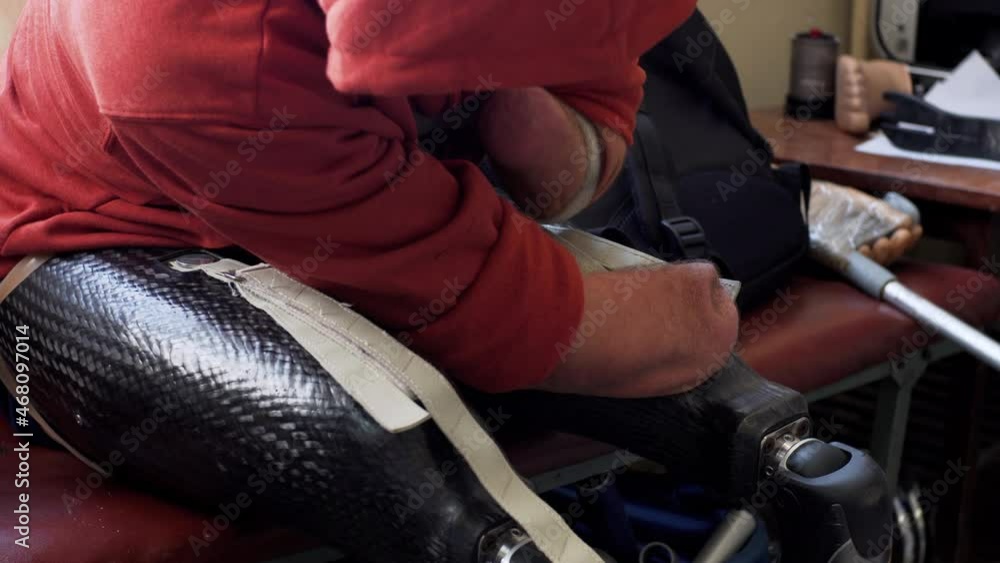
- Socket Design and Fitting: Modern prosthetic limbs use custom-molded carbon-fiber sockets lined with silicone or gel sleeves to minimize pressure points on scarred tissue.
- Microprocessor Knees and Ankles: For transfemoral amputees, computerized prosthetic joints automatically adjust hydraulic resistance based on walking speed and terrain, lowering the risk of falls.
- Gait Training: Physical therapists guide patients through progressive weight-bearing exercises, muscle strengthening, and balance retraining to restore mobility.
Psychological Trauma and Neurological Challenges
Surviving a kidnapping while sustaining life-altering physical disfigurement creates complex psychological and neurological complications that require long-term treatment.
- Pathophysiological Trauma (Amputation + Captivity)
- Phantom Limb Pain (PLP)
- Neuropathic Medications / Mirror Visual Therapy
- Complex PTSD (C-PTSD)
- Trauma-Informed CBT / EMDR Rehabilitation
- Phantom Limb Pain (PLP)
Phantom Limb Pain (PLP) and Central Sensitization
Over 80% of traumatic amputees experience phantom limb pain—painful sensations (burning, twisting, or sharp cramping) perceived as originating from the missing extremity.
- Neurological Mechanism: The brain's somatosensory cortex retains a mapped neural representation of the lost limb. Deafferentation (loss of sensory input) causes abnormal signal reorganization within the central nervous system.
- Treatment Modalities: Managed using neuropathic medications (such as gabapentin or pregabalin), mirror box therapy (which visually trick the brain into resetting limb perceptions), and targeted muscle reinnervation (TMR) surgery, where severed nerves are reattached to nearby motor nerves.
Complex Post-Traumatic Stress Disorder (C-PTSD)
Hostage survivors face a dual burden: processing the psychological terror of captive isolation alongside the traumatic altered body image from surgical amputation.
- Symptom Profile: Flashbacks of the abduction, hypervigilance, severe body dysmorphia, depressive disorders, and profound grief related to lost physical autonomy.
- Therapeutic Interventions: Trauma-focused Cognitive Behavioral Therapy (CBT), Prolonged Exposure therapy, and Eye Movement Desensitization and Reprocessing (EMDR) help survivors process traumatic memories while adapting to their physical reality.
Actionable Guidance for Legal Teams, Families, and Care Providers
Navigating the aftermath of a violent abduction that results in severe physical impairment requires coordinated actions across multiple disciplines.
For Legal Representatives and Prosecutors
- Preserve Medical Evidence Early: Subpoena all emergency medical services (EMS) records, operating room logs, initial trauma triage notes, and histopathological tissue slides immediately following rescue.
- Engage Forensic Experts: Retain qualified forensic pathologists and orthopedic trauma specialists to testify on the direct causal link between captivity conditions (e.g., ligature pressure, cold exposure) and surgical amputation.
- Calculate Lifetime Economic Damages: Work with certified life care planners and vocational experts to project the 30- to 50-year costs of prosthetic updates, physical therapy, home modifications, and lost earning capacity.
For Families and Primary Caregivers
- Coordinate with Victim Advocacy Services: Contact local law enforcement crime victim liaisons to access state funding for immediate medical expenses and mental health counseling.
- Secure Accessible Housing Modifications: Consult an occupational therapist prior to hospital discharge to evaluate home accessibility (widening doorways, installing bathroom grab bars, and arranging ramp access).
- Establish Integrated Psychological Care: Ensure the survivor is paired with mental health professionals who specialize simultaneously in hostage trauma recovery and physical disability adaptation.
Frequently Asked Questions
How does leg amputation alter the statutory penalties for a kidnapping charge?
Leg amputation is legally classified as great bodily injury, maiming, or permanent disfigurement. In most legal jurisdictions, this automatically elevates simple kidnapping to aggravated kidnapping. Aggravated kidnapping carries significantly harsher statutory minimum sentences, frequently escalating penalties from a multi-year prison term to mandatory life imprisonment without parole.
What causes compartment syndrome in restraint victims?
Compartment syndrome occurs when elevated pressure within a closed muscle space cuts off blood circulation. In kidnapping victims, this is caused by prolonged crush injuries, tight physical restraints (such as ropes or zip ties), or immobility in cramped spaces. The trapped muscle tissue quickly dies without an emergency surgical fasciotomy, making limb amputation necessary to prevent fatal systemic complications.
Are lifetime prosthetic expenses covered by Crime Victim Compensation funds?
State and national Crime Victim Compensation programs provide financial assistance for immediate emergency care, housing adjustments, and initial counseling. However, these funds usually have statutory caps (often between $25,000 and $75,000). Because lifetime prosthetic care and replacements cost hundreds of thousands of dollars, legal teams typically pursue civil judgments, restitution orders, or specialized disability assistance programs to cover long-term costs.
What forensic evidence proves that limb loss resulted directly from captivity?
Forensic evidence includes patterned skin indents corresponding to ligatures, tissue histopathology confirming the age of ischemic necrosis, blood chemistry showing elevated creatine kinase from muscle breakdown, and medical records documenting the absence of pre-existing peripheral vascular disease. Together, these findings establish that tissue death occurred precisely within the timeframe of abduction.
How is phantom limb pain managed in violent trauma survivors?
Phantom limb pain is treated using a combination of pharmacological and non-pharmacological therapies. Neuropathic pain medications balance altered nerve signals, while mirror visual feedback tricks the brain's sensory cortex into relaxing cramped phantom muscles. In severe cases, surgical interventions such as targeted muscle reinnervation (TMR) re-route severed nerves to reduce painful neuroma formation.
Image Gallery