How to Pitch for Funding: A Comprehensive Guide to Securing Capital
Pitching for funding is the structured process of presenting a business opportunity to potential investors to secure capital in exchange for equity, debt repayment, or other contractual agreements. Success requires a synthesis of finan...
Pitching for funding is the structured process of presenting a business opportunity to potential investors to secure capital in exchange for equity, debt repayment, or other contractual agreements. Success requires a synthesis of financial rigor, market analysis, and persuasive storytelling to convince stakeholders that your enterprise provides a compelling return on investment while mitigating operational and market risks.
Contents
Understanding the Funding Landscape
Before you begin your pitch, you must identify the specific type of capital your business requires. Funding is not a monolithic activity; it spans a spectrum of stages, from early-stage angel investment to institutional venture capital and debt financing. Understanding your stage dictates the expectations of the audience.
Angel investors often prioritize the founder’s vision, background, and the potential for disruptive growth in a niche market. Conversely, venture capital firms (VCs) in 2026 operate with stricter mandates, requiring comprehensive due diligence, scalable unit economics, and a clear path toward liquidity—such as an acquisition or an initial public offering (IPO). Debt financing, provided by banks or specialized lenders, focuses primarily on cash flow predictability and collateral, as these institutions are concerned with your ability to make consistent interest payments rather than exponential equity growth.
The Essential Components of a Pitch Deck
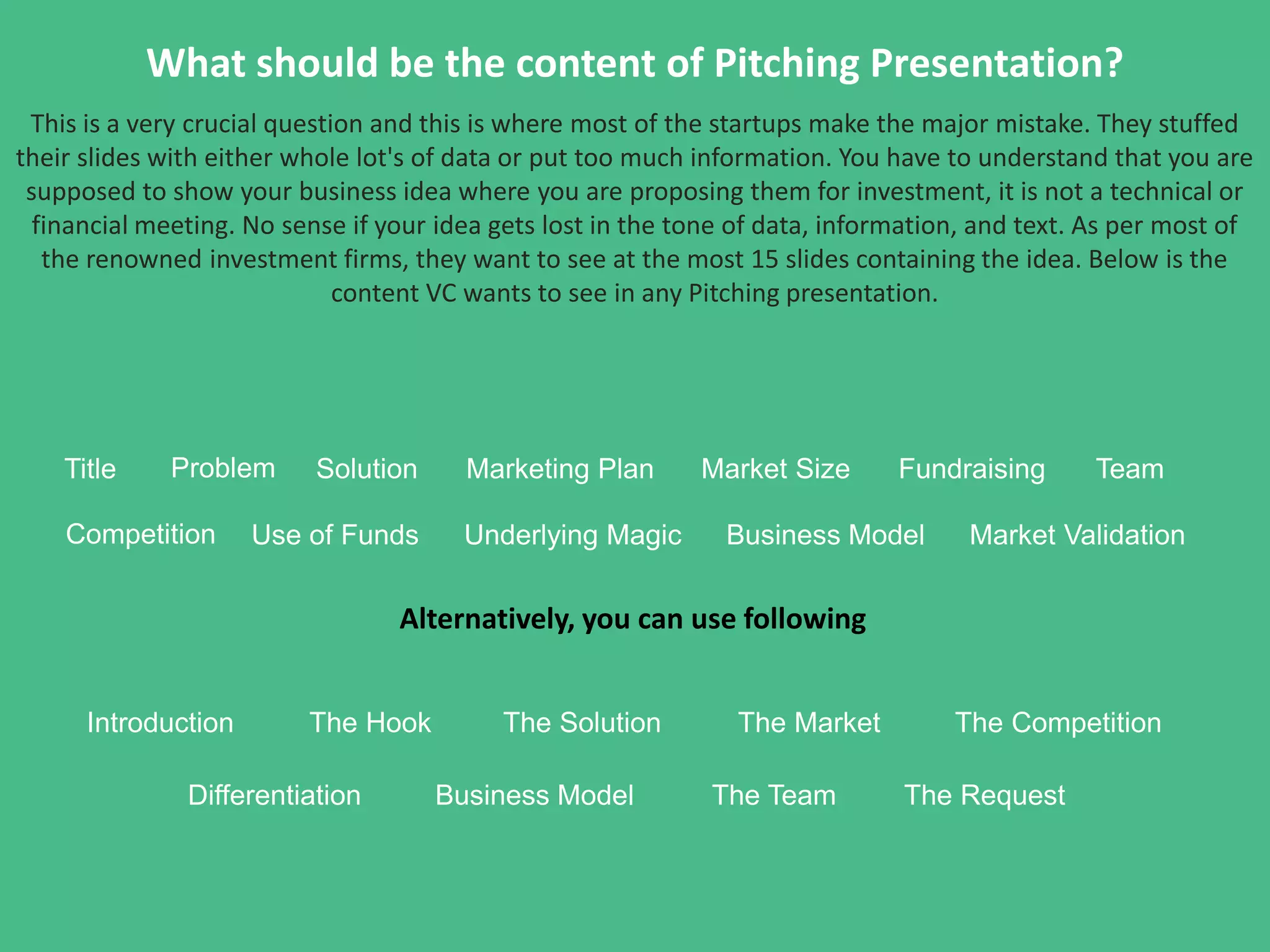
Your pitch deck is the primary document used to initiate discussions. While brevity is vital, the content must be substantive enough to survive initial scrutiny. Standard industry practice favors a 10–15 slide format that logically flows from the problem to the requested capital and expected results.
- The Problem Statement: Clearly define the pain point you are solving. This must be a specific, verifiable problem, not a vague inconvenience.
- The Solution: Present your product or service as the primary vehicle for solving that problem. Focus on the value proposition rather than just technical specifications.
- Market Opportunity: Quantify the Total Addressable Market (TAM), Serviceable Addressable Market (SAM), and Serviceable Obtainable Market (SOM). Investors need to know that the market is large enough to support a significant return on their investment.
- Traction: Provide verified metrics. This includes revenue, user growth, customer acquisition costs (CAC), and retention rates. Traction is the strongest evidence that your business model works.
- Business Model: Explain exactly how you make money. Detail your pricing tiers, margins, and the lifetime value of a customer (LTV).
- Competitive Analysis: Acknowledge competitors and clearly explain your "moat"—what prevents larger players from easily copying your model.
- The Team: Highlight why your specific team is uniquely qualified to execute the plan. Include relevant experience, previous exits, or domain-specific expertise.
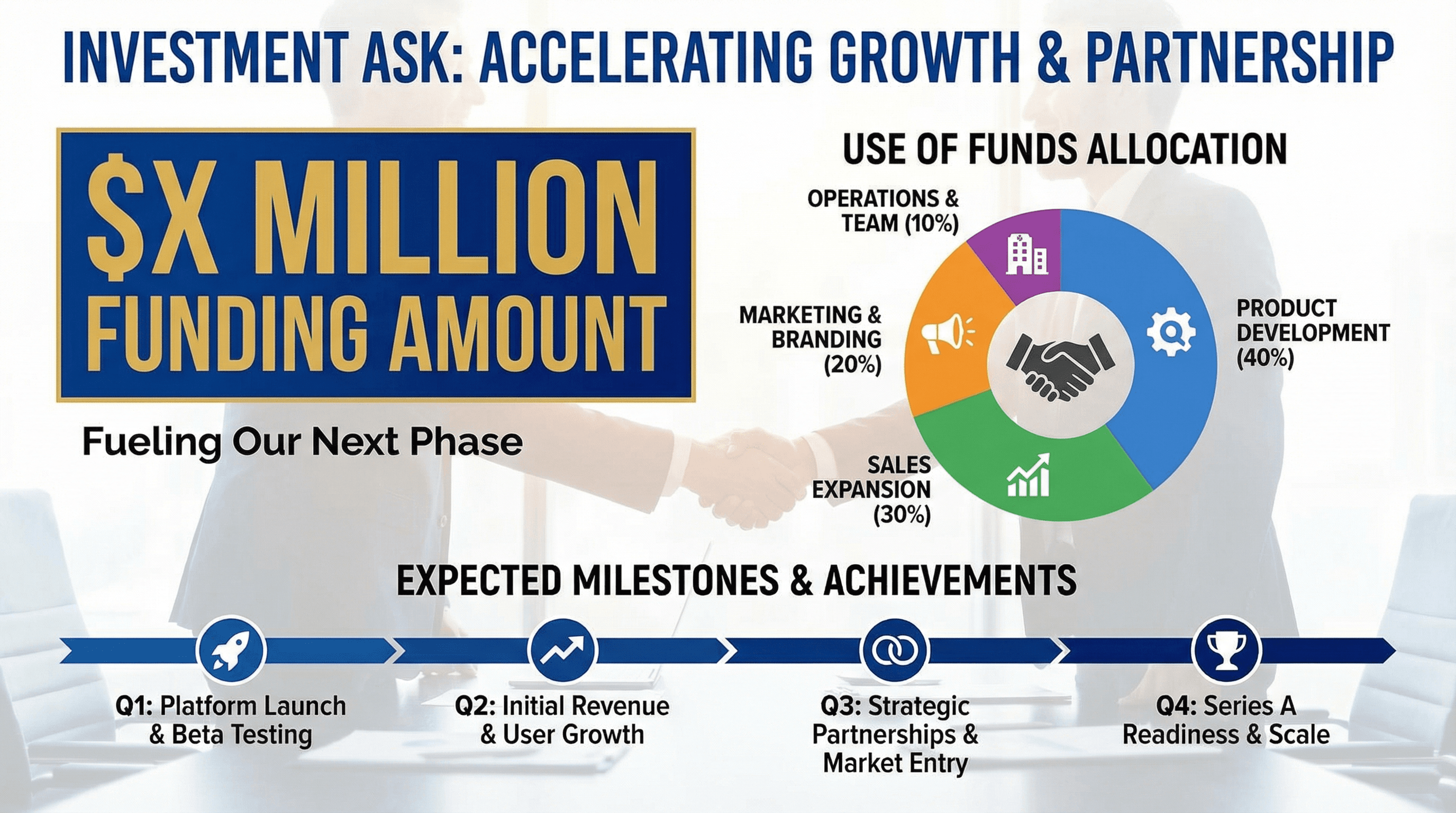
- Financial Projections and The Ask: Provide a realistic 3-to-5-year forecast. Be explicit about how much capital you are raising and exactly how those funds will be deployed (e.g., product development, marketing spend, or hiring).
Preparing for Due Diligence
The pitch is merely the first step. If investors express interest, they will move into the due diligence phase, where they verify the claims made in your deck. Failure to prepare for this stage often causes deals to collapse during the final signing process.
Maintain a "Data Room"—a secure, cloud-based repository containing your legal documents, incorporation papers, cap table, tax filings, and material contracts. Having these items organized demonstrates professionalism and readiness. In 2026, many investors expect this data to be accessible via encrypted portals, with access restricted until the prospective investor has signed a non-disclosure agreement (NDA) or a letter of intent.
Comparing Funding Options
| Funding Source | Primary Requirement | Typical Control Impact | Risk Profile |
|---|---|---|---|
| Angel Investors | Founder credibility | Low to Moderate | High |
| Venture Capital | Scalable unit economics | High (Governance rights) | Moderate |
| Bank Debt | Cash flow & Collateral | None (Loan covenants) | Low |
| Grants | Alignment with mandate | None | N/A |
Navigating Common Pitfalls
Many founders fail to secure funding due to avoidable errors during the pitching process. The most common pitfall is a lack of financial literacy. If you cannot explain your "burn rate"—the rate at which your company spends its venture capital to finance overhead before generating positive cash flow—investors will assume you lack the discipline to manage their capital.
Another significant error is failing to customize the pitch. Sending an identical pitch deck to a retail-focused VC and a deep-tech angel investor will almost certainly result in rejection. Research the investor’s portfolio, their specific investment thesis, and their typical ticket size before reaching out.
Furthermore, ensure that your valuation is defensible. If you are a pre-revenue startup, grounding your valuation in comparable company analyses rather than hypothetical "future unicorn" status is essential for maintaining credibility.
Regulatory and Legal Considerations
Financial solicitation is heavily regulated. In the United States, for example, offerings of securities must comply with the Securities Act of 1933, or qualify for exemptions under Regulation D. While private placements with "accredited investors" are common, you must ensure you meet all jurisdictional requirements.
Engage legal counsel early in the process to review your term sheet. A term sheet is a non-binding agreement that outlines the basic terms and conditions of an investment. It covers crucial elements such as liquidation preferences, anti-dilution clauses, and board representation. Never sign a term sheet without professional legal guidance, as these documents can have long-term impacts on your ownership and decision-making authority.
Note: This information is for educational purposes and does not constitute legal or financial advice. Always consult with qualified attorneys and financial advisors regarding your specific business structure and jurisdictional obligations.
Frequently Asked Questions
How long should my pitch deck be? Keep your pitch deck between 10 and 15 slides. Investors spend a limited amount of time reviewing initial decks, so prioritize clarity and high-impact data over lengthy narratives.
What is the difference between a pre-seed and a Series A round? Pre-seed funding is typically used to develop a prototype or test an initial concept. Series A funding is intended for companies that have already demonstrated product-market fit and require capital to scale their operations and customer base.
Should I use an NDA when pitching? Most professional investors will not sign an NDA for an initial meeting. They review thousands of pitches and cannot risk the legal liability of signing non-disclosure agreements for every conversation. Focus on protecting your "secret sauce" by disclosing only what is necessary to generate interest.
How do I find the right investors for my business? Use platforms like Crunchbase or LinkedIn to search for investors who have previously invested in your specific industry or stage of growth. Cold outreach is more effective when you can demonstrate why your company fits their specific thesis.
What happens if I receive a term sheet? A term sheet serves as the blueprint for the investment agreement. Once you receive one, you should perform a detailed comparison of the proposed equity dilution against your long-term goals. Consult with your legal team to ensure that the governance and control provisions are standard and not overly restrictive.
Recommended Next Steps
Start by building a "minimum viable deck" that clearly defines your value proposition. Once completed, solicit feedback from mentors or advisors who have successfully raised capital. Refine your narrative, organize your data room, and initiate a targeted outreach campaign to 10–15 investors who align with your industry. Approach these meetings as a discovery process—every "no" is an opportunity to refine your pitch based on specific investor feedback.
Image Gallery