Comprehensive Guide to Los Angeles County Property Tax Records in 2026
Los Angeles County property tax records are public documents managed by the Office of the Assessor and the Treasurer and Tax Collector. To access these records in 2026, taxpayers use the Assessor’s Identification Number (AIN) via the o...
Los Angeles County property tax records are public documents managed by the Office of the Assessor and the Treasurer and Tax Collector. To access these records in 2026, taxpayers use the Assessor’s Identification Number (AIN) via the official portal to view valuation history, payment status, and assessment details. These records provide transparency regarding the 1% base tax rate and additional voter-approved indebtedness.
Contents
The Infrastructure of Property Taxation in Los Angeles County
Understanding Los Angeles County property tax records requires a clear distinction between the three primary government entities that manage the lifecycle of a property tax dollar. While the public often views "the county" as a single monolith, the records are generated and maintained through a collaborative workflow involving the Assessor, the Auditor-Controller, and the Treasurer and Tax Collector (TTC).
The Los Angeles County Assessor is responsible for discovering all taxable property within the county and determining its fair market value. In 2026, the Assessor’s roll includes over 2.5 million line items, ranging from single-family homes to massive commercial complexes and refineries. The records generated by this office focus on the "Assessed Value," which, under California's Proposition 13, is generally tied to the purchase price plus an annual inflation factor not exceeding 2%.
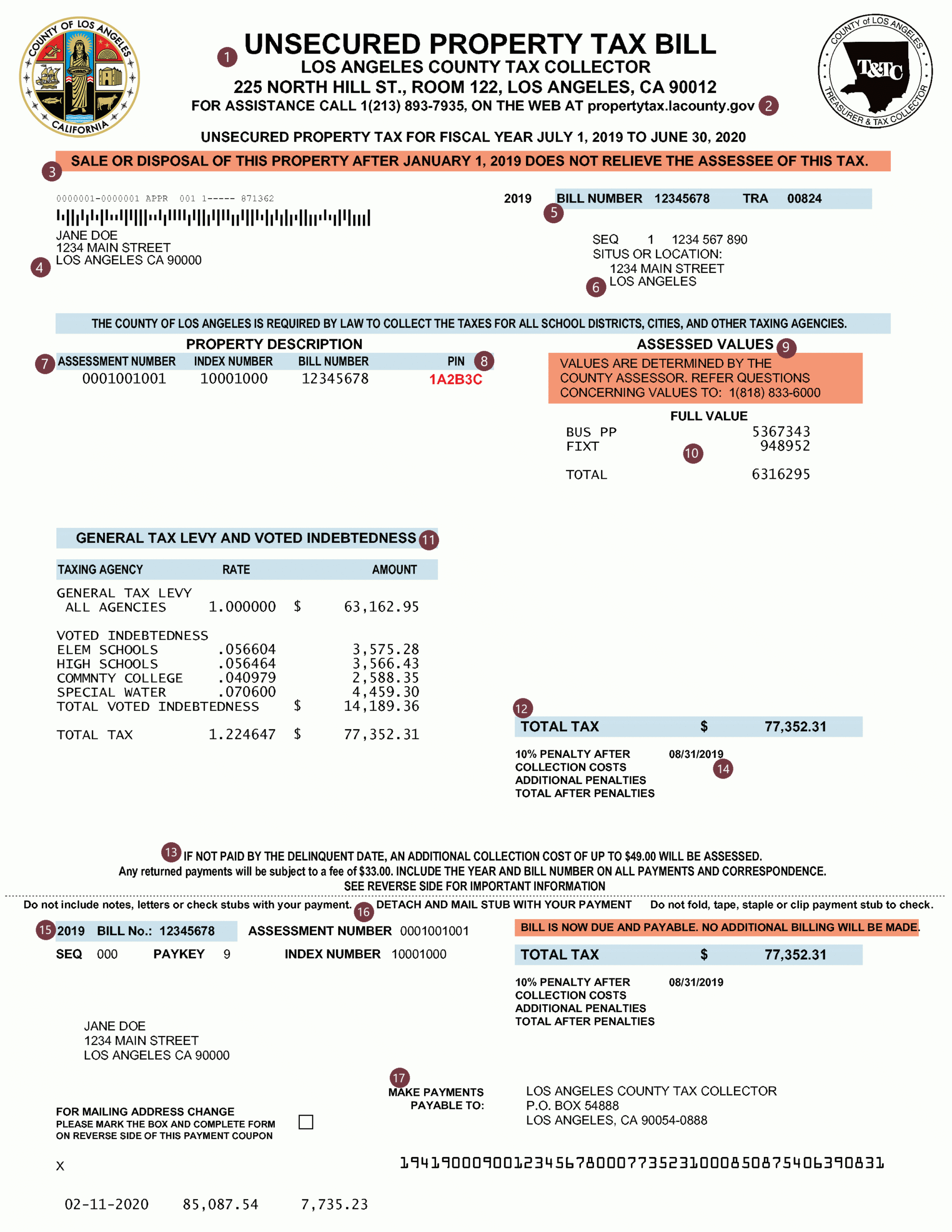
The Auditor-Controller takes the values established by the Assessor and applies the appropriate tax rates. This includes the constitutional 1% levy and any additional "direct assessments" or "special assessments" voted on by local residents, such as school bonds or library funds. Finally, the Treasurer and Tax Collector (TTC) acts as the county’s bank, issuing the bills, collecting payments, and maintaining the "Paid/Unpaid" status in the public record. When searching for records, you are essentially looking at a database that synthesizes data from all three departments.
How to Locate and Search Los Angeles County Property Tax Records
To access specific records in 2026, you must navigate the digital portals provided by the county. While the physical offices at the Kenneth Hahn Hall of Administration remain open, the vast majority of inquiries are handled through the Property Assessment Information System (PAIS).
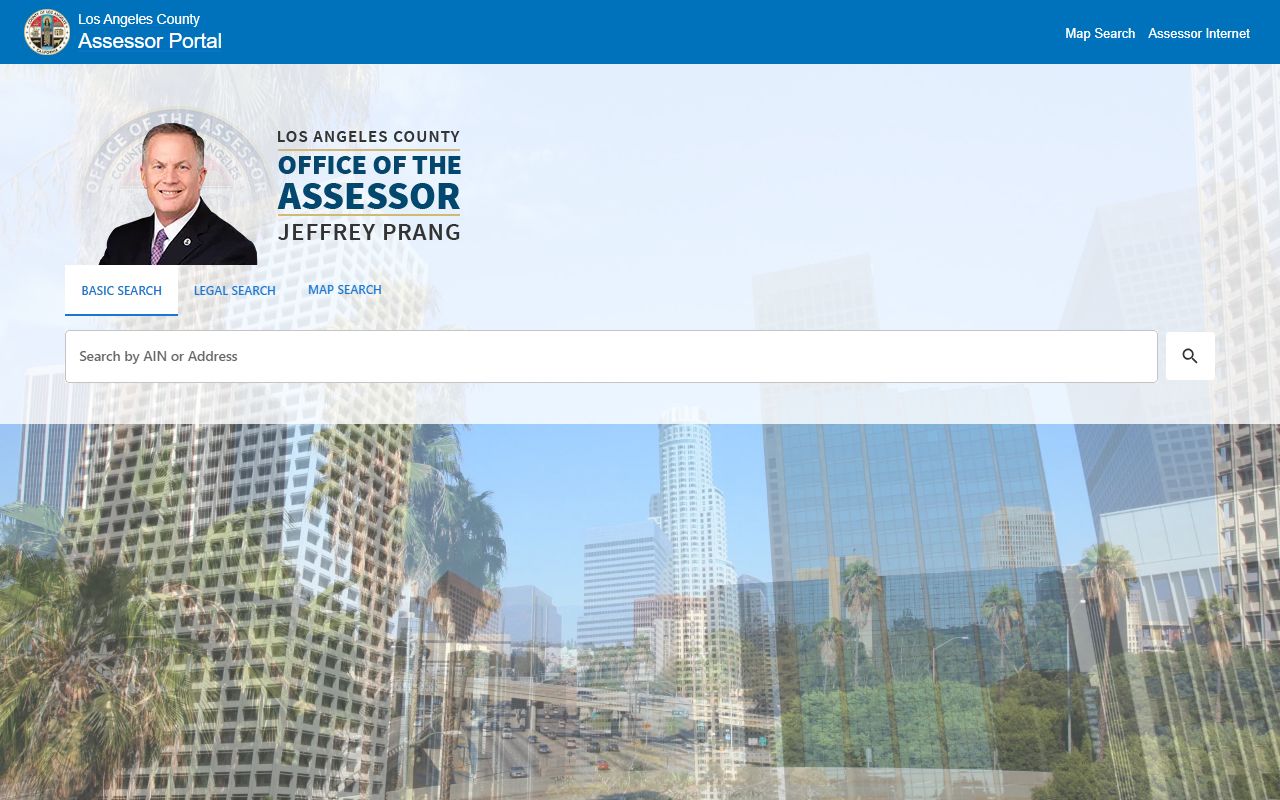
Searching by Assessor’s Identification Number (AIN)
The AIN is a 10-digit number used to uniquely identify every parcel of land in Los Angeles County. It is formatted as a three-part sequence: the Map Book (4 digits), the Page (3 digits), and the Parcel (3 digits). Searching by AIN is the most accurate method because it eliminates confusion between similar street names or sub-units within a large development.
Searching by Property Address
If you do not have the AIN, you can search using the physical situs address. The 2026 search interface is highly sensitive to formatting; for instance, searching for "123 North Main Street" may yield different results than "123 N Main St." It is generally recommended to enter only the house number and the street name, selecting the correct suffix from a generated list.
Interpreting the Public Record Display
Once a record is located, the public interface typically displays several key tabs of information:
- Property Overview: Displays the legal description, year built, square footage, and the number of bedrooms/bathrooms.
- Assessment History: Shows the trend of assessed values over the last five to ten years, highlighting any changes due to new construction or transfers of ownership.
- Current Tax Status: Indicates whether the 2025-2026 or 2026-2027 installments have been paid, the amount due, and any late penalties accrued.
Critical Tax Deadlines and the 2026 Fiscal Calendar
Los Angeles County operates on a fiscal year that begins on July 1 and ends on June 30 of the following year. Property tax records reflect this cycle through the issuance of "Secured" tax bills. For the 2026 calendar year, taxpayers must be aware of two distinct fiscal periods.
The First Installment Deadlines The first installment for the 2026-2027 fiscal year becomes due on November 1, 2026. This payment is considered delinquent if not received or postmarked by December 10, 2026. A 10% penalty is automatically applied to any records showing an unpaid status after 5:00 PM on this date.
The Second Installment Deadlines For the 2025-2026 fiscal year (the cycle currently concluding in the first half of 2026), the second installment is due February 1, 2026. The delinquency date is April 10, 2026. Failure to pay by this deadline results in a 10% penalty plus a $10 administrative cost.
The "No Darn Fooling Around" mnemonic (November, December, February, April) remains the gold standard for remembering these critical dates in the LA County tax record system.
Comparison of Tax Bill Types in Los Angeles County
Not all property tax records are the same. Depending on recent activity associated with a property, a taxpayer may find multiple types of records in the system simultaneously.
| Bill Type | Triggering Event | Purpose of Record |
|---|---|---|
| Annual Secured Bill | Standard Ownership | The primary bill sent every October covering the 1% tax plus voter-approved debt. |
| Supplemental Bill | Change of Ownership / New Construction | A "catch-up" bill reflecting the difference between the old assessed value and the new value. |
| Unsecured Bill | Business Property / Boats / Aircraft | Taxes on property that is not "secured" by real estate (land/buildings). |
| Escape Assessment | Discovery of Under-assessment | A record issued when the Assessor finds property that should have been taxed in previous years. |
| Redemption Bill | Prior Year Delinquency | A record used to pay off taxes that have been delinquent for more than one year. |
The Role of Supplemental Tax Records
A common point of confusion in Los Angeles County property tax records is the "Supplemental Tax Bill." When a property is sold or a major renovation is completed, the Assessor revalues the property as of the date of the event. However, because the annual tax roll is only "closed" once a year, the regular bill often reflects the old value.
The supplemental record accounts for the tax increase for the remaining months of the fiscal year. These records are independent of the annual bill. Crucially, in 2026, many mortgage companies and impound accounts do not automatically receive or pay supplemental bills. It is the responsibility of the property owner to monitor the tax records and ensure these supplemental installments are cleared to avoid liens.
Proposition 13 and Assessment Limits in 2026
Los Angeles County property records are heavily governed by California’s Proposition 13 (passed in 1978). This constitutional amendment dictates that the assessed value of a property can only increase by a maximum of 2% per year, based on the California Consumer Price Index (CCPI), unless there is a change in ownership or new construction.
In the 2026 landscape, this creates significant "tax equity" gaps. A homeowner who has owned their property in Santa Monica since 1995 might have an assessed value of $400,000, while their next-door neighbor who purchased an identical home in 2025 might be assessed at $2,500,000. When reviewing public records for real estate comps, it is vital to distinguish between the "Market Value" and the "Assessed Value," as they are rarely the same in LA County.
How to Dispute an Assessed Value
If a property owner believes the value reflected in the Los Angeles County property tax records is higher than the actual market value of their home as of January 1, 2026, they have the right to file an assessment appeal.
- Informal Review: Between January and April, owners can request a "Decline-in-Value" (Proposition 8) review. The Assessor’s staff will manually check if the market value has dipped below the assessed value.
- Formal Appeal: If the informal review is denied, owners must file a formal Application for Changed Assessment with the Assessment Appeals Board (AAB).
- Filing Window: The formal filing period for the 2026-2027 fiscal year typically runs from July 2 through November 30.
- Evidence Submission: The burden of proof lies with the taxpayer. You must provide records of comparable sales that occurred near the lien date (January 1) to justify a lower valuation in the official record.
Understanding Direct Assessments and Special Taxes
When viewing a Los Angeles County tax record, the total amount due is rarely exactly 1% of the assessed value. The "Direct Assessments" section of the record lists various charges that are not based on property value but on specific services or benefits provided to the land. Common examples found in 2026 records include:
- LA County Trapping/Vector Control: Fees for mosquito and pest abatement.
- Safe Clean Water Program (Measure W): A parcel tax based on impermeable surface area to fund stormwater projects.
- Mello-Roos Districts: Often found in newer developments like those in Santa Clarita or the Antelope Valley, these are special districts created to fund infrastructure like roads and schools.
- Landscape and Lighting Districts: Fees for maintaining local medians and streetlights.
These assessments are non-negotiable and are collected by the TTC on behalf of the specific agencies. If you have questions about a specific direct assessment, you must contact the agency listed on the tax bill, as the Assessor does not control these figures.
Strategic Tips for Real Estate Professionals and Homeowners
Managing property tax records in a high-value market like Los Angeles requires proactive monitoring. Because the county handles such a high volume of transactions, errors in ownership records or mailing addresses can occur.
- Verify Mailing Addresses: Ensure the "Taxpayer of Record" address is current. If you move, you must notify the Assessor in writing; the Post Office does not automatically update tax record addresses.
- Check for Exemptions: The Homeowners’ Exemption can save you approximately $70 per year by reducing your assessed value by $7,000. Check your records to ensure this is applied to your primary residence.
- Monitor for Fraud: Use the LA County Registrar-Recorder/County Clerk’s "Property Owner e-Notification" service. This alert system notifies you whenever a document is recorded against your property, helping prevent deed fraud.
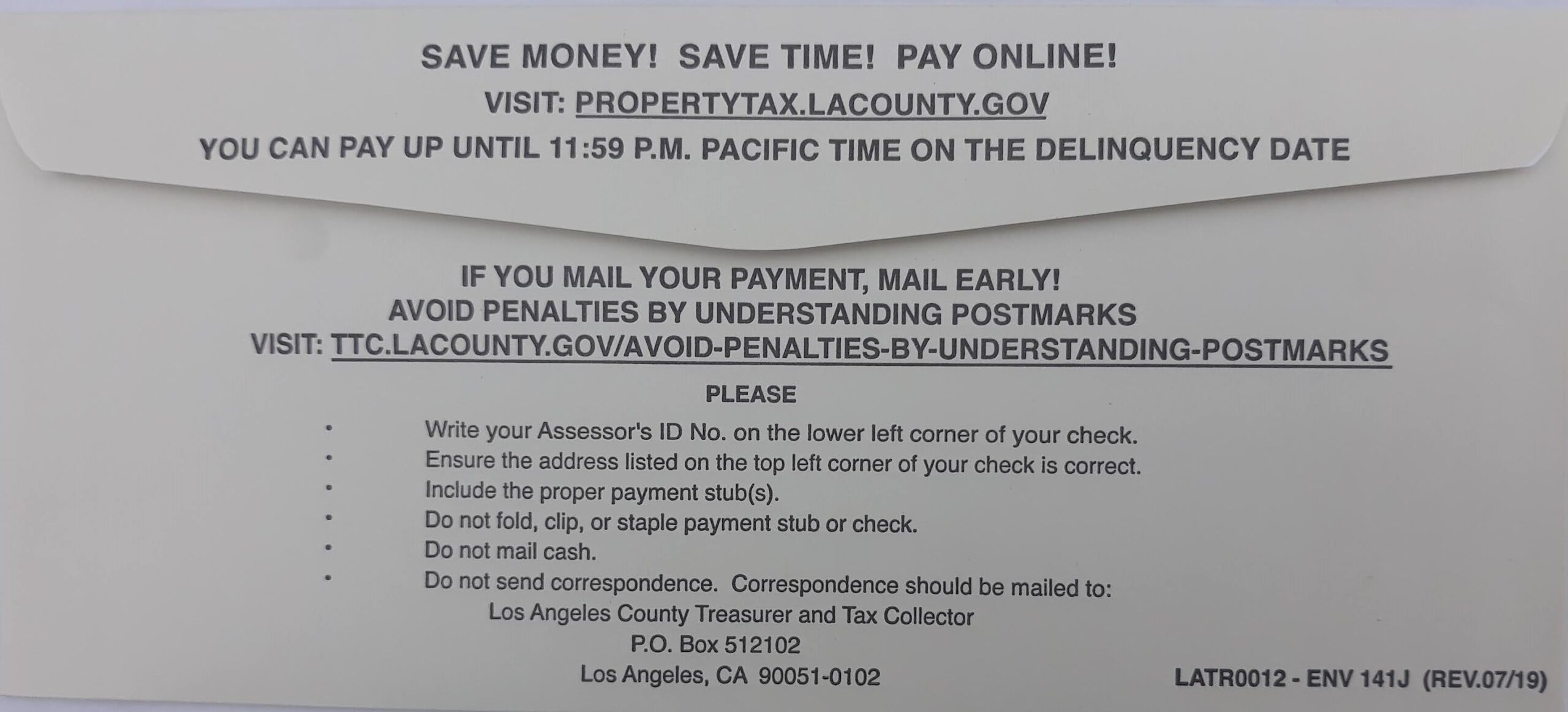
- Pay Online Safely: In 2026, the TTC portal allows for E-Check payments (usually with a low or zero convenience fee) and credit card payments (which carry a percentage-based service fee). Always print a confirmation for your records.
Frequently Asked Questions
How can I get a copy of my 2026 property tax bill if I lost it? You can download a duplicate copy of your tax bill through the Los Angeles County Treasurer and Tax Collector’s website by entering your 10-digit AIN. The system provides a PDF version of the original bill mailed in October, which is acceptable for income tax purposes and mortgage verification.
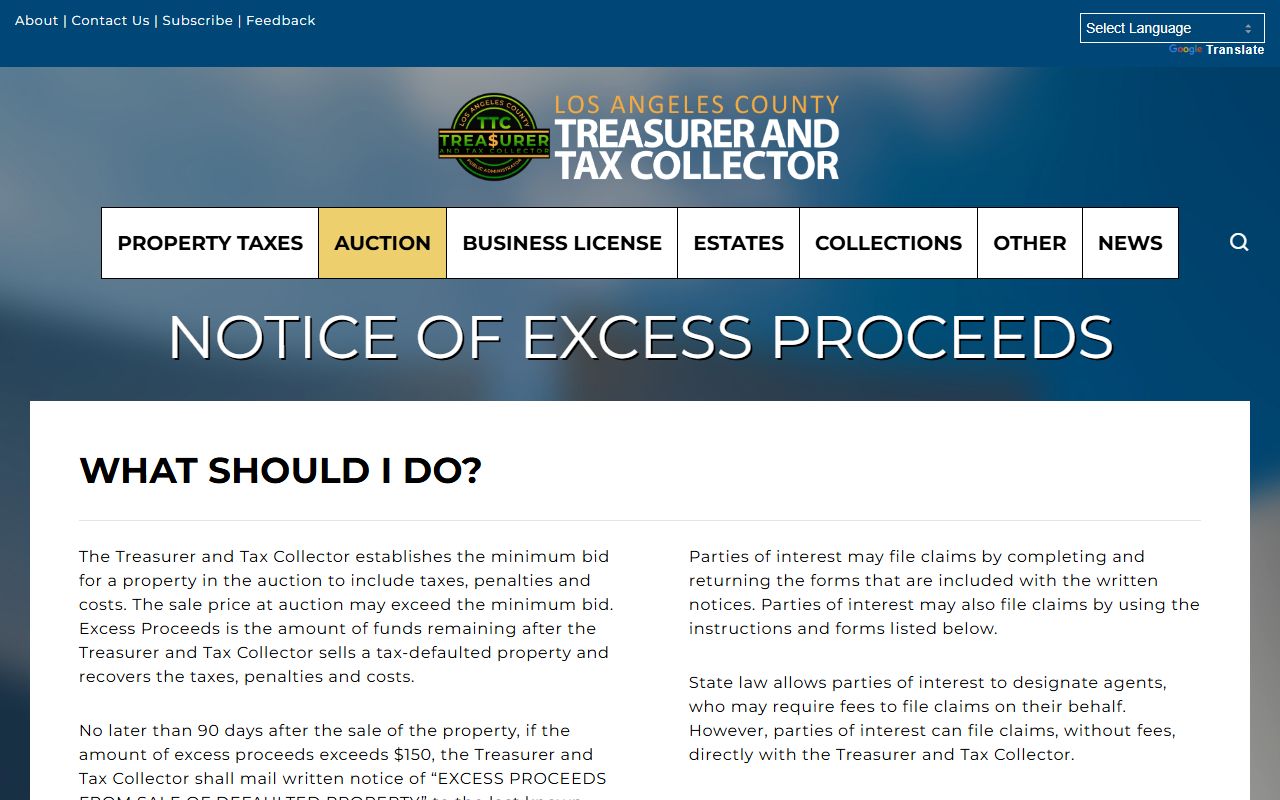
What happens if I don't pay my property taxes in Los Angeles County? If taxes remain unpaid after the April 10 deadline, a 10% penalty and administrative fees are added. If the taxes remain delinquent at the end of the fiscal year (June 30), the property is "declared tax-defaulted." This starts a five-year clock; if the taxes are not redeemed within five years, the Treasurer and Tax Collector has the power to sell the property at a public auction.
Can I pay my Los Angeles property taxes in monthly installments? The Los Angeles County TTC does not offer a monthly payment plan for current-year taxes. Taxes must be paid in two installments (December and April). However, if you are paying "Redemption" taxes (for prior years), you may be eligible for a Five-Year Installment Plan if you meet certain criteria.
Why did my property tax record show a huge increase after I bought my house? Under California law, a change in ownership triggers a reassessment of the property at its current market value (usually the purchase price). If the previous owner had lived there for a long time, their assessed value was likely very low due to Proposition 13. Your new record reflects the current market reality, not the previous owner’s tax base.
Are property tax records confidential in Los Angeles? No, property tax records are public information under the California Public Records Act. Anyone can look up the assessed value, tax amount, and payment status of any property in the county. However, certain personal information, such as homeowner phone numbers or social security numbers, is not included in the public-facing tax portal.
What is the "Lien Date" in Los Angeles County? The lien date is January 1 of each year. This is the date when taxes for the upcoming fiscal year become a lien on the property. The value of the property is "set" as of its condition on this date for the following October's bill.
Final Strategic Considerations for Taxpayers
Maintaining an accurate understanding of Los Angeles County property tax records is essential for financial planning and legal compliance in 2026. Whether you are a homeowner, a real estate investor, or a legal professional, the transparency provided by the Assessor’s digital tools allows for deep verification of a property’s fiscal standing. Always remember that the AIN is your primary key to the system, and staying ahead of the December and April deadlines is the only way to avoid the significant penalties mandated by state law. By regularly auditing your own records and ensuring all applicable exemptions are filed, you can manage your property tax liability with precision and authority.
Image Gallery