The Order of Disney Parks Opening: A Comprehensive Chronological Guide
Understanding the order of Disney parks opening provides valuable context into how the Walt Disney Company scaled its physical entertainment empire from a single nostalgic local attraction into a global network of multi-day resort dest...
Understanding the order of Disney parks opening provides valuable context into how the Walt Disney Company scaled its physical entertainment empire from a single nostalgic local attraction into a global network of multi-day resort destinations. Examining this historical sequence reveals shifts in theme park design, guest experience engineering, and international expansion over nearly a century of themed entertainment development.
Contents
The Walt Disney Company opened its first theme park, Disneyland Park in Anaheim, California, on July 17, 1955. This initial opening established the foundational blueprint for modern themed entertainment, which subsequently expanded across the United States with the massive Walt Disney World Resort in Florida starting in 1971, followed by major international additions in Tokyo, Paris, Hong Kong, and Shanghai.
The Foundation: Early Domestic Expansion (1955–1982)
The earliest era of Disney park development focused exclusively on domestic expansion within the United States. During this phase, Walt Disney and his Imagineers moved from initial proof-of-concept design to regional scale, eventually testing entirely new concepts in destination resort planning.
Disneyland Park (Anaheim, California) – July 17, 1955
Disneyland Park stands as the absolute genesis of the modern amusement industry. Conceived by Walt Disney as a clean, safe environment where adults and children could enjoy immersive environments together, it opened with five original lands: Main Street, U.S.A., Adventureland, Frontierland, Fantasyland, and Tomorrowland.
Operating under intense public scrutiny on opening day—an event famously televised as "Black Sunday" due to counterfeit tickets, plumbing failures, and asphalt softening in the summer heat—the park quickly triumphed over these initial logistical hurdles. It established the template for immersive storytelling, utilizing "plussing" (continuous improvement) and forced perspective architecture to maintain a cinematic illusion that insulated guests from the outside world.
Magic Kingdom (Bay Lake, Florida) – October 1, 1971
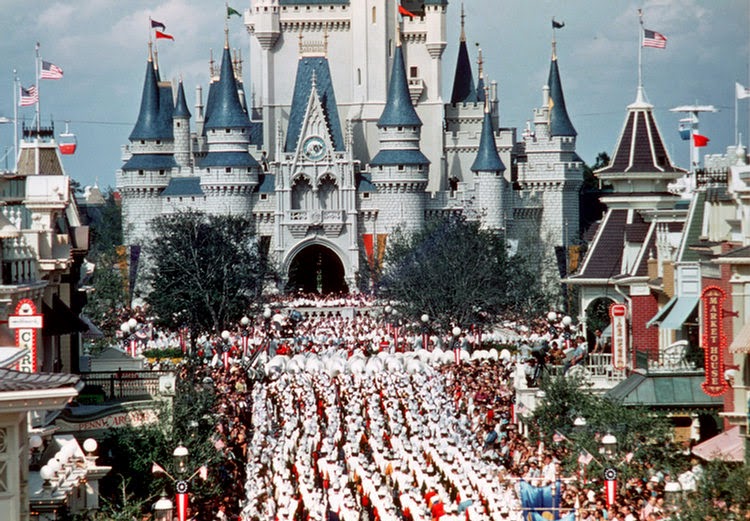
Following Walt Disney's passing, the company executed his grand vision for an eastern U.S. destination known as the Florida Project, anchoring the massive Walt Disney World property. The Magic Kingdom served as the flagship park of this new resort.
While structurally inspired by Disneyland, the Florida park benefited from vast real estate holdings, allowing for subterranean service corridors known as "utilidors." These tunnels kept operational logistics, cast member movement, and waste removal entirely out of the guest's line of sight, elevating the standard for operational efficiency and environmental immersion.
Epcot (Lake Buena Vista, Florida) – October 1, 1982
Epcot—originally styled as EPCOT Center—represented a radical departure from traditional amusement parks. Realizing his initial dream of an experimental prototype community was impractical, Walt Disney's successors transformed the concept into a permanent world's fair divided into two distinct thematic realms: Future World, focusing on technological innovation and industrial progress, and World Showcase, celebrating international culture and architecture.
Epcot shifted the demographic focus of Disney parks toward older audiences, emphasizing educational exploration, culinary diversity, and global pavilions staffed by cultural representatives from participating nations.
The Global Era and Second Gates (1983–2001)
As the 1980s and 1990s progressed, the Walt Disney Company pursued international expansion while simultaneously enriching its domestic resort footprints with secondary "gate" parks designed to extend guest stays.
Tokyo Disneyland (Urayasu, Chiba, Japan) – April 15, 1983
Tokyo Disneyland marked a historic milestone as the very first Disney park built outside of the United States. Licensed and operated by the Oriental Land Company rather than directly by Disney, the park was an instant cultural and financial phenomenon.
It closely mirrored the layout and core offerings of the Magic Kingdom in Florida and Disneyland in California, incorporating Japanese hospitality standards (omotenashi) and meticulous maintenance that set new benchmarks for cleanliness and guest satisfaction across the global resort portfolio.
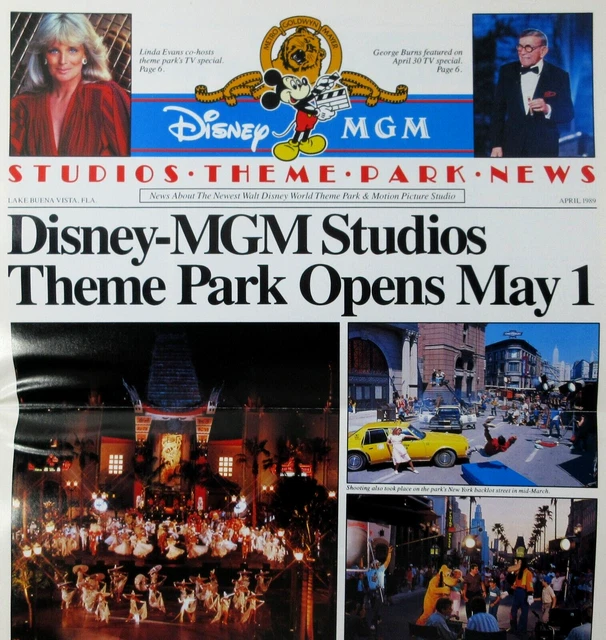
Disney-MGM Studios (Lake Buena Vista, Florida) – May 1, 1989
Rebranded in 2018 as Disney's Hollywood Studios, this Florida park was developed in direct competition with Universal Studios Florida to capture the magic of moviemaking.
The park initially functioned as a working television and film production studio alongside a traditional theme park, offering guests a behind-the-scenes look at animation production, soundstage filming, and stunt demonstrations before transitioning entirely into an immersive, character-driven intellectual property showcase featuring dedicated zones like Star Wars: Galaxy's Edge and Toy Story Land.
Disneyland Paris (Marne-la-Vallée, France) – April 12, 1992
Originally opening as Euro Disneyland, this European resort faced significant initial cultural and financial challenges due to macroeconomic factors, miscalculated attendance projections, and local skepticism regarding American corporate expansion.
Over subsequent decades, the resort adapted its offerings to European preferences, refined its real estate strategy, and eventually achieved profitability and cultural integration, anchoring a massive multi-park destination that now includes Walt Disney Studios Park.
Tokyo DisneySea (Urayasu, Chiba, Japan) – September 4, 2001
Widely regarded by industry critics and fans as one of the greatest theme parks ever constructed, Tokyo DisneySea was developed as a maritime-themed companion to Tokyo Disneyland.
Unlike standard castle-park formulas, DisneySea is organized around seven distinct "ports of call"—including Mediterranean Harbor, Mysterious Island, and American Waterfront—drawing inspiration from nautical myths, historical exploration, and classic maritime literature. Its architectural ambition and technical execution established a new gold standard for theme park design.
Modern Expansion and Contemporary Growth (2001–Present)
The 21st century has been characterized by high-density intellectual property integration, regional expansion across Asian growth markets, and continuous capital investment to modernize legacy infrastructure.
Disney's California Adventure (Anaheim, California) – February 8, 2001
Built on the former parking lot of the original Disneyland, Disney's California Adventure opened to mixed reviews due to an overreliance on generic California themes and a lack of iconic E-ticket attractions.
A massive multi-billion-dollar revitalization campaign, completed in 2012, completely transformed the property with the addition of Buena Vista Street and Cars Land. This turnaround demonstrated the company's ability to course-correct underperforming assets through strategic intellectual property deployment and immersive landscape design.
Walt Disney Studios Park (Marne-la-Vallée, France) – March 16, 2002
Opened a decade after its sister park in France, Walt Disney Studios Park was designed to celebrate cinema, animation, and television production. Similar to the early days of its Florida counterpart, the park faced criticism for its compact footprint and sparse attraction lineup.
Continuous multi-phase expansions, including the addition of Avengers Campus and ongoing transformations centered around upcoming immersive lands, have steadily enhanced its guest appeal.
Hong Kong Disneyland (Lantau Island, Hong Kong) – September 12, 2005
Hong Kong Disneyland opened as a joint venture between the Walt Disney Company and the Government of Hong Kong, designed to introduce the brand to the Chinese market while incorporating regional cultural considerations such as the application of feng shui principles during construction.
Though initially smaller in scale, the park has undergone successive expansion phases, introducing unique lands such as Mystic Point, Grizzly Gulch, and the world's first Frozen-themed land, World of Frozen.
Shanghai Disneyland (Pudong, Shanghai, China) – June 16, 2016
Shanghai Disneyland represents the most technologically advanced and culturally tailored castle park in the global portfolio. Developed under the design philosophy of "Authentically Disney, Distinctly Chinese," the park omits traditional lands like Main Street, U.S.A. in favor of the expansive Gardens of Imagination and features the largest castle in any Disney resort (the Enchanted Storybook Castle).
It houses cutting-edge ride systems, such as the pioneering propulsion system utilized in TRON Lightcycle Power Run, setting new standards for guest capacity and digital integration.
Chronological Summary of Disney Parks
| Park Name | Resort Location | Opening Date | Primary Significance |
|---|---|---|---|
| Disneyland Park | Anaheim, California | July 17, 1955 | The original park; established the modern theme park industry. |
| Magic Kingdom | Bay Lake, Florida | October 1, 1971 | First park at Walt Disney World; pioneered subterranean utilidors. |
| Epcot | Lake Buena Vista, Florida | October 1, 1982 | Merged technological innovation with international cultural exhibits. |
| Tokyo Disneyland | Urayasu, Chiba, Japan | April 15, 1983 | First international Disney park; benchmark for operational quality. |
| Disney's Hollywood Studios | Lake Buena Vista, Florida | May 1, 1989 | Initially combined a working studio with a motion-picture theme park. |
| Disneyland Paris | Marne-la-Vallée, France | April 12, 1992 | Introduced Disney resort operations to the European market. |
| Tokyo DisneySea | Urayasu, Chiba, Japan | September 4, 2001 | Celebrated maritime exploration with advanced nautical themes. |
| Disney California Adventure | Anaheim, California | February 8, 2001 | Expanded the original Anaheim resort into a multi-day destination. |
| Walt Disney Studios Park | Marne-la-Vallée, France | March 16, 2002 | Celebrates cinema and production arts in the European resort. |
| Hong Kong Disneyland | Lantau Island, Hong Kong | September 12, 2005 | Tailored regional expansion incorporating local cultural planning. |
| Shanghai Disneyland | Pudong, Shanghai, China | June 16, 2016 | Highly technological park blending Disney storytelling with Chinese culture. |
Frequently Asked Questions
What was the very first Disney park to open?
Disneyland Park in Anaheim, California, is the original Disney park, opening its gates to the public on July 17, 1955. It remains the only theme park designed and constructed under the direct, personal supervision of Walt Disney himself, serving as the blueprint for every subsequent resort development across the globe.
Which Disney park opened outside of the United States first?
Tokyo Disneyland was the first international Disney park, opening on April 15, 1983. Located in Urayasu, Chiba, Japan, it was constructed and is operated by the Oriental Land Company under a licensing agreement with the Walt Disney Company, achieving legendary status for its guest service and meticulous maintenance standards.
How many Disney resort destinations exist worldwide?
As of 2026, there are six resort destinations globally: Disneyland Resort (California), Walt Disney World (Florida), Tokyo Disney Resort (Japan), Disneyland Paris (France), Hong Kong Disneyland Resort, and Shanghai Disney Resort (China). Together, these properties house a total of twelve individual theme parks, alongside numerous resort hotels, shopping districts, and entertainment venues.
What is the newest Disney theme park to open?
Shanghai Disneyland is the newest major Disney theme park, having officially opened its gates on June 16, 2016. The resort features custom-designed attractions built specifically for the Chinese market, including the original TRON Lightcycle Power Run coaster and expansive garden landscapes that depart from traditional American park layouts.
Are all Disney parks owned directly by the Walt Disney Company?
No. Ownership structures vary significantly across the global portfolio. While parks like Disneyland and the Magic Kingdom are wholly owned and operated by the Walt Disney Company, others operate through joint ventures or licensing agreements. For example, Tokyo Disneyland and Tokyo DisneySea are owned entirely by the Oriental Land Company, while international parks in Hong Kong and Shanghai involve government partnerships and local shareholding structures.
Next Actions for Planning and Research
For travelers and researchers seeking to explore the history or operational layout of these properties further, reviewing official corporate archives, architectural summaries by organizations like the Themed Entertainment Association (TEA), or historical texts written by former Disney Imagineers provides deep insight into how these parks evolved. When planning a visit, consult official resort portals for up-to-date ticketing requirements, seasonal event schedules, and reservation policies to ensure accurate preparation.
Image Gallery