Comprehensive Guide to Fort Worth Mold Remediation Costs in 2026
For homeowners and property managers in the Fort Worth area, the average cost of mold remediation in 2026 typically ranges between $1,500 and $4,800. Smaller, localized projects such as a single bathroom corner or a laundry room wall m...
For homeowners and property managers in the Fort Worth area, the average cost of mold remediation in 2026 typically ranges between $1,500 and $4,800. Smaller, localized projects such as a single bathroom corner or a laundry room wall may cost as little as $600, while extensive structural remediation involving HVAC systems, attics, or crawlspaces can exceed $10,000 depending on the severity of the infestation and the materials affected.
Contents
Understanding Mold Remediation Costs in North Texas
Mold growth is a common consequence of the high humidity and occasional flash flooding seen in North Texas. In Fort Worth, the cost of remediation is not a single flat fee; rather, it is a calculation based on the volume of contaminated material, the accessibility of the growth, and the labor required to meet Texas state safety standards. Because mold can pose significant respiratory health risks and compromise the structural integrity of a building, professional intervention is often necessary to ensure the source of moisture is eliminated and the spores are properly contained.
The price you pay in Fort Worth is influenced by the local cost of living and the specific regulatory environment in Texas. Unlike many other states, Texas has strict laws regarding who can assess mold and who can remove it. This dual-professional requirement—often necessitating both a Mold Assessment Consultant (MAC) and a Mold Remediation Contractor (MRC)—can influence the total project budget.
Key Factors That Influence Your Estimate
Several variables dictate where your final invoice will fall within the standard pricing spectrum. Understanding these factors can help you better interpret quotes from local Fort Worth restoration companies.
Total Square Footage of Infestation
The most obvious factor is the size of the area affected. Remediation companies often categorize projects by the "level" of contamination:
- Level 1 (Small): Up to 10 square feet. Often handled with localized containment and standard antimicrobial cleaning.
- Level 2 (Medium): 10 to 30 square feet. Requires more robust containment and potentially more aggressive demolition of porous materials like drywall.
- Level 3 (Large): 30 to 100 square feet. Extensive labor and commercial-grade air scrubbing equipment are necessary.
- Level 4 (Extensive): Over 100 square feet or multiple rooms. This often involves structural drying and significant reconstruction.
Type of Material and Accessibility
Mold growing on non-porous surfaces like metal, glass, or finished tile is significantly cheaper to treat because it can often be scrubbed and disinfected without removing the underlying material. However, if mold has penetrated porous materials—such as drywall, insulation, carpeting, or unfinished wood—those materials must usually be removed and replaced.
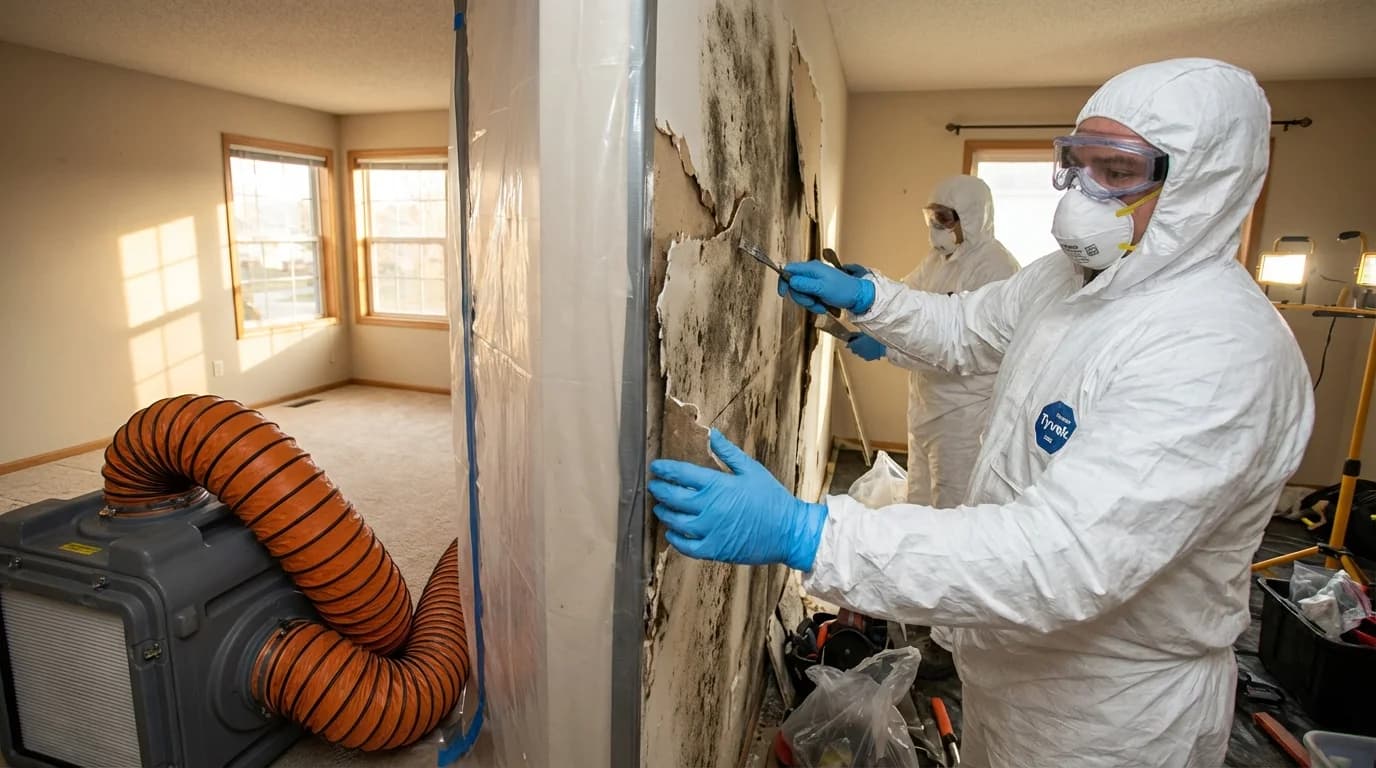
Accessibility also plays a major role. Remediating mold in an open living room is far less labor-intensive than working in a cramped crawlspace in the Tarrant County suburbs or a hot, narrow attic during a Texas summer. Technicians working in confined spaces require additional safety gear and specialized equipment to maintain negative air pressure, which increases the labor cost.
Mold Species and Toxicity
While the Environmental Protection Agency (EPA) notes that all molds should be treated with caution, certain species like Stachybotrys chartarum (often called "black mold") may require more stringent containment protocols. The presence of highly allergenic or toxigenic spores can necessitate more frequent air testing and more rigorous "clearance" protocols to ensure the building is safe for re-entry.
The Texas Regulatory Impact: TMARR Compliance
In Fort Worth, remediation costs are uniquely affected by the Texas Mold Assessment and Remediation Rules (TMARR), overseen by the Texas Department of State Health Services (DSHS). These regulations are designed to protect consumers from conflicts of interest.
- Separation of Duties: For projects involving more than 25 contiguous square feet of mold, Texas law generally prohibits the same company from performing both the initial assessment and the actual remediation. This means you will likely pay for a third-party consultant to write the "Remediation Protocol" and a separate contractor to do the work.
- Certificate of Mold Remediation (CMR): Upon successful completion, a licensed contractor will issue a CMR. This document is vital for property resale and insurance purposes in Texas, as it proves the problem was solved according to state standards. The administrative overhead for maintaining these licenses and filings is reflected in the professional service fees.
Estimated Cost Breakdown by Location
The location of the mold within your Fort Worth property often determines the specialized equipment needed.
| Area of Property | Estimated Cost Range (2026) | Primary Cost Drivers |
|---|---|---|
| Attic | $1,500 – $4,500 | Insulation removal, heat-related labor costs, roof leak repair. |
| Crawlspace | $2,000 – $7,000 | Moisture barriers, dehumidification, difficult accessibility. |
| HVAC / Air Ducts | $1,000 – $3,500 | Specialized cleaning tools, replacement of flex ducts, coil cleaning. |
| Basement | $1,500 – $5,000 | Grading issues, sump pump installation, drywall replacement. |
| Bathroom / Kitchen | $600 – $2,500 | Plumbing repairs, cabinet removal, tile/grout cleaning. |
| Whole House | $10,000 – $25,000+ | Extensive structural drying, contents cleaning, long-term containment. |
Attic Remediation
In North Texas, attic mold is frequently caused by poor ventilation or a failing roof. Because attics are often filled with blown-in or fiberglass insulation, remediation usually requires "source removal." This means all contaminated insulation must be vacuumed out, the wood framing must be treated with antimicrobial agents or encapsulated, and new insulation must be installed. This multi-step process makes attic work more expensive than simple wall remediation.
HVAC and Ductwork
Fort Worth's humidity often leads to condensation inside air conditioning units. If mold enters the ductwork, it can spread spores throughout the entire home every time the AC kicks on. Remediation here involves high-power HEPA vacuuming and, in some cases, the complete replacement of flexible ducting, which cannot be effectively cleaned once mold has taken root in the lining.
The Cost of Mold Testing and Assessment
Before remediation begins, a professional assessment is standard practice in Texas. A licensed Mold Assessment Consultant will conduct a visual inspection and take air or surface samples.
- Standard Inspection: $300 – $600.
- Air Sampling: $100 – $200 per sample (typically one outside as a baseline and one per affected room).
- Post-Remediation Clearance Testing: $300 – $500. This is the "final exam" for the remediation project, ensuring the spore count has returned to normal levels before the containment barriers are removed.
While it may be tempting to use a DIY mold test kit from a hardware store, these are often discouraged by the IICRC (Institute of Inspection Cleaning and Restoration Certification). DIY kits often yield "false positives" because mold spores exist naturally in almost every environment; they do not provide the context or the "protocol" required for professional remediation.
Hidden Costs: Build-Back and Reconstruction
It is important to distinguish between mold remediation and mold restoration. Remediation is the act of removing the mold and returning the environment to a "clean" state (Condition 1). However, this often involves tearing out drywall, removing flooring, or discarding cabinetry.
The cost to "put the house back together"—known as build-back or reconstruction—is usually quoted separately. For a standard bathroom, build-back might cost an additional $1,000 to $3,000. For a kitchen, if custom cabinets were damaged, these costs can easily exceed the cost of the remediation itself. When reviewing a quote in Fort Worth, always ask if "reconstruction" or "structural repair" is included in the estimated price.
Insurance Coverage and Limitations
A common question for Fort Worth residents is whether homeowners insurance will cover the cost. In 2026, the answer generally depends on the source of the moisture.
- Covered: If the mold resulted from a "sudden and accidental" discharge of water, such as a burst pipe or a water heater failure, the remediation is typically covered under a standard policy, subject to your deductible.
- Not Covered: If the mold is the result of long-term neglect, poor maintenance (e.g., a slow window leak ignored for months), or high indoor humidity, insurance companies will often deny the claim.
- Mold Riders: Some Texas policies have a "mold cap," often limiting coverage to $5,000 or $10,000. Residents in high-humidity areas like North Texas often purchase additional mold endorsements to increase these limits.
Frequently Asked Questions
Is it safe to stay in my house during mold remediation?
In many cases, yes, provided the area is properly contained. Professional remediators use heavy-duty plastic sheeting and "negative air machines" to ensure that spores disturbed during the cleaning process do not migrate to the rest of the house. However, if the HVAC system is contaminated or if the remediation involves the majority of the living space, you may need to vacate for 3 to 7 days.
How long does the remediation process take?
Most residential projects in Fort Worth take between 3 and 5 days. The first day is usually dedicated to containment and air scrubber setup. The second and third days involve the physical removal of materials and cleaning. The final days are for drying the structure and performing clearance testing.
Can I just use bleach to kill the mold?
Professional standards, including those from the EPA, generally advise against using bleach on porous surfaces like wood or drywall. Bleach is mostly water; while the chlorine stays on the surface, the water soaks into the material, potentially feeding the mold roots (hyphae) deeper into the structure. Professionals use specialized antimicrobial and fungicidal encapsulates that are designed to penetrate and neutralize the mold.
Does the City of Fort Worth require specific permits for mold removal?
While the City of Fort Worth does not typically require a "mold permit," any structural repairs, electrical work, or plumbing changes made during the reconstruction phase may require standard building permits from the city's Development Services Department.
Why is mold remediation so much more expensive than regular cleaning?
The cost reflects the specialized equipment (HEPA vacuums, commercial dehumidifiers, air scrubbers), the high cost of liability insurance for the contractor, the required safety gear (PPE), and the meticulous labor required to prevent cross-contamination. Removing mold incorrectly can actually make the problem worse by spreading millions of spores throughout the home.
Practical Recommendation for Fort Worth Property Owners
If you suspect a mold problem in your Fort Worth home, your first step should be to identify and stop the water source. Without fixing the leak or humidity issue, mold will return regardless of how much you spend on remediation.
For projects larger than a small patch of shower grout, hire a licensed Mold Assessment Consultant first to get an unbiased report. This report acts as a blueprint, ensuring that when you do hire a Remediation Contractor, you are paying for exactly what is necessary and nothing more. Always verify that your chosen contractor is licensed by the Texas Department of State Health Services to ensure your Certificate of Mold Remediation is valid and legally recognized.
Image Gallery