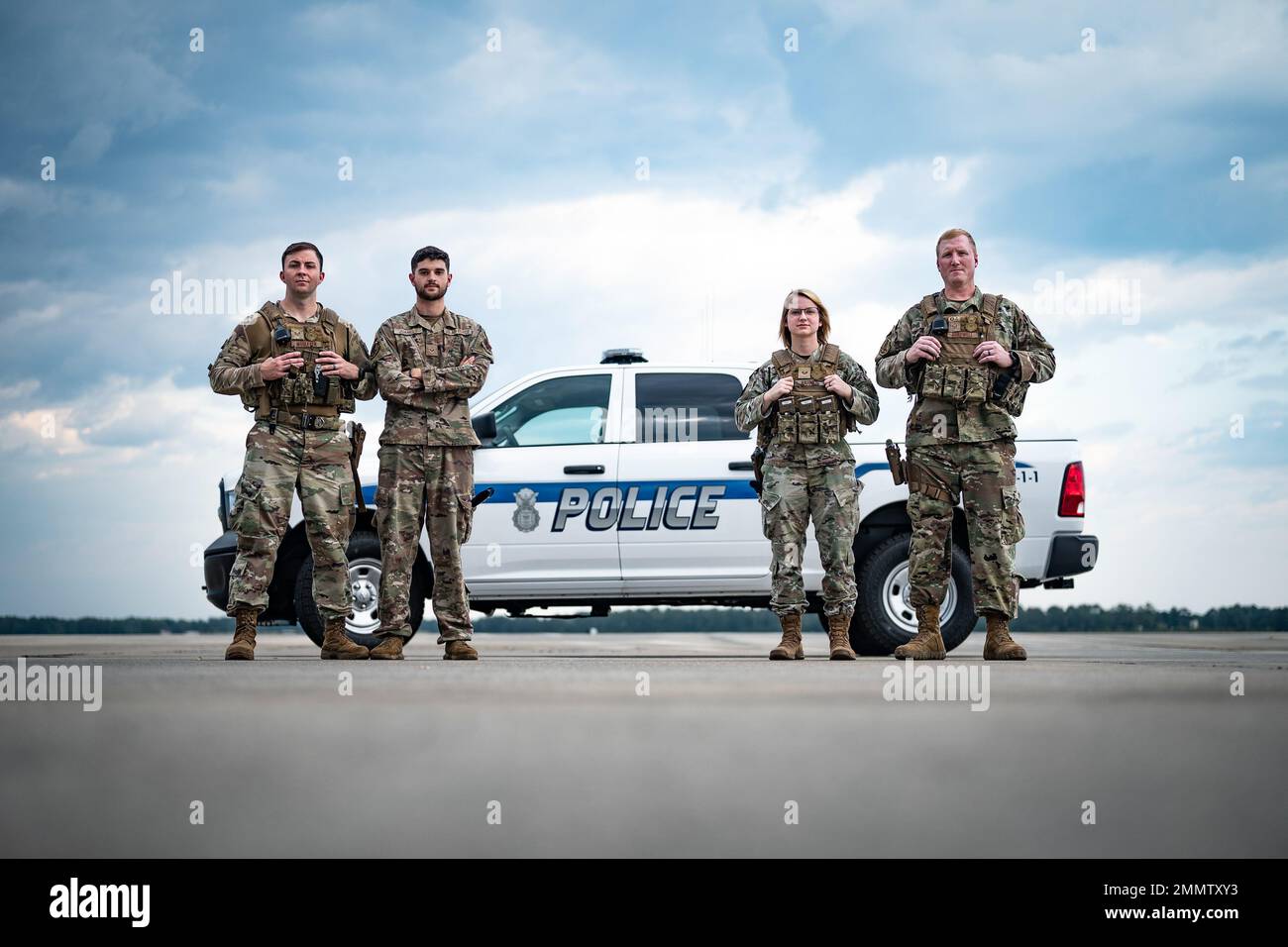
Security Forces in the Air Force: Roles, Training, and Operational Scope
Security forces in the United States Air Force represent the premier combat-capable protection element responsible for safeguarding personnel, equipment, and resources worldwide. Operating under the Air Force Security Forces Center (AF...
Security forces in the United States Air Force represent the premier combat-capable protection element responsible for safeguarding personnel, equipment, and resources worldwide. Operating under the Air Force Security Forces Center (AFSFC) and organized primarily within the Air Force Specialty Code (AFSC) 3P0X1, these professionals perform installation security, law enforcement, tactical combat operations, and nuclear asset protection across global deployments.
Contents
The Foundation and Evolution of Air Force Security Forces
The lineage of security forces within the United States Air Force traces back to the Army Air Forces military police and air provost marshal units of World War II. As air bases grew in strategic value during the Cold War, the need for specialized defense forces became acute. This led to the formal establishment of the Air Police specialty in 1948, which later transitioned into the Security Police career field in 1966, and finally consolidated into the modern Security Forces designation in October 1997.
Throughout this evolution, the core mission has expanded significantly. While early air base defense units focused primarily on law enforcement and basic installation access control, contemporary security forces maintain a dual-mission profile. They must seamlessly transition from garrison law enforcement duties to high-threat tactical environments, counter-terrorism operations, and nuclear deterrence protection. Understanding this dual capability is essential for comprehending the rigorous standards and comprehensive training pipelines required of every airman entering the career field.
Core Missions and Operational Responsibilities
The operational scope of security forces is vast, covering multiple specialized disciplines designed to maintain absolute installation integrity and mission readiness. These responsibilities are divided into distinct functional areas that require specialized equipment, continuous training, and multi-domain awareness.
Installation Security and Access Control
The most visible aspect of security forces operations involves installation access control, perimeter defense, and internal security patrols. Airmen manage entry control points (ECPs) at military installations globally, verifying credentials, inspecting commercial and private vehicles, and preventing unauthorized access. These duties require strict adherence to federal and military laws, precise threat-detection protocols, and the ability to manage high-volume traffic while maintaining heightened situational awareness.
Law Enforcement and Base Defense Operations
Beyond physical security, security forces personnel serve as the primary law enforcement agency for Air Force installations. They conduct traffic accident investigations, respond to domestic disturbances, enforce the Uniform Code of Military Justice (UCMJ), and execute local base regulations. In tactical scenarios, base defense operations squads deploy to austere locations globally to establish defensive perimeters, conduct reconnaissance patrols, and neutralize opposing forces attempting to compromise air operations.
Specialized Missions: Nuclear Security and Working Dogs
A critical echelon of the security forces career field is dedicated to nuclear deterrence operations. Personnel assigned to global strike installations undergo specialized screening and training to protect intercontinental ballistic missile (ICBM) fields and nuclear-capable bomber wings. Additionally, the Security Forces Military Working Dog (MWD) program deploys highly trained canines and handlers for explosive detection, drug interdiction, and tactical patrol operations worldwide.
| Functional Area | Primary Objective | Key Operational Environment |
|---|---|---|
| Installation Security | Perimeter defense and credential verification | Garrison entry control points and base borders |
| Law Enforcement | UCMJ enforcement and civilian police functions | Base housing, commercial sectors, and road networks |
| Tactical Operations | Base defense and offensive combat support | Deployed, austere, and combat environments |
| Nuclear Security | Absolute defense of strategic deterrence assets | ICBM silos and strategic bomber installations |
Training Pipeline and Qualification Standards
Becoming a security forces airman requires successfully navigating one of the most physically and mentally demanding training pipelines in the United States military. The process begins at Joint Base San Antonio-Camp Bullis, Texas, where initial skills training takes place.
Basic Military Training and Technical School
Following standard Air Force Basic Military Training (BMT) at Lackland Air Force Base, prospective security forces members transition directly to the 3P0X1 technical training course. Over several weeks, trainees receive intensive instruction in firearms proficiency, tactical combat movements, combatives, military law, anti-terrorism techniques, and active shooter response protocols. Trainees must achieve high qualification scores with standard-issue weaponry, primarily the M4 carbine and M9 or M18 pistol, while maintaining strict physical fitness standards.
Ongoing Readiness and Advanced Training
Training does not conclude upon graduation from technical school. Active-duty, Air National Guard, and Air Force Reserve security forces personnel participate in continuous readiness training cycles. These include home-station combat arms qualification, mission-specific deployment pre-training, and advanced tactical courses such as the Security Forces Apprentice Course, Ravens training for aircraft security, and specialized sniper or designated marksman programs.
Career Progression and Specialized Opportunities
As airmen advance through the ranks, the security forces career field offers diverse opportunities for specialization and leadership development. Progression from an entry-level apprentice to a senior non-commissioned officer involves expanding operational horizons into specialized career tracks.
- Phoenix Raven Program: Specially trained security forces teams assigned to provide close-in security for mobility aircraft transiting high-threat areas.
- Tactical Response Teams (TRT): Specialized garrison units trained to handle high-risk situations, barricaded suspects, and hostage rescue scenarios on installations.
- Combat Arms Training and Maintenance (CATM): Instructors responsible for maintaining, repairing, and training base personnel on all small arms weapons systems.
- Office of Special Investigations (OSI) Support: Collaborative investigative and protective service details working alongside federal law enforcement entities.
Frequently Asked Questions
What is the official AFSC code for security forces in the Air Force?
The primary Air Force Specialty Code for security forces is 3P0X1. As airmen progress in rank and leadership responsibilities, this code evolves to reflect supervisory and management levels within the career field, while maintaining the foundational 3P0 prefix.
What are the physical fitness requirements for entering security forces?
Candidates must meet standard Air Force physical fitness assessments, which evaluate cardiovascular endurance, muscular strength, and body composition. Furthermore, individuals must meet rigorous medical standards, including uncorrected visual acuity requirements, color vision screening, and psychological evaluations necessary for bearing firearms and handling classified assets.
Do security forces airmen deploy to combat zones?
Yes. Security forces are among the most frequently deployed career fields in the Air Force. They routinely deploy worldwide to establish and defend forward operating bases, augment Army and Marine Corps ground combat units, and protect critical aviation assets in hostile environments.
Can security forces personnel transition to civilian law enforcement?
The training, certifications, and operational experience acquired in the security forces career field provide a strong foundation for civilian law enforcement careers. Many former security forces members transition successfully into federal agencies, state police departments, and municipal law enforcement agencies, frequently receiving preference or specialized hiring considerations.
Strategic Next Steps and Further Resources
For individuals considering enlistment or commissioning paths involving security forces, preparation should focus on physical conditioning, academic readiness through the Armed Services Vocational Aptitude Battery (ASVAB), and thorough review of security clearance prerequisites. Prospective candidates should consult official recruitment resources provided by the United States Air Force to verify current enlistment incentives, medical qualification criteria, and accession timelines.
Image Gallery