Big Data Cloud Security: Strategies for Securing Massive Data Ecosystems in 2026
Big data cloud security refers to the collective framework of technologies, policies, and procedural controls designed to protect massive, distributed datasets stored and processed within cloud environments. It addresses the unique ris...
Big data cloud security refers to the collective framework of technologies, policies, and procedural controls designed to protect massive, distributed datasets stored and processed within cloud environments. It addresses the unique risks of high-volume data ingestion and storage, ensuring confidentiality, integrity, and availability while meeting stringent global regulatory compliance standards and mitigating sophisticated AI-driven cyber threats.
Contents
The convergence of big data and cloud computing has redefined how organizations extract value from information. In 2026, the volume of data generated globally has surpassed previous projections, making the cloud the only viable environment for the scale and elasticity required to process it. However, this migration introduces a complex security landscape. Traditional perimeter-based security is no longer sufficient when data is distributed across multi-cloud and hybrid environments. Securing big data in the cloud requires a shift toward data-centric security, where protection travels with the data itself rather than relying solely on the network boundary.
The Shared Responsibility Model in Big Data Contexts
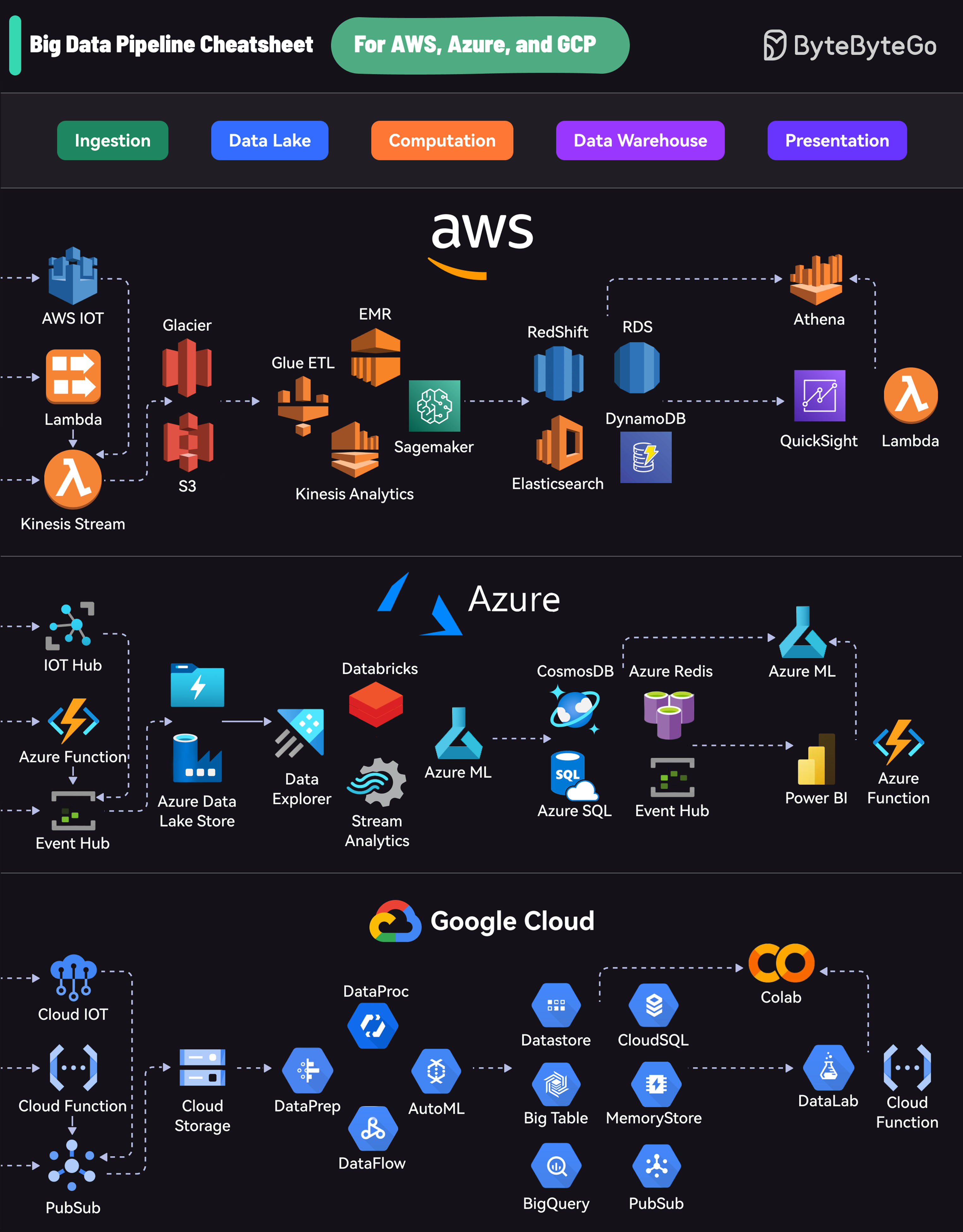
Understanding big data cloud security begins with the Shared Responsibility Model. This framework defines the security obligations of the Cloud Service Provider (CSP) and the customer. While CSPs like Amazon Web Services (AWS), Microsoft Azure, and Google Cloud Platform (GCP) are responsible for the security of the cloud—including physical hardware, cooling, and foundational networking—the customer is responsible for security in the cloud.
For big data applications, the customer’s responsibility expands significantly. You are responsible for classifying the data, managing who can access the analytics clusters, and ensuring that the data being ingested into a "Data Lake" is encrypted. Misconfigurations in S3 buckets or Azure Blob Storage remain a primary cause of data breaches. In a big data context, a single misconfigured access policy can expose petabytes of sensitive information, making automated configuration auditing a critical component of your security stack.
Core Pillars of Big Data Cloud Security
To build a resilient security posture, organizations must focus on three core pillars: data privacy through encryption, sophisticated identity management, and rigorous governance.
Advanced Encryption and Masking
Encryption is the final line of defense. In 2026, standard AES-256 encryption at rest is a baseline requirement, but big data necessitates more granular approaches. Field-level encryption allows organizations to encrypt specific sensitive fields (like Social Security numbers or health records) within a dataset while leaving non-sensitive data available for analysis. This ensures that even if an analyst has access to the database, they cannot view PII (Personally Identifiable Information) without specific decryption keys.
Furthermore, homomorphic encryption has moved from theoretical research into more practical enterprise applications. This technology allows computations to be performed on encrypted data without ever decrypting it, providing a way to perform analytics while maintaining total privacy. For data in transit, TLS 1.3 is the standard, ensuring that data moving between IoT devices, on-premises servers, and cloud clusters is protected against interception.
Identity and Access Management (IAM)
In a big data ecosystem, thousands of users, service accounts, and automated scripts may require access to data. Traditional Role-Based Access Control (RBAC) often proves too rigid for these dynamic environments. Instead, Attribute-Based Access Control (ABAC) is preferred. ABAC evaluates attributes such as the user’s department, the sensitivity of the data, the time of day, and the security posture of the device being used before granting access.
The principle of "Least Privilege" is paramount. Analysts should only have access to the specific datasets required for their current project, and this access should be time-bound. Just-in-Time (JIT) provisioning helps reduce the "standing privileges" that attackers often exploit during lateral movement within a cloud network.
Data Governance and Compliance
Big data often crosses international borders, triggering a variety of legal requirements such as GDPR (General Data Protection Regulation), CCPA/CPRA (California), and various sovereign cloud mandates. Governance in 2026 involves more than just policy documents; it requires automated data discovery and classification. Security teams must use AI-driven tools to scan data lakes to identify and tag sensitive data automatically. This ensures that privacy controls are applied consistently, regardless of where the data originated or how it was transformed during the ETL (Extract, Transform, Load) process.
Security Challenges Unique to Big Data Environments
Big data architectures, such as Hadoop ecosystems or Spark clusters, introduce vulnerabilities that differ from standard web applications.
- Data Ingestion Vulnerabilities: As data flows from millions of IoT sensors or social media feeds, there is a risk of "data poisoning." Attackers may inject malicious or biased data into the stream to corrupt machine learning models or trigger buffer overflows in the processing engine.
- Granular Access at Scale: Providing different levels of access to specific rows or columns within a massive distributed database like NoSQL (e.g., Cassandra or MongoDB) is computationally expensive and difficult to manage.
- Metadata Security: While the raw data might be encrypted, the metadata (which describes the data's structure, source, and timing) is often left exposed. Metadata can reveal significant patterns about an organization’s operations and must be protected with the same rigor as the data itself.
Comparison of Common Data Protection Techniques
Choosing the right technical control depends on the balance between security needs and the performance requirements of your analytics workloads.
| Technique | Primary Use Case | Pros | Cons |
|---|---|---|---|
| Symmetric Encryption | High-speed encryption of large datasets at rest. | Very fast; low computational overhead. | Key management becomes difficult at scale. |
| Tokenization | Replacing sensitive data with non-sensitive placeholders. | Data retains format; reduces PCI-DSS/GDPR scope. | Requires a secure token vault; adds latency to lookups. |
| Data Masking | Providing redacted datasets for testing or dev environments. | High utility for developers; protects PII effectively. | Not reversible; cannot be used for production analytics. |
| Differential Privacy | Adding "noise" to datasets to hide individual identities. | Mathematical guarantee of privacy for individuals. | Can reduce the accuracy of highly specific queries. |
| Zero Trust Architecture | Securing multi-cloud environments. | Eliminates "trusted" zones; prevents lateral movement. | Complex to implement across legacy systems. |
Implementing a Zero Trust Framework for Big Data
The traditional "castle and moat" security model has failed in the cloud. A Zero Trust Architecture (ZTA) operates on the assumption that the network is already compromised. For big data, this means every request for data access must be authenticated, authorized, and continuously validated.
Implementing Zero Trust involves segmenting the cloud network into "micro-perimeters." For instance, your data ingestion layer should be completely isolated from your reporting layer. Communication between these layers should occur only via secure, authenticated APIs. By using a Service Mesh (like Istio or Linkerd), organizations can enforce mutual TLS (mTLS) between all microservices in a big data pipeline, ensuring that a compromise in one part of the system does not lead to a total data breach.
Proactive Threat Detection and Response
In 2026, manual monitoring of security logs is impossible due to the sheer volume of telemetry. Organizations must employ Cloud Native Application Protection Platforms (CNAPP) and Security Orchestration, Automation, and Response (SOAR) tools. These systems use machine learning to establish a "baseline" of normal behavior.
If a service account suddenly attempts to download a terabyte of data at 3:00 AM from an unusual IP address, the SOAR platform can automatically revoke that account's credentials and alert the security team. This "automated defense" is essential for big data cloud security, as the window for mitigation is often measured in seconds before data exfiltration is complete.
Frequently Asked Questions
What is the biggest risk to big data in the cloud?
The most significant risk remains human error, specifically misconfigured access controls and storage settings. Because cloud environments are highly complex, it is easy to inadvertently leave a database or storage bucket open to the public internet. Automated configuration management and "Policy as Code" are the primary defenses against these errors.
How does big data security differ from traditional database security?
Traditional security focuses on protecting a centralized, structured SQL database. Big data security must protect unstructured data (images, logs, sensor data) across distributed systems. The "3 Vs" of big data—Volume, Variety, and Velocity—make traditional scanning and firewalling techniques inefficient and difficult to scale.
Can I perform analytics on encrypted data?
Yes, using techniques like homomorphic encryption or secure multi-party computation. While these methods currently carry a performance penalty compared to processing plaintext data, advancements in hardware acceleration and algorithm efficiency in 2026 have made them viable for many sensitive enterprise use cases.
Is multi-cloud more secure for big data than a single cloud?
Multi-cloud can improve availability and prevent vendor lock-in, but it increases security complexity. Managing consistent identity and security policies across AWS, Azure, and GCP requires a sophisticated centralized management layer. Without proper tooling, multi-cloud often leads to "security debt" and increased risk of oversight.
What role does AI play in big data cloud security?
AI is a "dual-use" technology. Organizations use AI for anomaly detection, automated data classification, and predictive threat hunting. Conversely, attackers use AI to automate the discovery of vulnerabilities and to create highly targeted phishing attacks to steal cloud credentials.
Practical Recommendation for 2026
To secure your big data cloud environment effectively, prioritize the implementation of a unified data governance platform that integrates directly with your cloud provider’s IAM. Start by automating the discovery and classification of your data to understand exactly what you are protecting. Following this, enforce a Zero Trust policy where all data access—whether by a human or a machine—is strictly verified. Regularly audit your cloud configurations using automated tools to ensure that your security posture has not drifted over time.
Image Gallery