How Does a Mini Refrigerator Work? A Deep Dive into Compact Cooling
A mini refrigerator works by removing thermal energy from its interior and transferring it to the external environment. Most units use a vapor-compression cycle, where a compressor circulates refrigerant to absorb heat inside and relea...
A mini refrigerator works by removing thermal energy from its interior and transferring it to the external environment. Most units use a vapor-compression cycle, where a compressor circulates refrigerant to absorb heat inside and release it outside. Alternatively, some models use thermoelectric cooling, employing the Peltier effect to move heat through solid-state semi-conductors without a compressor.
Contents
To understand how these compact appliances maintain a steady, cold temperature in a small footprint, one must look at the underlying thermodynamics and the specific engineering of their internal components. Whether you are using a 1.7-cubic-foot "cube" fridge in a dorm or a 4.5-cubic-foot "under-counter" model in an office, the physics of heat transfer remain the primary driver of performance.
The Science of Cold: Principles of Heat Transfer
It is a common misconception that refrigerators "create cold." According to the Second Law of Thermodynamics, heat naturally flows from a warmer area to a cooler one. To refrigerate a space, we must reverse this natural flow. A mini refrigerator acts as a heat pump, utilizing a medium—either a chemical refrigerant or electrical current—to pick up heat energy from the food and beverages inside and dump it into the surrounding room air.
There are three primary methods used in mini refrigerators to achieve this: vapor compression, thermoelectric cooling, and, less commonly, absorption cooling. By 2026, energy efficiency standards have largely pushed manufacturers toward highly optimized versions of these technologies, emphasizing lower noise levels and reduced environmental impact.
The Vapor-Compression Cycle: The Workhorse of Cooling
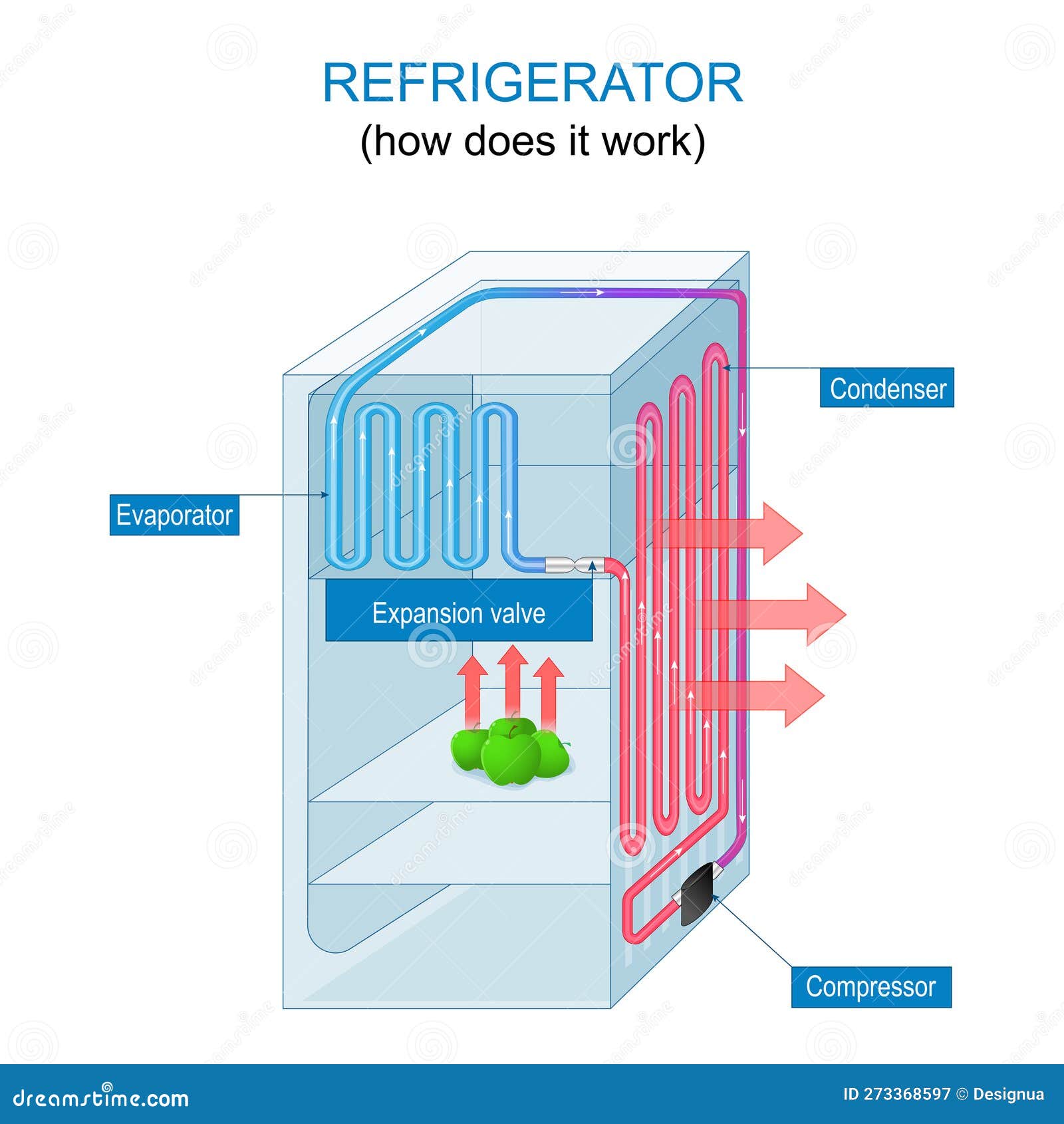
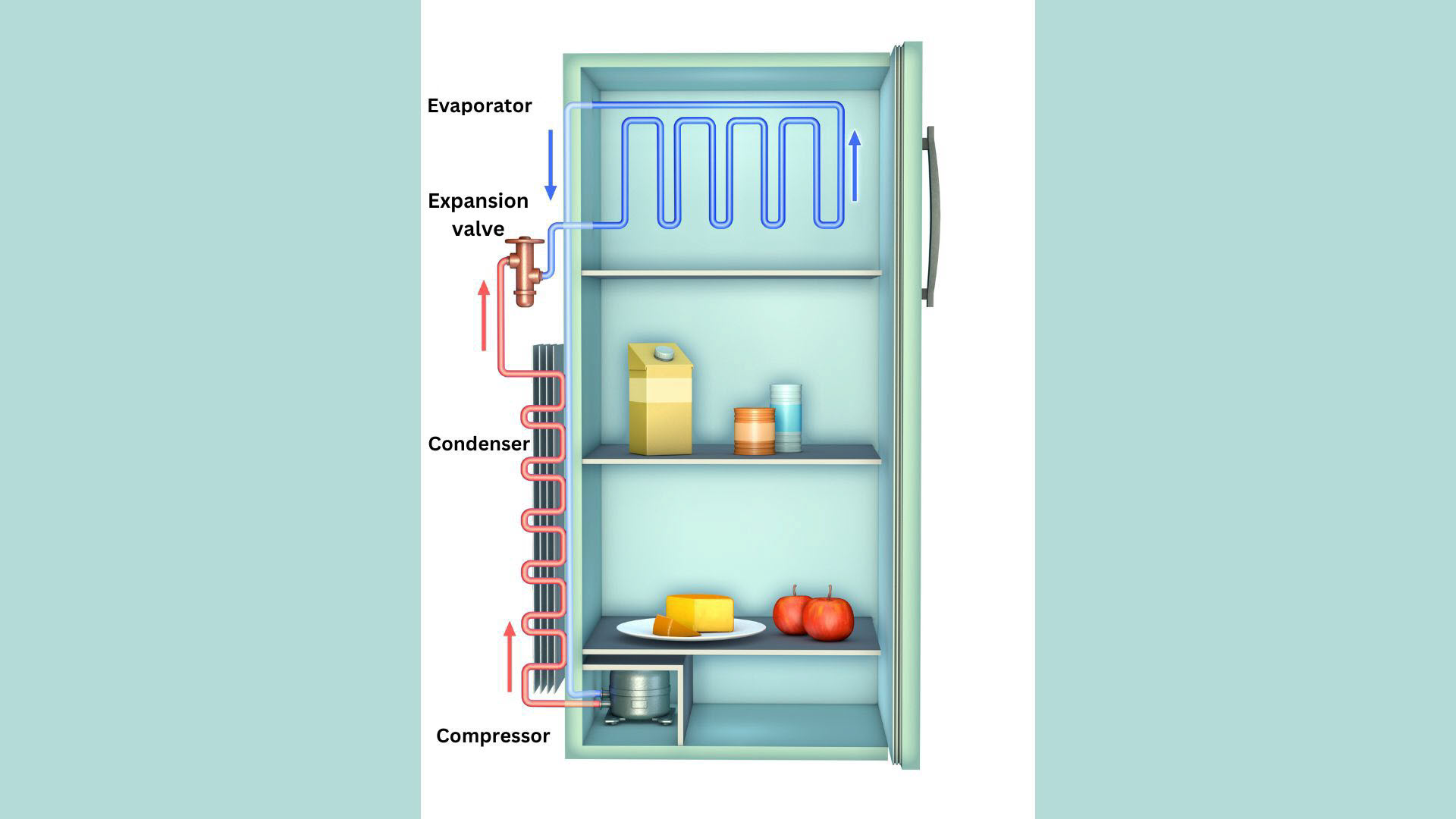
The vast majority of mini refrigerators on the market use the vapor-compression cycle. This is the same technology found in full-sized kitchen refrigerators, scaled down for smaller dimensions. The system consists of four main components: the compressor, the condenser, the expansion valve (or capillary tube), and the evaporator.
1. The Compressor: The Heart of the System
The process begins at the compressor, usually located in a bottom compartment at the rear of the unit. The compressor is an electric pump that takes in low-pressure, cool refrigerant gas and compresses it. This compression increases the pressure and, significantly, the temperature of the gas. By 2026, most mini fridges use variable-speed compressors or highly efficient reciprocating pumps that minimize the "clunk" sound often associated with older models.
2. The Condenser: Releasing the Heat
The high-pressure, hot gas then flows into the condenser coils. In many mini refrigerators, these coils are located on the back of the unit or integrated into the side walls. As the hot gas travels through these coils, it radiates heat into the ambient air. As it loses heat, the gas cools down and condenses into a high-pressure liquid. This is why the sides or back of a mini fridge often feel warm to the touch during operation.
3. The Expansion Valve (Capillary Tube): The Pressure Drop
The liquid refrigerant then passes through a metering device, typically a very thin copper "capillary tube." This tube acts as a bottleneck. When the liquid exits the narrow tube into the wider evaporator, its pressure drops suddenly. This rapid drop in pressure causes the refrigerant to evaporate, a process that requires a significant amount of thermal energy.
4. The Evaporator: Absorbing Internal Heat
The evaporator coils are located inside the refrigerator, often forming the walls of the small freezer compartment or hidden behind the interior back panel. As the low-pressure refrigerant evaporates into a gas, it "sucks" heat from the air inside the fridge. This makes the coils extremely cold, which in turn chills the air and the items stored nearby. The now-warmed gas travels back to the compressor to begin the cycle again.
Thermoelectric Cooling: The Solid-State Alternative
Small, ultra-portable mini fridges—often used for skincare products or a few soda cans—frequently use thermoelectric cooling. Unlike compressor-based models, these have no moving parts other than a small fan.
The Peltier Effect
Thermoelectric cooling relies on the Peltier effect, discovered by Jean Charles Athanase Peltier in 1834. When an electric current flows through a junction of two different types of semi-conductors, heat is moved from one side of the junction to the other. One side of the "Peltier module" becomes cold, while the other side becomes hot.
In a thermoelectric mini fridge, the cold side faces the interior, while the hot side is attached to a heat sink on the exterior. A fan blows air over the exterior heat sink to dissipate the warmth.
Performance Limitations
While thermoelectric units are silent and vibration-free, they are significantly less powerful than compressor units. They are generally limited to cooling about 20°F to 30°F below the ambient room temperature. This means if the room is 80°F, the fridge may only reach 50°F—which is not cold enough for perishable items like milk or raw meat, which require temperatures below 40°F according to FDA food safety guidelines.
Key Components and Their Roles
Beyond the cooling mechanism itself, several secondary components ensure the mini refrigerator operates efficiently and safely.
- Refrigerants (R600a): As of 2026, the industry has almost entirely transitioned to Isobutane (R600a). This refrigerant has a very low Global Warming Potential (GWP) compared to the older R134a. It is highly efficient but flammable, requiring specialized sealed systems.
- The Thermostat: This is a switch that monitors the internal temperature. When the temperature rises above the set point, the thermostat completes the electrical circuit to the compressor. In modern units, electronic sensors have replaced older bimetallic strips for more precise temperature control.
- Insulation: Mini fridges rely on high-density polyurethane foam injected between the inner liner and outer shell. This foam provides structural integrity and a thermal barrier to prevent heat from leaking back into the unit.
- The Door Gasket: This magnetic rubber seal is critical. If it is cracked or dirty, warm air will leak in, causing the compressor to run constantly and leading to frost buildup.
- Accumulator: Often found just before the compressor, this component ensures that only gas—not liquid—reaches the compressor, preventing mechanical damage known as "slugging."
Technical Comparison: Compressor vs. Thermoelectric
| Feature | Compressor Mini Fridge | Thermoelectric Mini Fridge |
|---|---|---|
| Cooling Power | Strong; can reach freezing temps. | Moderate; limited by ambient temp. |
| Noise Level | Audible hum/click when cycling. | Very quiet; only fan noise. |
| Energy Efficiency | High (Energy Star models common). | Lower (runs continuously). |
| Typical Size | 1.7 to 4.5 cubic feet. | 0.15 to 0.6 cubic feet. |
| Suitability | Perishables, milk, long-term storage. | Skincare, drinks, snacks. |
| Vibration | Slight vibration from motor. | None. |
Factors Affecting Mini Fridge Performance
A mini refrigerator is more sensitive to its environment than a full-sized unit because its smaller mass and thinner insulation provide less thermal "inertia."
Ventilation and Placement
Because the condenser coils need to shed heat into the room, clearance is vital. If a mini fridge is pushed flush against a wall or tucked into a tight cabinet without ventilation, the heat has nowhere to go. The compressor will overheat, the internal temperature will rise, and the lifespan of the appliance will be drastically shortened. Most manufacturers recommend at least 2–5 inches of clearance on all sides.
Ambient Temperature
Mini refrigerators are designed to operate within a specific "Climate Class." If placed in a hot garage or a sun-drenched balcony, a compressor-based unit may struggle to keep up, while a thermoelectric unit will likely fail to keep items cold at all. Conversely, in very cold environments, some thermostats may fail to trigger the compressor, causing the interior to actually warm up to the ambient freezing temperature.
The Impact of Load
A common mistake is keeping a mini fridge completely empty or overstuffing it. An empty fridge loses its "coldness" every time the door is opened because air has little thermal mass. Storing a few bottles of water can help maintain a stable temperature. However, overstuffing the unit blocks internal airflow, preventing the evaporator from cooling the entire cabinet evenly.
Maintenance and Common Issues
To keep a mini refrigerator working efficiently through 2026 and beyond, regular maintenance is required.
- Defrosting: Most mini fridges are "manual defrost." Because the evaporator is inside the main compartment, moisture from the air freezes onto it. If this ice layer becomes thicker than 1/4 inch, it acts as an insulator, preventing the coils from cooling the fridge. Users must periodically turn off the unit and let the ice melt.
- Cleaning Coils: Dust buildup on the exterior condenser coils (if exposed) prevents heat from escaping. Vacuuming these coils every six months can improve efficiency by up to 20%.
- Leveling: If the fridge is not level, the refrigerant may not flow correctly, and the door may not seal properly under its own weight. Most units have adjustable "leveling legs" on the front.
Frequently Asked Questions
Why is my mini fridge making a clicking sound?
The clicking is usually the start relay attempting to kick-start the compressor. If it clicks repeatedly but the compressor doesn't stay on, it could indicate a failing relay, a capacitor issue, or that the compressor is struggling against high head pressure due to poor ventilation.
Can I plug a mini fridge into an extension cord?
It is generally discouraged. Mini fridges, especially compressor models, have a high "startup surge" of current. Cheap extension cords may not be rated for this load, leading to a voltage drop that can damage the compressor motor or create a fire hazard. If necessary, use a heavy-duty, 14-gauge appliance cord.
How much electricity does a mini fridge use?
In 2026, a typical Energy Star-rated compressor mini fridge (3.2 cu. ft.) uses between 200 and 300 kWh per year. Depending on local utility rates, this usually translates to roughly $30 to $50 annually. Thermoelectric models, while smaller, often use more electricity because they run 24/7 without cycling off.
Why is there water pooling at the bottom of the fridge?
This is usually caused by a blocked drain hole. In models with an automatic defrost cycle or a drip tray, a small hole allows melt-water to exit the cabinet. If this hole is clogged with food debris or ice, water will pool under the crisper drawer.
Is it safe to store medicine in a mini fridge?
Only if the unit is a compressor-based model with a reliable thermostat. Thermoelectric "coolers" fluctuate too much with room temperature. For temperature-sensitive medications like insulin, it is vital to use a digital thermometer to verify the fridge stays consistently between 36°F and 46°F.
Recommendation for Users
If you are purchasing a mini refrigerator for food or milk, always choose a compressor-based model with an Energy Star certification. For those looking for a "beauty fridge" or a desktop soda chiller where noise is the primary concern, a thermoelectric model is appropriate. Regardless of the type, ensure the unit has adequate ventilation and the door seal is kept clean to maintain its cooling efficiency and longevity.
Image Gallery