What an Estate Planning Attorney in Seattle Provides: A Complete 2026 Guide
An estate planning attorney in Seattle provides comprehensive legal strategies to manage and distribute your assets, minimize Washington’s unique state estate taxes, and ensure your medical and financial wishes are honored during incap...
An estate planning attorney in Seattle provides comprehensive legal strategies to manage and distribute your assets, minimize Washington’s unique state estate taxes, and ensure your medical and financial wishes are honored during incapacity. They draft essential documents—including wills, trusts, and powers of attorney—tailored to Washington’s community property laws and King County probate procedures.
Contents
As we move through 2026, the landscape of estate planning has become increasingly complex due to the sunset of major federal tax provisions and the continued rise of Puget Sound property values. Whether you are a tech professional with complex stock options or a long-time resident with significant home equity, professional legal guidance is essential for protecting your legacy.
The Core Legal Framework: Essential Documents
A Seattle estate planning attorney does not merely "fill out forms." They design a cohesive legal framework that ensures your assets pass to your chosen beneficiaries with minimal delay and expense. In Washington, this framework is built upon several critical instruments.
Last Will and Testament
The will remains the bedrock of most estate plans. In Washington, a will must be executed according to specific statutory requirements (RCW 11.12.020). Your attorney ensures that the document is validly witnessed and notarized, reducing the risk of a will contest. Beyond asset distribution, the will is the only place where you can legally nominate a guardian for minor children—a critical concern for young families in the Seattle area.
Revocable Living Trusts
While Washington’s probate process is more streamlined than in many other states, many Seattle residents prefer the privacy and control offered by a Revocable Living Trust. An attorney provides the technical expertise to "fund" the trust, which involves re-titling assets into the name of the trust. This prevents those assets from passing through the public probate court system, keeping your financial affairs private and allowing for a faster transition of wealth to your heirs.
Durable Powers of Attorney
Incapacity planning is arguably as important as death planning. A Seattle attorney drafts Durable Powers of Attorney for both financial and healthcare decisions. These documents allow you to designate a trusted individual (an agent) to manage your affairs if you are unable to do so due to illness or injury. Without these, your family might be forced to seek a court-ordered guardianship, which is expensive, public, and time-consuming.
Healthcare Directives (Living Wills)
A Healthcare Directive outlines your wishes regarding end-of-life care. Given Washington’s progressive legal climate regarding medical autonomy, an attorney ensures your directive is clear, legally binding, and integrated with your broader medical power of attorney.
Managing Washington’s Unique Tax Landscape in 2026
One of the most valuable services a Seattle estate planning attorney provides is sophisticated tax mitigation. Washington is one of the few states with its own independent estate tax, and the rules differ significantly from federal law.
The Washington State Estate Tax
As of 2026, the Washington state estate tax threshold remains one of the lowest in the country relative to the federal exemption. For estates exceeding approximately $2.193 million (adjusted for inflation), the state applies a graduated tax rate ranging from 10% to 20%. Because the median home price in many Seattle neighborhoods now approaches or exceeds $1 million, many residents find themselves "accidentally wealthy" and subject to this tax.
An attorney provides "credit shelter" or "AB" trust structures that allow married couples to maximize both of their state exemptions, potentially saving heirs hundreds of thousands of dollars in state taxes.
Federal Tax Adjustments (Post-TCJA Sunset)
The year 2026 marks a significant turning point in federal tax law. The high exemptions provided by the Tax Cuts and Jobs Act (TCJA) have sunset, returning the federal estate tax exemption to roughly $7 million (adjusted for inflation) from the previous $13+ million levels. Seattle attorneys are currently helping high-net-worth clients navigate this "new" environment by utilizing irrevocable trusts, such as Spousal Lifetime Access Trusts (SLATs) or Grantor Retained Annuity Trusts (GRATs), to move appreciation out of their taxable estates.
Specialized Planning for Seattle’s Professional and Tech Communities
Seattle’s unique economy, driven by giants like Amazon, Microsoft, and Starbucks, requires specialized estate planning strategies that a general practitioner might overlook.
Handling Restricted Stock Units (RSUs) and Options
For many tech employees, a significant portion of their wealth is tied up in unvested RSUs or stock options. A specialized Seattle attorney provides guidance on how these assets are treated upon death or disability. They ensure that beneficiary designations are correctly coordinated with the overall estate plan to avoid tax "cliffs" or the unintended loss of equity.
Community Property Considerations
Washington is a community property state (RCW 26.16). This means that, generally, all property acquired during a marriage is owned equally by both spouses. However, many residents move to Seattle from common-law states. An attorney provides a "Community Property Agreement" or analyzes separate property to ensure that the characterization of assets aligns with the couple's intent, particularly concerning the "step-up in basis" for capital gains tax purposes.
Probate and Trust Administration in King County
When a loved one passes away, a Seattle estate planning attorney provides the roadmap for the legal process that follows.
Navigating King County Superior Court
If a deceased person had a will or died intestate (without a will), the estate often goes through probate. In Seattle, this occurs in the King County Superior Court. The attorney assists the Personal Representative (executor) in:
- Filing the petition to open probate.
- Notifying creditors and heirs.
- Inventorying assets and appraising property.
- Resolving valid debts and taxes.
- Distributing the remaining assets to beneficiaries.
Trust Administration
If the deceased utilized a trust, the attorney guides the Successor Trustee through their fiduciary duties. This includes interpreting the trust language, ensuring proper accounting to beneficiaries, and managing the distribution of assets without court supervision.
Comparison: Will-Based vs. Trust-Based Planning in Washington
| Feature | Will-Based Plan | Trust-Based Plan |
|---|---|---|
| Initial Cost | Lower ($1,500 - $3,500) | Higher ($3,500 - $7,000+) |
| Probate Required? | Yes, for titled assets | No, if fully funded |
| Privacy | Public record upon filing | Private document |
| Asset Control | Post-death distribution | Immediate and ongoing control |
| Complexity | Simple to execute | Requires re-titling assets |
| State Tax Planning | Possible, but less flexible | Highly effective for tax "sheltering" |
Costs and Fee Structures in Seattle
Understanding the financial commitment is essential when engaging a Seattle estate planning attorney. In 2026, fees generally fall into two categories:
- Flat Fees: Most attorneys offer flat-fee packages for standard estate plans. A basic package for an individual (Will, POA, Directive) typically starts around $2,000, while a comprehensive trust-based plan for a couple may range from $4,500 to $8,000 depending on the complexity of tax planning required.
- Hourly Rates: For complex business succession, litigation, or probate administration, Seattle attorneys generally charge between $350 and $650 per hour. Junior associates or paralegals may bill at lower rates for administrative tasks.
Selecting the Right Attorney and the Onboarding Process
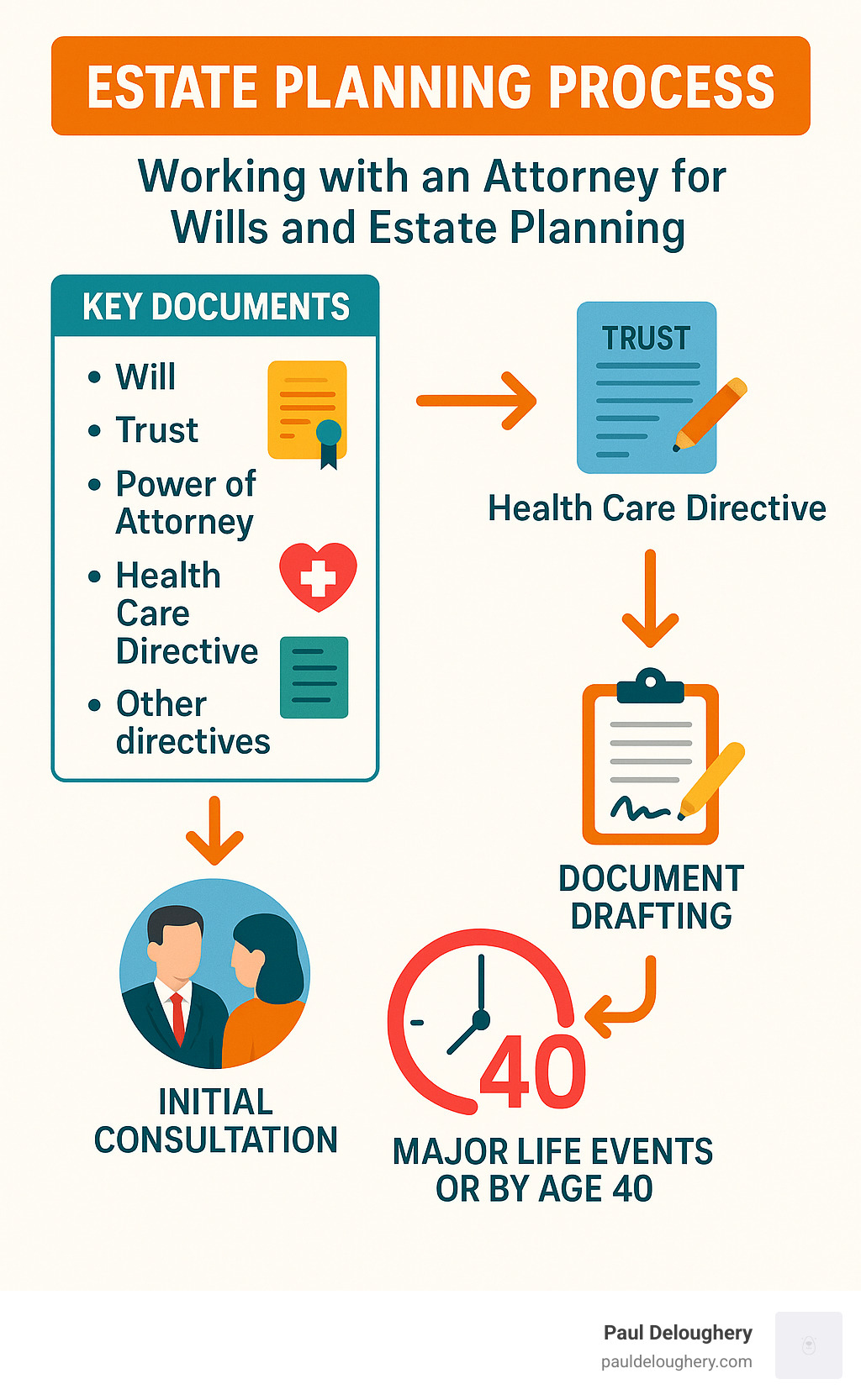
The process of working with a Seattle estate planning attorney typically begins with an initial consultation to review your balance sheet and family dynamics.
The Discovery Phase
You will be asked to provide a comprehensive list of assets, including real estate holdings, retirement accounts, life insurance policies, and digital assets (cryptocurrency, etc.). The attorney uses this data to identify potential tax liabilities and "gaps" in your current beneficiary designations.
Designing the Strategy
The attorney will explain the pros and cons of various structures—such as whether a "Disclaimer Trust" is better for your specific tax situation than a "Mandatory Credit Shelter Trust." They will also discuss the selection of fiduciaries, helping you choose executors and trustees who are capable of handling the responsibility.
Execution and Maintenance
Once the documents are drafted, the attorney oversees the formal signing ceremony to ensure compliance with Washington law. However, a Seattle attorney's job doesn't end there; they provide ongoing advice as tax laws change or as your family situation evolves (e.g., divorce, birth of a child, or receiving an inheritance).
Frequently Asked Questions
Do I need a Seattle attorney if I already have a will from another state?
Yes. Washington’s community property laws and specific state estate tax thresholds differ significantly from most other states. An out-of-state will may be technically valid, but it likely fails to utilize Washington-specific tax-saving strategies, potentially costing your heirs significant sums in avoidable taxes.
Can a Seattle estate planning attorney help avoid the "Death Tax"?
While you cannot avoid all taxes, an attorney can significantly reduce the impact of the Washington State Estate Tax through strategic gifting, the use of irrevocable trusts, and credit-shelter planning for couples. For most families, these strategies can push the taxable threshold much higher.
What happens if I die in Seattle without a will?
If you die without a valid will (intestate), Washington’s intestacy laws (RCW 11.04.015) determine who receives your assets. This often leads to results that people do not intend, such as a spouse having to share assets with the deceased’s parents or siblings, or the court appointing a guardian you would not have chosen for your children.
How often should I update my estate plan in Washington?
You should review your plan with an attorney every three to five years, or whenever a major life event occurs. In 2026, it is particularly important to review plans drafted before the TCJA sunset to ensure they still function correctly under the lower federal exemptions.
Is probate in King County expensive?
Washington has a relatively efficient probate system compared to states like California. However, it still involves court filing fees, mandatory notice periods, and attorney fees. While not always "expensive" in terms of percentage of the estate, it is a public process that many Seattle residents choose to avoid through the use of trusts.
Practical Next Action
If you own a home in the Seattle area or have assets exceeding $2 million, your first step should be to schedule a "Design Consultation" with a qualified estate planning attorney. Ask specifically about their experience with the Washington State Estate Tax and how they handle Non-Probate Assets like 401(k)s and RSUs. Early planning is the only way to ensure that your Seattle success translates into a protected legacy for the next generation.
Image Gallery