EBT Calendar 2026: Official Food Stamp Issuance Dates and Schedule
Navigating your food assistance benefits requires knowing the exact electronic benefit transfer distribution schedule, which varies significantly depending on your state of residence, case number, or social security details. State huma...
Navigating your food assistance benefits requires knowing the exact electronic benefit transfer distribution schedule, which varies significantly depending on your state of residence, case number, or social security details. State human services agencies release Supplemental Nutrition Assistance Program funds across specific days each month, ensuring recipients can access nutritional support reliably without system overloads.
Contents
Understanding How State EBT Issuance Schedules Work
Supplemental Nutrition Assistance Program benefits are funded federally through the United States Department of Agriculture Food and Nutrition Service, but the administration and distribution are managed entirely at the state level. Because millions of households rely on these funds for groceries, state agencies stagger the issuance of benefits rather than releasing them to all recipients on the first day of the month. Staggering prevents retail point-of-sale network bottlenecks, reduces fraud opportunities, and balances administrative workloads.
Most state agencies utilize specific algorithmic identifiers to determine your individual deposit date. Depending on where you live, your deposit schedule may be tied to:
- The last digit of your Social Security Number (SSN).
- The last digit of your EBT case number or client identification number.
- Your date of birth (specifically the day or month).
- The first letter of your last name.
Knowing which identifier your state uses is the first step in tracking your monthly financial calendar accurately. Missing a deposit cycle or miscalculating your refill date can lead to unexpected gaps in household food security.
State-by-State EBT Issuance Patterns for 2026
While rules vary across all 50 states, the District of Columbia, and U.S. territories, most jurisdictions follow structured, predictable monthly frameworks. The table below outlines common issuance methodologies used by major state jurisdictions to distribute benefits.
| State / Region | Primary Identifier Used | Typical Issuance Window | Notes on Weekend/Holiday Shifts |
|---|---|---|---|
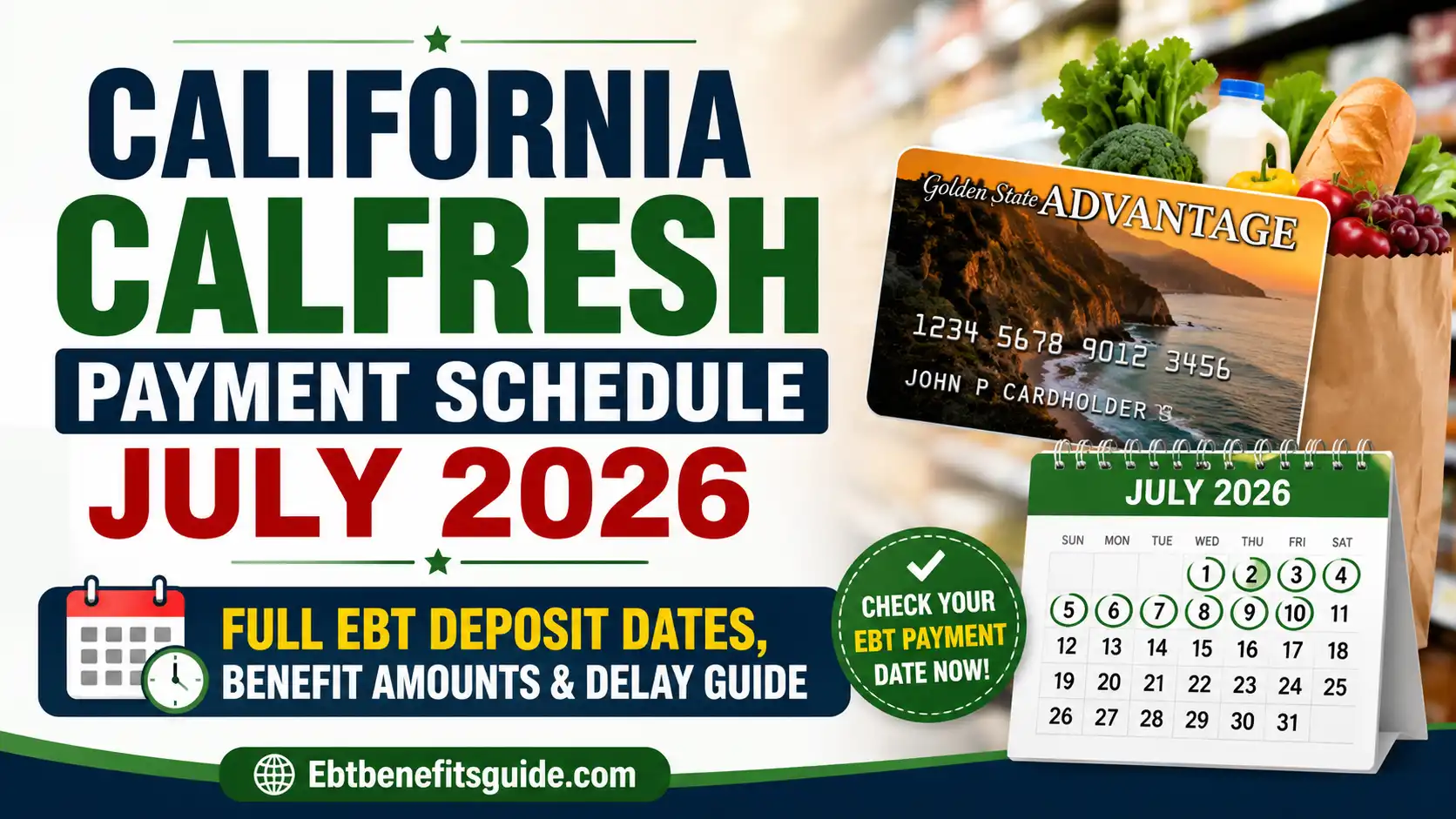
| California | Case Number (8th digit) | 1st through 10th of the month | Deposited every single day, including weekends and holidays. |
| Texas | Eligibility Determination Group (EDG) number | 1st through 15th of the month | Distributed systematically based on the lowest digit of the EDG. |
| Florida | 9th and 8th digits of Case Number | 1st through 28th of the month | Spread out over a nearly month-long window to manage retail traffic. |
| New York | Last digit of Client Identification Number (CIN) | 1st through 9th of the month | Excludes weekends and federal banking holidays in some counties. |
| Illinois | Last digit of Case Number / SSN | 1st through 20th of the month | Adjusted forward if the scheduled date falls on a weekend or state holiday. |
If you reside in a state that excludes weekends and banking holidays from its disbursement schedule, your funds will typically post on the closest preceding business day. Always verify your specific state's exact calendar through official portals, such as the USDA Food and Nutrition Service state directory or your local Department of Social Services.
Step-by-Step Guide to Finding and Tracking Your Deposit Date
Accurately tracking your disbursement dates prevents budgeting errors and eliminates confusion at the grocery checkout lane. Follow this structured process to master your monthly replenishment cycle:
- Locate your official state agency documentation, such as your initial notice of decision or your plastic EBT card carrier, which lists your case identifier.
- Identify the specific metric your state uses for scheduling (SSN digit, case number digit, or birthdate).
- Log into your state's official EBT mobile application or authorized web portal (such as ebtEDGE, ConnectEBT, or state-specific proprietary apps) to view your upcoming deposit ledger.
- Set up text message or push notification alerts if your state portal provides automated reload reminders.
- Check your available balance via the automated telephone customer service line printed on the back of your card 24 hours before your anticipated deposit date.
Pro Tip on Balance Rollovers: Unused benefits do not disappear at the end of the month. Any remaining balance rolls over automatically into the next month, accumulating safely in your account. However, federal regulations mandate that benefits left untouched for 274 consecutive days (roughly nine months) are permanently expunged from the account.
Common Misconceptions and Troubleshooting Missing Benefits
Even with a predictable schedule, technical glitches, banking holidays, or administrative updates can cause confusion. Addressing these issues swiftly ensures your household maintains uninterrupted access to nutritional resources.
If your benefits do not appear on your expected calendar date, investigate the following potential causes:
- Banking Holidays: If your state adheres strictly to federal banking calendars, holidays like New Year's Day, Memorial Day, or Juneteenth can shift standard deposit timing by 24 hours.
- Recertification Deadlines: Every assistance case has a designated certification period (ranging from 6 to 24 months). If you failed to submit your recertification paperwork or completed interview on time, your case may have closed automatically.
- Address or Status Changes: Failing to report household income shifts, moves, or changes in household size can trigger a temporary freeze or reduction in benefits.
To resolve missing funds immediately, call the customer service hotline listed on the back of your EBT card or visit your local county assistance office. Avoid sharing your PIN or personal identification details with unauthorized third-party apps claiming to offer calendar tracking services.
Pros and Cons of Staggered Benefit Issuance
Evaluating how distribution systems impact communities highlights both operational benefits and logistical challenges for low-income households.
Advantages:
- Prevents catastrophic stock shortages and long checkout lines at local grocery stores and farmers markets.
- Reduces peak-load server strain on electronic payment processing gateways.
- Allows social service agencies to manage call center volumes more efficiently throughout the month.
Disadvantages:
- Creates long gaps between grocery trips for households accustomed to receiving funds on the first of the month.
- Makes budgeting complex for families juggling multiple assistance programs with conflicting disbursement dates.
- Can lead to food scarcity late in the month for recipients whose cycles fall toward the end of the distribution window.
Alternatives and Supplementary Assistance Programs
If your EBT calendar leaves you with gaps in food security, several complementary federal and local programs can bridge the gap. Utilizing these resources maximizes your household purchasing power:
- Special Supplemental Nutrition Program for Women, Infants, and Children (WIC): Provides specific nutritional foods, infant formula, and education for pregnant women, new mothers, and children up to age five.
- Local Food Pantries and Faith-Based Food Banks: Offer emergency supplemental boxes and fresh produce without impacting your primary government assistance case.
- Senior Farmers' Market Nutrition Program (SFMNP): Provides eligible older adults with coupons to exchange for eligible foods at farmers' markets and roadside stands.
- Double Up Food Bucks Initiatives: Many states partner with local grocers to match EBT dollars spent on fresh fruits and vegetables, effectively doubling your purchasing power.
Frequently Asked Questions
What time of day do EBT funds typically load onto the card?
Funds usually become available very early in the morning on your scheduled distribution day, often between midnight and 5:00 AM local time. Retail transactions can be made immediately once the balance reflects the updated amount.
Can my state change my EBT deposit date mid-year?
Yes, state agencies retain the administrative right to restructure their issuance schedules to balance system loads, though they typically provide advance written notice via mail or digital portals before altering schedules.
What should I do if my EBT card is stolen or lost?
Lock your card immediately using your state's mobile application if available, and call the customer service hotline to report the card lost or stolen and request an expedited replacement. Unauthorized electronic theft of benefits may be eligible for federal replacement under specific guidelines.
Do cash benefits (TANF) follow the same calendar as food stamps?
In many states, Temporary Assistance for Needy Families cash benefits are distributed on the exact same day as food benefits, but some states utilize entirely separate disbursement calendars for cash assistance. Check your specific state guidelines.
Are EBT benefits distributed on weekends and federal holidays?
It depends entirely on your state. Some states disburse benefits 365 days a year without exception, while other states pause distributions on Saturdays, Sundays, and official banking holidays, pushing those deposits to the next business day.
How can I check my benefit schedule without calling customer service?
You can log into your state's official web portal or mobile app (such as Providers or state-specific apps) to view your personalized issuance calendar and real-time transaction history.
Maximizing Your Food Assistance Resources
Mastering your local EBT calendar ensures that your household can plan grocery trips efficiently, avoid checkout surprises, and maintain steady access to healthy meals throughout the year. Keep your contact information updated with your caseworker, monitor your state's official digital portals regularly, and utilize supplemental local food resources whenever your budget requires extra support.
Image Gallery