The Most Generous Billionaires and Their Giving Patterns
As of 2026, the most generous billionaires—led by figures like Warren Buffett, Bill Gates, and MacKenzie Scott—are defined by their lifetime contributions and distinct strategic patterns. While some favor institutionalized foundations...
As of 2026, the most generous billionaires—led by figures like Warren Buffett, Bill Gates, and MacKenzie Scott—are defined by their lifetime contributions and distinct strategic patterns. While some favor institutionalized foundations and multi-generational goals, others prioritize rapid, trust-based grants to address immediate global inequities and systemic social challenges.
Contents
Philanthropy at the highest level of wealth has shifted from a secondary "retirement activity" to a primary, data-driven enterprise. The sheer scale of capital being deployed by the world’s wealthiest individuals has created a shadow infrastructure for global development, healthcare, and education. Understanding these giving patterns requires a look beyond the raw numbers to the underlying philosophies that dictate how, where, and why billions of dollars are redistributed.
Defining Generosity: Net Worth vs. Lifetime Giving
Generosity is a multi-dimensional metric. In the context of the ultra-wealthy, it is often measured in two ways: total lifetime giving and the "generosity index," which represents the percentage of a person’s total wealth donated to date.
Historically, Warren Buffett has topped the list of total dollars given, largely due to his massive annual contributions of Berkshire Hathaway stock to the Bill & Melinda Gates Foundation and four family-led charities. However, in terms of percentage of net worth, individuals like George Soros have historically ranked higher, having transferred the vast majority of his wealth to his Open Society Foundations over several decades.
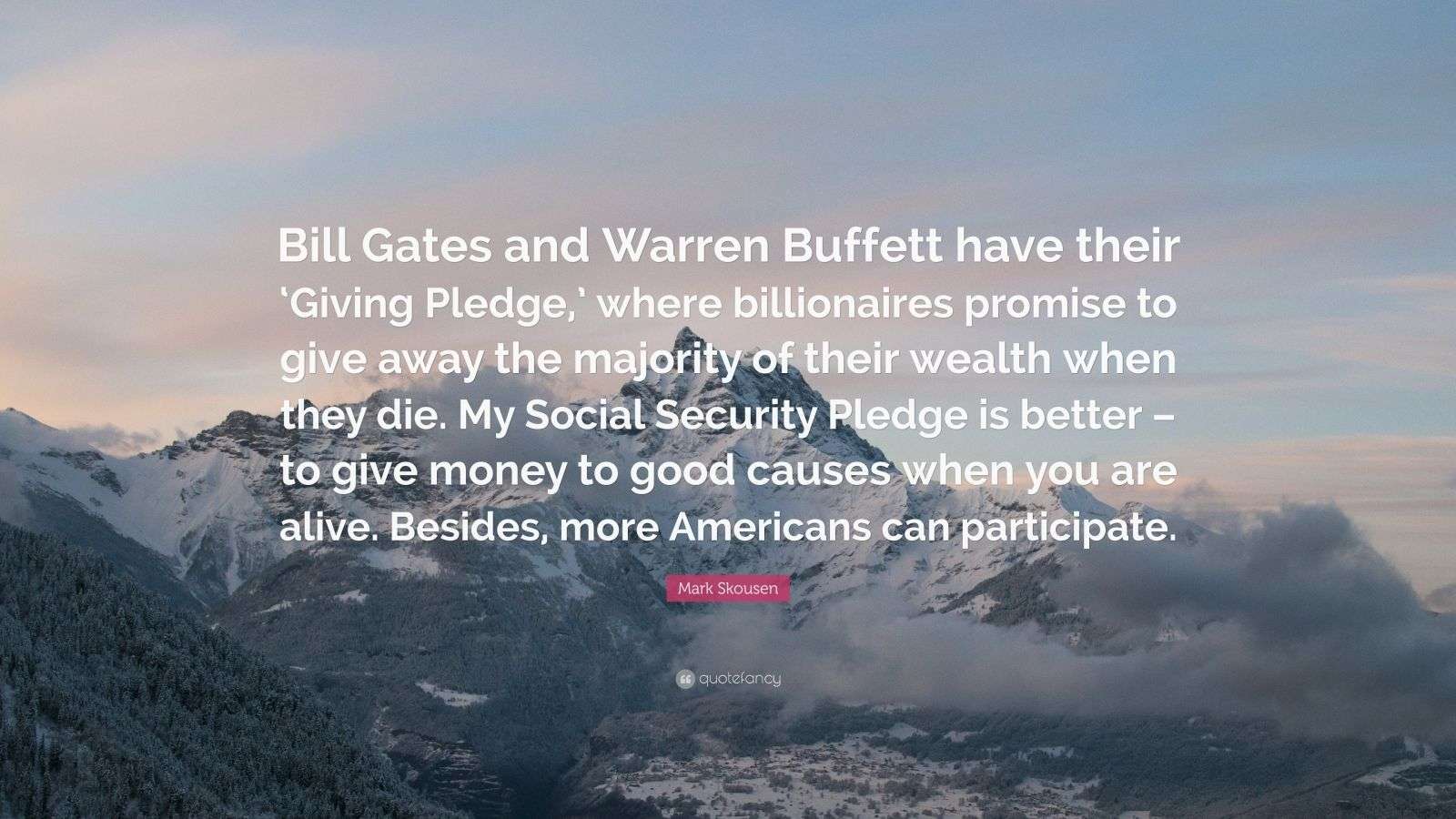
As we evaluate the landscape in 2026, the distinction between "committed" wealth and "distributed" wealth remains critical. The Giving Pledge, an initiative started by Buffett and the Gateses in 2010, now includes hundreds of signatories who have promised to give away the majority of their wealth. Yet, the pace at which these commitments are fulfilled varies wildly, creating distinct patterns of "patient capital" versus "rapid response" philanthropy.
Profiles of Strategic Philanthropy
Warren Buffett: The Compounded Legacy
Warren Buffett’s giving pattern is characterized by its consistency and reliance on established experts. Rather than building his own sprawling philanthropic infrastructure, Buffett famously decided to channel the bulk of his fortune through the Bill & Melinda Gates Foundation. His logic follows his investment philosophy: find the best managers and provide them with the capital to execute.
Buffett’s annual gifts, often totaling billions of dollars, are primarily directed toward global health, poverty alleviation, and education. His "giving while living" philosophy has set the standard for the 21st-century billionaire, emphasizing that wealth created in a society should eventually return to it.
Bill Gates and Melinda French Gates: Institutionalized Impact
Despite their personal separation, Bill Gates and Melinda French Gates continue to co-chair the Bill & Melinda Gates Foundation, which remains a titan of institutional philanthropy. Their pattern is hyper-analytical and focused on "moonshot" goals, such as the total eradication of polio and the reduction of malaria deaths.
The Gates model is often called "philanthro-capitalism." It applies business-like rigor, detailed metrics, and market-based solutions to social problems. They don’t just write checks; they negotiate with pharmaceutical companies, fund primary research, and lobby governments to match their funding. Their influence is so vast that the foundation is a primary funder of the World Health Organization, giving them a seat at the table of global health policy.
MacKenzie Scott: The Disrupter
MacKenzie Scott has fundamentally altered the expectations of billionaire giving. Since 2019, her pattern has been one of "trust-based philanthropy." Unlike the Gates Foundation, which requires rigorous applications and constant reporting, Scott’s team identifies high-impact non-profits and surprises them with large, unrestricted grants.
Her approach—detailed on her website Yield Giving—focuses on "those who have been underfunded and overlooked." By 2026, her total giving has surpassed $17 billion, distributed to thousands of organizations. Her pattern is significant because it removes the power dynamic typically found in donor-recipient relationships, allowing non-profits to spend the money where they see the greatest need rather than where a billionaire dictates.
Michael Bloomberg: Data-Driven Urbanism
Michael Bloomberg’s giving through Bloomberg Philanthropies follows a pattern of "urban intervention." As a former mayor, Bloomberg focuses heavily on cities as the engines of change. His giving is concentrated in five key areas: the environment, public health, the arts, government innovation, and education.
Bloomberg’s pattern is distinct for its focus on policy and advocacy. He has spent hundreds of millions of dollars on campaigns to reduce tobacco use and move the United States away from coal-fired power plants. This is "political philanthropy," where the goal is to trigger legislative changes that have a multiplier effect on the initial donation.
Comparison of Leading Philanthropic Patterns
| Billionaire | Estimated Lifetime Giving | Primary Giving Pattern | Key Focus Areas |
|---|---|---|---|
| Warren Buffett | Over $56 Billion | Outsourced / Institutional | Global Health, Poverty Alleviation |
| Bill & Melinda Gates | Over $75 Billion | Analytical / Moonshot | Eradication of Disease, Sanitation |
| MacKenzie Scott | Over $17 Billion | Trust-Based / Rapid | Equity, Education, Community Health |
| Michael Bloomberg | Over $15 Billion | Policy-Driven / Urban | Climate Change, Public Health |
| George Soros | Over $32 Billion | Systemic / Political | Democracy, Human Rights, Law Reform |
| Chuck Feeney (Legacy) | $8 Billion (Total Wealth) | Giving While Living | Higher Education, Human Rights |
Emergent Patterns in Global Philanthropy
Beyond individual profiles, several macro patterns have emerged among the world’s most generous billionaires as of 2026.
1. The Rise of the Limited Liability Company (LLC)
A notable shift is the move away from traditional 501(c)(3) private foundations toward LLC structures. Mark Zuckerberg and Priscilla Chan popularized this with the Chan Zuckerberg Initiative (CZI). Unlike foundations, an LLC can make political donations, invest in for-profit companies that align with their mission, and keep their specific grants more private. This pattern suggests that billionaires are seeking more flexibility and less regulatory oversight in how they deploy their capital.
2. Focus on "Effective Altruism"
Influenced by philosophers like Peter Singer, a subset of younger billionaires focuses on "Effective Altruism" (EA). This pattern prioritizes evidence and rationality to determine the most efficient way to save a life or improve a year of life. This often leads to funding less "glamorous" but highly effective interventions, such as deworming programs or the distribution of insecticide-treated bed nets, primarily in the Global South.
3. Climate Adaptation and Mitigation
In 2026, climate change has become a dominant pillar of billionaire giving. The Bezos Earth Fund, committed to $10 billion over a decade, exemplifies this pattern. The focus has shifted from mere awareness to hard technology—funding carbon capture, sustainable aviation fuel, and biodiversity preservation. Billionaires are increasingly acting as "first-loss" investors in green technologies that are too risky for traditional venture capital.
The Role of the Giving Pledge
The Giving Pledge remains the most significant collective force in billionaire philanthropy. Founded as a moral commitment rather than a legal contract, it has fostered a community where the ultra-wealthy discuss best practices and failures.
The pattern within the Giving Pledge is one of "peer-driven accountability." By making their intentions public, signatories invite scrutiny. However, critics point out that while pledges are made, the actual transfer of funds sometimes lags behind the growth of the donors' assets, leading to a "accumulation gap" where wealth grows faster than it can be given away.
Challenges and Criticisms of Billionaire Giving
While the scale of generosity is unprecedented, it is not without controversy. Many observers note that billionaire giving patterns often reflect the personal biases of the donor rather than the democratic priorities of a society.
- Tax Implications: Large charitable donations provide significant tax breaks. Critics argue that this effectively means the public is subsidizing the private interests of billionaires, as that tax revenue would otherwise go to the government's general fund.
- Influence and Power: When a single individual provides more funding for a sector (like education or global health) than a mid-sized country, they gain immense power over public policy without being elected.
- Transparency: Patterns involving LLCs or Donor-Advised Funds (DAFs) can obscure where money is actually going, making it difficult for researchers and the public to track the real-world impact of "generosity."
Frequently Asked Questions
How is a billionaire's "generosity" actually calculated?
Generosity is typically calculated by "Lifetime Giving," which is the total sum of money actually distributed to charities. Analysts also use the "Generosity Index," which is (Lifetime Giving / (Current Net Worth + Lifetime Giving)). This helps identify people who have given away a high percentage of their total potential wealth, rather than just large raw amounts.
What is the difference between a foundation and a donor-advised fund (DAF)?
A private foundation is a legal entity controlled by the donor or their family, requiring annual filings and a mandatory 5% payout of assets. A DAF is a private fund managed by a third party (like Fidelity Charitable). DAFs offer immediate tax deductions, but they do not currently have the same annual payout requirements as foundations, leading to concerns about "warehoused" wealth.
Do all billionaires in the Giving Pledge give away their money immediately?
No. The Giving Pledge is a commitment to give away the majority of one's wealth either during their lifetime or in their will. Some, like MacKenzie Scott, choose to give rapidly, while others plan for their wealth to be distributed over decades through a structured foundation.
Why do some billionaires focus on "Giving While Living"?
The "Giving While Living" philosophy, pioneered by Chuck Feeney (who successfully gave away his entire $8 billion fortune before his death), suggests that donors can be more active in ensuring their money is spent effectively. It also allows the donor to tackle urgent problems now, rather than letting the money sit in an endowment.
Can billionaire philanthropy replace government social programs?
Most experts agree it cannot. While billionaires can fund innovation and "gap-filling" services, the scale of government spending on healthcare, infrastructure, and education is trillions of dollars annually. Billionaire giving is best used for "catalytic" change—testing new ideas that governments can later adopt and scale.
Practical Recommendation for Tracking Impact
For those interested in the real-world outcomes of these giving patterns, it is recommended to follow independent evaluators rather than the foundations' own reports. Organizations like GiveWell and the Center for High Impact Philanthropy at the University of Pennsylvania provide rigorous, third-party analysis of where charitable dollars do the most good. If you are looking to model your own giving after the "most generous," focusing on evidence-based, high-transparency organizations is the most effective path to creating measurable change.
Image Gallery