Why Tesla's Autopilot Is Not a Safer Driver: What the Data Shows
Tesla’s Autopilot is not inherently safer than an attentive human driver because official claims comparing crash rates rely on fundamentally flawed data. Independent analyses from safety regulators and engineers show that Autopilot ope...
Tesla’s Autopilot is not inherently safer than an attentive human driver because official claims comparing crash rates rely on fundamentally flawed data. Independent analyses from safety regulators and engineers show that Autopilot operates primarily in safer driving environments, suffers from critical human-machine handover failures, and frequently leads to severe driver disengagement.
Contents
The Statistical Reality Behind Tesla’s Safety Claims
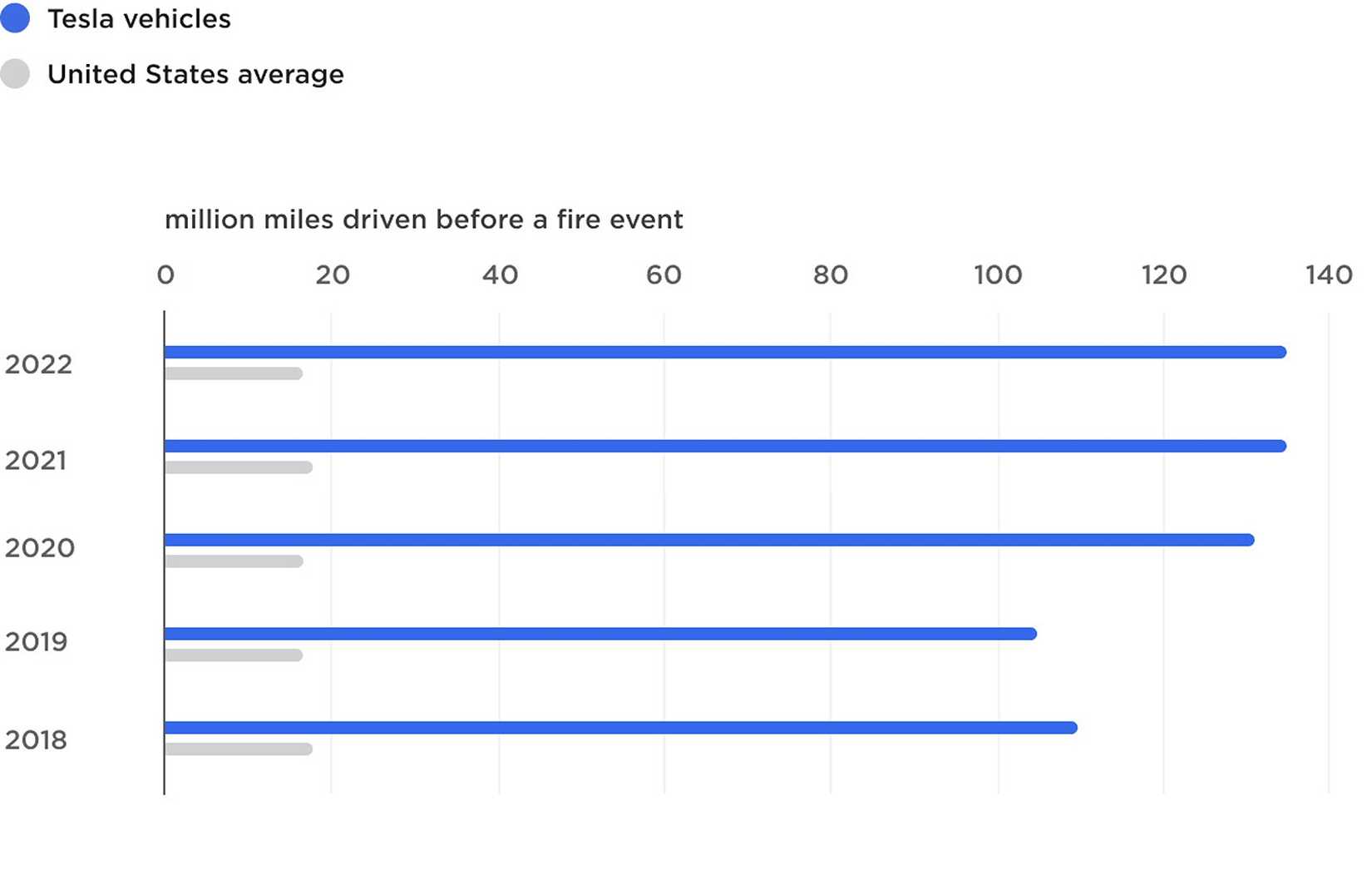
For years, marketing claims and quarterly vehicle safety reports have suggested that vehicles operating with Autopilot engaged experience far fewer collisions per million miles traveled than the national average. However, independent transportation researchers, statistical analysts, and federal regulators have systematically challenged these metrics as an unequal comparison.
Tesla compares Autopilot miles—driven overwhelmingly on divided, controlled-access highways with physical medians, clear lane striping, and no cross-traffic or pedestrians—against the overall United States fleet average calculated by the National Highway Traffic Safety Administration (NHTSA). The national average incorporates all roadway conditions, including:
- Unlit rural roads with sharp curves and sudden grade shifts
- Congested urban intersections with bicycles and jaywalking pedestrians
- Substandard infrastructure missing pavement markings
- Severe weather and adverse surface conditions
Divided highways are statistically the safest roads in the country, experiencing roughly half the fatal crash rate of two-lane rural roads. When researchers control for road type, driver age, vehicle weight, and operational conditions, the purported statistical advantage of Autopilot largely evaporates.
Furthermore, standard Autopilot disengages automatically fractions of a second before an imminent collision if the driver takes sudden evasive action or if the system reaches its operational design limit. In early reporting datasets, collisions occurring immediately after disengagement were not consistently attributed to the driver-assist system, creating an artificial survivorship bias in safety reporting.
Levels of Automation: The Driver-in-the-Loop Problem
To understand why Tesla's Autopilot fails to act as a truly safer driver, one must understand the SAE International (Society of Automotive Engineers) levels of driving automation. Autopilot is an SAE Level 2 driver support system, not an autonomous or self-driving platform.
- Level 0: No Driving Automation
- Level 1: Driver Assistance (Adaptive Cruise Control OR Lane Centering)
- Level 2: Partial Automation (Adaptive Cruise Control AND Lane Centering) - Autopilot
- Level 3: Conditional Automation (System drives; driver is fallback)
- Level 4: High Automation (System drives in geofenced areas; no driver)
- Level 5: Full Automation (System drives anywhere under all conditions)
Under Level 2 automation, the human behind the wheel retains 100% legal, operational, and physical responsibility for dynamic driving tasks at every moment. The software merely coordinates longitudinal control (acceleration and braking via Traffic-Aware Cruise Control) and lateral control (steering via Autosteer).
The Perils of Automation Complacency
The core vulnerability of Level 2 partial automation is cognitive: human beings are notoriously bad at passive monitoring. When a vehicle performs mundane driving tasks reliably for tens of miles, the human brain suffers from automation complacency and vigilance decrement.
Drivers naturally drop their scan frequency, look away from the road, or mentally check out. When an edge case occurs—such as an overturned commercial vehicle across dark lanes, an unconventional lane split, or an emergency vehicle parked partially on the shoulder—the system may abort or misinterpret the obstacle. Expecting an inattentive human to recognize a complex hazard, orient their attention, and execute an emergency evasive maneuver within 1.5 seconds is an engineering design flaw that physical testing has repeatedly demonstrated.
Regulatory Findings and Federal Investigations
Federal safety agencies have accumulated significant empirical data documenting instances where Autopilot failed to maintain safety margins.
NHTSA Engineering Analysis and Recalls
NHTSA launched extensive investigations into Autopilot performance, most notably focusing on collisions where Tesla vehicles operating with Autopilot struck stopped emergency and service vehicles displaying flashing lights, flares, or reflective cones.
The agency identified key structural issues:
- Inadequate Driver Engagement Controls: Early iterations of Autopilot relied primarily on rotational steering wheel torque rather than active eye-tracking to detect attentiveness. Drivers easily bypassed this system using steering wheel weights or occasional finger touches while remaining completely distracted.
- Abrupt De-escalation: Systems regularly handed dynamic control back to drivers with minimal acoustic warning when encountering complex roadway geometries or unexpected stationary obstacles.
- Overconfidence in System Capabilities: Branding choices like "Autopilot" and "Full Self-Driving Capability" fostered a false sense of security, encouraging drivers to treat Level 2 assist software as automated driving.
These inquiries culminated in massive safety recalls to mandate software updates that instituted stricter visual and audible warnings, progressive driver lockouts for non-compliance, and closer monitoring through cabin-facing cameras.
NTSB Crash Investigations
The National Transportation Safety Board (NTSB) has investigated numerous fatal Autopilot crashes, including high-profile incidents in Williston, Florida; Delray Beach, Florida; and Mountain View, California. In these reports, the NTSB repeatedly cited two intersecting primary causes:
- The driver's overreliance on automation leading to complete disengagement.
- The failure of Tesla's system design to restrict the operational design domain (ODD), allowing drivers to engage Autopilot on roadway types and under environmental conditions for which it was never validated.
Hardware Limitations: Vision-Only vs. Multi-Sensor Redundancy
A fundamental technical divergence between Tesla and other autonomous vehicle developers (such as Waymo or traditional automotive OEMs developing Level 3 systems) lies in sensor architecture.
| Feature / Architecture | Tesla Autopilot (Tesla Vision) | Alternative Autonomous Platforms (Waymo, Mercedes Drive Pilot) |
|---|---|---|
| Primary Sensing Method | Optical cameras (passive optical feed) | Sensor fusion: LiDAR, Radar, Cameras, Ultrasonics |
| Direct Distance Ranging | Algorithmic estimation via 2D images | Direct time-of-flight physical measurement (LiDAR) |
| Adverse Weather Reliability | Susceptible to lens glare, direct low sun, heavy fog, and snow | Radar and active sensors penetrate atmospheric interference |
| Redundancy Model | Redundant camera overlapping fields | Physically diverse sensor suites covering multiple wavelengths |
| SAE Automation Level | Level 2 (Driver supervision mandatory at all times) | Level 3 / Level 4 (System maintains legal liability when active) |
| Driver Monitoring System | Cabin camera + steering wheel torque resistance | Infrared eye-tracking + steering wheel capacitive touch |
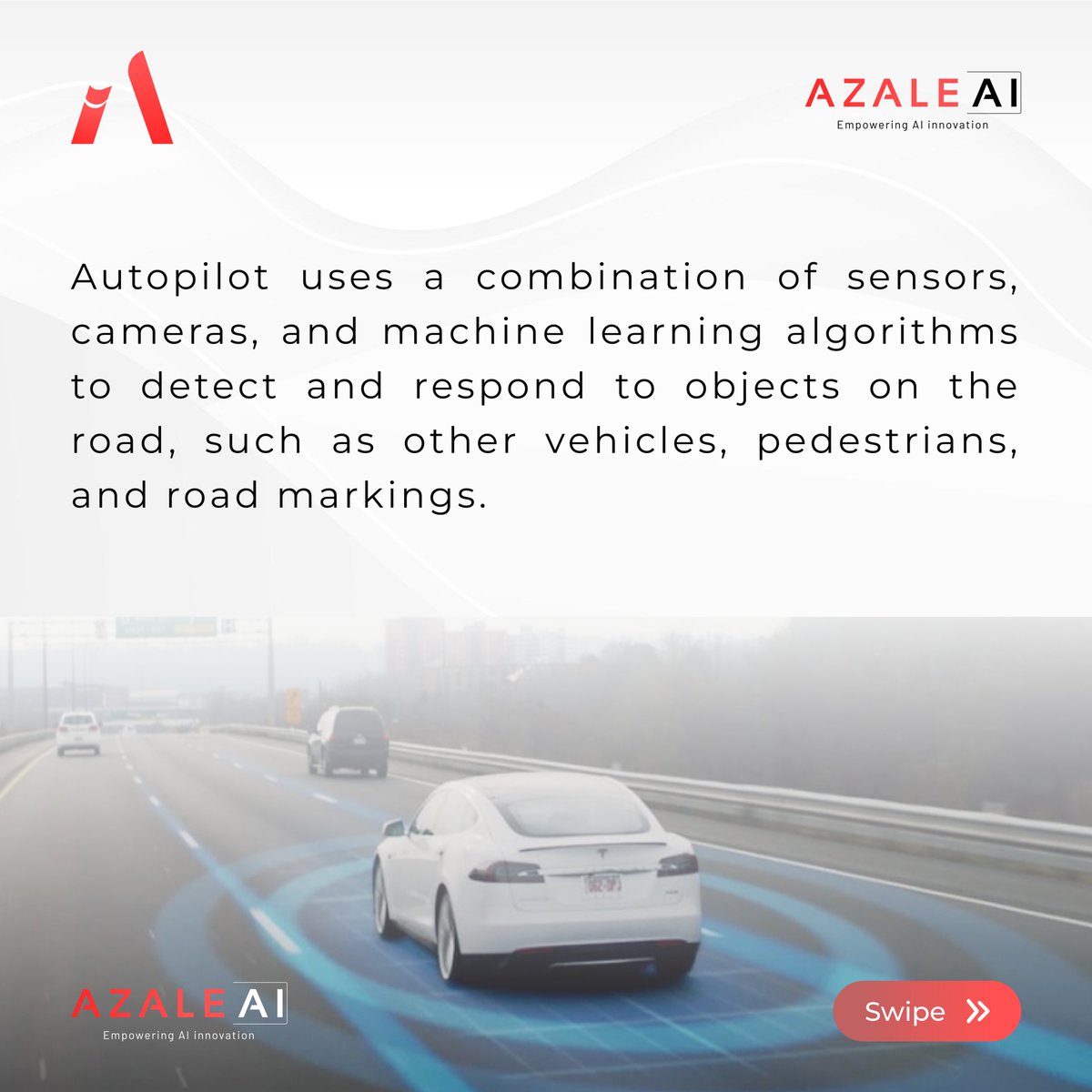
Tesla transitioned entirely to "Tesla Vision," removing ultrasonic sensors and forward-facing radar from its production line. While pure optical systems mimic the human eye, they lack the redundant verification that physical millimeter-wave radar and light detection and ranging (LiDAR) provide.
Cameras struggle with extreme contrast scenarios—such as emerging from a dark tunnel into blinding sunlight, detecting white tractor-trailers against an overexposed overcast sky, or operating in zero-ambient-light rural conditions. Without radar or LiDAR to cross-verify depth, the neural networks must calculate distance through visual inference alone, introducing latency and edge-case classification errors that a human driver with natural stereoscopic depth perception handles intuitively.
The Legal and Insurance Implications for Drivers
Because Autopilot is classified strictly as driver-assist software, drivers bear full liability for accidents occurring while the software is active.
Liability in Civil and Criminal Court
Operating Autopilot does not transfer legal fault to the manufacturer. If an Autopilot-engaged Tesla runs a red light, strikes a pedestrian, or rear-ends another motorist, prosecutors and civil plaintiffs hold the human sitting in the driver's seat accountable. US courts have seen drivers charged with vehicular manslaughter and reckless driving for fatal crashes where Autopilot was verified to be operating immediately prior to impact.
Insurance Risk Profiling
Insurance underwriters increasingly evaluate driver-assist usage metrics. While automakers initially argued that active safety systems would reduce premiums, real-world claims data tells a nuanced story:
- Repair Costs: Teslas and similar high-tech vehicles contain complex sensor arrays, specialized aluminum casting, and integrated battery architectures that drive up collision repair costs significantly compared to conventional vehicles.
- Severity of Impact: When Autopilot fails due to late braking or obstacle misclassification, collisions often occur at high travel speeds without preliminary braking, leading to more severe property damage and higher personal injury claims.
Actionable Best Practices for Operating Autopilot Safely
If you operate a vehicle equipped with Autopilot, you must treat the system as a convenience tool rather than an active driver. Follow these operational guidelines to mitigate safety risks:
- Keep Constant Eyes on the Far Horizon: Never fixate on the instrument cluster visualization. Scan the road 15 to 20 seconds ahead, actively watching for lane changes, road debris, construction zones, and stationary utility vehicles.
- Maintain Physical Steering Control: Rest a hand lightly on the wheel using downward resting pressure rather than an active grip, allowing you to feel Autopilot’s steering inputs while remaining primed to override sudden phantom braking or errant swerves instantly.
- Disengage in Complex Operational Environments: Turn off Autopilot immediately when entering construction zones with non-standard lane markers, complex highway interchanges, areas with heavy pedestrian traffic, or severe inclement weather.
- Never Use Aftermarket Defeat Devices: Defeat devices, such as steering wheel counterweights designed to trick hands-on detection systems, directly undermine vehicle safety, expose you to catastrophic personal liability, and void warranty and insurance protections.
- Treat Warning Alerts with Immediate Action: If the vehicle alerts you to take control, intervene manually with steering or braking immediately without waiting to diagnose what the vehicle is reacting to.
Frequently Asked Questions
Does Autopilot have a lower fatality rate than human drivers?
No conclusive, peer-reviewed data proves Autopilot has a lower fatality rate when adjusting for operational variables. Tesla's published figures compare highway miles driven in newer, heavier, premium vehicles against the entire US vehicular fleet across all road types, weather conditions, and vehicle ages. When evaluated solely on interstate highways, conventional human drivers demonstrate safety records comparable to or exceeding Autopilot operations.
What is phantom braking, and why does it happen?
Phantom braking occurs when advanced driver-assist systems abruptly apply the brakes without an actual hazard present. In camera-only systems, this typically stems from optical illusions, such as overhead road signs casting sharp shadows across the lane, heat shimmer, or misinterpreting bridges as low-clearance obstacles. This behavior introduces severe rear-end collision hazards from vehicles traveling behind.
Who is legally responsible if a Tesla crashes while on Autopilot?
The driver seated behind the steering wheel is legally responsible. Under SAE Level 2 guidelines, the human driver must actively monitor the driving environment and retain operational control at all times. Neither regulatory bodies nor legal precedents hold the automated software liable for traffic violations or collisions.
How does Autopilot compare to GM Super Cruise or Ford BlueCruise?
While Tesla’s Autopilot allows engagement on a wider range of unmapped roadways, systems like GM Super Cruise and Ford BlueCruise utilize geofencing, restricting operation strictly to pre-mapped, divided highways. Additionally, these alternative systems employ advanced infrared driver-facing eye-tracking cameras that demand strict line-of-sight visual attention before allowing hands-free operation, significantly reducing automation complacency.
Final Recommendation
Do not treat Level 2 driver assistance as a replacement for human perception, situational judgment, and dynamic reaction. If you drive a Tesla equipped with Autopilot, treat the feature strictly as an advanced cruise control designed to reduce physical driver fatigue on long, open highway stretches. Never divert your visual attention from the roadway, remain prepared to take immediate manual control at any microsecond, and recognize that automated systems cannot anticipate anomalous road hazards as reliably as an alert, defensive human driver.
Image Gallery