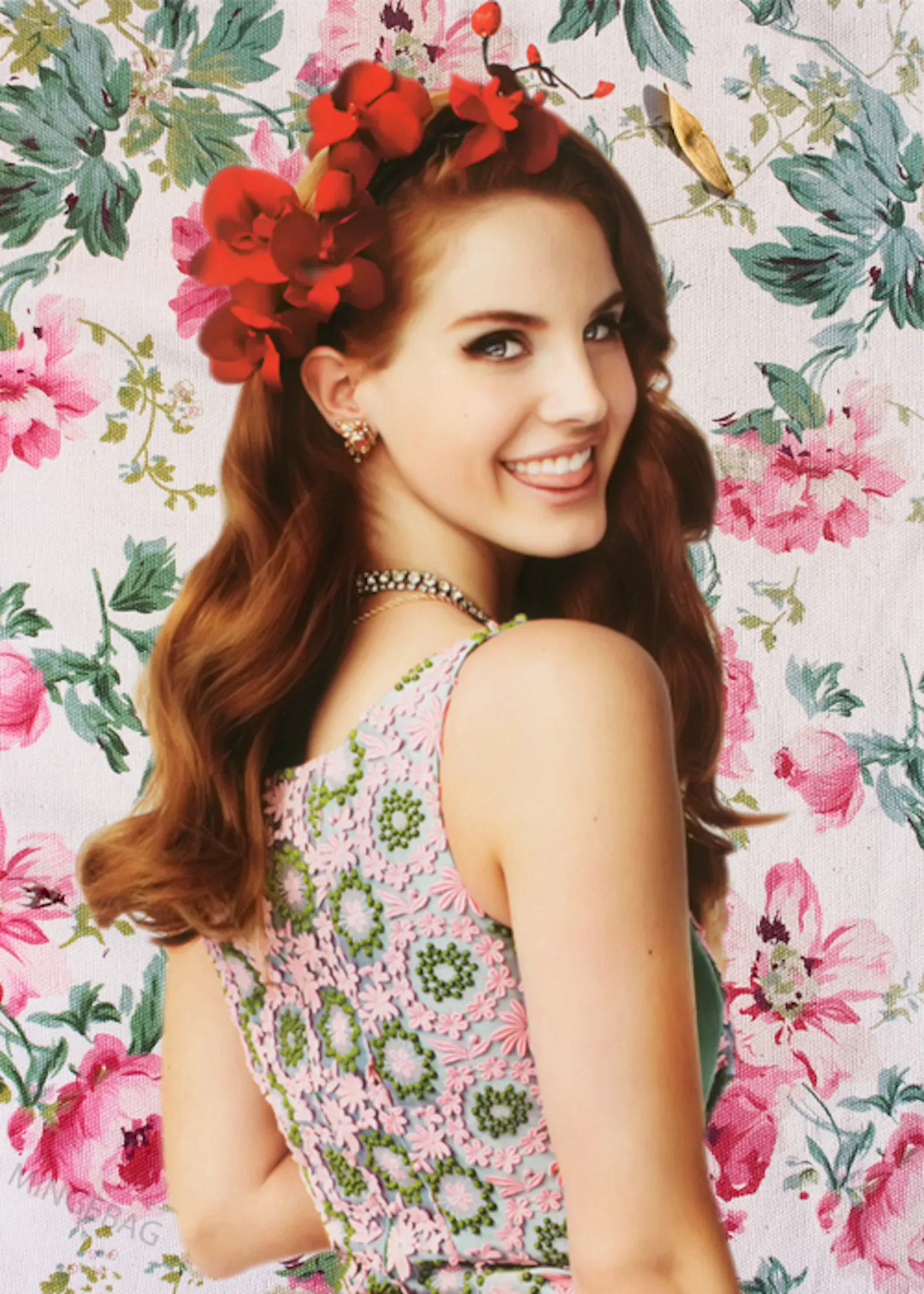
What the Lana Del Rey Flowers in Hair Really Mean: A Deep Dive into the Aesthetic Symbolism
Lana Del Rey’s use of flowers in her hair is a multi-layered symbol of memento mori, representing the fleeting nature of beauty, youth, and romance. By blending 1960s Americana with Shakespearian tragedy and religious iconography, the...
Lana Del Rey’s use of flowers in her hair is a multi-layered symbol of memento mori, representing the fleeting nature of beauty, youth, and romance. By blending 1960s Americana with Shakespearian tragedy and religious iconography, the flowers establish her "tragic glamour" persona, signaling a preoccupation with the delicate balance between life and decay.
Contents
The imagery of Lana Del Rey adorned with flora has become one of the most recognizable visual motifs in 21st-century pop culture. While often dismissed as a mere fashion trend that fueled the "flower crown" craze of the mid-2010s, the placement, type, and color of the flowers in her hair carry significant weight within the "Lana Del Rey Universe." To understand what these flowers really mean, one must look past the petals and into the literary, cinematic, and historical references that the artist has meticulously woven into her brand since her debut.
The Origin of the Floral Motif: Tragic Glamour and "Born to Die"
When Lana Del Rey burst into the mainstream in 2011 and 2012, her visual identity was as much a part of her art as her "low-register" vocals. In the music video for "Born to Die," she sits on a throne flanked by tigers, wearing a massive crown of blue and white roses. This was the definitive introduction to her use of floral headpieces.
In this context, the flowers signify a reclamation of the "tragic heroine." The blue roses, in particular, are not found in nature; they symbolize the unattainable, the mysterious, and the artificial. By wearing them, Del Rey signaled that her persona was a construction—a "gangster Nancy Sinatra"—that existed in the space between reality and a Hollywood dream. The sheer size of the crown served as a halo, immediately evoking the imagery of the Virgin Mary, but stripped of traditional purity and replaced with a heavy, melancholic grandeur.
This era established the "Sad Girl" aesthetic that would dominate Tumblr and early Instagram culture. The flowers were not just accessories; they were a shield and a statement. They suggested that while the woman wearing them might be suffering or "born to die," she would do so with impeccable, curated beauty.
The Literary Connection: Ophelia and the Drowning Woman
One of the most persistent interpretations of Lana Del Rey’s floral hair arrangements is the reference to William Shakespeare’s Ophelia. In Hamlet, Ophelia is famously depicted adorned with wild flowers—pansies, rosemary, and fennel—before her tragic death by drowning.
Throughout the history of Western art, particularly during the Pre-Raphaelite movement, Ophelia has been portrayed as the ultimate symbol of the "beautiful death." Artists like John Everett Millais popularized the image of a woman floating in water, surrounded by flowers, turning a moment of utter despair into a masterpiece of aestheticism.
Lana Del Rey has frequently leaned into this "Ophelia-core" imagery. In various photo shoots and music videos, such as "Summertime Sadness," the flowers in her hair serve to frame her face in a way that suggests a proximity to the end. The meaning here is a fascination with Vanitas—the artistic theme that reminds viewers of their mortality. Flowers, which are at their most beautiful just before they begin to wilt, are the perfect metaphor for the "Live fast, die young" philosophy that permeated Del Rey's early work.
Religious Iconography and the "Floral Halo"
Lana Del Rey’s work is deeply saturated with Catholic imagery, from the rosaries she wears to the lyrical references to "Gods and Monsters." The flowers in her hair often function as a secular or "Hollywood" version of a religious halo.
In traditional iconography, the Virgin Mary is often depicted with a crown of lilies or roses, representing purity and her status as the Queen of Heaven. Del Rey subverts this by using the floral crown to canonize the "outcast" or the "lover." By placing flowers in her hair, she elevates her personal narratives of heartbreak and devotion to a level of spiritual importance.
This was most explicitly seen at the 2018 Met Gala, where the theme was "Heavenly Bodies: Fashion and the Catholic Imagination." While she wore a literal crown of wings and daggers (designed by Gucci), her frequent use of floral arrangements in editorial shoots during that period continued to bridge the gap between the divine and the profane. The flowers mean that her love is her religion, and her suffering is her sanctification.
The Evolution of Meaning: From Roses to Daisies
As Lana Del Rey’s discography evolved, so did the flora. The meaning of the flowers shifted from the heavy, funereal weight of the Born to Die era to the lighter, more optimistic tones of Lust for Life (2017).
| Era | Primary Flower Type | Dominant Meaning | Cultural Reference |
|---|---|---|---|
| Born to Die (2012) | Large Roses (Blue/White/Red) | Memento Mori, Tragic Glamour, Artificiality | Pre-Raphaelite Art, Old Hollywood |
| Ultraviolence (2014) | Occasional Wildflowers | Rawness, Americana, Laurel Canyon | 1970s Rock Culture, Woodstock |
| Lust for Life (2017) | Daisies | Innocence, Peace, Rebirth | 1960s "Flower Power," Hippie Movement |
| Did You Know... (2023-2024) | Soft Ribbons and Buds | Softness, Coquette, Nostalgia | Southern Gothic, Victorian Mourning |
In the Lust for Life album cover, Del Rey is seen smiling—a rare occurrence in her early discography—with two small daisies tucked into her hair. Here, the flowers mean rebirth and peace. The daisy is a symbol of innocence and the "Flower Power" movement of the late 1960s. By moving away from the heavy, oversized roses of her debut, she signaled a shift toward a more "awake" and less "doomed" perspective, though still rooted in the nostalgia of a bygone era.
Cultural Impact: The Birth of the "Coachella" Aesthetic
One cannot discuss the meaning of Lana Del Rey’s flowers without acknowledging their massive impact on fashion history. In the early 2010s, Del Rey’s floral hair choices single-handedly popularized the flower crown as the de facto uniform for music festivals like Coachella and Glastonbury.
For the audience, wearing these flowers was a way to tap into the "Lana-esque" spirit: a blend of bohemian freedom and curated melancholy. However, while the public saw it as a festive accessory, for Del Rey, it remained a costume of the "Old World." It was a way to link herself to the 1960s counter-culture and the aesthetics of The Laurel Canyon music scene, which she has frequently cited as a major influence.
By 2026, this look has transitioned from a "trend" into a "classic." In the current fashion landscape, the "Coquette" and "Vintage-core" movements—which heavily utilize floral hair accents—owe their longevity to the foundation Del Rey laid over a decade ago.
Technical Symbolism: Color and Placement
The specific colors of the flowers Lana Del Rey chooses provide deeper insight into the emotional state of the character she is portraying in her songs:
- Red Roses: These signify a passionate, often dangerous love. They are the flowers of the "femme fatale" and are often seen when her lyrics discuss tumultuous relationships or sacrifice.
- White Flowers (Lilies/Roses): Typically used to denote purity or, conversely, a funeral. In her work, they often lean toward the latter, symbolizing the death of innocence.
- Lavender and Blue Tones: These represent the surreal and the "dream state." They are the most frequent choice for her more psychedelic or "trip-hop" leaning eras.
- Dried Flowers: In some later visuals, she has used dried or wilted flowers. These represent stagnation and memory, the idea of holding onto a love that has already passed its bloom.
The placement is also strategic. Flowers tucked behind the ear often suggest a more casual, "island" or "California girl" vibe (as seen in her Honeymoon era), while the full crown or "halo" placement suggests the more theatrical, "larger than life" persona of her stadium-filling performances.
FAQs: Understanding the Aesthetic
Did Lana Del Rey invent the flower crown? No, flower crowns have existed for centuries in various cultures, notably in Slavic traditions (the vinok) and ancient Greece. However, Lana Del Rey is credited with reviving them in modern pop culture and making them a staple of the "Indie Sleaze" and "Tumblr" eras of the 2010s.
What is the connection between her flowers and her "Americana" theme? The flowers often represent the "Garden of Eden" version of the American Dream—beautiful on the surface but often hiding a sense of rot or sadness underneath. They evoke the 1960s "Summer of Love," which is a core pillar of her aesthetic.
Why does she often wear artificial-looking flowers? Del Rey often embraces the "fake" or the "plastic" to comment on the artifice of fame and the "Hollywood" machine. Artificial flowers never die, much like the frozen-in-time image of a movie star, but they also lack the scent and "soul" of real life.
How can I recreate the Lana Del Rey floral look in 2026? The 2026 approach to this aesthetic focuses more on subtlety and "coquette" elements. Rather than the massive crowns of 2012, look for delicate silk ribbons interwoven with small baby's breath or single, high-quality silk roses pinned into a "beehive" or "half-up" hairstyle.
Recommendations for Further Exploration
To truly grasp the significance of these floral motifs, it is recommended to view her visuals alongside the works of the Pre-Raphaelite Brotherhood, specifically the paintings of Dante Gabriel Rossetti. The way these painters used flowers to signify the emotional state of their female subjects is a direct ancestor to Del Rey’s visual language.
Additionally, listening to the album Lust for Life while viewing the floral-heavy photography of Neil Krug, who has collaborated extensively with Del Rey, provides a masterclass in how photography and botany can intersect to create a legendary music brand.
For those looking to adopt the look, remember that the "meaning" is found in the contrast. Pair delicate flowers with heavy eyeliner or vintage "biker" gear to capture the signature Lana Del Rey duality: the soft and the hard, the living and the dying.
Image Gallery